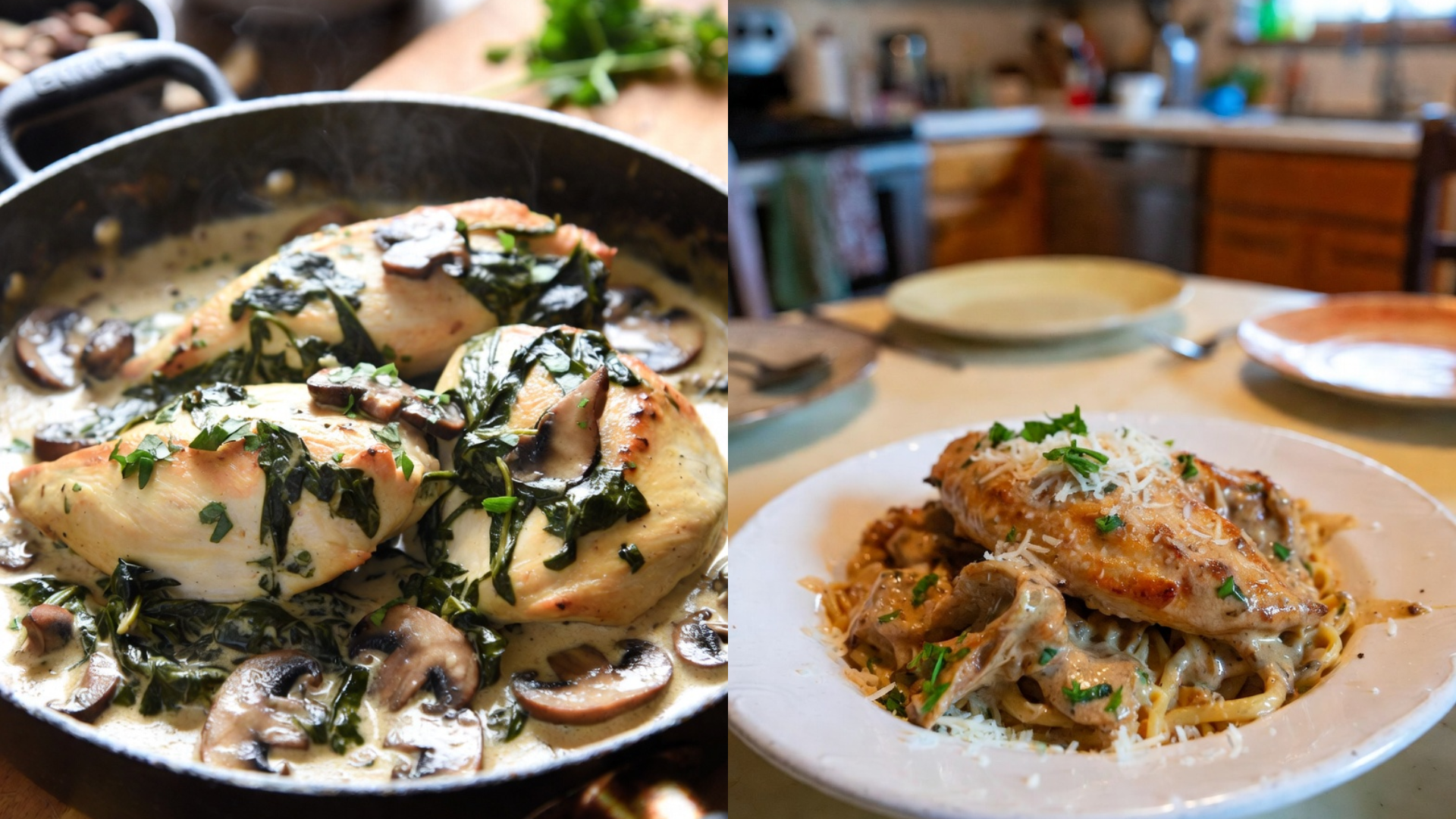
Most people overcook this. Here’s how not to. The difference between a good version and a great one comes down to one step: pulling the chicken before it’s fully done and letting it finish in the sauce, rather than cooking it all the way through in the pan.
A properly executed juicy Marry Me chicken recipe relies on a sear that builds flavor without drying out the meat, followed by a sun-dried tomato cream sauce that does the real work of tenderizing and finishing the dish. Skip that sequencing and you end up with chicken that’s technically cooked but disappointingly tough underneath a good sauce.
Prep time: 10 minutes | Cook time: 25 minutes | Total time: 35 minutes | Servings: 4
Table of Contents
What Makes This Recipe Work
- Chicken breasts are pounded to even thickness before searing — this is intentional. Uneven thickness means the thin end overcooks while the thick end is still raw, and that mismatch is where dryness starts
- The chicken is seared to about 90 percent done, then pulled — the science here is simple: it finishes cooking gently in the simmering sauce, which keeps it moist instead of drying out over direct high heat
- Sun-dried tomatoes are used both whole and as oil — most recipes skip using the reserved oil, but it’s already infused with concentrated tomato and herb flavor that plain olive oil can’t replicate
- Parmesan is added off heat, gradually — this prevents the proteins in the cheese from seizing and turning the sauce grainy instead of silky
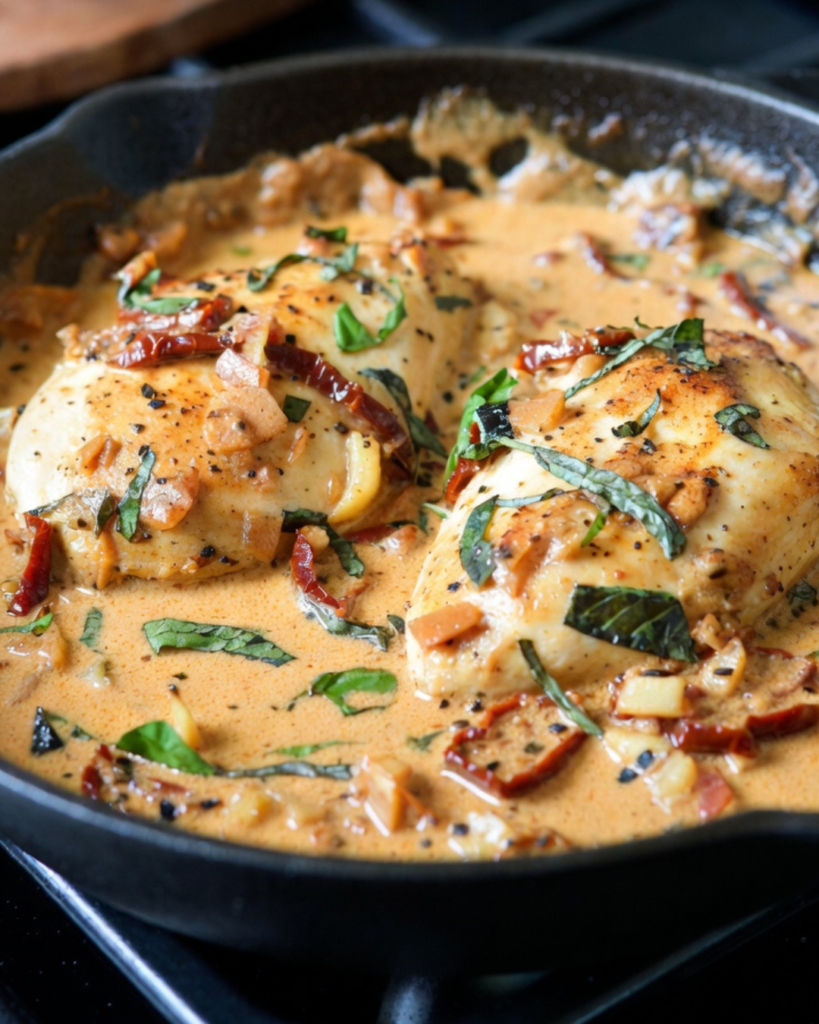
Ingredients — What to Buy and Why It Matters
- Boneless, skinless chicken breasts (4, about 1.5-2 lbs), pounded to even thickness: Even thickness is what allows consistent cooking — skipping this step is the single biggest cause of dry, unevenly cooked chicken in this dish.
- Sun-dried tomatoes in oil (1/2 cup, chopped), oil reserved: The oil-packed variety carries far more flavor than the dry-packed kind, which tends to taste leathery and one-note by comparison.
- Heavy cream (1 cup): Full-fat cream is what gives the sauce its body — substituting half-and-half will work but produces a noticeably thinner sauce that separates more easily.
- Chicken broth (1/2 cup, low sodium): Using low-sodium broth lets you control the final salt level, since the Parmesan and sun-dried tomatoes both already carry significant salt.
- Parmesan, finely grated (1/2 cup): Grate it fresh — pre-shredded cheese contains anti-caking starch that prevents it from melting smoothly into a cream sauce.
- Garlic (4 cloves, minced): Fresh garlic gives a sharper aromatic base than jarred garlic, which mellows and loses potency over time.
- Fresh basil (a handful, torn) and red pepper flakes (1/2 tsp): Basil goes in at the end for brightness; the pepper flakes add background heat that keeps the richness from tasting flat.
- Italian seasoning (1 tsp) and smoked paprika (1/2 tsp): The paprika adds a subtle smokiness that plain Italian seasoning alone doesn’t provide.
Substitution note: Coconut cream can replace heavy cream for a dairy-free version, but it shifts the flavor toward something sweeter and less traditionally savory.
Step-by-Step Instructions
- Pound the chicken breasts to an even 3/4-inch thickness between plastic wrap, then season generously with salt, pepper, and half the Italian seasoning and paprika.
- Heat 2 tablespoons of the reserved sun-dried tomato oil in a large skillet over medium-high heat. Sear the chicken 4-5 minutes per side, until deeply golden but not fully cooked through — internal temperature should read around 145°F at this stage. This is the critical step here, since pulling it early is what keeps the finished dish juicy.
- Remove the chicken and set aside. It will finish cooking in the sauce, so don’t worry that it isn’t done yet.
- In the same pan, add the garlic and remaining paprika, cooking 30 seconds until fragrant. Using the same pan means you’re building on the browned bits left from searing, which carry concentrated flavor.
- Add the chicken broth and scrape up any browned bits from the bottom of the pan. What’s actually happening is deglazing — those browned bits dissolve back into the liquid, adding depth the sauce would otherwise lack.
- Stir in the cream, sun-dried tomatoes, and remaining Italian seasoning. Bring to a gentle simmer, not a boil — a hard boil risks breaking the cream.
- Return the chicken to the pan and simmer 8-10 minutes, until the chicken reaches 165°F internally and the sauce has thickened slightly.
- Remove from heat, stir in the Parmesan gradually, then finish with torn basil and red pepper flakes. Adding cheese off heat and in stages is non-negotiable if you want a smooth, glossy sauce instead of a clumpy one.
Technique Notes for Better Results
- The professional approach here is pounding the chicken to uniform thickness before you do anything else — this single step prevents more dryness than any sauce trick can fix afterward
- Where most home cooks go wrong is fully cooking the chicken during the sear, leaving nothing for the sauce to gently finish, which leads to overcooked meat by the time the dish is plated
- If the sauce looks too thick, thin it gradually with a splash of chicken broth rather than more cream, to avoid diluting the flavor
- Simmer the sauce, never boil it, once the cream and cheese are in — a hard boil is the fastest way to break a cream sauce
- Taste before adding extra salt — sun-dried tomatoes and Parmesan both carry substantial sodium on their own
- Let the dish rest 3-4 minutes off heat before serving so the sauce continues to thicken slightly and cling better to the chicken
Plating and Serving
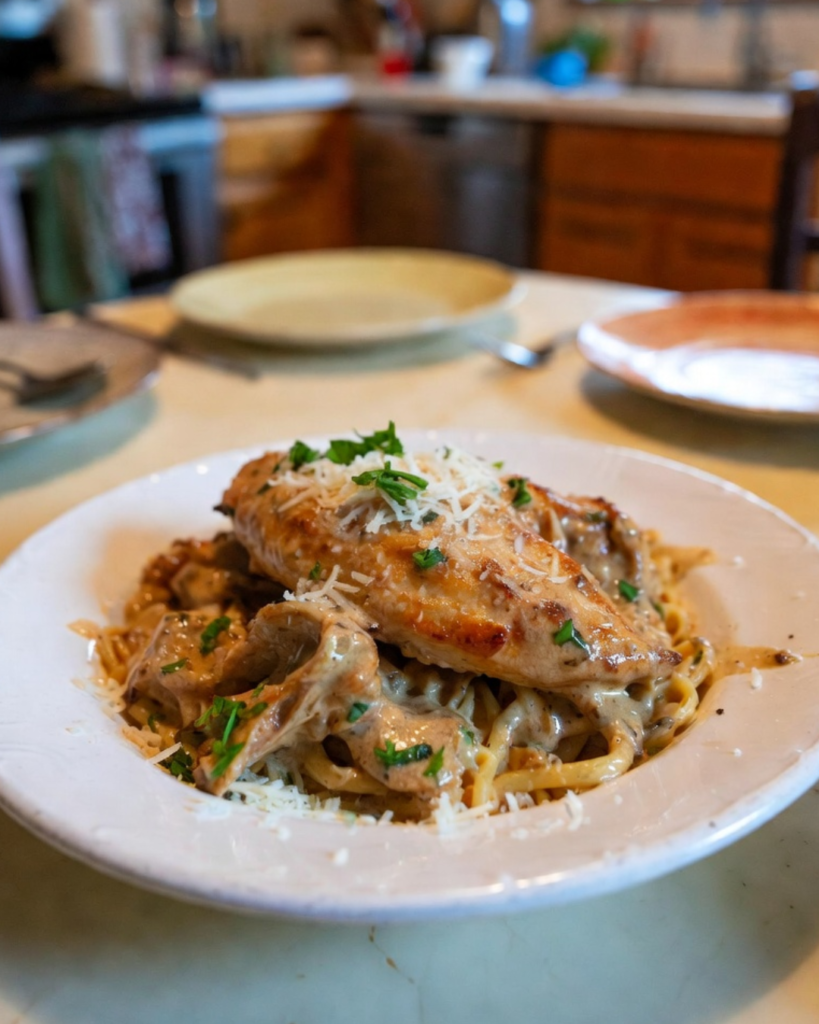
- Serve over pappardelle or another wide pasta that holds the cream sauce well without getting lost underneath it
- Crusty bread on the side is useful for scraping up any sauce left on the plate
- A simple arugula salad with lemon vinaigrette balances the richness of the dish with acidity
- Garnish with extra torn basil and a light dusting of Parmesan for visual contrast against the pale sauce
- A crisp, dry white wine like Pinot Grigio or a light Chardonnay cuts through the cream without competing with the sun-dried tomato flavor
Nutritional Profile
Chicken breast provides lean protein with less fat than thigh meat, though the cream sauce adds meaningful calories and saturated fat to the overall dish. Sun-dried tomatoes contribute concentrated lycopene and a modest amount of fiber relative to their size. For a lighter version, swapping half the heavy cream for additional chicken broth reduces richness and fat while keeping most of the sauce’s flavor intact, though the texture will be noticeably thinner. Using a dairy-free cream alternative works for those avoiding dairy, though it changes the flavor profile toward something sweeter than the traditional version.
Common Questions, Answered Directly
Can I use chicken thighs instead of breasts? Yes — thighs are more forgiving against overcooking, though you’ll want to sear them slightly longer since they’re typically thicker.
How long does this keep? Up to 3 days refrigerated in a sealed container; reheat gently on the stove over low heat to avoid breaking the sauce.
Can I freeze this dish? Cream-based sauces don’t freeze particularly well, since they tend to separate on thawing, but if you do freeze it, reheat slowly while whisking to bring it back together.
Why did my sauce turn grainy? The Parmesan was likely added too quickly or over heat that was too high. Always remove the pan from heat and add cheese gradually, stirring constantly.
Skip the reservation tonight — this comes together fast, and it’s the kind of dish that earns its name.