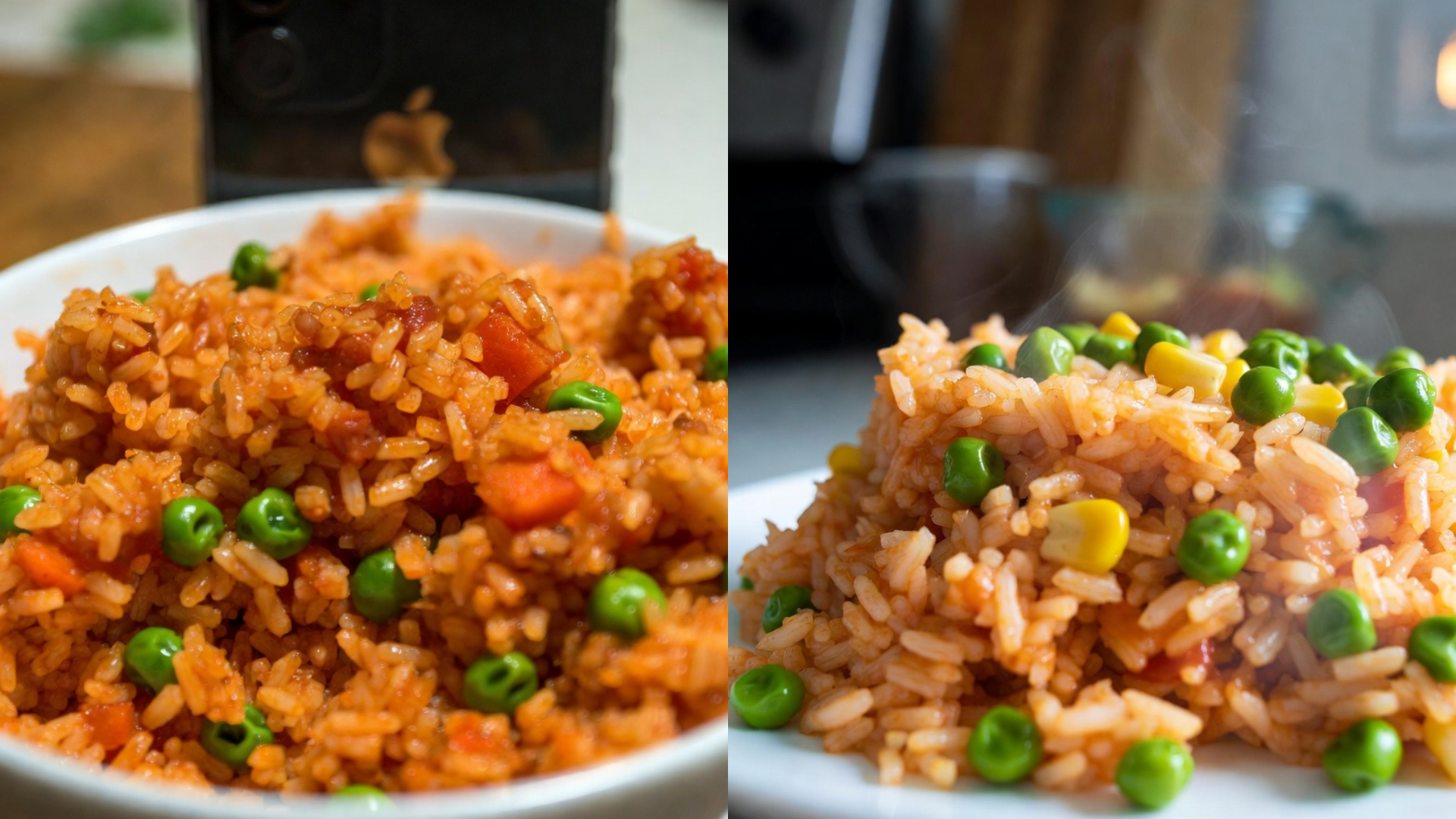
Most people overcook this. Here’s how not to. The difference between a mushy, forgettable side and a genuinely great one comes down to one step: toasting the raw rice in oil before any liquid touches it, since that toasting is what builds the base flavor and prevents the grains from turning gummy.
This savory rice recipe, Mexican inspired, relies on toasted rice, a properly blended tomato-based liquid, and a precise hands-off simmer to get fluffy, distinct grains every time. Gummy Mexican rice is almost always a toasting or liquid-ratio problem, not a seasoning one.
Prep time: 10 minutes | Cook time: 25 minutes | Total time: 35 minutes | Servings: 6
Table of Contents
What Makes This Recipe Work
- Raw rice is toasted in oil until golden before any liquid is added — this is intentional. Toasting coats each grain in fat, which limits starch release during cooking and is the main reason this rice stays fluffy instead of clumping together
- The cooking liquid is blended smooth, not left chunky — the science here is simple: a smooth tomato-broth base distributes color and flavor evenly through every grain, while chunky liquid leaves some rice underseasoned and some overwhelmed
- The pot is covered and left completely undisturbed during the simmer — most recipes skip this warning, but lifting the lid or stirring during cooking releases steam the rice needs to finish properly, leading to unevenly cooked grains
- The rice rests off heat before fluffing — pulling the lid immediately and fluffing right away disrupts the final steaming stage that evens out texture across the pot
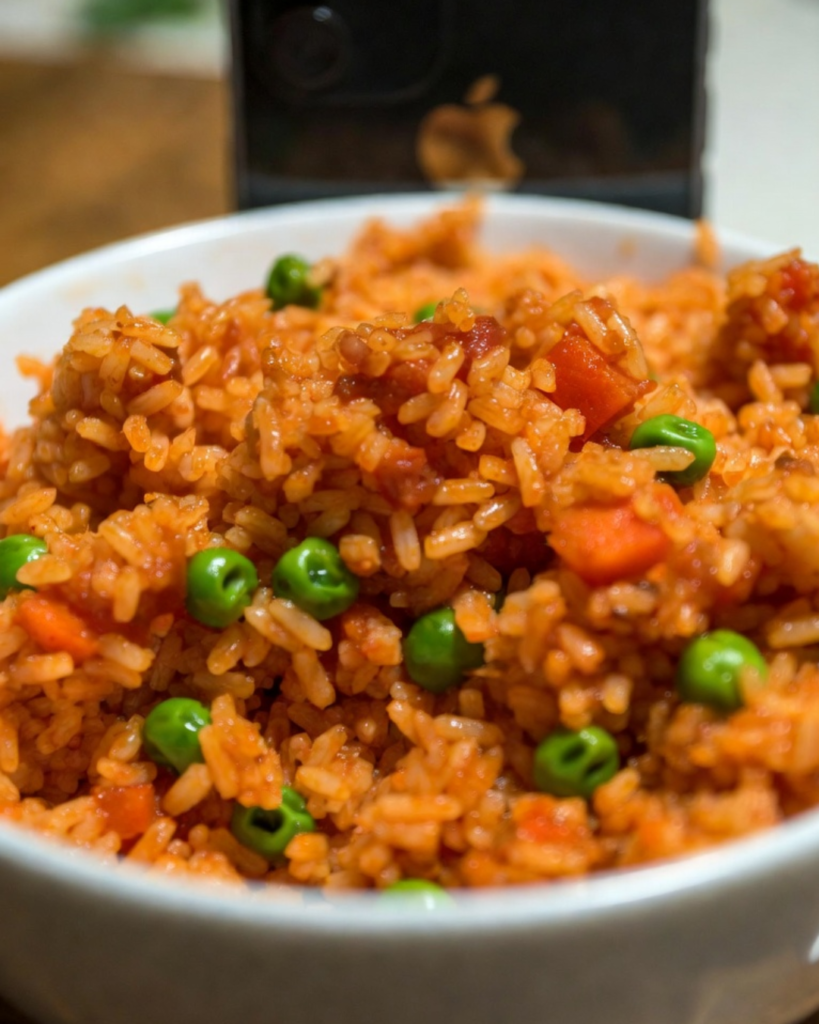
Ingredients — What to Buy and Why It Matters
- Long-grain white rice (2 cups), rinsed: Long-grain rice has less starch than short-grain varieties, which is essential for distinct, fluffy grains rather than a sticky result — rinsing removes surface starch before it even reaches the pot.
- Roma tomatoes (2, quartered) or canned diced tomatoes (1 cup): Fresh tomatoes offer a brighter flavor when in season; canned works reliably year-round and blends just as smoothly.
- White onion (1/4, roughly chopped) and garlic (2 cloves): Blended into the cooking liquid rather than sautéed separately, both infuse flavor throughout the liquid evenly.
- Chicken broth (2 1/4 cups, low sodium): Low sodium gives you control over the final salt level, since the tomatoes and any added bouillon also contribute sodium.
- Tomato paste (1 tbsp): Deepens the tomato flavor and color beyond what fresh or canned tomatoes provide on their own.
- Neutral oil (3 tbsp): A high smoke point is necessary for properly toasting the rice without burning — olive oil will smoke at the required temperature.
- Cumin (1/2 tsp) and a bay leaf: The cumin adds warmth without dominating; the bay leaf contributes background aromatic complexity over the simmer.
Substitution note: Vegetable broth can replace chicken broth for a vegetarian version with minimal difference in the final flavor, since the tomato and cumin carry much of the dish’s character.
Step-by-Step Instructions
- Blend the tomatoes, onion, garlic, and tomato paste with the chicken broth until completely smooth. Set aside. This is the critical step here — a smooth liquid ensures every grain of rice gets even color and flavor, rather than some grains sitting in a tomato chunk while others stay pale.
- Heat the oil in a heavy pot with a tight-fitting lid over medium heat. Add the rinsed and drained rice, stirring frequently.
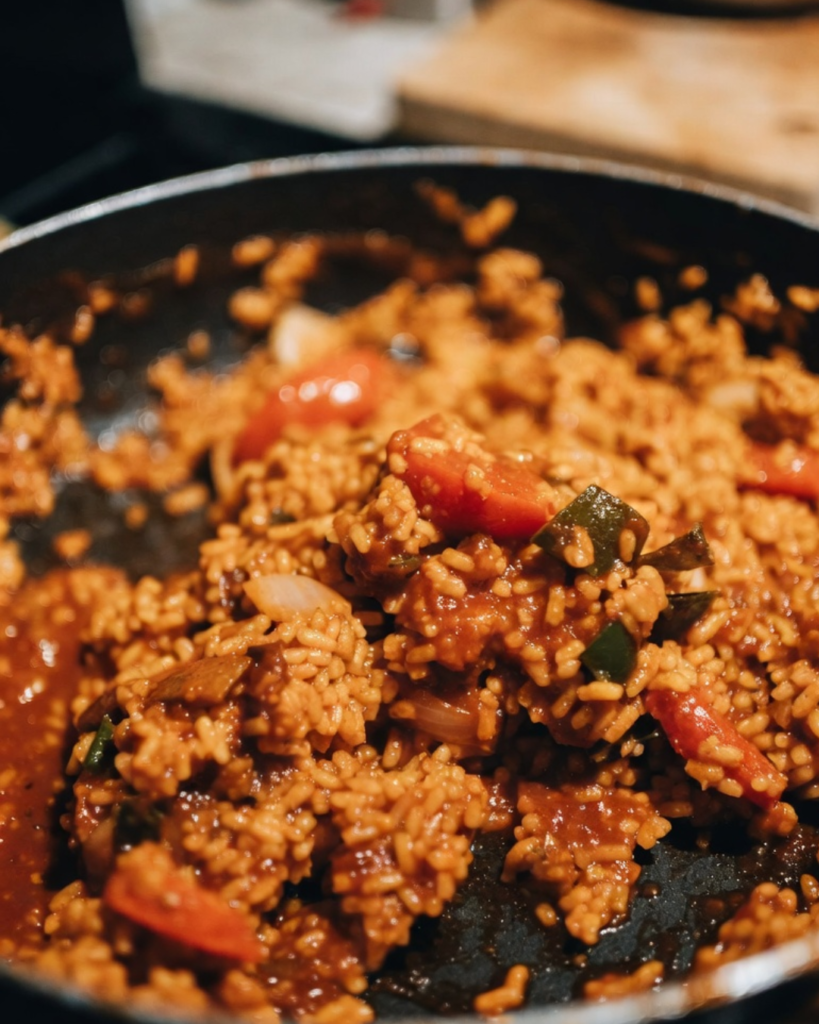
- Toast the rice for 5-7 minutes, stirring constantly, until the grains turn golden and translucent at the edges. What’s actually happening is the oil is coating each grain, which limits how much starch releases into the liquid later — this is the single biggest factor in whether the rice turns out fluffy or gummy.
- Add the cumin and stir for 30 seconds, just until fragrant.
- Pour in the blended tomato mixture and add the bay leaf. Stir once to combine, then bring to a boil.
- Once boiling, reduce heat to low, cover tightly, and simmer for 18-20 minutes. Do not lift the lid or stir during this time — this is non-negotiable, since releasing steam mid-cook is one of the most common reasons rice turns out unevenly cooked, with some grains mushy and others still firm.
- Remove from heat and let it rest, still covered, for 5-10 minutes. This final rest allows trapped steam to finish evening out the texture across the pot.
- Remove the bay leaf, then fluff gently with a fork before serving.
Technique Notes for Better Results
- The professional approach here is toasting the rice until it’s genuinely golden, not just warmed through — a light toast doesn’t provide the same starch-limiting benefit as a fully golden one
- Where most home cooks go wrong is lifting the lid partway through cooking to check on the rice, which releases the steam needed to finish cooking evenly
- If your rice consistently turns out mushy, measure your liquid precisely rather than eyeballing it — even a small excess throws off the ratio this method depends on
- A wide, shallow pot distributes heat more evenly than a narrow, deep one, reducing the risk of scorched rice at the bottom before the top finishes cooking
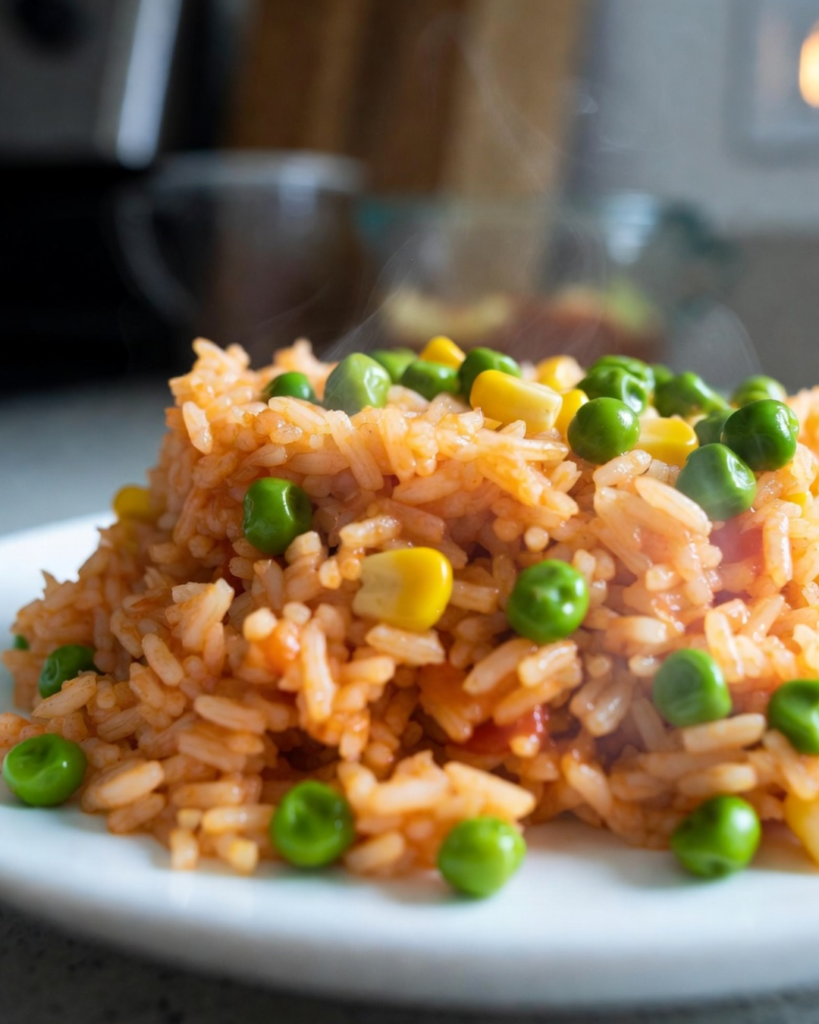
- For added texture, stir in a cup of frozen peas and diced carrots during the last 5 minutes of the simmer, letting the residual steam cook them through gently
- Resting the rice off heat before fluffing isn’t optional if you want consistent texture — fluffing immediately disrupts grains that haven’t finished steaming
Plating and Serving
- Serve alongside grilled chicken, carne asada, or simple black beans for a complete, classic plate
- A wedge of lime on the side lets each person adjust brightness to taste
- Top with fresh cilantro just before serving for color and a fresh contrast to the richness of the tomato base
- Serve in a wide, shallow bowl to show off the rice’s texture rather than mounding it in a deep dish
- A cold Mexican lager or a lime-forward agua fresca both complement the dish without competing with its flavor
Nutritional Profile
Tomatoes contribute lycopene, an antioxidant that becomes more available when cooked, adding some nutritional value beyond the rice itself. White rice is relatively low in fiber compared to brown rice, though this dish’s other components add some balance to the overall plate. For a version with more fiber, brown rice can substitute for white, though it requires roughly double the liquid and a longer simmer time to fully cook. Using low-sodium broth throughout gives meaningful control over the dish’s total sodium, since Mexican rice recipes can otherwise run high in salt.
Common Questions, Answered Directly
Why does my rice always turn out mushy? The most common causes are too much liquid, lifting the lid during cooking, or skipping the toasting step entirely. All three affect how the starch behaves during cooking.
Can I make this ahead? Yes, it reheats well with a splash of water or broth stirred in to loosen it, warmed gently on the stove or in the microwave.
How long does this rice keep? Up to 5 days refrigerated in a sealed container, making it a solid option for meal prep alongside other components.
Can I use brown rice instead of white? Yes, but increase the liquid to about 4 cups and extend the simmer time to 40-45 minutes, since brown rice takes considerably longer to fully hydrate and cook through.
Skip the mushy side dish tonight — toasting the rice properly is the one step that actually makes this worth making again.