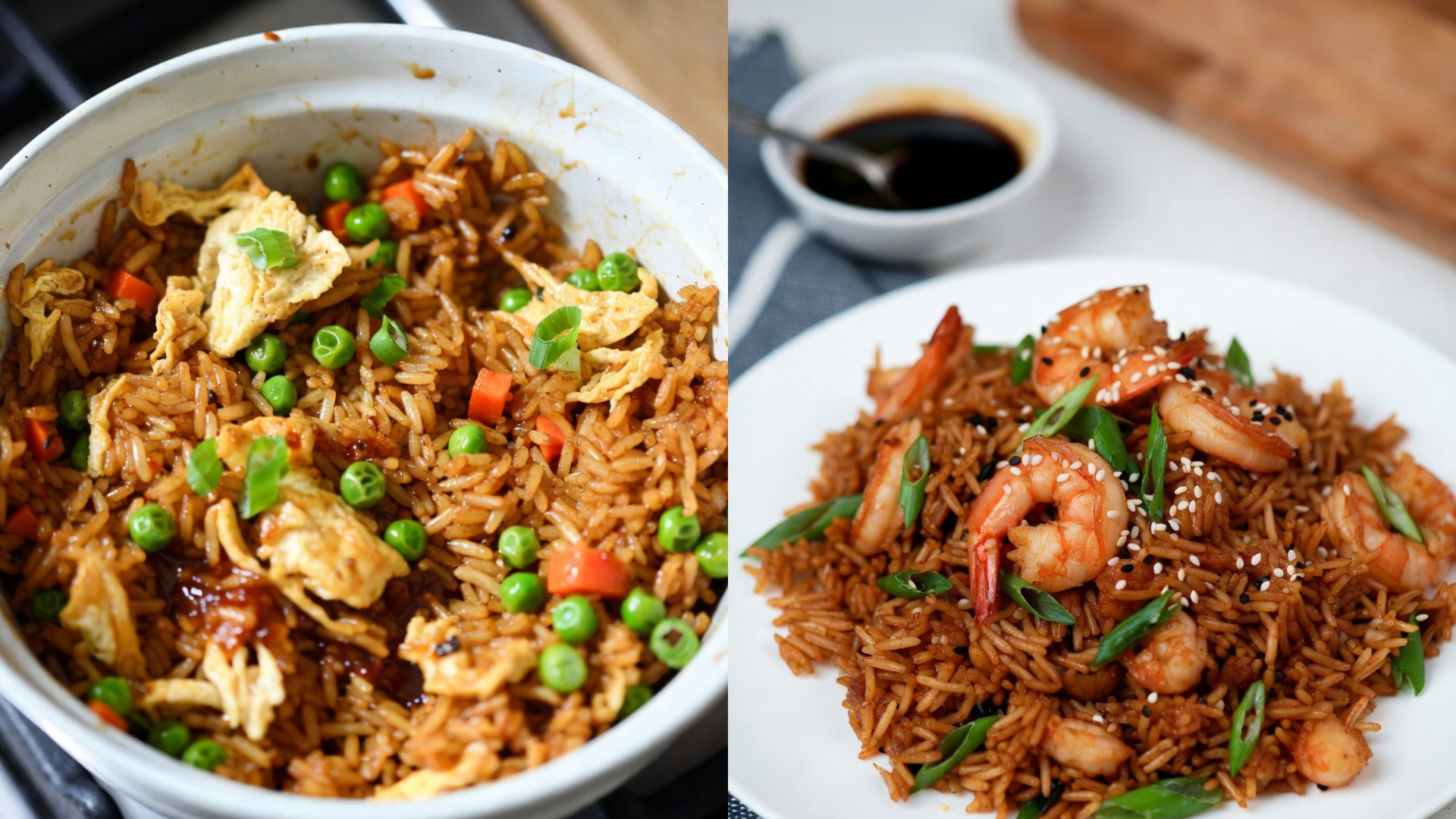
Most people overcook this. Here’s how not to. The difference between clumpy, steamed-tasting fried rice and a genuinely great one comes down to one step: starting with cold, day-old rice instead of fresh, warm rice straight off the stove.
This savory fried rice recipe, easy style, relies on cold rice, a screaming hot pan, and ingredients added in a specific sequence to avoid the soggy, mushy texture most home versions end up with. Restaurant-style fried rice isn’t a secret technique — it’s mostly about respecting what warm, fresh rice can’t do that cold rice can.
Prep time: 10 minutes (plus overnight rice chilling) | Cook time: 12 minutes | Total time: 22 minutes, plus chilling | Servings: 4
Table of Contents
What Makes This Recipe Work
- Rice is cooked and refrigerated overnight before frying — this is intentional. Cold rice has firmer, separated grains with less surface moisture, which is exactly what allows it to fry rather than steam in the pan
- Ingredients are added in stages, not all at once — the science here is simple: eggs, vegetables, and rice all cook at different rates, and adding everything simultaneously means some ingredients overcook while others undercook
- The pan or wok is heated until visibly smoking before anything goes in — most recipes skip this, but insufficient heat is the single biggest reason home fried rice turns out soft and greasy instead of having distinct, slightly crisp grains
- Soy sauce is added directly to the rice, not poured over the finished dish — this ensures even seasoning throughout rather than a few oversauced bites and many bland ones
Ingredients — What to Buy and Why It Matters
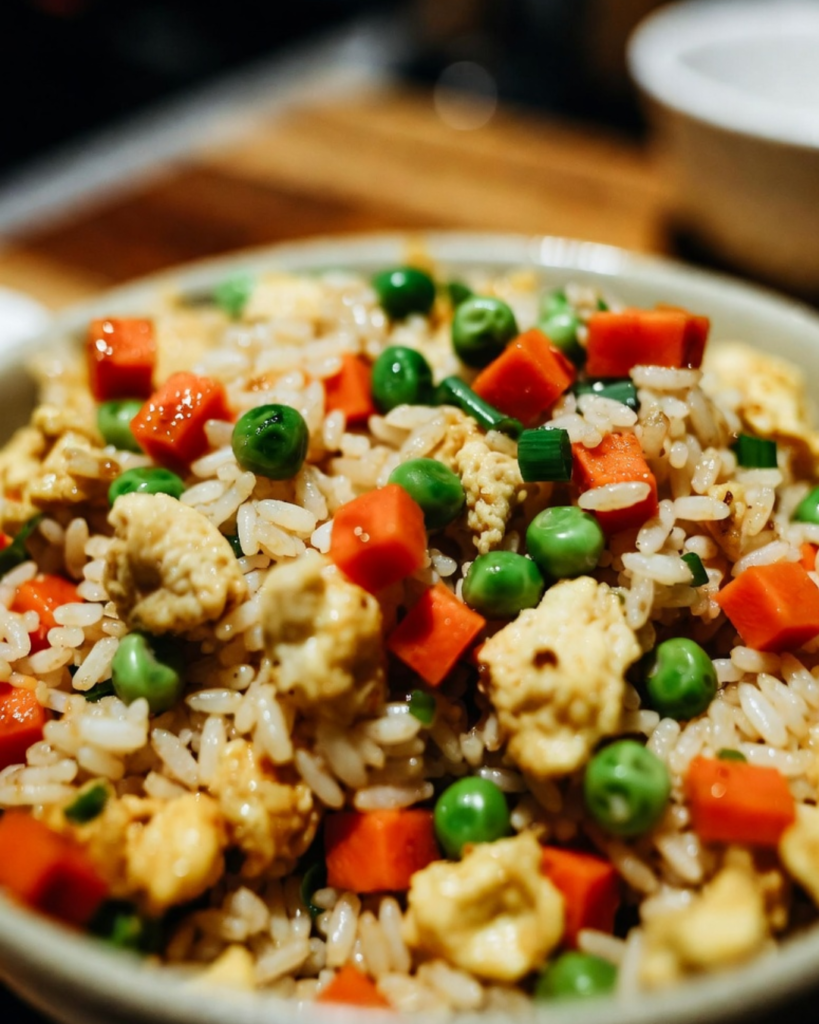
- Cooked long-grain white rice (4 cups), cold, ideally a day old: Day-old rice has less surface moisture than fresh rice, which is essential for that characteristic fried texture — freshly cooked rice will turn mushy no matter how well you execute the rest of the technique.
- Eggs (3 large), lightly beaten: Scrambled separately first, then added back at the end, this keeps the eggs in distinct curds rather than disappearing into the rice.
- Neutral oil (3 tbsp, divided): A high smoke point is essential for the high heat this method requires — sesame oil alone will burn and turn bitter at frying temperature.
- Garlic (2 cloves, minced) and fresh ginger (1 tsp, grated): Added briefly at high heat, both provide the aromatic base without needing to cook for long.
- Frozen peas and carrots (1 cup), thawed: Using frozen, thawed vegetables rather than raw ones saves time and cooks through quickly enough to match the rice’s fast frying time.
- Soy sauce (3 tbsp) and a small amount of oyster sauce (1 tbsp, optional): Soy sauce provides the primary seasoning; oyster sauce adds depth and a subtle sweetness that plain soy sauce alone doesn’t offer.
- Green onions (3, sliced), for finishing: Added at the very end for a fresh, sharp contrast to the richness of the fried rice.
Substitution note: Day-old jasmine or basmati rice can replace long-grain white rice with a similar result, though the flavor and aroma will shift slightly toward each variety’s characteristic profile.
Step-by-Step Instructions
- Break up the cold rice with your hands or a fork before cooking, separating any large clumps. This is the critical step here — clumped rice fries unevenly, with the interior of each clump staying steamed rather than crisped.
- Heat 1 tablespoon of oil in a large wok or skillet over high heat until visibly shimmering, close to smoking. Add the beaten eggs and scramble quickly, breaking them into small curds. Remove and set aside.
- Add another tablespoon of oil to the same pan. Add the garlic and ginger, stirring constantly for 15-20 seconds, just until fragrant. What’s actually happening is the high heat is quickly releasing their aromatic oils without giving them time to burn.
- Add the thawed peas and carrots, stirring for 1-2 minutes until heated through.
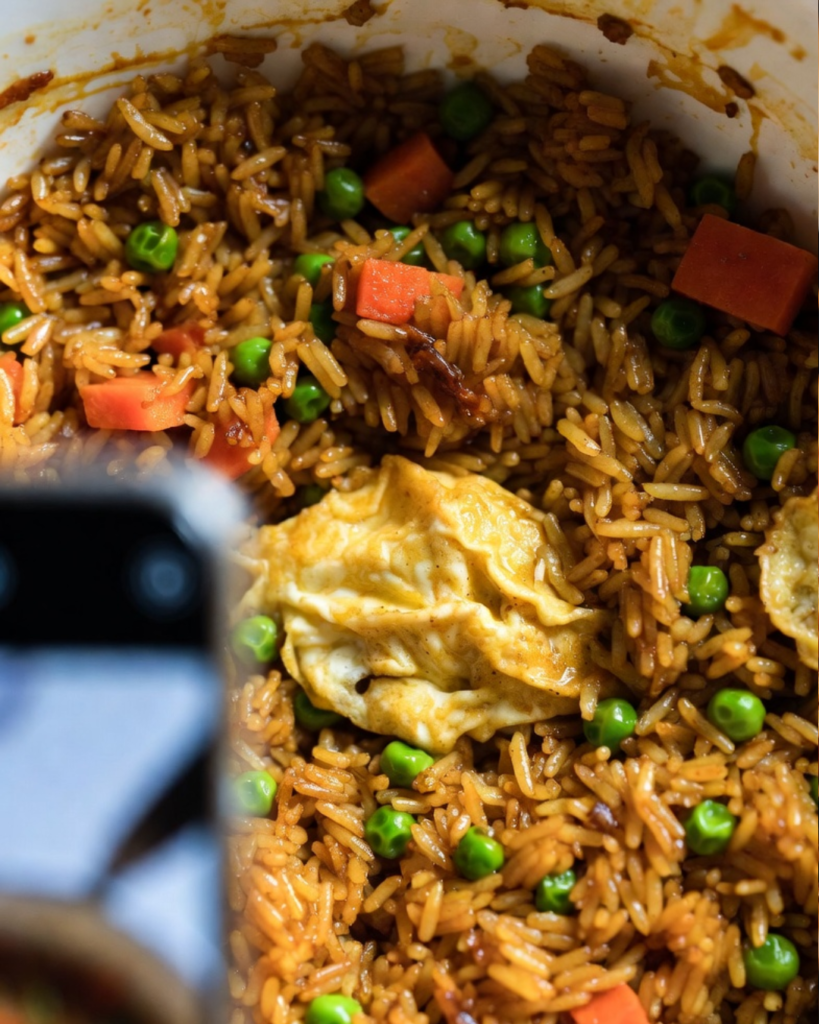
- Add the remaining oil, then add the cold, broken-up rice directly to the pan. Spread it out in an even layer and let it sit undisturbed for 1-2 minutes before stirring. This is non-negotiable if you want any textural contrast — constant stirring from the start prevents the rice from ever developing the slightly crisp edges that define good fried rice.
- Add the soy sauce and oyster sauce, if using, stirring to distribute evenly throughout the rice. Continue stir-frying for 3-4 minutes, tossing frequently now, until everything is heated through and lightly toasted.
- Return the scrambled eggs to the pan, breaking them up slightly as you fold them through the rice.
- Remove from heat and stir in the green onions just before serving.
Technique Notes for Better Results
- The professional approach here is genuinely committing to high heat throughout, even though it feels aggressive — a wok or pan that isn’t hot enough is the most common single cause of soggy, greasy fried rice
- Where most home cooks go wrong is using freshly cooked, warm rice out of impatience, which almost guarantees a mushy result regardless of how well the rest of the technique is executed
- If you don’t have day-old rice, spread freshly cooked rice on a baking sheet and refrigerate uncovered for at least an hour to dry it out somewhat, though this is a compromise, not a full substitute for overnight chilling
- Cook in batches if your pan isn’t large enough to keep the rice in a relatively thin, even layer — overcrowding traps steam and undermines the crisping you’re going for
- A well-seasoned wok or a nonstick pan reduces sticking significantly compared to a poorly seasoned cast iron or stainless surface
- For extra depth, a small drizzle of sesame oil off heat at the very end adds aroma without the risk of burning it during the high-heat cooking process
Plating and Serving
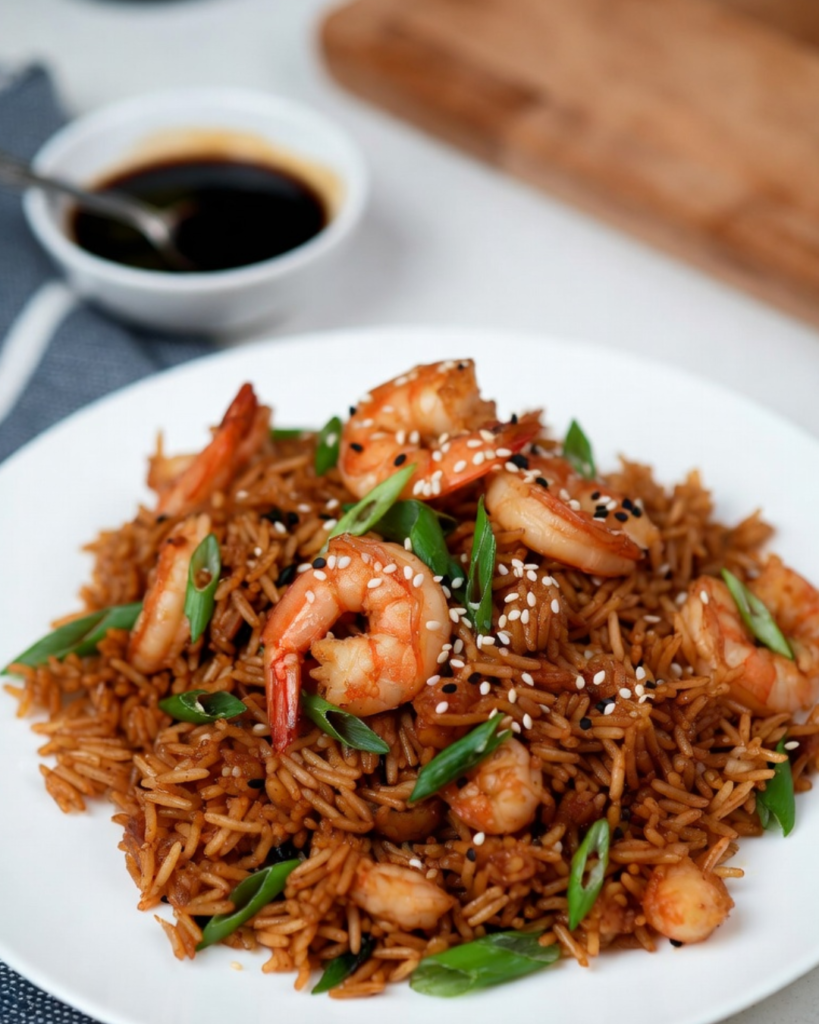
- Add cooked, diced chicken, shrimp, or char siu pork for a heartier, more complete meal
- A simple cucumber salad on the side adds acidity and crunch that contrasts with the rice
- Serve immediately, while the rice is still hot and the eggs are at their most tender
- A drizzle of extra soy sauce or chili oil at the table lets each person adjust to their own taste
- A cold beer or a light green tea both work well, cutting through the richness of the fried rice
Nutritional Profile
Rice provides carbohydrates as the primary energy source in this dish, while the eggs and vegetables round out the nutritional profile with protein, vitamins, and some fiber. The soy sauce contributes meaningful sodium, so using a low-sodium version is a reasonable adjustment for anyone monitoring salt intake, though it may need slightly more of it to achieve the same depth of flavor. Adding lean protein like chicken or shrimp increases the protein content significantly, turning this from a side dish into a more complete, balanced meal. Using brown rice instead of white adds fiber, though it requires being fully cooked and cold beforehand just like the white rice version.
Common Questions, Answered Directly
Can I use freshly cooked rice if I’m short on time? You can, but expect a softer, less distinct texture — spreading it out to cool and dry for at least an hour helps somewhat, though it won’t fully replicate overnight-chilled rice.
Why does my fried rice always turn out mushy? The most likely causes are using warm, fresh rice, an insufficiently hot pan, or overcrowding, all of which trap steam instead of allowing the rice to fry properly.
How long does fried rice keep? Up to 4 days refrigerated in a sealed container — reheat in a hot pan rather than the microwave to help recrisp the rice somewhat.
Can I freeze fried rice? Yes, up to 2 months in a sealed container, though the texture softens noticeably upon thawing and reheating compared to freshly made.
Skip the takeout tonight — cold rice and a properly hot pan are what actually make this fried rice worth making again.