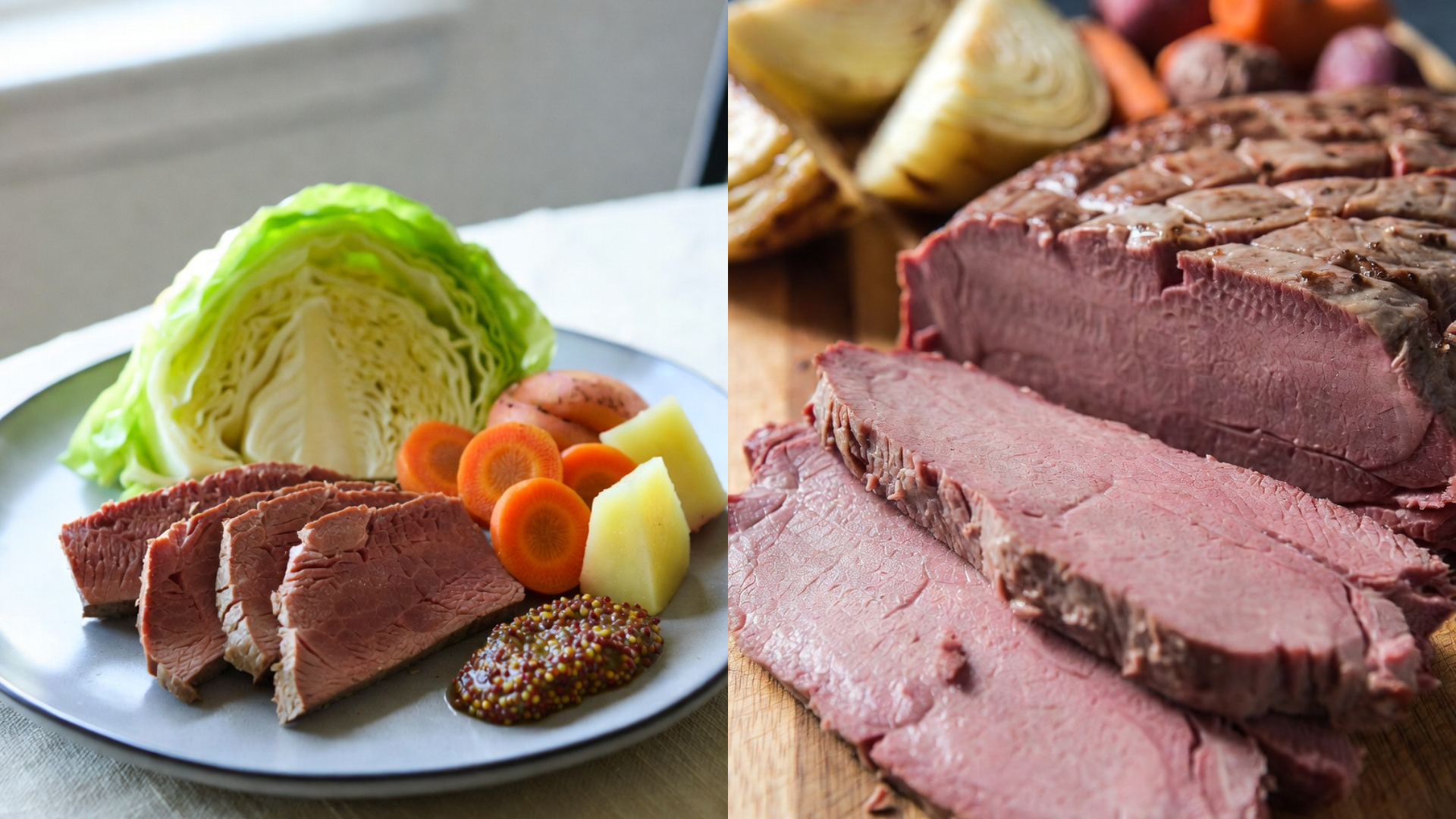
Most people overcook this — or rather, they rush it. Here’s how not to. The difference between tough, stringy corned beef and a genuinely tender version comes down to one step: simmering low and slow for hours rather than boiling hard to speed things along, since corned beef brisket needs time for its connective tissue to break down properly.
This tender corned beef and cabbage recipe relies on a gentle simmer, correct timing for each vegetable, and a rest before slicing — not a fast boil that seems efficient but actually toughens the meat before it has a chance to become tender. Corned beef rewards patience specifically, and rushing it is the single most common mistake.
Prep time: 15 minutes | Cook time: 3-3.5 hours | Total time: 3.5-4 hours, plus resting | Servings: 6
Table of Contents
What Makes This Recipe Work
- The brisket simmers at a low, gentle heat, never a rolling boil — this is intentional. A hard boil agitates and toughens the meat fibers faster than the connective tissue can break down, working directly against tenderness
- Vegetables are added in stages, not all at once — the science here is simple: potatoes, carrots, and cabbage all have different cook times, and adding them together means some turn to mush while others stay underdone
- The included spice packet, or a homemade blend, simmers with the meat from the start — most recipes skip building this flavor early, but the pickling spices need the full cook time to properly infuse the meat and cooking liquid
- The meat rests before slicing, against the grain — cutting immediately or with the grain produces long, tough-feeling strands rather than tender, bite-sized pieces
Ingredients — What to Buy and Why It Matters
- Corned beef brisket (3-4 lbs), with its included spice packet: Point cut carries more fat and marbling than flat cut, making it more forgiving and tender through a long simmer — flat cut works too, but benefits from closer attention to avoid drying out.
- Pickling spice blend (if not included, or to supplement): Typically includes mustard seed, coriander, bay leaf, and peppercorns — this is what gives corned beef its distinctive flavor profile beyond the brining process itself.
- Yellow onion (1 large, quartered) and garlic (4 cloves): Added at the start alongside the brisket, both infuse the cooking liquid over the long simmer.
- Small red or yellow potatoes (1.5 lbs), whole or halved depending on size: Their firmness holds up well to the simmer time needed for the vegetables, unlike a starchier potato that would break down too much.
- Carrots (1 lb), cut into large chunks: Cut them larger than you might for other dishes, since smaller pieces would overcook before the meat and potatoes are ready.
- Green cabbage (1 head, cut into wedges): Added last, since cabbage cooks quickly and turns to mush if given the same extended time as the meat and root vegetables.
Substitution note: Beer, particularly a stout or lager, can replace a portion of the water in the cooking liquid for added depth, though this changes the traditional flavor profile somewhat.
Step-by-Step Instructions
- Rinse the corned beef brisket briefly under cold water to remove excess surface brine, then place it in a large pot along with the spice packet, onion, and garlic.
- Cover with water by about 2 inches. Bring to a boil, then immediately reduce to a low simmer. This is the critical step here — once it reaches a boil, dropping the heat right away prevents the aggressive agitation that toughens meat fibers over a long cook.
- Cover and simmer gently for 2.5-3 hours, checking occasionally to ensure the liquid stays at a gentle simmer, not a rolling boil. What’s actually happening during this time is the collagen in the brisket is slowly converting to gelatin, which is the actual mechanism behind a tender result.
- Add the potatoes and carrots to the pot, nestling them into the simmering liquid around the meat. Continue simmering for 20-25 minutes, until they’re just becoming tender when pierced with a fork.
- Add the cabbage wedges on top of the other vegetables. Simmer for a final 15-20 minutes, until the cabbage is tender but not falling apart.
- Remove the brisket from the pot and let it rest on a cutting board for 10-15 minutes before slicing. This is non-negotiable — cutting immediately releases juices that resting would otherwise allow to redistribute back through the meat.
- Slice the brisket thinly against the grain. Look for the direction the muscle fibers run and cut perpendicular to them — this is what actually shortens the fibers and produces tender bites rather than tough, stringy strands.
Technique Notes for Better Results
- The professional approach here is checking your simmer periodically throughout the long cook, since even a properly started gentle simmer can creep up to a hard boil on an inconsistent stovetop
- Where most home cooks go wrong is boiling the brisket hard from the start in an attempt to save time, which guarantees a tougher result no matter how long it eventually cooks
- If your brisket still seems tough after the full cook time, it likely needs more time rather than less — continue simmering gently and checking every 20-30 minutes until a fork inserts with minimal resistance
- Slicing against the grain matters more than almost any other single step; even a perfectly cooked brisket will taste tough if sliced the wrong direction
- For deeper flavor, let the sliced brisket rest briefly in a small amount of the cooking liquid before serving, which keeps it moist and reinforces the seasoning
- A meat thermometer can help confirm doneness, but texture is the better final indicator here — corned beef is safe to eat well before it becomes fully tender, so rely on fork-tenderness rather than temperature alone
Plating and Serving
- Serve with grainy mustard on the side, which cuts through the richness of the meat
- Irish soda bread or a simple crusty loaf works well for soaking up the flavorful cooking liquid
- Arrange the sliced brisket alongside the vegetables on a large platter for a classic, communal presentation
- A light drizzle of the cooking liquid over the sliced meat just before serving adds moisture and reinforces the seasoning
- A dark stout or a dry Irish cider both pair traditionally well, complementing the richness of the dish
Nutritional Profile
Corned beef brisket provides protein and iron, though it also carries significant sodium from the brining process, which is largely responsible for the dish’s distinctive flavor. The potatoes, carrots, and cabbage all contribute fiber and a range of vitamins, rounding out the meal with genuine nutritional balance beyond the meat itself. For a lower-sodium version, rinsing the brisket more thoroughly before cooking and using a partial water change midway through the simmer can reduce some of the salt, though it will also soften the traditional flavor somewhat. Trimming visible fat from the brisket before slicing reduces overall fat content without significantly affecting the tenderness the long simmer achieves.
Common Questions, Answered Directly
Why is my corned beef still tough after hours of cooking? It likely needs more time rather than less, or was simmered too hard rather than gently. Continue cooking at a low simmer and check for fork-tenderness every 20-30 minutes.
Can I make this in a slow cooker instead? Yes, cook on low for 8-9 hours, which naturally maintains the gentle heat this method depends on without requiring you to monitor the stovetop.
How long does this keep? Up to 4 days refrigerated in a sealed container, and the flavor often improves by the second day as everything continues to meld.
Can I freeze cooked corned beef? Yes, sliced or whole, wrapped tightly, for up to 3 months. Thaw overnight in the refrigerator and reheat gently to avoid toughening it further.
Skip the tough, rushed version tonight — a gentle simmer and slicing against the grain are what actually make corned beef worth the wait.