
Most people overcook this. Here’s how not to. The difference between a bland, mushy rice bowl and one that actually tastes composed comes down to one step: building each component separately and layering them at the end, rather than cooking everything together and hoping it balances out.
These savory salmon rice bowl recipes rely on properly seared salmon, well-seasoned rice, and a quick sauce that ties everything together — each treated as its own small process rather than one chaotic pan. A rice bowl is only as good as its weakest component, and layering protects every part of it from compromising the others.
Prep time: 15 minutes | Cook time: 20 minutes | Total time: 35 minutes | Servings: 4
Table of Contents
What Makes This Recipe Work
- The salmon is seared separately, not steamed in the sauce — this is intentional. A hard sear builds a crust and locks in moisture, while cooking the fish directly in a wet sauce steams it instead, producing a softer, less flavorful result
- Rice is seasoned directly after cooking, while still warm — the science here is simple: warm rice absorbs seasoning far more effectively than cold rice, which is why a bowl assembled with already-cooled rice often tastes flat by comparison
- The sauce is built separately and drizzled at the end, not cooked into the fish — most recipes skip this distinction, but a fresh, uncooked finishing sauce keeps its brightness, while a sauce simmered with the fish loses acidity and sharpness over heat
- Vegetables are prepped raw or quick-cooked, added last — this preserves crunch and color, both of which soften considerably if vegetables sit under warm rice and fish for too long before serving
Ingredients — What to Buy and Why It Matters
- Salmon fillets (4, about 6 oz each), skin-on if available: Skin-on holds together better under a hard sear and adds a textural contrast once crisped — skinless works but requires slightly gentler handling to avoid tearing.
- Cooked short-grain or sushi rice (4 cups): Short-grain rice’s higher starch content gives it a stickier texture that holds together in a bowl format better than long-grain varieties.
- Rice vinegar (2 tbsp) and a pinch of sugar: Stirred into the warm rice, this classic seasoning combination brightens the rice without needing to season the whole dish through the fish or sauce alone.
- Soy sauce (3 tbsp), mayonnaise (2 tbsp), and sriracha (1 tbsp): The base for a quick, creamy-spicy sauce that ties the bowl together — adjust the sriracha up or down depending on your heat preference.
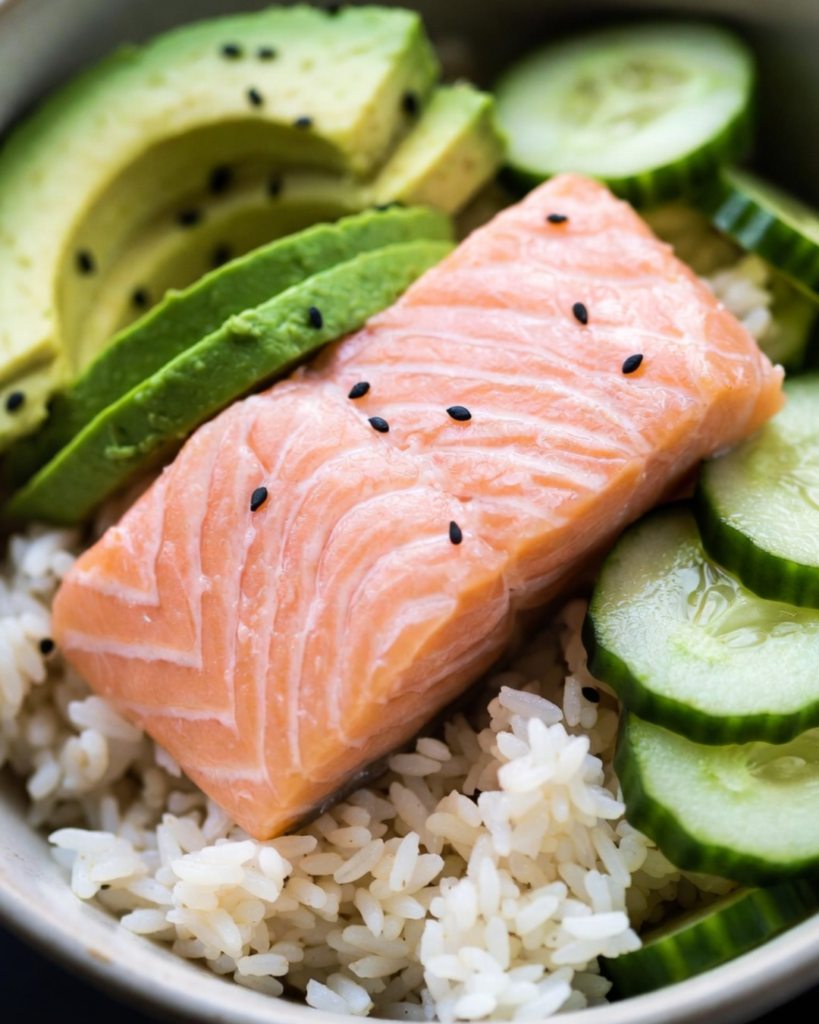
- Cucumber (1, thinly sliced) and avocado (1, sliced): Both add fresh, cooling contrast against the richness of the salmon and sauce — slice just before serving, since both brown or soften quickly once cut.
- Sesame oil (1 tsp) and sesame seeds, for finishing: A small amount of sesame oil drizzled at the very end adds aroma without the risk of burning it during cooking.
- Green onions (2, sliced) and nori strips (optional): Added last for freshness and a bit of visual structure across the top of the bowl.
Substitution note: Any firm white fish or even cooked shrimp can replace the salmon using the same searing method, though cook times will vary slightly depending on thickness.
Step-by-Step Instructions
- Cook the rice according to package instructions, then transfer it to a wide bowl while still warm. Stir in the rice vinegar and sugar immediately. This is the critical step here — seasoning warm rice allows it to absorb the vinegar evenly, which cold rice simply won’t do as effectively.
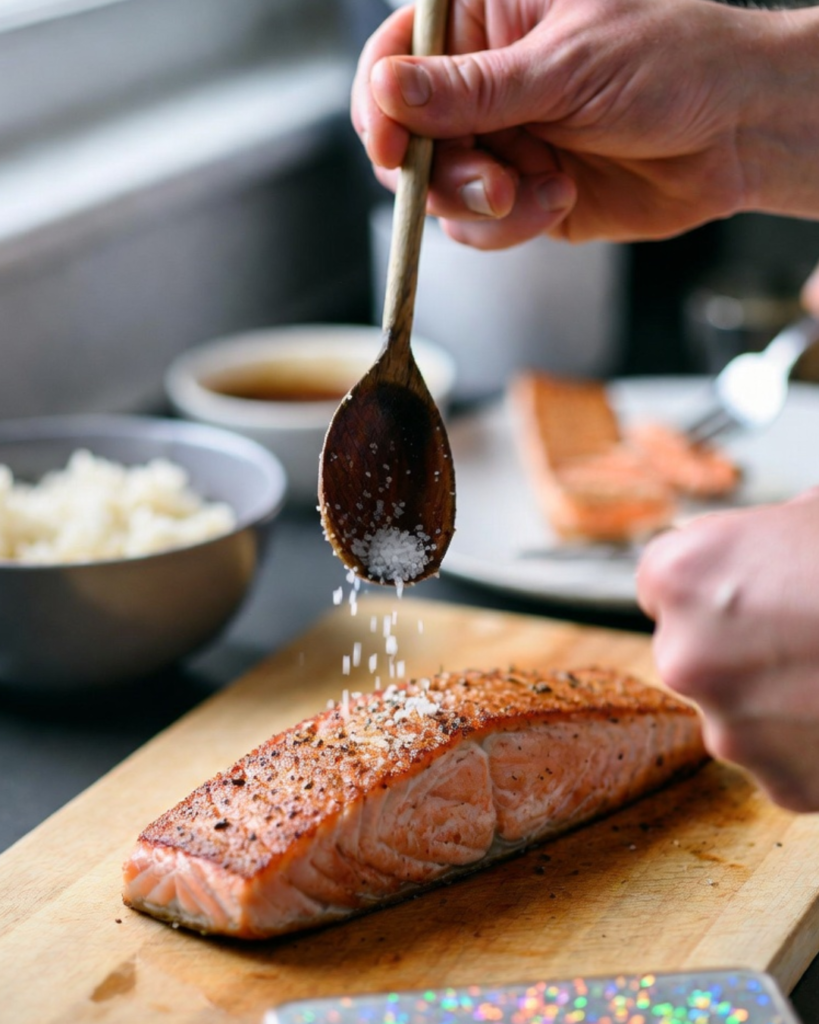
- Pat the salmon fillets completely dry with paper towels. Season lightly with salt and pepper.
- Heat a skillet over medium-high heat with a small amount of neutral oil. Place the salmon skin-side down and cook undisturbed for 4-5 minutes, until the skin is deeply crisp. What’s actually happening is the direct, sustained contact is rendering the skin’s fat and building a genuine crust, which a quicker or gentler cook wouldn’t achieve.
- Flip and cook the second side for 2-3 minutes, until the fish reaches an internal temperature of about 130°F. Remove from heat and let rest for 2 minutes.
- While the salmon rests, whisk together the soy sauce, mayonnaise, and sriracha in a small bowl until smooth. This is non-negotiable to build separately — a sauce cooked directly with the fish loses its bright, uncooked sharpness.
- Flake the rested salmon into large pieces, keeping the crisp skin somewhat intact if possible for texture.
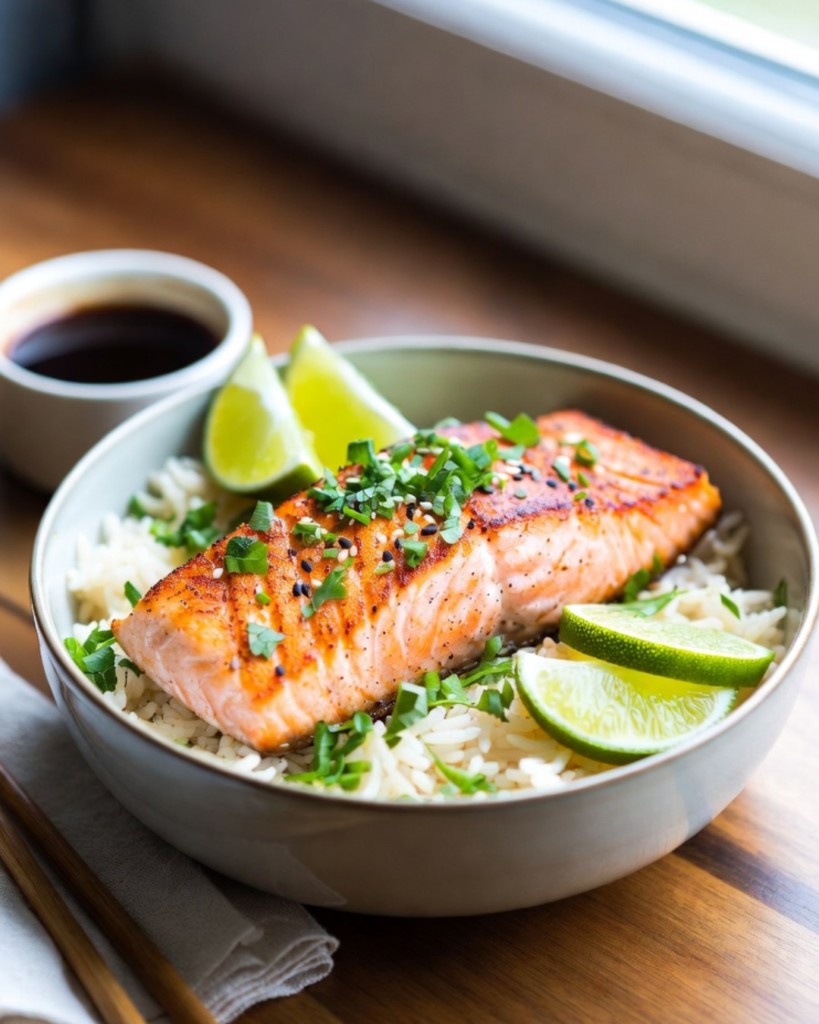
- Divide the seasoned rice among bowls, then arrange the salmon, cucumber, and avocado on top.
- Drizzle with the sauce, then finish with sesame oil, sesame seeds, green onions, and nori strips if using.
Technique Notes for Better Results
- The professional approach here is treating each component as its own small cooking task, checking it for doneness independently rather than assuming everything will align if cooked together
- Where most home cooks go wrong is adding raw fish directly into a simmering sauce, which steams the salmon instead of searing it and produces a noticeably softer, less flavorful result
- If your rice tastes bland despite following the recipe, check that you seasoned it while genuinely still warm — even a few extra minutes of cooling meaningfully reduces how much seasoning it absorbs
- For a smokier flavor, finish the seared salmon under a broiler for 30 seconds to add a light char without overcooking the interior
- Prep the vegetables last, right before assembly, since both cucumber and avocado lose their best texture and color if cut too far ahead
- A wide, shallow bowl rather than a deep one lets you see and layer the components properly, rather than burying the salmon and vegetables under a mound of rice
Plating and Serving
- Arrange each topping in its own section rather than mixing everything together, for a cleaner, more composed presentation
- A few pickled vegetables on the side add acidity that cuts through the richness of the salmon and sauce
- Serve immediately after assembly, while the salmon is still warm and the vegetables are at their crispest
- Extra sauce on the side lets each person adjust richness and heat to their own taste
- A light Japanese lager or a dry Riesling both pair well, complementing the salmon without overwhelming the sauce’s spice
Nutritional Profile
Salmon provides substantial omega-3 fatty acids along with high-quality protein, making this bowl more nutritionally dense than many rice-based meals. The avocado adds healthy monounsaturated fat and fiber, rounding out the dish’s overall nutritional profile. For a lighter version, substituting a Greek yogurt-based sauce for the mayonnaise reduces fat while maintaining a similar creamy texture, though the flavor will read as slightly tangier. Using brown rice instead of white adds fiber, though it requires a longer cook time and a slightly different water ratio than short-grain white rice.
Common Questions, Answered Directly
Can I make the components ahead and assemble later? Yes, the rice and sauce both hold up well made ahead — cook the salmon fresh just before serving, since it’s best enjoyed hot and freshly seared rather than reheated.
Why does my rice always taste bland in this kind of bowl? The most common cause is seasoning it after it’s already cooled, which limits how well it absorbs the vinegar and sugar mixture.
Can I use leftover cooked salmon instead of searing fresh? Yes, though you’ll lose the crisp texture this method builds — a quick reheat in a hot, dry pan helps recapture some of that crispness on the exterior.
How long do the components keep? The rice and sauce both keep up to 3 days refrigerated in separate containers; cooked salmon is best eaten within 2 days and reheated gently to avoid drying it out further.
Skip the mediocre bowl tonight — building each component separately is what actually makes this worth making instead of ordering out.