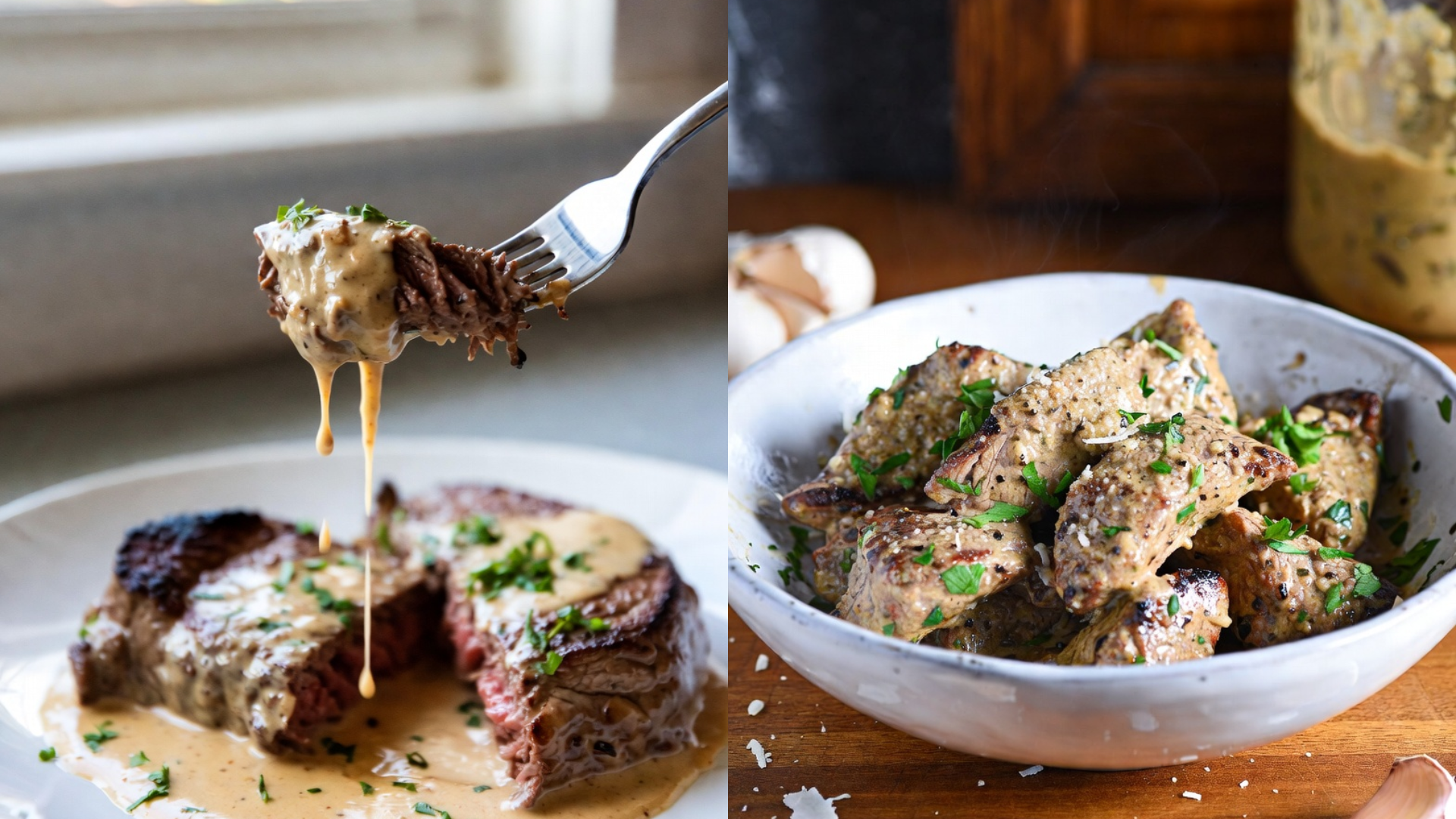
Most people overcook this. Here’s how not to. The difference between chewy, gray steak bites and genuinely tender ones comes down to one step: searing the beef hard and fast in a screaming hot pan, then pulling it out before the sauce ever touches it, rather than letting the meat sit and simmer in cream until it toughens.
This garlic butter steak bites with parmesan cream sauce recipe everyone is obsessed with relies on treating the steak and sauce as two separate processes. The steak gets maximum heat for minimum time; the sauce gets its own space to develop richness without ever cooking the meat further.
Prep time: 10 minutes | Cook time: 15 minutes | Total time: 25 minutes | Servings: 4
Table of Contents
What Makes This Recipe Work
- Steak is cut into uniform bite-sized cubes and seared in batches — this is intentional. Uniform pieces cook evenly, and searing in batches prevents overcrowding, which would drop the pan’s temperature and steam the meat instead of browning it
- The steak is removed from the pan before the sauce is built — the science here is simple: returning already-cooked steak to a simmering cream sauce for just a minute at the end keeps it tender, while cooking it directly in the sauce toughens it well past that point
- Garlic is added late, off the highest heat — most recipes skip this timing, but garlic burns quickly at searing temperatures, and burnt garlic turns bitter enough to compromise the whole sauce
- Parmesan is added gradually, off direct high heat — this prevents the cheese from clumping or turning grainy, producing a smooth, cohesive sauce instead of a broken one
Ingredients — What to Buy and Why It Matters
- Sirloin or ribeye steak (1.5 lbs), cut into 1-inch cubes: Sirloin offers a good balance of tenderness and value; ribeye brings more marbling and richness if you want to splurge — both work well with this quick, high-heat method.
- Butter (4 tbsp, divided): Used both for searing and building the sauce — its milk solids contribute to browning during the sear and richness in the finished sauce.
- Garlic (4 cloves, minced): Added after the steak comes out, giving it a gentler introduction to the pan than the initial high-heat sear would allow.
- Heavy cream (1 cup): Full-fat cream is essential for a stable sauce — a lower-fat substitute is more likely to separate under heat and produces a noticeably thinner result.
- Parmesan (3/4 cup, finely grated): Grate it yourself — pre-shredded cheese contains anti-caking starch that prevents it from melting smoothly into the cream.
- Beef broth (1/4 cup, low sodium): Thins the sauce slightly and adds depth beyond what cream and cheese alone provide.
- Fresh thyme or rosemary (a few sprigs) and red pepper flakes (1/4 tsp, optional): Both add background complexity — thyme in particular pairs naturally with the richness of the butter and cream.
Substitution note: Flank or skirt steak can replace sirloin if sliced thin against the grain before cubing, though these cuts benefit from a slightly shorter sear given their thinner natural structure.
Step-by-Step Instructions
- Pat the steak cubes completely dry with paper towels. This is the critical step here — surface moisture prevents proper browning and can cause the meat to steam instead of sear.
- Season generously with salt and pepper. Heat 2 tablespoons of butter in a large skillet over high heat until foaming and just beginning to brown.
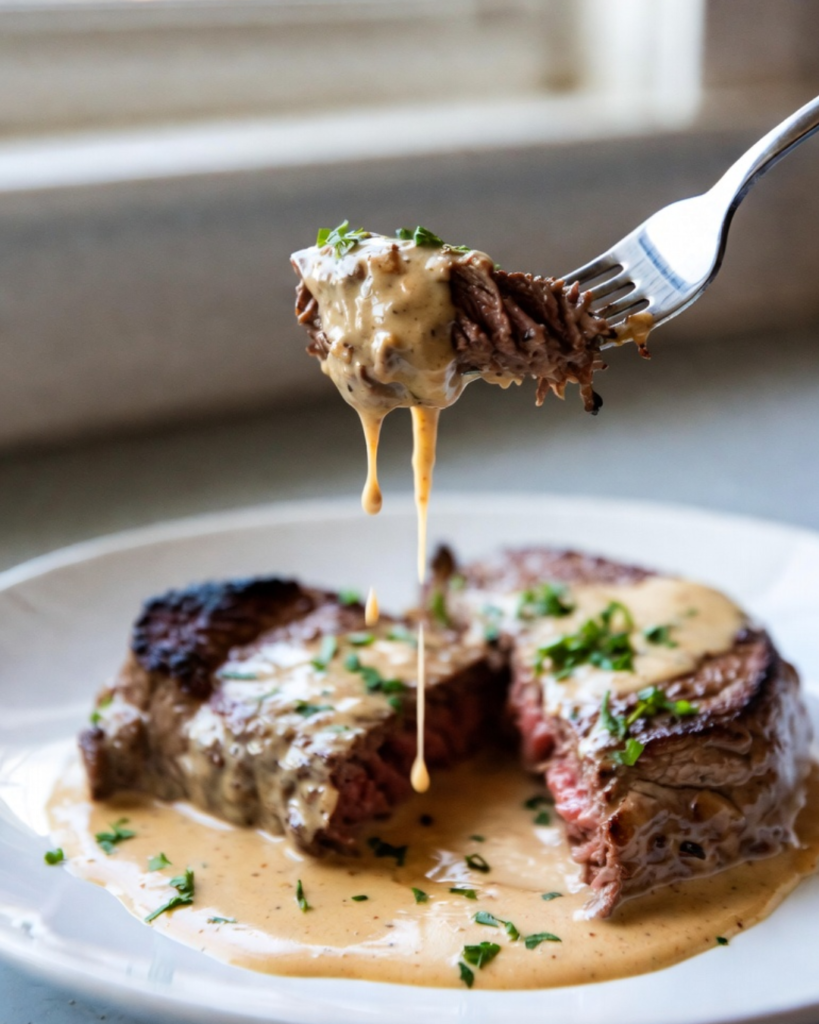
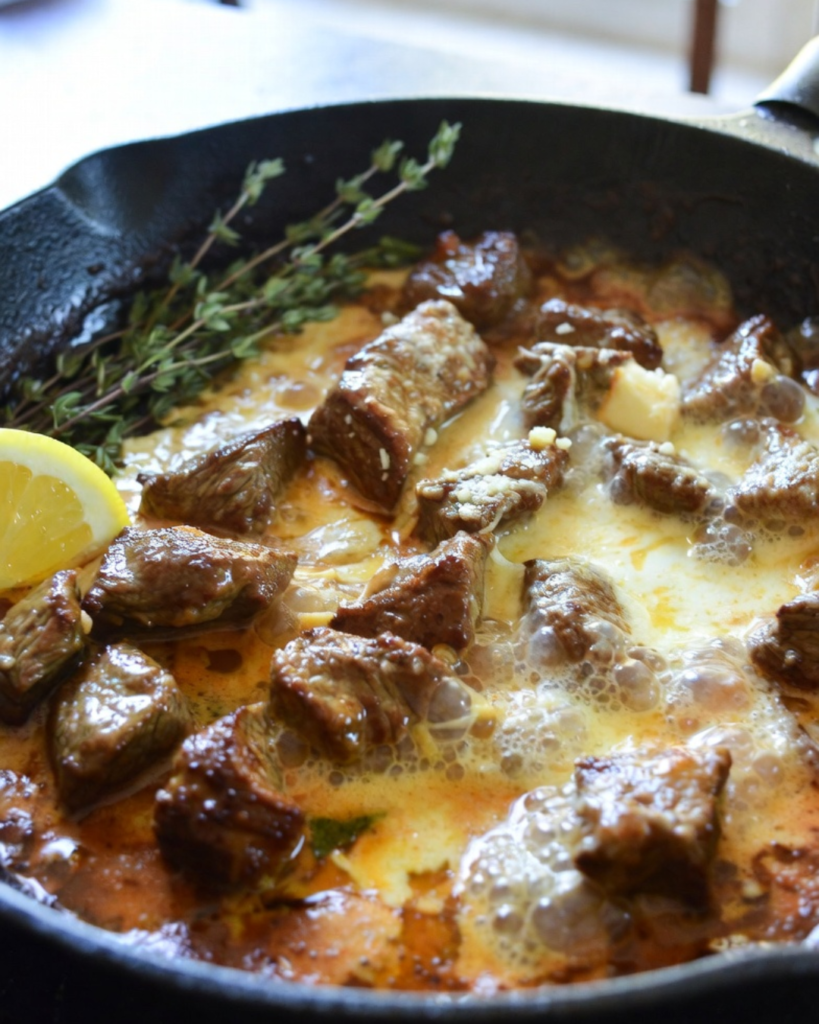
- Add the steak in a single layer, working in batches if needed to avoid overcrowding. Sear undisturbed for 1-2 minutes per side, until deeply browned but still pink in the center. Overcrowding the pan drops the temperature and steams the meat instead of searing it, so don’t rush this by cramming it all in at once.
- Remove the steak to a plate and tent loosely with foil. This is non-negotiable if you want tender bites — the meat will finish gently from residual heat while the sauce comes together, rather than continuing to cook directly in the pan.
- Lower the heat to medium and add the remaining butter to the same pan. Add the garlic, cooking 30 seconds until fragrant. What’s actually happening is the lower heat protects the garlic from the scorching that direct high heat would cause.
- Add the beef broth, scraping up any browned bits from the bottom of the pan. These bits carry concentrated flavor that becomes the base of the sauce.
- Stir in the cream and bring to a gentle simmer, not a boil. Add the thyme and red pepper flakes if using.
- Reduce heat to low and add the parmesan gradually, stirring until fully melted and smooth. This is non-negotiable — adding all the cheese at once over higher heat risks clumping instead of a cohesive, silky sauce.
- Return the steak and any accumulated juices to the pan, tossing gently to coat. Warm through for 1-2 minutes, just until heated — this is not the time for further cooking, since the steak is already done.
Technique Notes for Better Results
- The professional approach here is treating the sear and the sauce as genuinely separate stages that only combine at the very end, rather than one continuous cooking process
- Where most home cooks go wrong is returning the steak to the pan too early or leaving it in the sauce too long, both of which toughen meat that was perfectly tender straight off the sear
- If your sauce seems too thick, thin it gradually with a splash of extra broth rather than more cream, which would dilute the parmesan flavor
- Keep the heat low once the cream and cheese are combined — a hard simmer risks breaking the sauce even after the parmesan has properly melted in
- For deeper flavor, deglaze the pan with a splash of dry white wine before adding the broth, letting it reduce for a minute to cook off the sharp alcohol taste
- Taste and adjust salt gradually, since parmesan already contributes a meaningful amount on its own
Plating and Serving
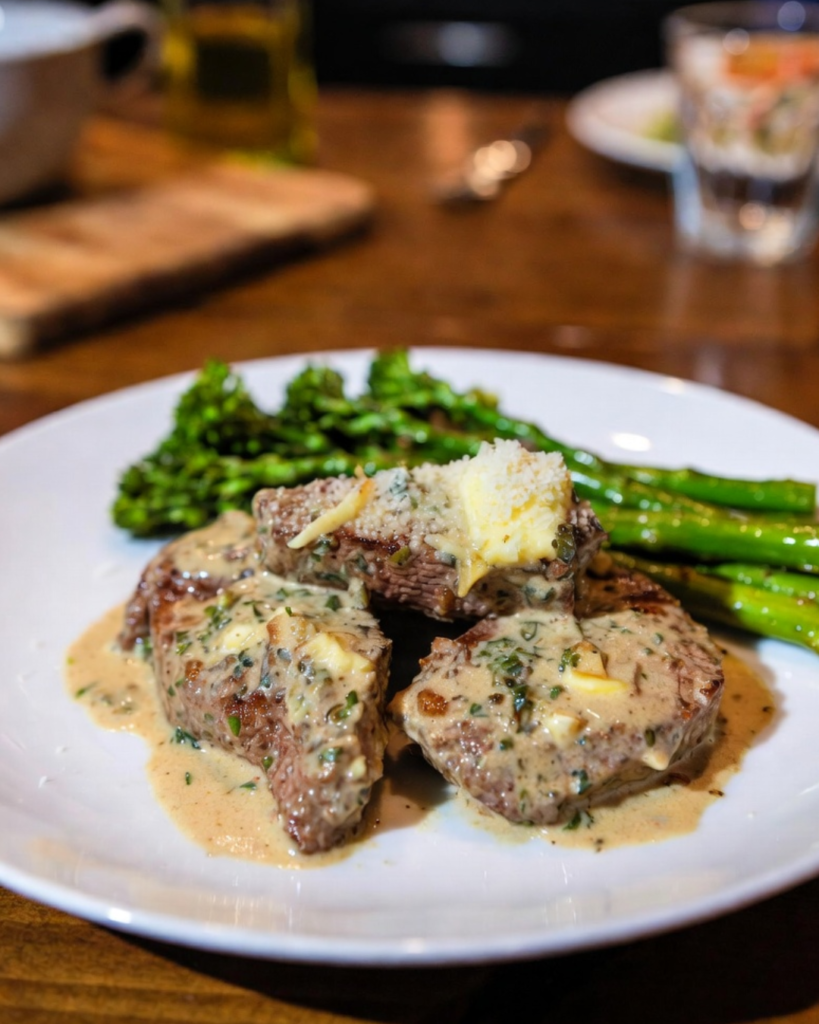
- Serve over mashed potatoes or egg noodles, both of which hold the cream sauce well
- A simple green salad with a sharp vinaigrette cuts through the richness of the dish
- Crusty bread on the side works for scooping up any extra sauce left on the plate
- Garnish with a sprinkle of fresh parsley or extra grated parmesan for color contrast against the pale sauce
- A medium-bodied red wine like Cabernet Sauvignon or a buttery Chardonnay both pair well, depending on preference for red or white alongside a cream sauce
Nutritional Profile
Steak provides iron, zinc, and protein, though the cream and cheese both contribute meaningful saturated fat to the finished dish. For a lighter version, using half-and-half instead of heavy cream reduces some fat, though it’s more prone to separating, so keep the heat especially low if you make that swap. Sirloin offers a leaner option than ribeye if you’re looking to reduce fat further without sacrificing much tenderness given this quick-sear method. Pairing the dish with a lighter side like a green salad, rather than a starch-heavy one, helps balance the overall richness of the meal.
Common Questions, Answered Directly
Can I make this ahead? The sauce reheats reasonably well, but the steak is best seared fresh — reheating already-cooked steak in the sauce risks toughening it further.
Why did my sauce turn grainy? The parmesan was likely added too quickly or over heat that was too high. Add it gradually, off the highest heat, stirring constantly until each addition melts before adding more.
Can I use a different cut of steak? Yes, flank or skirt steak both work if sliced thin against the grain before cubing, though they benefit from a slightly shorter sear given their thinner structure.
How long does this keep? Up to 3 days refrigerated in a sealed container; reheat gently over low heat, stirring frequently, rather than in the microwave on high, which risks breaking the sauce.
Skip the restaurant tonight — a hot pan and a little patience with the sauce are what actually make these steak bites worth the hype.