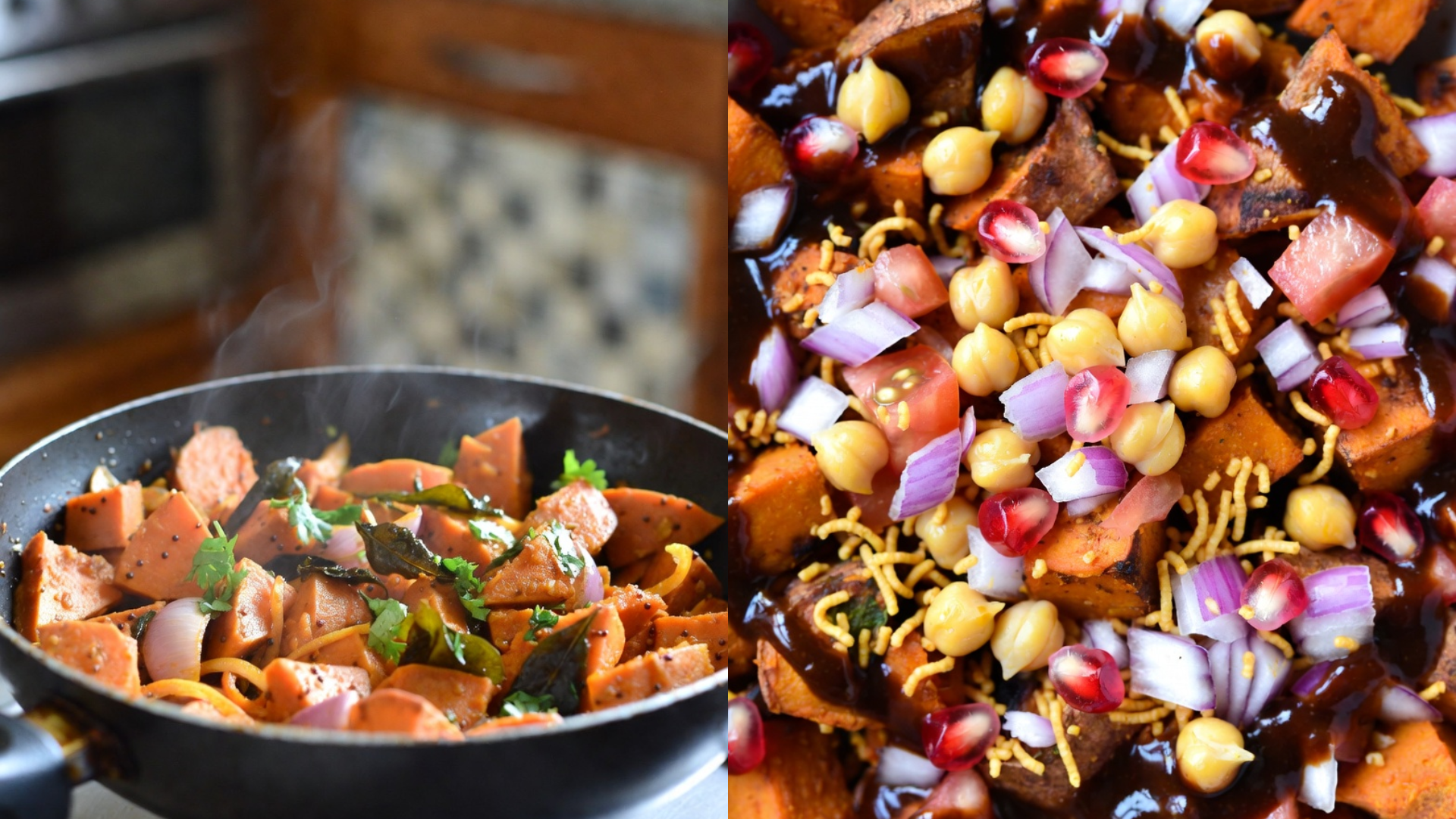
Most people overcook this. Here’s how not to. The difference between a flat, one-note sweet potato curry and a genuinely vibrant one comes down to one step: tempering whole spices in hot oil before anything else touches the pan, rather than adding ground spices directly to simmering liquid.
This easy sweet potato recipe, Indian dishes style, relies on a properly tempered spice base, sweet potatoes cut to a precise size for even cooking, and a balance of warmth and acidity that lets the vegetable’s natural sweetness come through rather than getting buried. Tempering, called tadka in many Indian kitchens, is the technique most home versions skip, and it’s exactly what separates a restaurant-quality result from a flat one.
Prep time: 15 minutes | Cook time: 25 minutes | Total time: 40 minutes | Servings: 4
Table of Contents
What Makes This Recipe Work
- Whole cumin and mustard seeds are tempered in hot oil first — this is intentional. Tempering, or blooming whole spices in fat before anything else goes into the pan, releases far more aromatic compound than adding ground spices directly to a simmering liquid ever could
- Sweet potatoes are cut into uniform, bite-sized cubes — the science here is simple: consistent sizing means every piece cooks at the same rate, avoiding the common problem of some pieces turning mushy while others remain undercooked
- A small amount of sugar or jaggery balances the dish’s acidity — most recipes skip this, but sweet potatoes’ natural sugars need a partner against the tomatoes and tamarind’s acidity, and a touch of added sweetness rounds out that balance rather than fighting it
- Fresh curry leaves, if available, are added during the tempering stage — their aromatic oils release specifically when heated in fat at the very start, which is why they’re added early rather than as a garnish at the end
Ingredients — What to Buy and Why It Matters
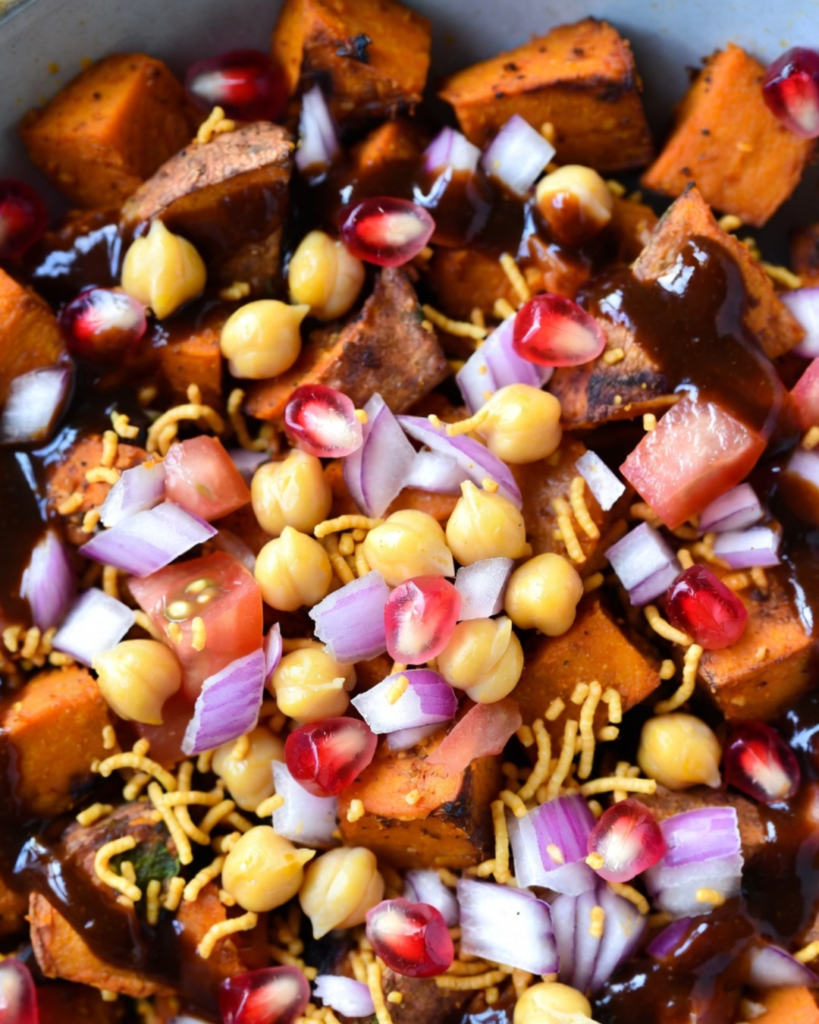
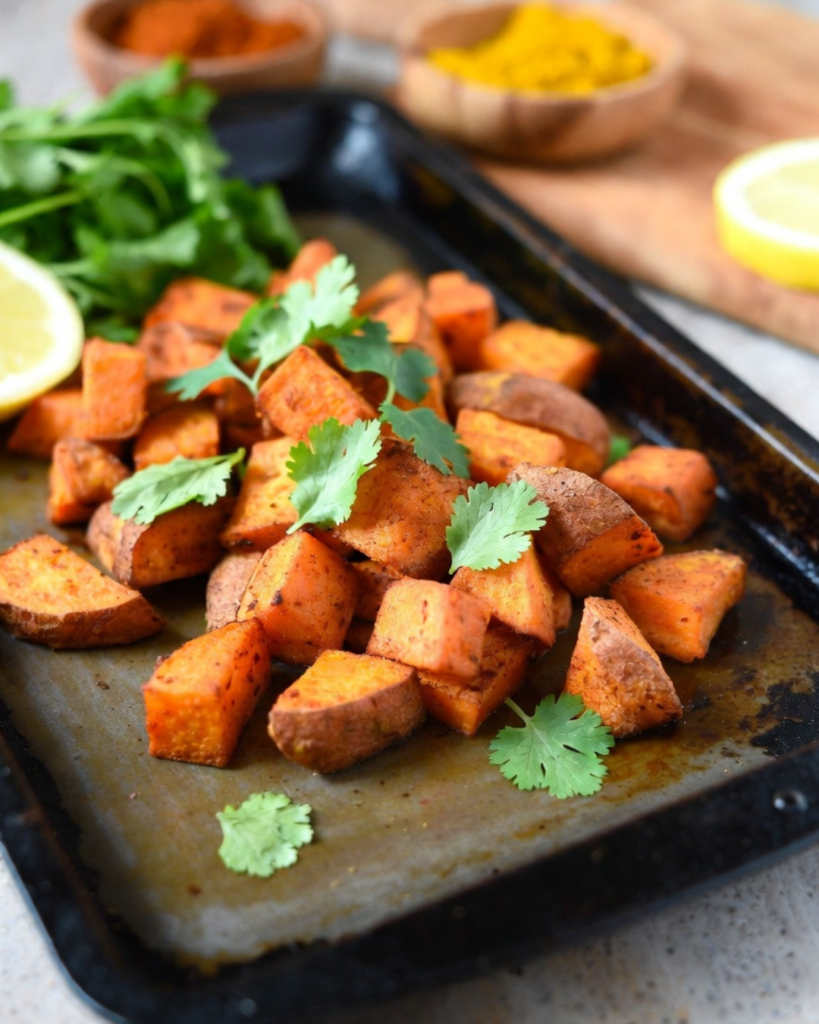
- Sweet potatoes (2 lbs), peeled and cut into 1-inch cubes: Uniform cubing is essential here — pieces cut unevenly will cook at different rates, leaving some mushy while others remain firm by the time the dish is done.
- Neutral oil or ghee (3 tbsp): Ghee adds a rounder, slightly nutty flavor traditional to many Indian preparations — neutral oil works fine if ghee isn’t available, though the final flavor will read as slightly less rich.
- Whole cumin seeds (1 tsp) and black mustard seeds (1 tsp): These are tempered first in hot fat, which is the actual mechanism behind this dish’s depth — ground cumin alone, added later, won’t produce the same aromatic intensity.
- Fresh curry leaves (10-12, optional) and dried red chilies (2, optional): Both added during the tempering stage if available — curry leaves specifically lose much of their aroma if added any later in the cooking process.
- Onion (1, diced), garlic (3 cloves, minced), and fresh ginger (1 tbsp, grated): The aromatic base built after tempering, layered in before the sweet potatoes go into the pan.
- Ground turmeric (1/2 tsp), ground coriander (1 tsp), and garam masala (1 tsp): Ground spices added after the aromatics have softened, giving them a chance to bloom briefly in the pan’s residual oil without burning.
- Canned diced tomatoes (14 oz) and a small amount of sugar or jaggery (1 tsp): The tomatoes provide acidity and body, while the touch of sweetness balances that acidity against the sweet potato’s natural sugars.
Substitution note: Coconut milk (1/2 cup) can be stirred in near the end for a richer, slightly sweeter variation, though it shifts the dish toward a more South Indian flavor profile than the tomato-forward base described here.
Step-by-Step Instructions
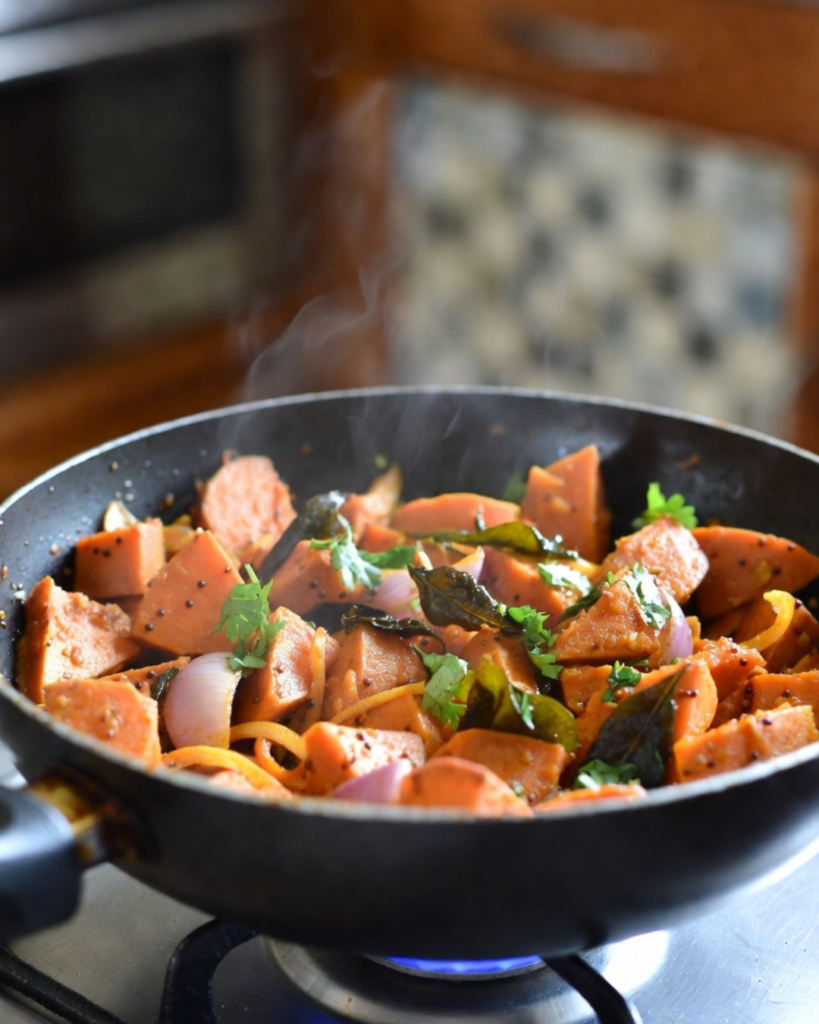
- Heat the oil or ghee in a large, heavy-bottomed pan over medium heat until shimmering. Add the cumin and mustard seeds. This is the critical step here — tempering these whole spices in hot fat is what releases their aromatic oils fully, something that simply can’t be replicated by adding ground versions later.
- Once the mustard seeds begin to pop, about 30-45 seconds, add the curry leaves and dried chilies if using. Stand back slightly, since the curry leaves can sputter briefly in the hot oil.
- Add the diced onion and cook for 5-6 minutes, until softened and lightly golden.
- Add the garlic and ginger, cooking 1 minute more, until fragrant.
- Add the ground turmeric, coriander, and half the garam masala directly to the pan. Stir for 30 seconds. What’s actually happening is these ground spices are blooming briefly in the residual oil and aromatics, deepening their flavor before any liquid dilutes the pan.
- Add the sweet potato cubes, stirring to coat evenly in the spiced onion mixture.
- Add the diced tomatoes and sugar or jaggery, stirring to combine. Bring to a simmer, then cover and cook for 18-20 minutes, stirring occasionally, until the sweet potatoes are tender when pierced with a fork.
- Stir in the remaining garam masala just before serving. This is non-negotiable if you want the full aromatic impact of the spice blend — adding all of it at the start means much of its fragrance cooks off over the full simmer time.
Technique Notes for Better Results
- The professional approach here is genuinely tempering the whole spices until the mustard seeds fully pop, not pulling the pan off heat early out of caution — that popping is the visual cue that the spices have released their oils properly
- Where most home cooks go wrong is skipping tempering entirely and just stirring ground spices into the simmering curry, which produces a noticeably flatter, less aromatic result
- If your sweet potato pieces are cooking unevenly, check your cube size — inconsistent cutting is one of the most common reasons for uneven texture in a dish like this
- A splash of water or broth can loosen the curry if it looks too thick partway through cooking, though add it gradually rather than all at once
- Taste and adjust the sugar or jaggery gradually, since sweet potato varieties differ in their natural sweetness and may need more or less balancing acid
- For deeper flavor, let the finished curry sit off heat for 10-15 minutes before serving, which allows the spices to continue melding into the sauce
Plating and Serving
- Serve over steamed basmati rice, which absorbs the sauce without competing with the spice profile
- Warm naan or roti works well for scooping, especially with a curry this substantial
- A simple cucumber raita on the side offers a cool, creamy contrast to the warmth of the spices
- Garnish with fresh cilantro just before serving for both color and a final layer of brightness
- A light lager or a lightly sweetened iced tea both work well, cutting through the richness without competing with the spice
Nutritional Profile
Sweet potatoes provide fiber, vitamin A, and complex carbohydrates, making this dish more nutritionally dense than many simple side dishes. The tomatoes add lycopene, an antioxidant that becomes more available through cooking, while the modest amount of oil or ghee contributes richness without overwhelming the dish’s overall lightness. For a lighter version, reducing the oil slightly and using a splash of vegetable broth instead maintains the dish’s texture while cutting some fat. This preparation is naturally vegetarian and can be made vegan simply by using neutral oil instead of ghee.
Common Questions, Answered Directly
Can I make this ahead? Yes, this curry actually tastes better the next day, once the spices have had more time to meld into the sweet potatoes and sauce.
Why does my curry taste flat despite using the same spices? You’re most likely skipping the tempering step and adding spices directly to liquid instead, which produces a noticeably less aromatic result even with identical ingredients.
Can I use coconut milk instead of tomatoes? Yes, though this shifts the flavor toward a richer, South Indian-style profile — reduce or omit the sugar in that case, since coconut milk already adds natural sweetness.
How long does this keep? Up to 5 days refrigerated in a sealed container, and the flavor often improves by the second day as the spices continue to develop.
Skip the flat, underseasoned version tonight — properly tempering the spices is what actually gives this dish its depth.