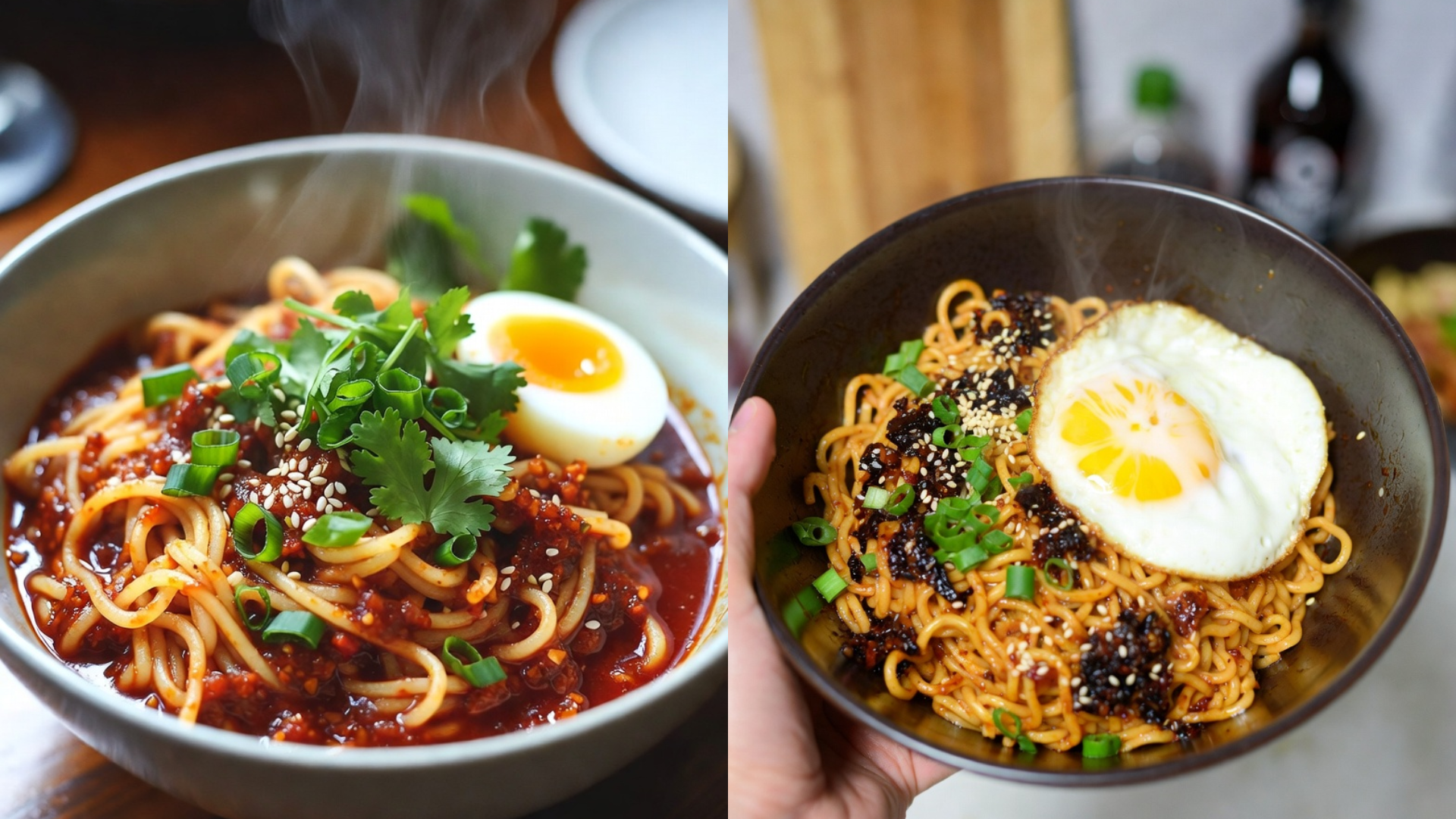
My grandmother never measured her chili oil. She’d tip the pan, watch the color turn from red to almost black-red, and say “now” — and that was the whole recipe. These spicy noodles are the closest I’ve come to bottling that instinct into something you can actually follow, and they’ve become the dish everyone in my life is quietly obsessed with right now, the one friends text me about at 9pm asking for “that noodle recipe again.” There’s a dish that takes me straight back to my grandmother’s kitchen on a rainy afternoon, steam fogging the window, and this is it.
Prep Time: 15 minutes | Cook Time: 20 minutes | Total Time: 35 minutes | Servings: 4
Table of Contents
Why This Recipe Feels Like Home
- It’s soul-warming in the specific way only a bowl of something hot and a little too spicy can be — the kind of heat that makes you exhale before you even take the first bite.
- This is the timeless combination of chewy noodles, glossy sauce, and chili that shows up in some form in almost every food culture, which is part of why it feels instantly familiar even the first time you make it.
- It’s the kind of dish people ask for again and again, not because it’s complicated, but because it hits a very specific craving that plain pasta or takeout never quite satisfies.
- Making it fills the whole kitchen with garlic and chili smell, which somehow always draws people out of other rooms.
The Ingredients That Tell the Story
- Fresh wheat noodles: the backbone of the dish, chewy enough to hold onto the sauce without going limp. Dried noodles work in a pinch, just don’t overcook them.
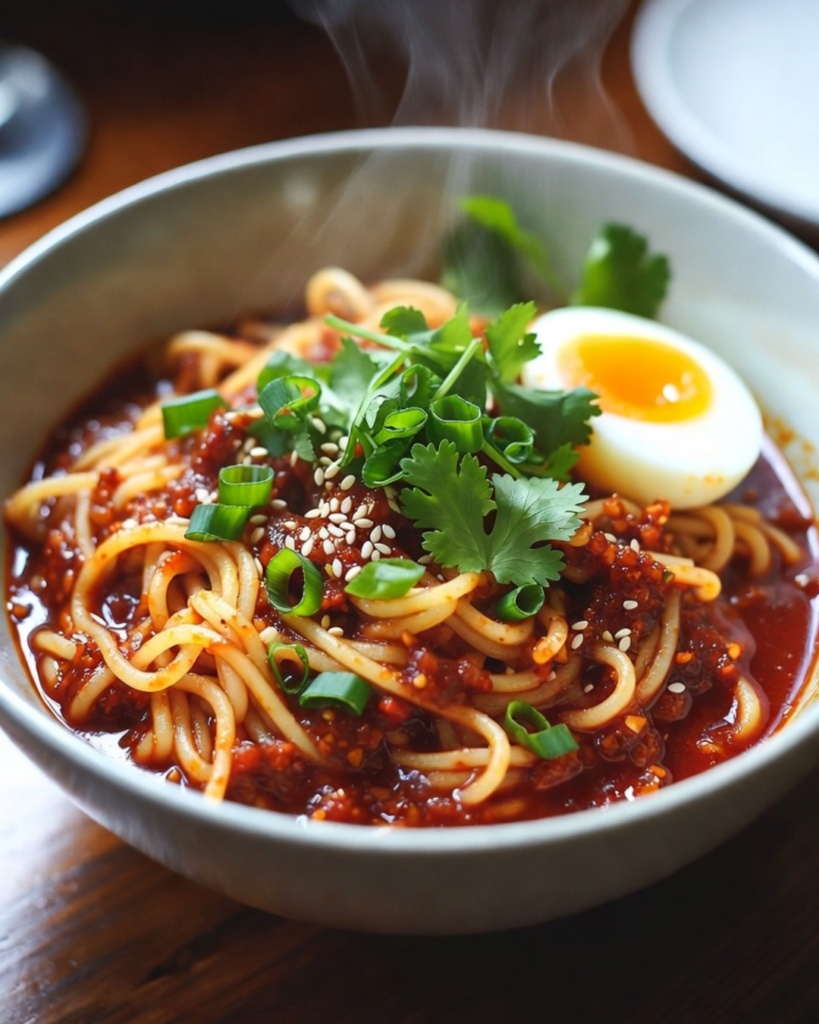
- Chili oil: the moment everything becomes red and glossy and alive. Homemade is worth it if you have twenty extra minutes, but a good store-bought jar will not let you down.
- Garlic and ginger, minced fine: the quiet workhorses. They build the base flavor before the chili ever gets involved.
- Soy sauce and black vinegar: the balance point — salty depth against a sharp, almost fruity tang. Rice vinegar can stand in for black vinegar, though you’ll lose a little of that signature complexity.
- Scallions, sliced thin: the freshness that cuts through all that richness at the very end.
- A spoonful of sugar: this is the part people skip and shouldn’t. It rounds out the heat instead of masking it.
Step-by-Step Instructions
- Bring a large pot of water to a rolling boil. Salt it generously — it should taste like the sea.
- Cook the noodles according to package directions, usually 2-4 minutes for fresh, longer for dried. You’ll know they’re ready when they’re tender but still have a slight bite in the center.
- While the noodles cook, whisk together soy sauce, black vinegar, sugar, and a splash of the noodle water in a large bowl. This is the part where the sauce comes together fast, so have everything measured and ready.
- Heat a small pan with a neutral oil over medium heat. Add the minced garlic and ginger and cook just until fragrant, about 30 seconds — you’ll smell the shift immediately, from sharp to warm and toasty.
- Drain the noodles, reserving a half cup of the starchy cooking water, and add them straight into the bowl with the sauce.
- Pour the hot garlic-ginger oil over the noodles. It should sizzle when it hits the bowl — that sound is exactly what you want to hear.
- Toss everything together, adding a splash of the reserved noodle water if the sauce needs loosening.
- Spoon chili oil over the top, as much or as little as your heat tolerance allows. Scatter with scallions and serve right away, while it’s still steaming.
Tips Passed Down (and Hard-Earned)
- Here’s what took me years to figure out: don’t rinse the noodles after draining. That starchy coating is what helps the sauce cling instead of sliding off.
- Don’t rush the garlic and ginger step. Burnt garlic will make the whole dish taste bitter, and there’s no fixing it once it happens.
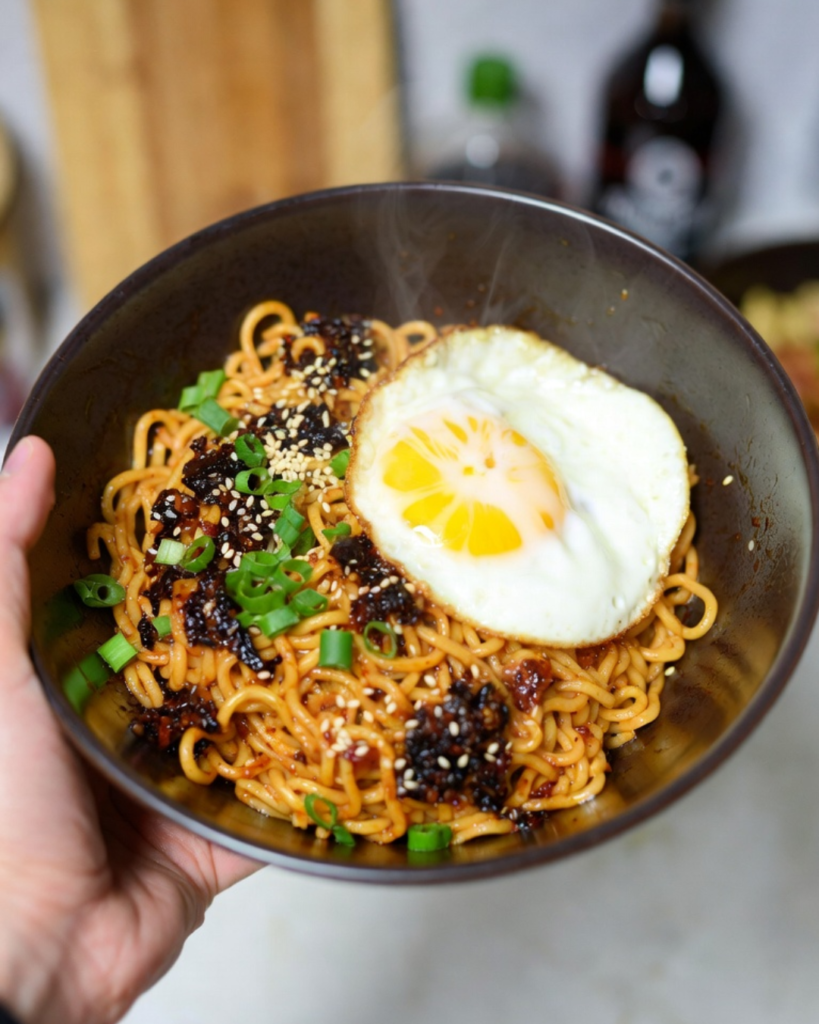
- If your chili oil is too mild, add a pinch of crushed red pepper flakes directly into the hot oil before pouring — it wakes everything back up.
- This is a family secret my grandmother swore by: a tiny pinch of five-spice powder in the sauce, so small you’d never guess it’s there, but you’d miss it if it were gone.
- Taste as you go. Every brand of soy sauce and chili oil is different, and the recipe should bend to what’s in front of you, not the other way around.
- Make extra sauce. You will want it for leftovers, and it never quite tastes the same reheated without a fresh pour.
How to Serve It (and Who to Serve It To)
Straight from the bowl, chopsticks in hand, standing at the counter — that’s the most honest way to eat this.
A side of quick-pickled cucumbers, cold and crunchy, cuts through the richness.
Soft-boiled eggs, halved and jammy, turn this into something that feels like a full meal.
Cold jasmine tea or a light beer are the natural companions here, something that won’t compete with the heat.
Serve it to the person who always asks for “something with a kick” — this is built for them.
Why It’s Good for You Too
This dish nourishes as much as it comforts. Garlic and ginger bring warmth and digestive support, chili contains capsaicin, which has been linked to a temporary metabolism boost, and scallions add a fresh hit of vitamins without any extra effort.
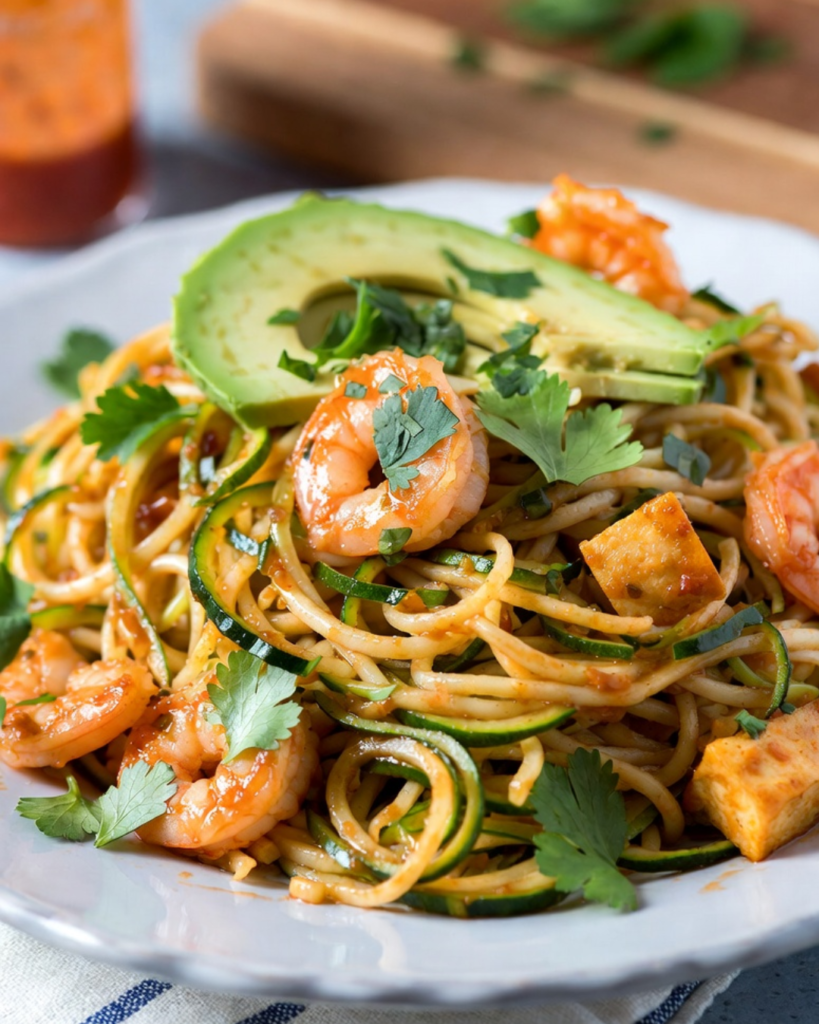
For a lighter version, swap in whole wheat or soba noodles, and cut the oil by half without losing the flavor. For a gluten-free version, rice noodles work beautifully and take on the sauce just as well. However you make it, this is a dish that gives you room to adjust without guilt — the version that fits your body today is the right one.
Questions Readers Always Ask
Can I make this ahead of time? You can prep the sauce and chili oil up to three days ahead. I’d hold off on cooking the noodles themselves until just before serving, since they lose their texture sitting around.
How do I store leftovers? Keep them in an airtight container in the fridge for up to three days. A quick toss in a hot pan brings them back to life better than the microwave does.
What if I don’t have black vinegar? Rice vinegar with a tiny pinch of brown sugar gets you close — it won’t be identical, but it’ll still land in the right neighborhood of sweet-sour depth.
What’s the most common mistake? Overcooking the noodles. They keep cooking a little even after draining, especially once the hot oil hits them, so pull them just shy of where you’d normally stop.
This is the kind of recipe that earns a permanent spot in the regular rotation — not because it’s fancy, but because it’s made with actual love, the kind that shows up in small, repeatable details. Make it once by the book, then make it yours. Add more chili. Swap the noodles. Skip the eggs if they’re not your thing. You’ll know it’s ready when the smell pulls someone else into the kitchen asking what’s cooking.