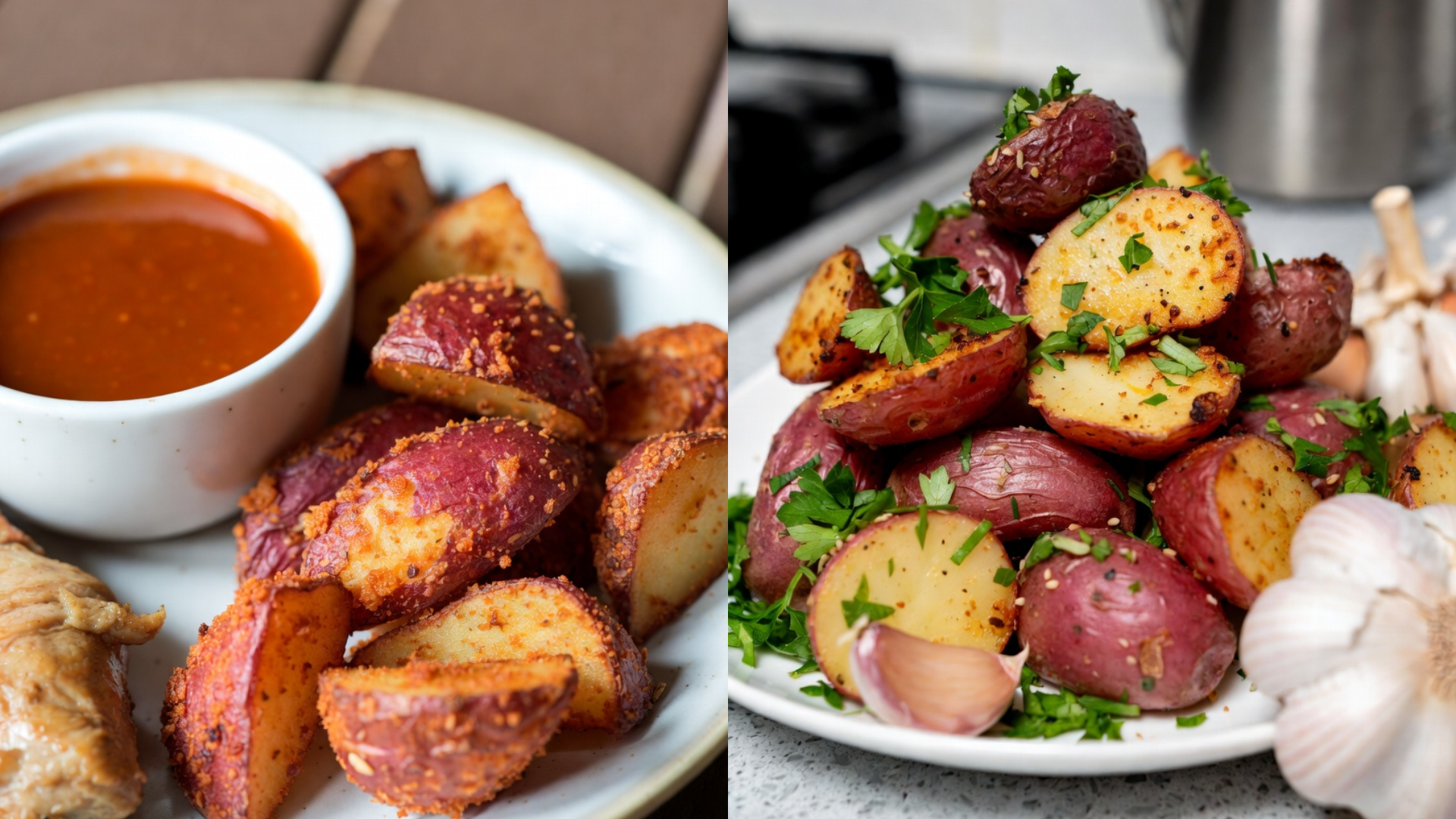
Most people overcook this. Here’s how not to. The difference between soft, pale roasted potatoes and genuinely crispy ones comes down to one step: parboiling the potatoes briefly and roughing up their edges before they ever hit the oven, since that roughed-up starchy surface is what actually crisps.
These crispy red potato recipes rely on a two-stage cooking process, high oven heat, and enough space on the pan for proper browning to occur. Soft, disappointing roasted potatoes are almost always a technique problem, not an oven temperature problem alone.
Prep time: 10 minutes | Cook time: 40 minutes | Total time: 50 minutes | Servings: 4
Table of Contents
What Makes This Recipe Work
- Potatoes are parboiled before roasting, not roasted raw — this is intentional. Parboiling softens the exterior just enough that shaking the potatoes afterward roughs up the surface starch, and that roughed texture is exactly what crisps most dramatically in the oven
- The oven runs hot, at 425°F or higher — the science here is simple: high heat drives off surface moisture quickly and browns the potatoes before the interior overcooks, whereas a lower temperature dries them out without ever achieving real crispness
- Potatoes are spaced with room between each piece — most recipes skip this warning, but overcrowding traps steam around the potatoes, and steam is the direct enemy of the dry heat needed for crisping
- Oil is added generously, not sparingly — enough oil coats every surface and conducts heat efficiently against the potato skin, which is what actually produces a crisp exterior rather than a merely roasted one
Ingredients — What to Buy and Why It Matters
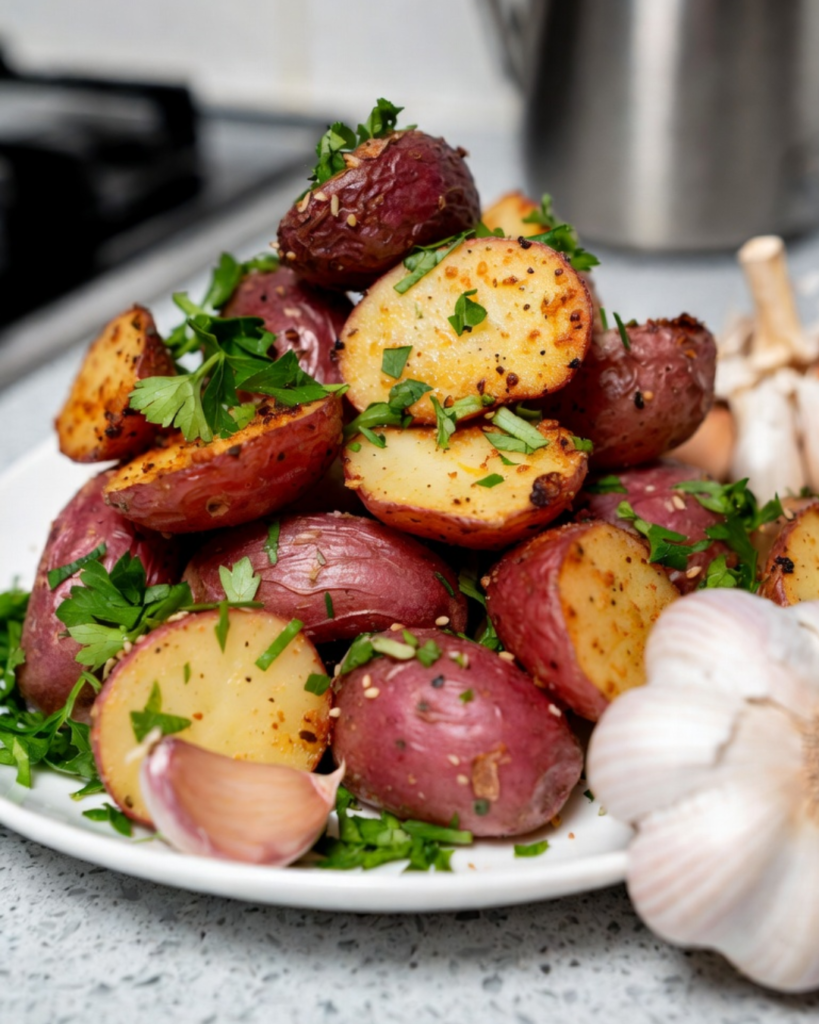
- Red potatoes (2 lbs), cut into 1.5-inch chunks: Red potatoes hold their shape well through parboiling and roasting, unlike starchier russets, which tend to fall apart under the same process — leave the skins on, since they crisp beautifully and add texture.
- Olive oil (1/3 cup): A generous amount is necessary here, more than most home cooks instinctively use — the oil conducts heat directly against the potato surface, and skimping on it produces a drier, less crisp result.
- Kosher salt (1 tsp, for the parboiling water, plus more for seasoning): Salting the water seasons the potatoes from the inside during parboiling, which a surface seasoning applied only after roasting can’t replicate.
- Garlic powder and smoked paprika (1 tsp each): Both add flavor without the risk of burning that fresh garlic or fresh herbs would carry under such high roasting heat.
- Fresh rosemary or thyme (a few sprigs, optional): Added partway through roasting rather than at the start, since fresh herbs can scorch and turn bitter over a full 40-minute high-heat roast.
Substitution note: Yukon gold potatoes can substitute for red potatoes with a similar result, holding their shape reasonably well, though red potatoes’ thinner skin crisps slightly more dramatically.
Step-by-Step Instructions
- Place the cut potatoes in a large pot and cover with cold water by about an inch. Add the salt. This is the critical step here — starting with cold water and bringing it to a boil together ensures the potatoes cook evenly, rather than the exterior overcooking before the center catches up.
- Bring to a boil, then reduce to a simmer and cook for 6-8 minutes, until the potatoes are just barely fork-tender at the edges but still firm in the center.
- Drain the potatoes thoroughly in a colander, then return them to the empty pot. Shake the pot vigorously with the lid on for about 10 seconds. What’s actually happening here is you’re roughing up the potato surfaces, creating small ridges and starchy texture that will crisp far more dramatically than a smooth surface would.
- Preheat the oven to 425°F while the potatoes steam-dry briefly in the colander or pot, uncovered, for a few minutes. This is non-negotiable for crispness — any residual surface moisture works directly against the browning you’re trying to achieve.
- Toss the potatoes generously with olive oil, garlic powder, smoked paprika, and additional salt.
- Spread the potatoes in a single layer on a baking sheet, leaving space between each piece. Overcrowding traps steam, which softens the potatoes instead of letting them crisp.
- Roast for 30-35 minutes, flipping halfway through, until deeply golden and crisp on multiple sides. Add fresh herbs during the last 10 minutes if using, to avoid scorching them over the full roast time.
- Remove from the oven and season with a final pinch of salt while still hot, which helps it adhere better than seasoning added after cooling.
Technique Notes for Better Results
- The professional approach here is roughing up the parboiled potato surface deliberately, whether by shaking in the pot or gently tossing with a fork, since that texture is directly responsible for how crisp the final result turns out
- Where most home cooks go wrong is skipping the parboiling step entirely and roasting raw potatoes from the start, which produces a softer, less crisp exterior no matter how hot the oven runs
- If your potatoes aren’t crisping despite following the recipe, check that they weren’t overcrowded on the pan, since even a properly parboiled and oiled potato won’t crisp if steam is trapped around it
- A dark, heavy baking sheet conducts and retains heat better than a light, thin one, contributing to more even browning across the batch
- For extra crispness, a light dusting of cornstarch tossed with the potatoes after oiling adds another layer of crunch, similar to the technique used for crispy roasted chicken skin
- Flip the potatoes with a metal spatula rather than tongs, which is less likely to tear off the crispy exterior that’s already formed
Plating and Serving
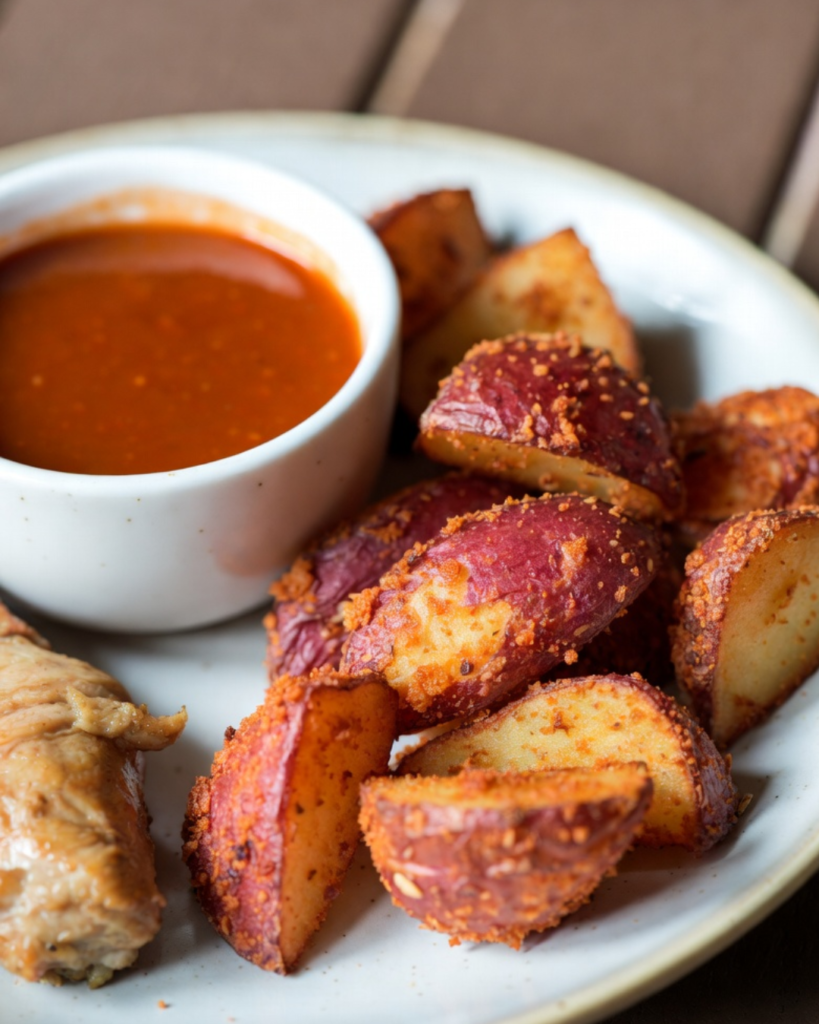
- Serve alongside a simple roasted chicken or steak, letting the potatoes’ texture provide contrast to a tender protein
- A dollop of sour cream or a light herb aioli on the side adds a cooling, creamy contrast to the crispy exterior
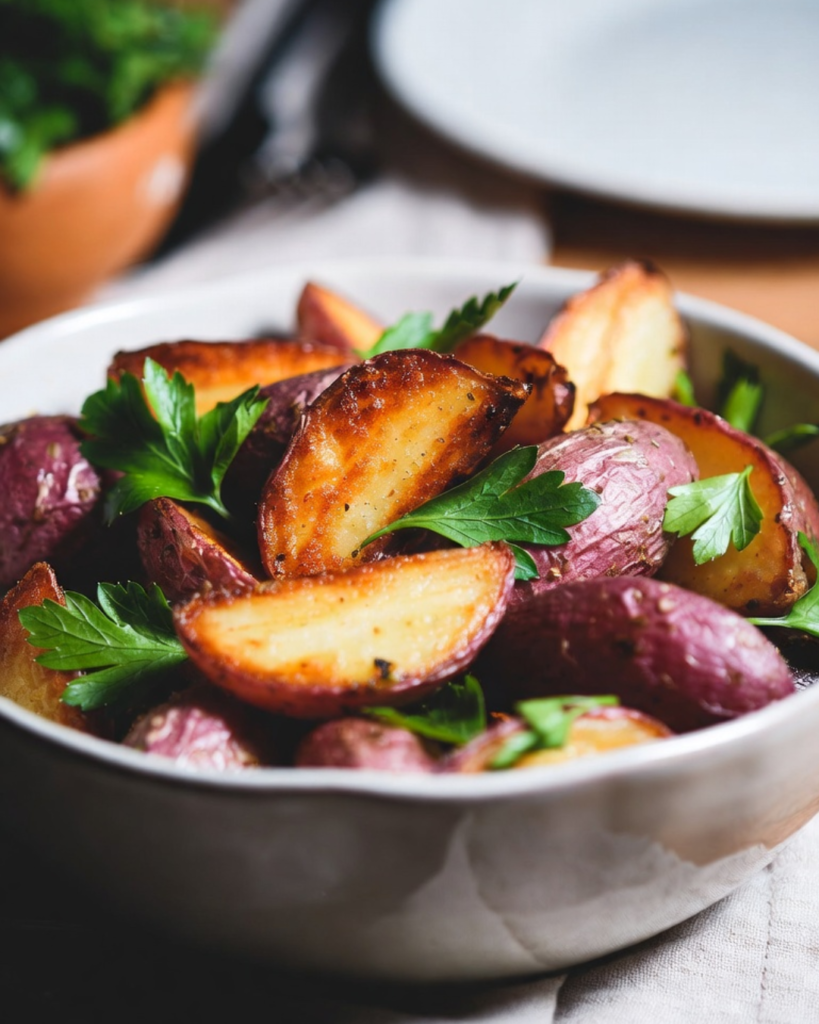
- Arrange on a platter rather than piling in a bowl, which helps preserve crispness by avoiding trapped steam between pieces
- A sprinkle of fresh chopped parsley just before serving adds color without competing with the smoky paprika
- A crisp lager or a light red wine both pair well, cutting through the richness of the oil without overwhelming the potatoes’ flavor
Nutritional Profile
Red potatoes provide fiber, potassium, and vitamin C, particularly when the skins are left on as this recipe calls for. The generous amount of olive oil contributes healthy monounsaturated fat, though it does add meaningful calories relative to a lower-oil roasting method. For a lighter version, reducing the oil to about 3 tablespoons still allows for reasonable crisping, though the result won’t be quite as deeply golden or crunchy as the full amount produces. This dish is naturally gluten-free and vegetarian as written, making it a flexible side for a range of dietary needs.
Common Questions, Answered Directly
Why do my roasted potatoes always turn out soft instead of crispy? The most common causes are skipping the parboil-and-rough-up step, overcrowding the pan, or using too little oil. All three directly work against the crisping process.
Can I make these ahead and reheat them? They’re best fresh, but if reheating, use a hot oven rather than a microwave, which will soften the crispy exterior almost immediately.
Can I use a different potato variety? Yukon gold works well as a substitute, holding its shape similarly to red potatoes, though the skin won’t crisp quite as dramatically given its slightly thicker texture.
How long do leftovers keep? Up to 4 days refrigerated in a sealed container, though the texture is noticeably better the day they’re made, before any refrigeration softens the crisp exterior.
Skip the soft, disappointing batch tonight — parboiling and proper spacing on the pan are what actually separate crispy potatoes from mediocre ones.