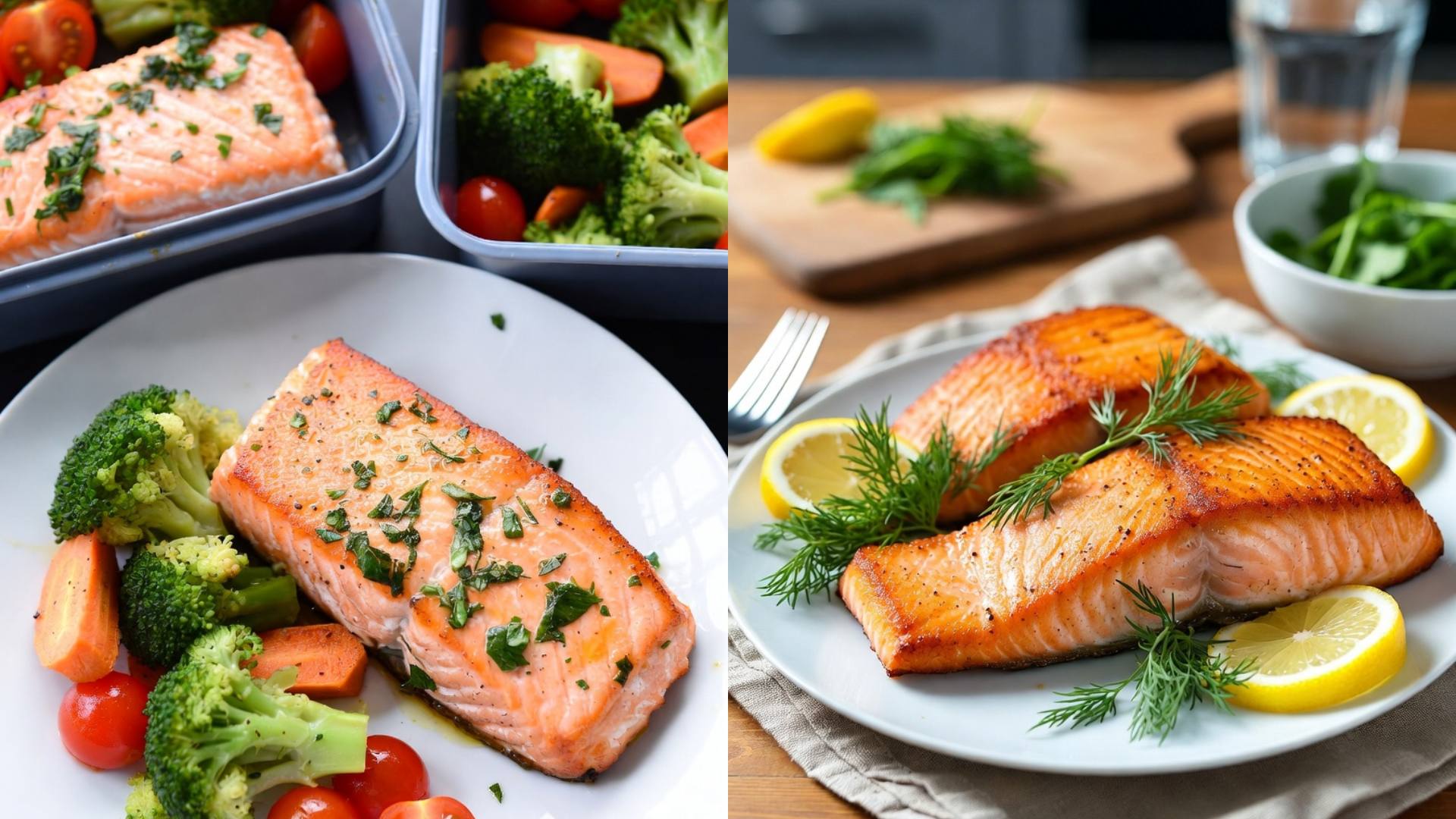
Most people overcook this. Here’s how not to. The difference between healthy baked salmon that turns dry and chalky and one that stays genuinely moist comes down to one step: pulling it from the oven based on internal temperature, not on time, since salmon crosses from perfectly done to overcooked in a matter of minutes.
These easy salmon recipes baked healthy style rely on a moderate oven temperature, minimal added fat, and a thermometer instead of guesswork to keep the fish moist without relying on heavy sauces or butter to compensate. Healthy doesn’t have to mean bland here — it means the technique does the work that fat usually covers for.
Prep time: 5 minutes | Cook time: 12-15 minutes | Total time: 20 minutes | Servings: 4
Table of Contents
What Makes This Recipe Work
- The oven runs at 400°F, not higher — this is intentional. A moderate temperature cooks the salmon through gently, giving you a wider window to catch it at the right moment instead of racing past doneness in a hotter oven
- Only a light coating of oil is used, not a heavy marinade — the science here is simple: salmon’s natural fat already carries plenty of flavor and moisture, so a minimal approach keeps the dish light without sacrificing richness
- The fish is pulled at 125-130°F, not 145°F — most recipes skip explaining this, but carryover cooking continues after the salmon leaves the oven, and pulling it early is what actually prevents the dry, flaky-but-tough texture associated with overcooked fish
- Lemon and herbs are added fresh, not cooked into a sauce — this keeps the dish light and lets the salmon’s own flavor lead, rather than masking it under a heavy, calorie-dense topping
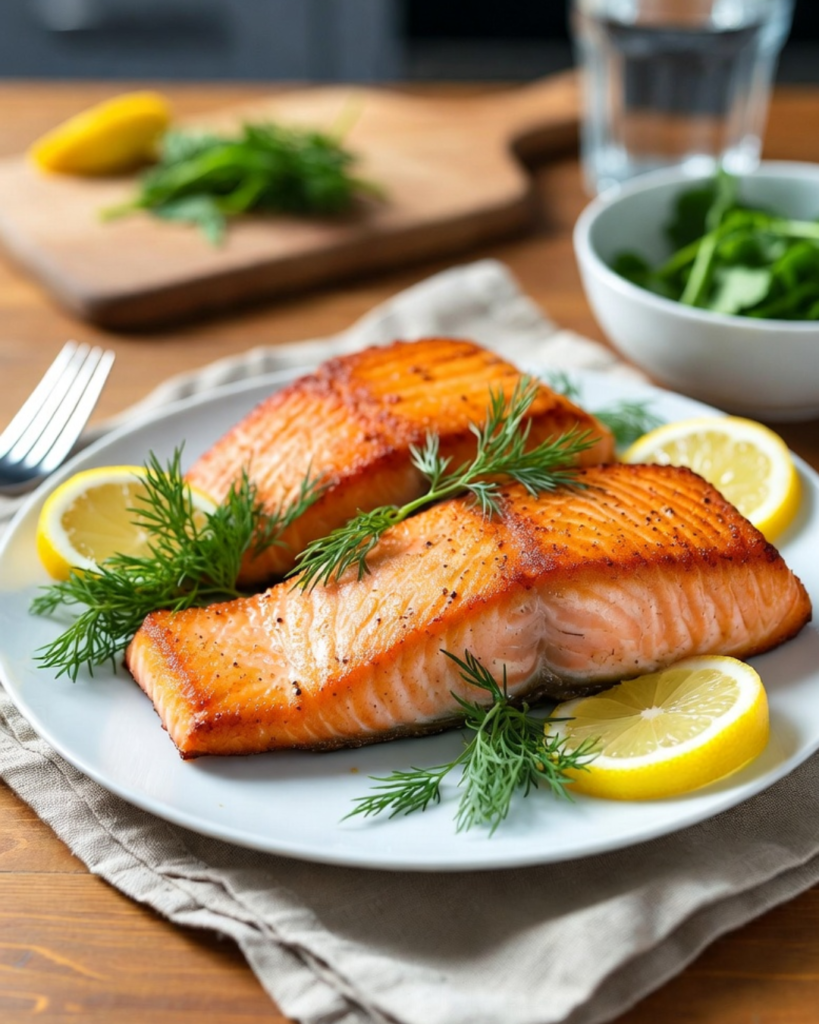
Ingredients — What to Buy and Why It Matters
- Salmon fillets (4, about 6 oz each), skin-on: Skin-on holds the fillet together better under heat and adds a pleasant textural contrast on the bottom — center-cut pieces cook more evenly than tail-end cuts, which taper and overcook at the thin end.
- Olive oil (1 tbsp): A light coating is enough to prevent sticking and help seasoning adhere — salmon’s own natural fat does most of the moisture work, so there’s no need for a heavier oil application.
- Fresh lemon (1, sliced, plus extra for serving): Placed under and around the fillets, lemon adds moisture and bright acidity without any added fat or calories.
- Garlic (2 cloves, minced) and fresh dill or parsley (a small handful): The primary flavor layer — using fresh herbs instead of a butter-based sauce keeps the dish light while still delivering real flavor.
- Salt and black pepper: Simple seasoning is genuinely enough here — the fish itself, plus lemon and garlic, carries the dish without needing a heavier hand.
Substitution note: Any thin, delicate white fish can use a similar method, though salmon’s higher natural fat content makes it more forgiving against slight overcooking than something like tilapia or cod.
Step-by-Step Instructions
- Preheat the oven to 400°F. A moderate temperature is the critical step here — it cooks the salmon through gently, without racing ahead of the interior the way a hotter oven would, giving you a more forgiving window to catch it at the right moment.
- Pat the fillets completely dry with paper towels. A dry surface allows the light oil coating and seasoning to adhere evenly rather than sliding off a damp surface.
- Arrange lemon slices on a lined baking sheet, then place the fillets on top, skin-side down. The lemon adds moisture from underneath as the fish bakes.
- Brush each fillet lightly with olive oil, then season with salt, pepper, and garlic.
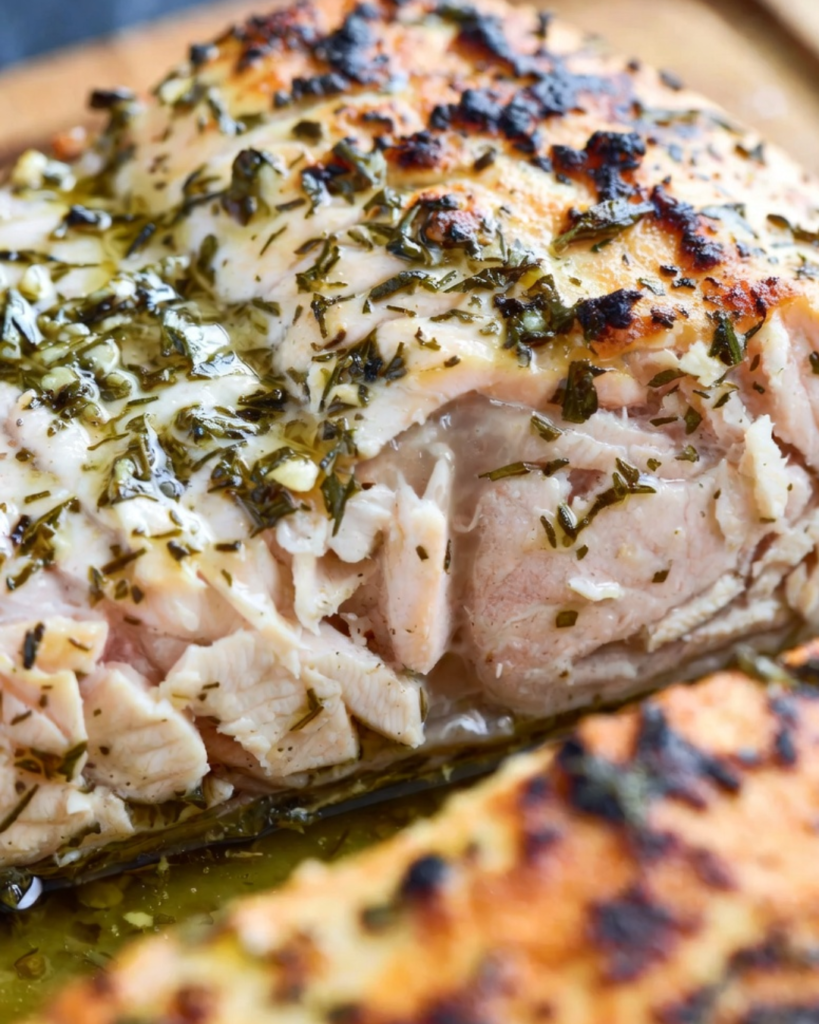
- Bake for 12-15 minutes, depending on thickness. Check at the 12-minute mark with a fork or thermometer — the fish should still look slightly translucent at the very center. What’s actually happening is the residual heat will continue cooking the fish for another minute or two after it leaves the oven, so pulling it while it looks slightly underdone is exactly right.
- Pull the salmon at an internal temperature of 125-130°F. This is non-negotiable if you want a moist result — waiting for a fully opaque, flaked-through appearance in the oven means you’ve already overcooked it by the time it’s plated.
- Rest for 2 minutes, then finish with fresh herbs and a squeeze of lemon juice before serving.
Technique Notes for Better Results
- The professional approach here is using an instant-read thermometer every time, rather than relying on visual cues alone, since salmon’s color change from raw to cooked happens fast and is easy to misjudge
- Where most home cooks go wrong is leaving the fish in until it looks completely opaque throughout, not realizing that residual heat will finish the job during the rest
- Check the thinnest fillet in your batch first, since thickness can vary even within the same package and the thinnest piece will finish before the others
- Skin-side down isn’t just about presentation — it insulates the flesh slightly from direct heat, buying a small margin of protection against overcooking
- If you want more flavor without adding fat, a dry rub of smoked paprika or Cajun seasoning works well as an alternative to the garlic-herb approach here
- The result holds up well cold the next day, flaked over a salad, since salmon retains its texture better than most proteins once refrigerated
Plating and Serving
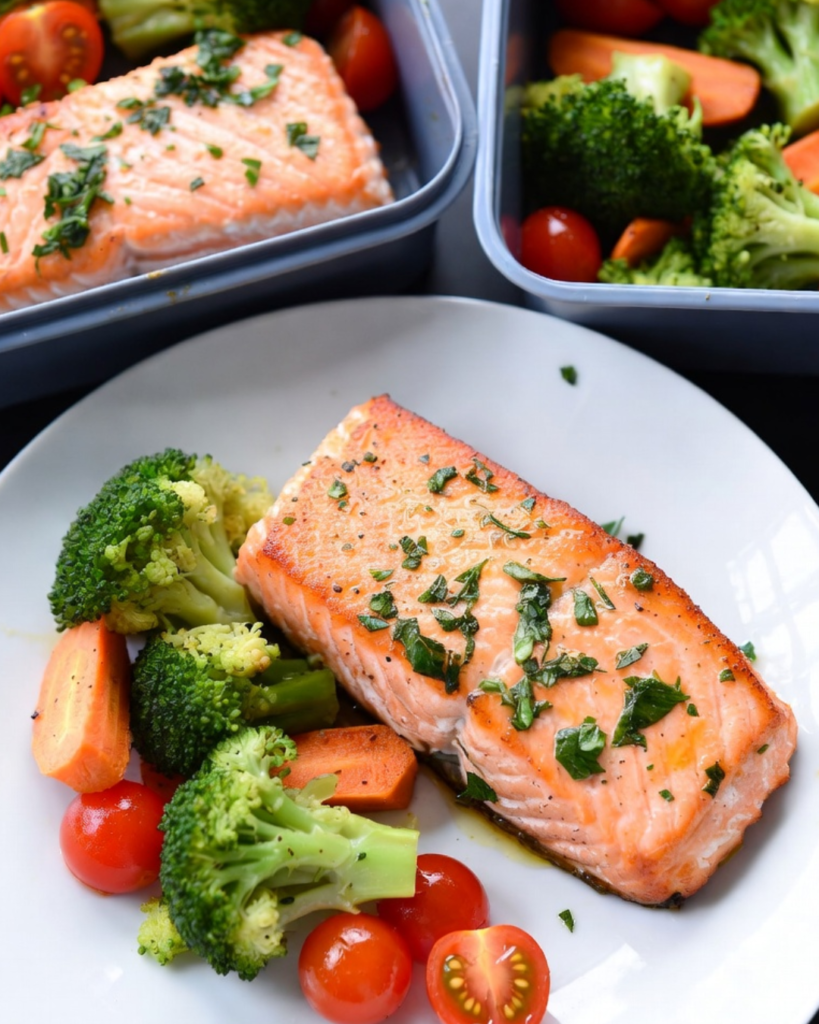
- Roasted asparagus or steamed green beans, cooked alongside on the same sheet if timing allows
- A simple grain like quinoa or brown rice underneath adds fiber without much added fat
- A light yogurt-based sauce on the side offers creaminess without the calories of a butter-based one
- Serve skin-side down on the plate to show off the flesh’s color
- A dry white wine or sparkling water with lime both pair well, keeping the overall meal light
Nutritional Profile
Salmon is naturally rich in omega-3 fatty acids, which support heart and brain health, along with high-quality protein that makes this dish satisfying without needing a heavy side. Using only a light coating of oil and skipping a butter-based sauce keeps the added fat minimal, letting the salmon’s own healthy fat carry the richness. This dish is naturally low in carbohydrates as written, making it a reasonable choice for those managing blood sugar or following a lower-carb approach. For an even lighter version, using a nonstick spray instead of brushed oil trims a small amount of additional fat without meaningfully affecting the result.
Common Questions, Answered Directly
Why does my baked salmon always turn out dry? Almost certainly overcooking. Pull it at 125-130°F using a thermometer, and let the residual heat finish the center during the short rest.
Can I use frozen salmon? Yes, thawed completely and patted very dry first — any excess moisture from thawing will steam the fish instead of letting it roast properly.
How long does baked salmon keep? Two to three days refrigerated in a sealed container, best enjoyed cold or gently reheated rather than microwaved on high, which tends to overcook it further.
Can I make this with skinless fillets? Yes, though watch the bottom closely, since there’s no skin to buffer the direct heat from the pan.
Bake this one tonight — a thermometer and a moderate oven are what actually make healthy baked salmon taste like something you’d choose, not settle for.