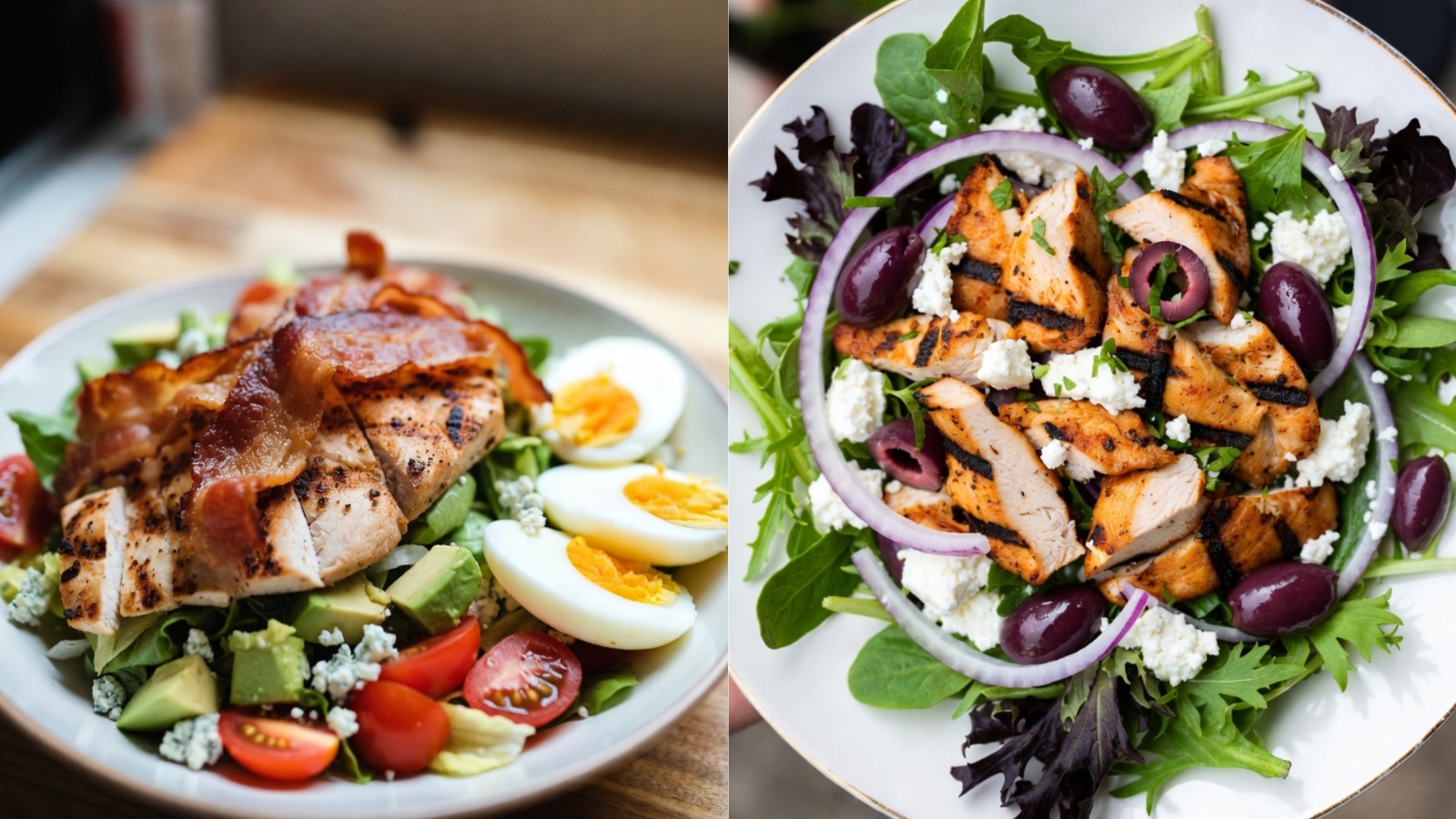
Most people overcook this. They pull grilled chicken salad out of the fridge dry, stringy, and flavorless, and blame the recipe instead of the internal temperature. The difference between a mediocre grilled chicken salad and one with genuinely juicy meat comes down to exactly one variable: how you handle the chicken before it ever touches the grill. This grilled chicken salad recipe is built around that one non-negotiable step, and once you understand it, dry chicken stops being a mystery you’re trying to avoid and becomes a mistake you know how to prevent.
Prep time: 20 minutes (plus 30 minutes to brine) Cook time: 12 minutes Total time: 1 hour 2 minutes Servings: 4
Table of Contents
What Makes This Recipe Work
- The science here is simple: chicken breast dries out because its muscle fibers tighten and expel moisture past 165°F. Everything in this method is designed to hit that number and stop.
- This is intentional — a quick brine changes the protein structure of the meat before it ever hits heat, letting it hold more moisture through cooking.
- Most recipes skip resting the chicken after grilling, which is where a meaningful percentage of retained juice is either kept or lost.
- Cutting against the grain isn’t a garnish step. It shortens muscle fibers, which is what makes each bite tender rather than chewy.
Ingredients — What to Buy and Why It Matters
Boneless, skinless chicken breasts (4, roughly 6 oz each): Choose breasts of similar thickness. Uneven thickness is one of the most common causes of dry chicken — the thin end overcooks long before the thick end is done.
Kosher salt, for brining: The brine is what makes this recipe work. Table salt can be substituted, but use roughly half the volume — it’s denser and more concentrated by weight.
Olive oil, extra virgin: Used both in the marinade and the dressing. A lower-quality oil will flatten the flavor of the dressing specifically, where it isn’t cooked off.
Lemon juice, fresh: Acid tenderizes slightly and balances the richness of the oil. Bottled juice works in a pinch, but the flavor is noticeably flatter.
Garlic, minced fresh: Not garlic powder. Fresh garlic in a quick marinade brings sharpness that powder can’t replicate at this short a marinating time.
Mixed greens (romaine, arugula, or a spring mix): Choose based on texture contrast — arugula’s peppery bite works particularly well against the sweetness of grilled chicken.
Cherry tomatoes, halved: Their acidity cuts through the richness of the chicken and dressing.
Red onion, thinly sliced: Soak in cold water for 10 minutes before adding if you want the flavor without the sharp bite.
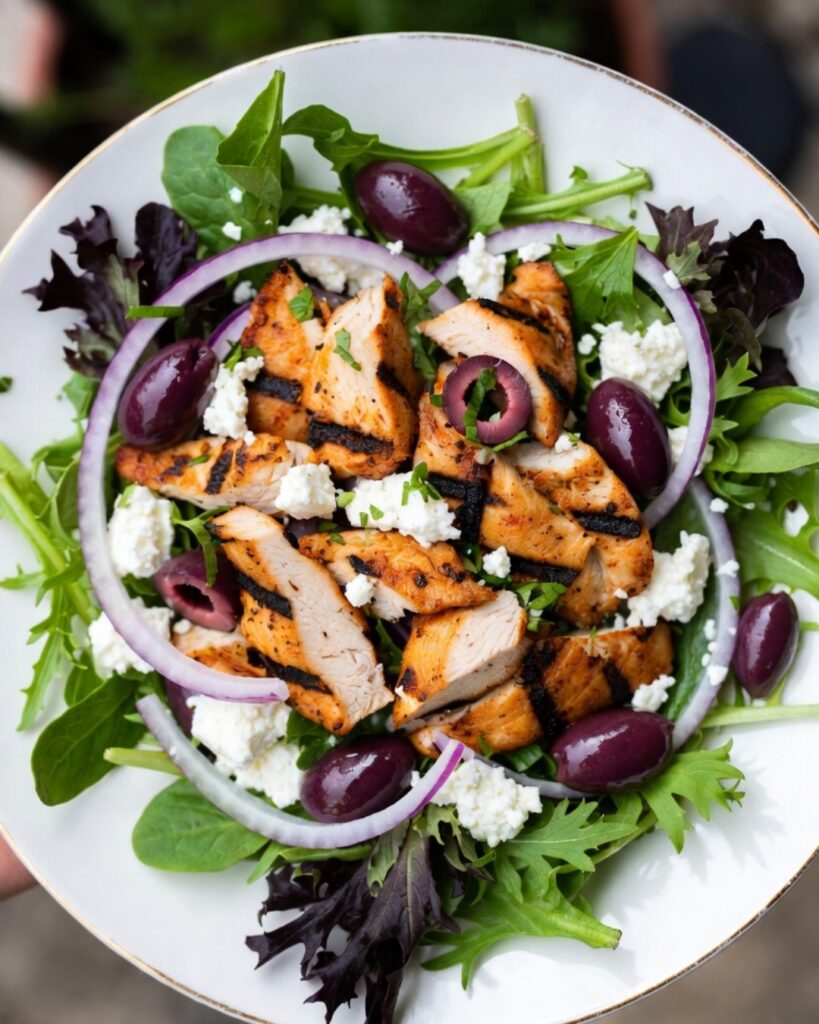
Feta or goat cheese (optional): Adds a salty, creamy counterpoint. Skip it for a dairy-free version — the salad still holds up structurally without it.
Step-by-Step Instructions
- Brine the chicken. Dissolve ¼ cup kosher salt in 4 cups cold water. Submerge the chicken breasts for 30 minutes at room temperature. This is the critical step — it’s what separates this method from a standard grilled chicken salad recipe. Don’t skip it, and don’t exceed 45 minutes, or the texture turns spongy.
- Pat completely dry. Remove the chicken from the brine and pat it dry with paper towels. Excess surface moisture prevents proper searing, which is where flavor develops.
- Marinate briefly. Whisk together 3 tablespoons olive oil, 2 tablespoons lemon juice, 2 cloves minced garlic, and black pepper. Coat the chicken and let it sit for 10–15 minutes — long enough to add surface flavor, short enough that the acid doesn’t start breaking down the exterior texture.
- Preheat the grill to medium-high, roughly 450°F. A grill that’s too cool causes the chicken to steam rather than sear, and steaming is what pulls moisture out early.
- Grill 6–7 minutes per side. Don’t move the chicken once it’s placed — let it develop grill marks undisturbed. You’ll know it’s ready to flip when it releases easily from the grates without sticking.
- Pull at 160°F, not 165°F. This is the second non-negotiable step. Carryover cooking will raise the internal temperature the final 5 degrees while it rests, and pulling early is what prevents overcooking.
- Rest for 5 full minutes before slicing. What’s actually happening during the rest is redistribution — juices that moved toward the center under heat move back outward once the pan is off the heat. Cutting too early lets that moisture spill onto the board instead of staying in the meat.
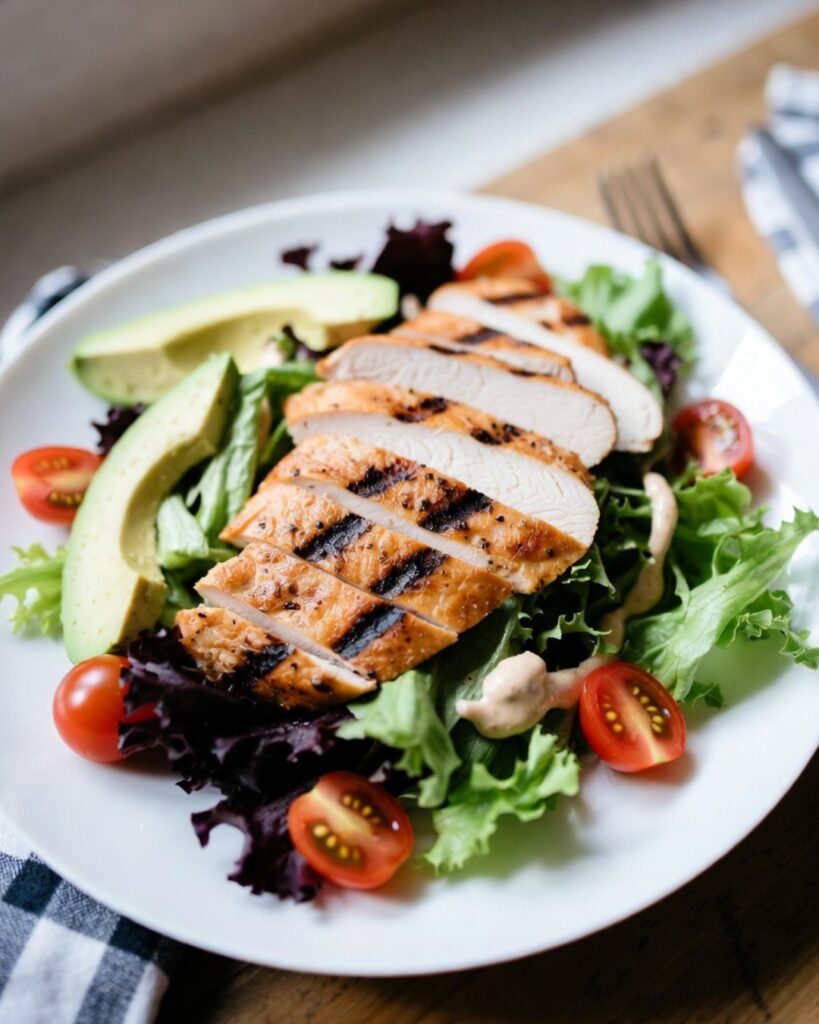
- Slice against the grain, in strips roughly ½ inch thick.
- Assemble the salad. Toss the greens, tomatoes, and red onion with a simple vinaigrette of olive oil, lemon juice, and a pinch of salt. Top with the sliced chicken and cheese, if using.
Technique Notes for Better Results
- The professional approach here is to use an instant-read thermometer rather than relying on time alone — grill thickness, heat variance, and chicken size all shift actual cook time.
- Where most home cooks go wrong is skipping the rest period entirely. Five minutes feels long when the chicken is ready, but it’s the difference between juicy and dry.
- Pound uneven breasts to a consistent 3/4-inch thickness before brining for more even cooking across the whole piece.
- Dress the greens separately from the chicken, then combine — warm chicken added directly to already-dressed greens can wilt them prematurely.
- If using a grill pan indoors, preheat it for a full 5 minutes before adding the chicken. An underheated pan produces the same steaming problem as a cool grill.
- Reserve a small amount of dressing to add just before serving if the salad is assembled more than 10 minutes in advance — greens release moisture over time and dilute the dressing already on them.
Plating and Serving
Warm crusty bread, to round out the meal without competing with the salad’s acidity. A chilled glass of Sauvignon Blanc, whose acidity mirrors the lemon in the dressing. Sliced avocado, for added richness and visual contrast against the greens. A light grain like quinoa or farro, stirred in for a heartier, main-course version. Serve on a wide, shallow plate rather than a bowl — it keeps the chicken visible and the greens from compacting.
Nutritional Profile
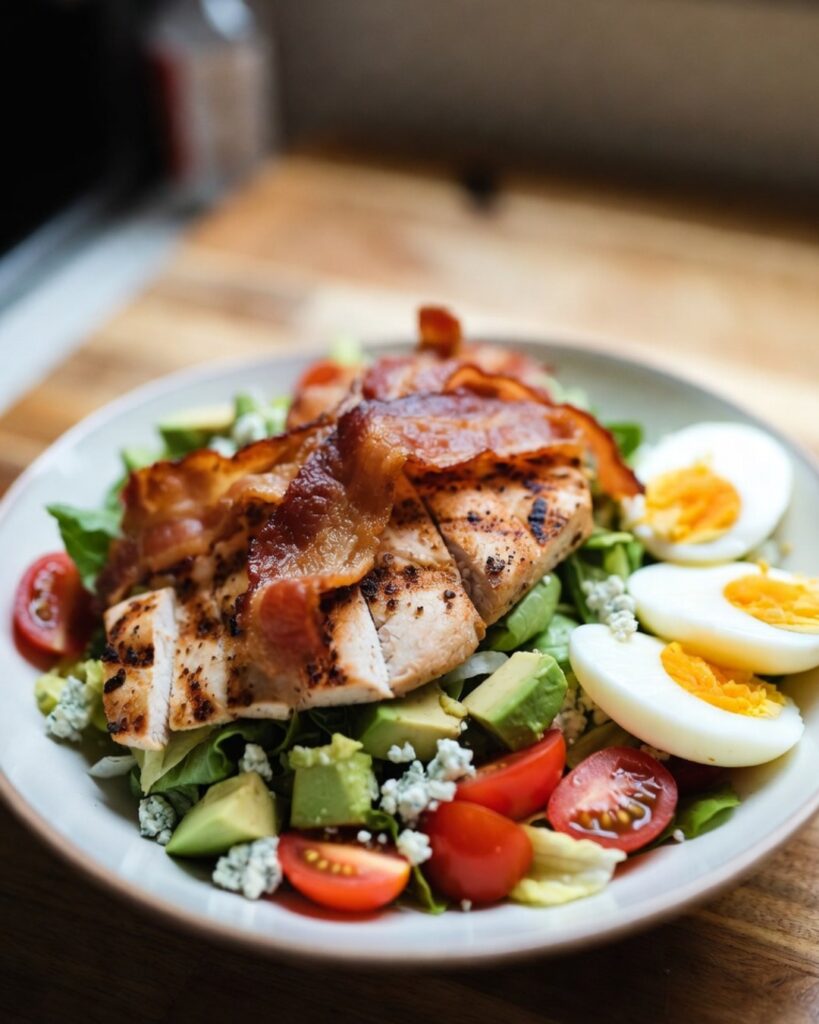
Chicken breast is a lean, high-protein base — roughly 26 grams of protein per 6 oz serving with minimal saturated fat, particularly when grilled rather than fried. The olive oil in the dressing contributes primarily monounsaturated fat, which supports the salad’s flavor without significantly raising saturated fat content. For a lower-sodium version, reduce the brine time to 20 minutes rather than skipping it — the texture benefit is still meaningful even at a shorter duration. For a dairy-free version, omit the cheese; the dish remains nutritionally balanced without it, though it loses some calcium content.
Common Questions, Answered Directly
Can I skip the brine if I’m short on time? Yes, but expect a noticeably drier result. If skipping, compensate by pulling the chicken at 155°F and resting it slightly longer, closer to 8 minutes.
Can I make this ahead of time? Grill the chicken up to 2 days ahead and store it separately from the greens. Slice and reheat gently, or serve cold — do not reheat past 140°F or you’ll dry it out further.
What’s the best substitute for grilling if I don’t have access to one? A cast-iron skillet or grill pan on the stovetop replicates the sear closely. Follow the same internal temperature targets regardless of cooking method.
Why is my chicken rubbery instead of tender? This is almost always overcooking, not undercooking. Rubbery texture means the muscle fibers have tightened past the point of no return — use a thermometer, not visual cues, to avoid it.
Master the brine, respect the 160°F pull temperature, and rest the chicken before you cut it. Get those three details right and dry grilled chicken salad stops being a recurring problem in your kitchen.