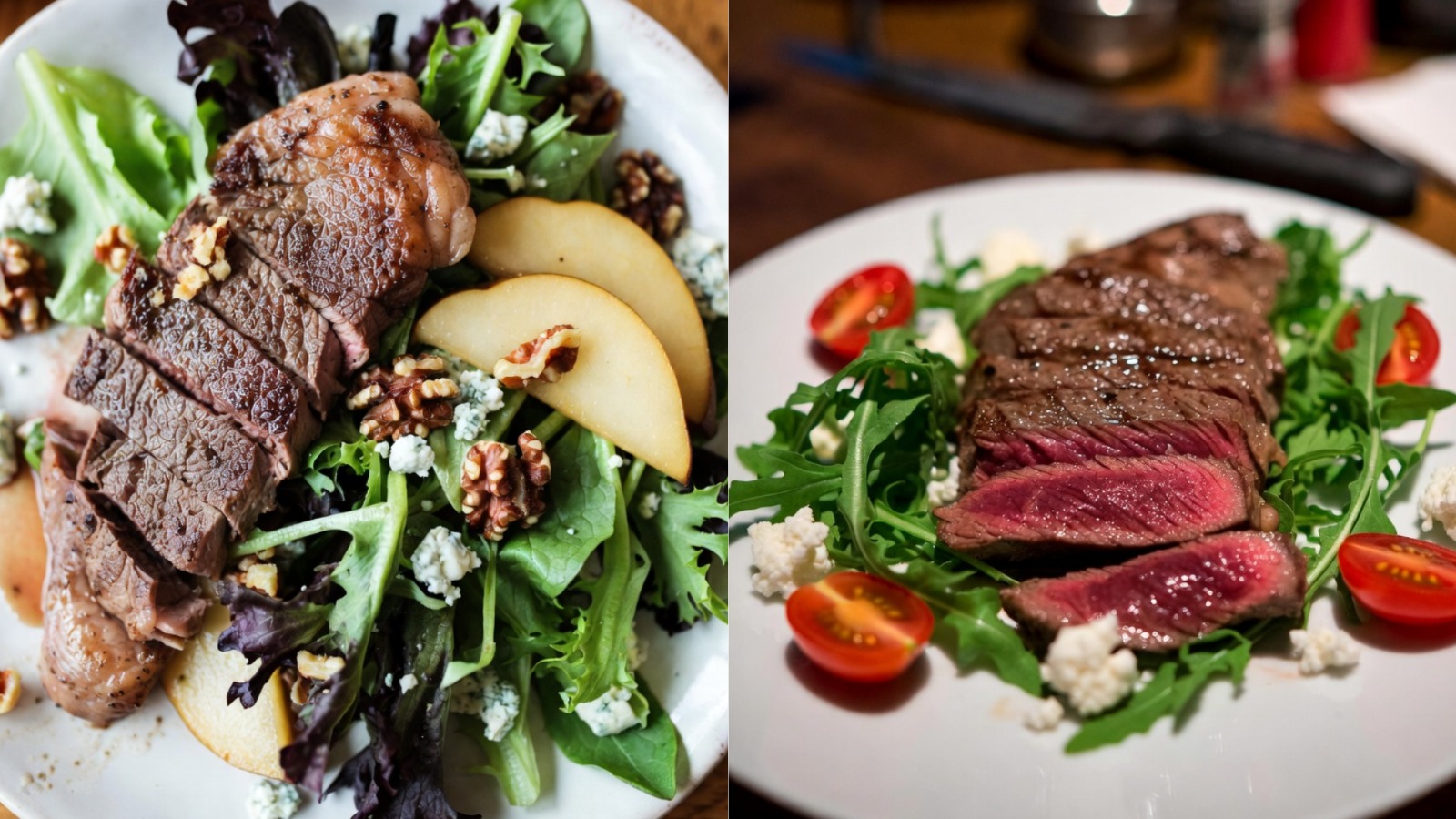
Most people overcook this. They sear steak for a salad the same way they’d sear it for a plate on its own, forgetting that thin slices resting on cold greens keep cooking well after the steak leaves the pan. The difference between a steak salad recipe you make once and one you’ll actually make again comes down to a single decision: pulling the steak earlier than instinct tells you to. Get that right, and this becomes the kind of dinner-for-two steak salad recipe that solves a weeknight problem instead of creating one.
Prep time: 15 minutes Cook time: 10 minutes Rest time: 8 minutes Total time: 33 minutes Servings: 2 as a main, 4 as a side salad
Table of Contents
What Makes This Recipe Work
- The science here is simple: steak continues cooking from residual heat after it leaves the pan, and thin post-slice exposure to air accelerates that carryover. Underestimating this is the single biggest reason steak salads turn out gray and tough.
- This is intentional — a hot, dry pan and a short cook time sear the exterior before the interior has a chance to overcook, which matters more here than in almost any other steak preparation.
- Most recipes skip resting the steak whole before slicing, which is where juice retention is actually decided.
- Slicing against the grain isn’t stylistic. It physically shortens muscle fiber length, which is what keeps thin steak slices tender instead of chewy on a fork.
Ingredients — What to Buy and Why It Matters
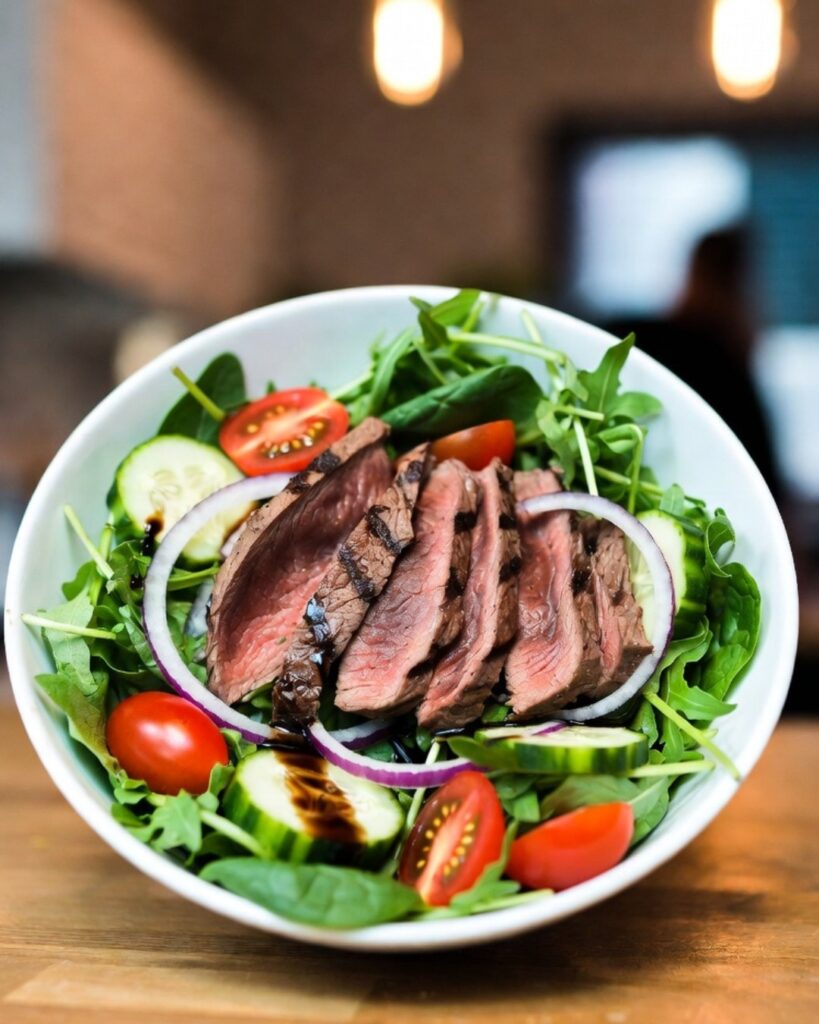
Flank steak or sirloin (1 lb): Choose a cut with visible marbling and consistent thickness. Flank steak has more pronounced grain, which makes the against-the-grain cut more forgiving to identify; sirloin is more tender by default but requires closer attention to doneness.
Kosher salt and black pepper: Salt the steak at least 20 minutes before cooking, not right before. Salting early draws moisture to the surface and reabsorbs it, seasoning the meat throughout rather than just the exterior.
Olive oil, divided: Used for both searing and the vinaigrette. A neutral oil with a higher smoke point, like avocado oil, is a reasonable substitute for searing specifically — olive oil’s lower smoke point means it can scorch at the high heat this method requires.
Balsamic vinegar: The acidic backbone of the dressing. Do not substitute a sweetened balsamic glaze here — the sugar content changes the dressing’s balance significantly.
Dijon mustard: Acts as an emulsifier, which is what keeps the vinaigrette from separating. Skipping it isn’t fatal, but the dressing will need more vigorous whisking and won’t hold as long.
Mixed greens (arugula, spinach, or a spring mix): Arugula’s bitterness contrasts well against the richness of the steak fat; milder greens like spinach let the steak flavor dominate more.
Blue cheese or shaved parmesan (optional): Adds a sharp, salty counterpoint. Omit for a dairy-free version — the vinaigrette’s acidity carries the salad structurally without it.
Cherry tomatoes and thinly sliced red onion: Provide acidity and sharpness that balance the fat content of the steak.
Step-by-Step Instructions
- Salt the steak and let it sit at room temperature for 20–30 minutes. This is the critical step for even seasoning and consistent cooking — a cold steak straight from the fridge cooks unevenly, searing the exterior before the interior comes up to temperature.
- Pat the steak completely dry immediately before cooking. Surface moisture prevents a proper sear, which is where the majority of the flavor in this dish comes from.
- Heat a heavy skillet or cast-iron pan over high heat until it’s visibly smoking, roughly 2–3 minutes. This is non-negotiable — a pan that isn’t hot enough will steam the steak instead of searing it.
- Add 1 tablespoon oil and the steak. Sear for 3–4 minutes per side for medium-rare, without moving it. Movement during searing disrupts crust formation, which is what’s actually happening when you hear people describe a good sear as “locking in flavor” — it doesn’t lock in juice, but it does build the flavor compounds that make the dish worth eating.
- Pull the steak at 130°F internal temperature, 5 degrees below your final target. Carryover cooking will raise the temperature the rest of the way while it rests — pulling at the final target temperature guarantees overcooking.
- Rest the steak whole for 8 minutes before slicing. This is where most steak salad recipes fail. Slicing immediately releases juice onto the cutting board instead of letting it redistribute through the meat.
- Make the vinaigrette while the steak rests. Whisk 3 tablespoons olive oil, 2 tablespoons balsamic vinegar, 1 teaspoon Dijon mustard, and salt and pepper until emulsified. The mixture should look uniformly glossy, not separated.
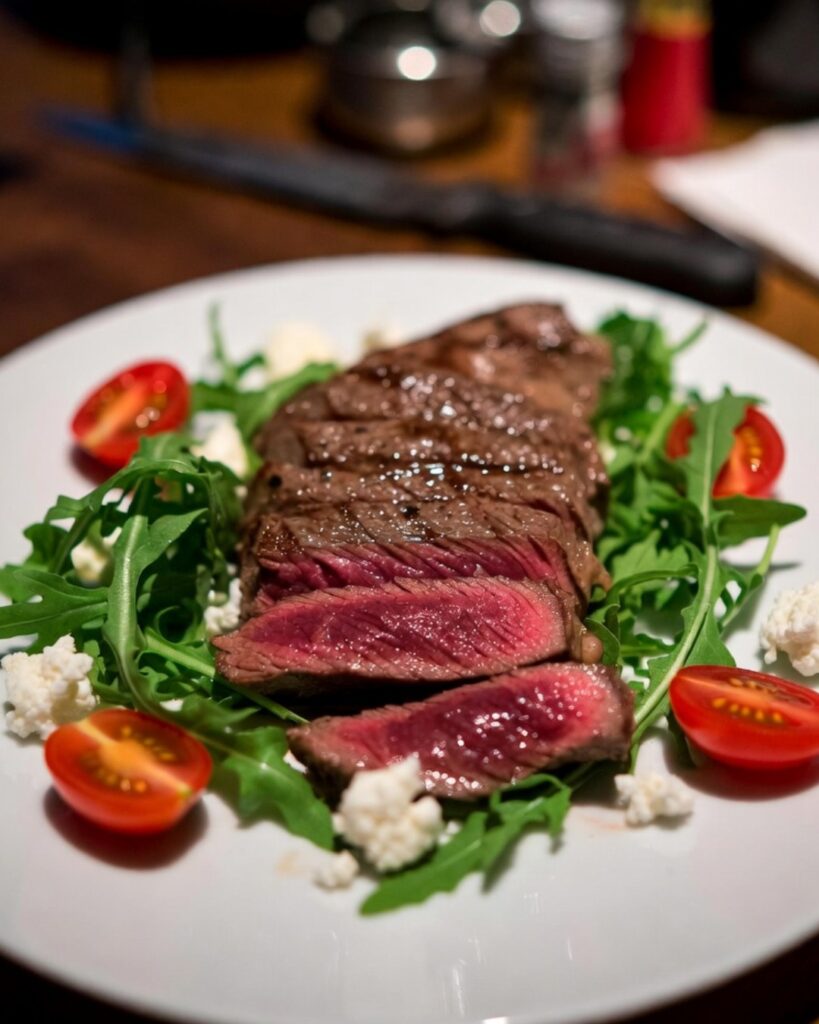
- Slice the steak thin, against the grain, at a slight diagonal. Identify the direction of the muscle fibers first — cutting parallel to them is the most common technical error in this recipe.
- Toss the greens with the vinaigrette first, then top with the sliced steak, tomatoes, onion, and cheese. Dressing the greens before adding the steak prevents the salad from becoming soggy under the weight of the toppings.
Technique Notes for Better Results
- The professional approach here is to use an instant-read thermometer rather than timing alone — pan heat, steak thickness, and cut all shift actual cook time meaningfully.
- Where most home cooks go wrong is slicing the steak immediately off the heat. Eight minutes feels excessive when you’re hungry, but it’s the difference between a juicy salad and a dry one.
- Bring the steak fully to room temperature before searing — a cold center forces you to choose between an overcooked exterior and an underdone interior.
- Reserve a spoonful of vinaigrette to drizzle over the sliced steak directly, not just the greens, for more even flavor distribution across the whole plate.
- If your steak is thicker than 1 inch, reduce the pan heat slightly after searing and finish over medium to avoid a burnt exterior before the interior reaches temperature.
- Slice steak just before serving, not in advance. Pre-sliced steak sitting on greens loses moisture and heat rapidly, undermining the entire point of the resting step.
Plating and Serving
Warm, crusty bread, to round out the plate without overshadowing the steak. A glass of medium-bodied red wine, like a Malbec, whose tannins complement the char on the steak. Roasted sweet potatoes on the side, for a heartier, more filling version of the meal. Serve on a wide plate rather than a deep bowl, keeping the steak slices visible rather than buried under greens. Fan the steak slices across the top rather than mixing them in, for a cleaner presentation and easier portioning.
Nutritional Profile
Flank and sirloin steak are both lean relative to other cuts, delivering roughly 25 grams of protein per 4 oz serving with moderate saturated fat content, particularly once excess surface fat is trimmed before cooking. The olive oil in the vinaigrette contributes primarily monounsaturated fat, supporting flavor without significantly increasing saturated fat. For a lower-fat version, reduce the oil in the vinaigrette by half and add a splash of water to maintain the dressing’s consistency — the trade-off is a slightly thinner texture. For a dairy-free version, omit the cheese entirely; the dish stays nutritionally balanced without it, though the salad’s flavor profile becomes noticeably more acidic and less rounded.
Common Questions, Answered Directly
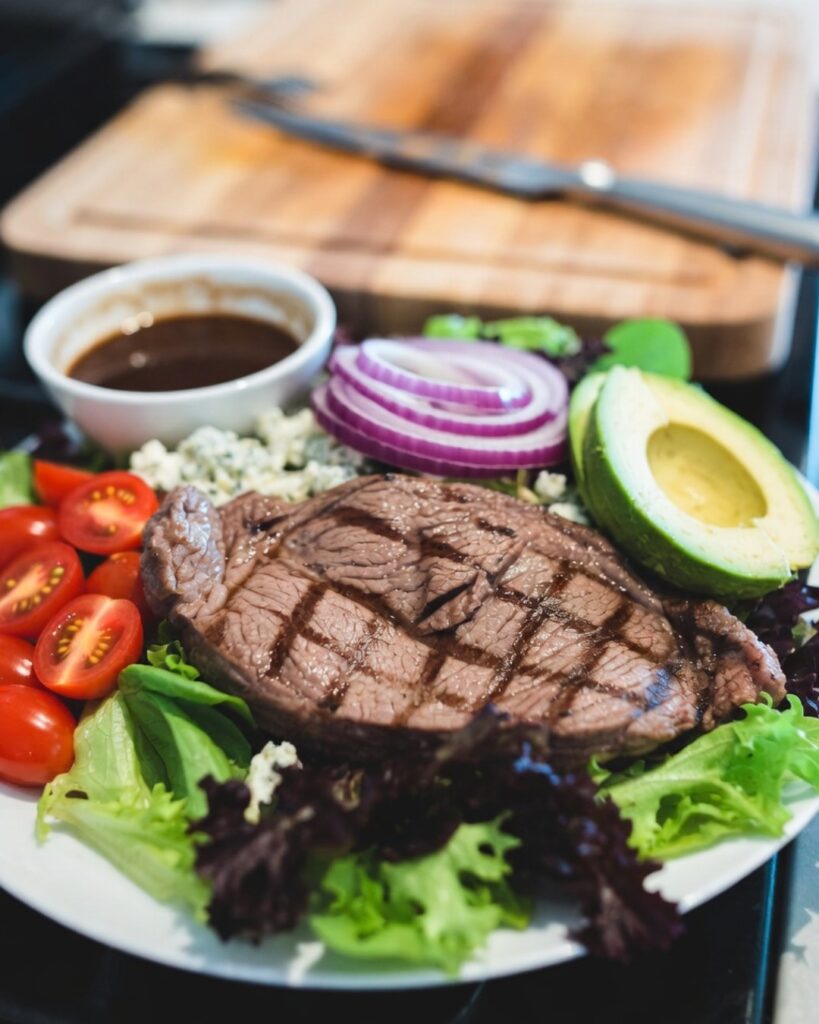
Can I use a different cut of steak? Yes. Ribeye or New York strip both work, though they carry more fat and cost more. Adjust sear time down slightly for thinner cuts.
Can I make the components ahead of time? The vinaigrette holds well in the fridge for up to 5 days. The steak is best cooked and sliced fresh — pre-cooked steak reheated for a salad loses significant moisture.
Why is my steak tough even though I didn’t overcook it? This is almost always a grain-direction issue, not a doneness issue. Slicing with the grain instead of against it produces long, intact muscle fibers that are inherently chewier regardless of internal temperature.
Can I substitute a different acid for the balsamic vinegar? Red wine vinegar works as a substitute, though it’s sharper and less sweet — start with slightly less and adjust to taste.
Salt early, sear hot and fast, pull at 130°F, and rest a full 8 minutes before you slice. Get those four steps right and this steak salad recipe stops being a special-occasion dish and becomes a reliable weeknight dinner.