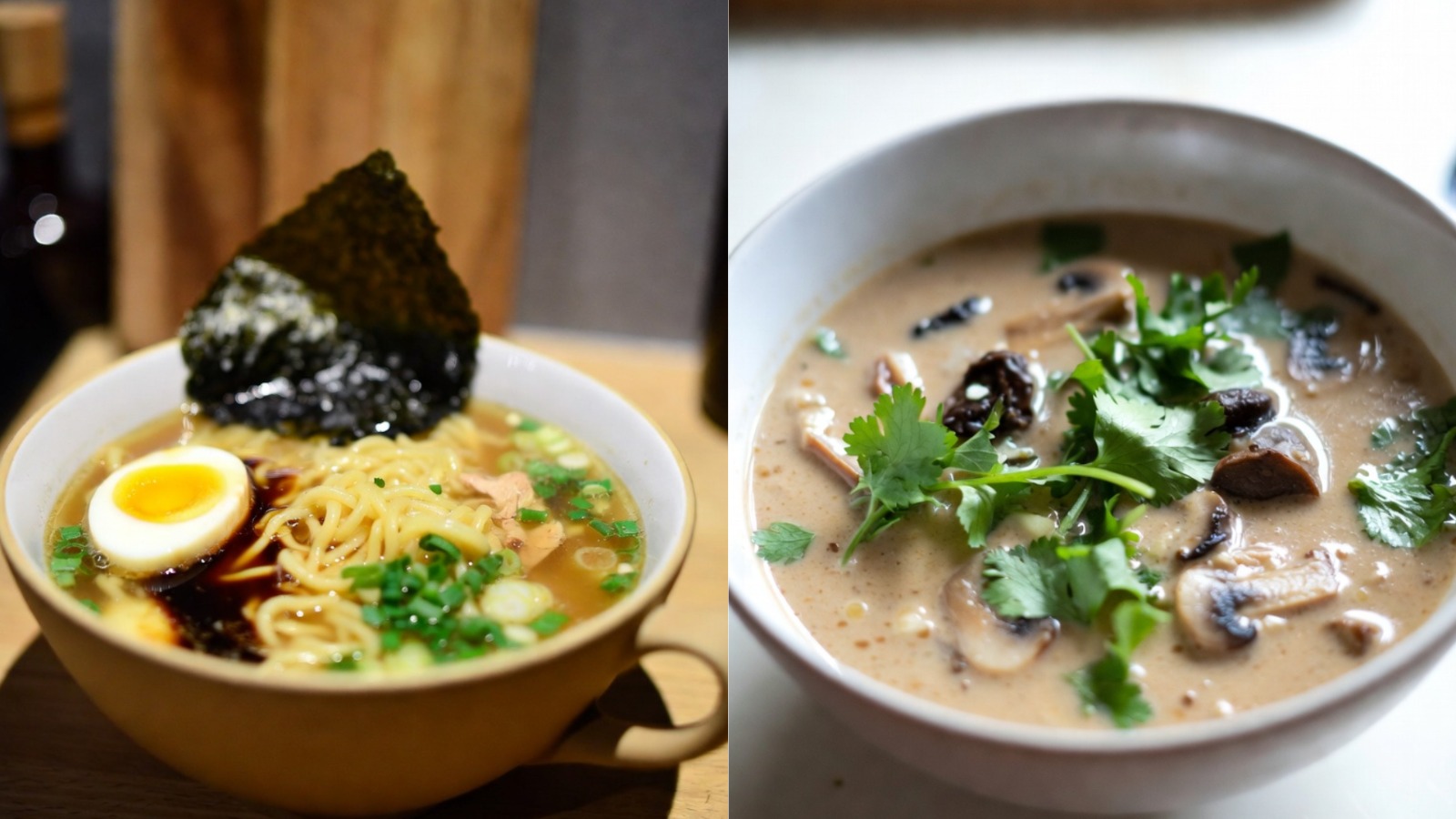
Most home cooks treat the broth as an afterthought and the toppings as the point. It’s backward. The difference between a forgettable bowl and one of those Asian soup recipes you’ll actually make again comes down to a single principle: the broth carries everything, and everything else is built to serve it. Get the liquid right — properly seasoned, layered, balanced between salt, umami, and acid — and even a simple bowl of noodles becomes something worth craving. This is a master approach that works across a family of soups: a clean, aromatic broth you can steer toward ramen, pho-style noodles, or a quick weeknight bowl.
Table of Contents
What Makes This Recipe Work
- The broth is seasoned in layers, not all at once. The science here is simple: aromatics bloom in fat, then release into liquid over time. Adding ginger, garlic, and scallion to hot oil before the stock extracts far more flavor than dumping everything in cold water.
- Umami is stacked, not singular. This is intentional. Combining two or three savory sources — soy, miso, dried mushroom, or a splash of fish sauce — creates depth no single ingredient delivers. The tongue reads it as richness.
- Acid and salt are balanced at the end. Most recipes skip this. A finishing hit of rice vinegar or lime lifts the whole bowl and keeps the salt from tasting flat.
- Aromatics are removed before serving. They’ve given what they have. Straining keeps the broth clean on the palate and clear in the bowl.
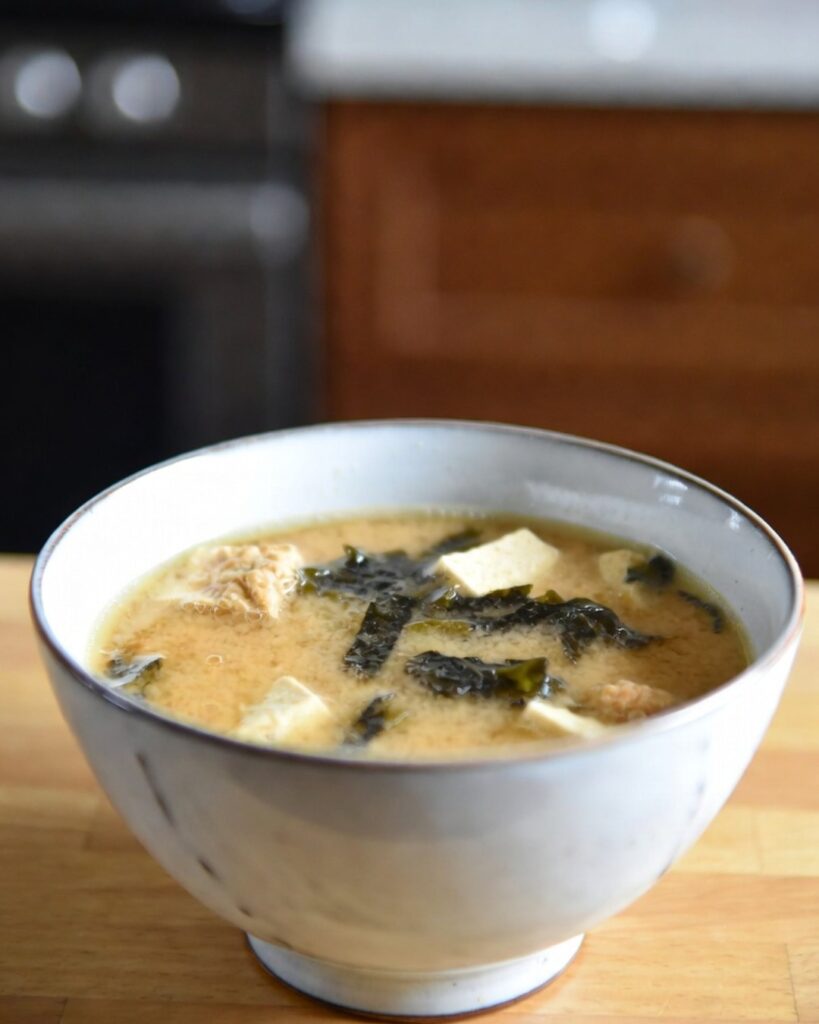
Ingredients — What to Buy and Why It Matters
- A good stock base (chicken or vegetable): the foundation. Use low-sodium so you control the seasoning yourself. Boxed is fine; what you add to it is what matters.
- Fresh ginger and garlic: non-negotiable aromatics. Buy firm ginger with tight skin — old, fibrous ginger gives harsh, papery flavor.
- Scallions: whites for the broth, greens for garnish. The two ends do different jobs, so use both.
- Soy sauce and white or yellow miso: your umami spine. Miso adds body and a gentle funk; whisk it in off the heat so it doesn’t break or turn grainy.
- Toasted sesame oil: a finishing oil, not a cooking oil. Its flavor is volatile and burns easily, so it goes in at the end. Do not fry with it.
- Dried shiitake mushrooms: an optional umami multiplier. Their soaking liquid is liquid gold — strain and add it to the broth.
- Noodles (ramen, rice, or udon): cook these separately, always. Trade-off note: rice noodles are gluten-free and quick; wheat noodles hold texture longer in hot broth.
- Protein (chicken, tofu, or a soft egg) and quick vegetables (bok choy, mushrooms, bean sprouts): added near the end so they keep their texture.
Step-by-Step Instructions
Prep time: 15 minutes · Cook time: 30 minutes · Total time: 45 minutes · Servings: 4
- Bloom the aromatics. Heat a tablespoon of neutral oil in a heavy pot over medium. Add sliced ginger, smashed garlic, and scallion whites. Cook 60 to 90 seconds, until fragrant but not browned. What’s happening is the fat is extracting and carrying the aromatic compounds — this is the critical step for depth.
- Build the broth. Pour in 6 cups of stock and, if using, the strained shiitake soaking liquid. Bring to a gentle simmer, not a boil. A hard boil turns the broth cloudy and muddies the flavor.
- Simmer to develop. Hold at a low simmer for 15 minutes so the aromatics infuse. You’ll see the broth take on color and smell distinctly of ginger and garlic.
- Season off the boil. Lower the heat. Whisk in soy sauce and miso, adding the miso through a small strainer or by whisking in a ladle of hot broth first to prevent clumping. Taste as you go.
- Strain. Remove the solid aromatics for a clean bowl. This step separates a good broth from a professional one.
- Cook the components separately. Boil your noodles in a second pot, drain, and set aside. Poach or sear the protein. Blanch the greens for 60 seconds so they stay bright and crisp.
- Assemble in the bowl, not the pot. Noodles first, then protein and vegetables, then ladle the hot broth over everything. Finish with scallion greens, a few drops of toasted sesame oil, and a squeeze of lime.
- Balance and serve. Taste the finished bowl. Adjust with more acid or a pinch of salt. Serve immediately, while the broth is still steaming.
Technique Notes for Better Results
- The professional approach here is to keep the broth at a bare simmer. Bubbles should barely break the surface. Aggressive heat emulsifies fat and clouds the liquid.
- Where most home cooks go wrong: cooking noodles in the broth. They release starch, thicken the liquid, and turn gummy in leftovers. Separate pots, every time. This is non-negotiable.
- Add miso and sesame oil only off the heat. Both are damaged by high temperature — miso loses its nuance and sesame oil turns bitter.
- Salt the protein separately before it goes in. Seasoning it in the broth alone leaves it bland while over-salting the liquid.
- Toast dried spices or chili flakes briefly if you use them. Thirty seconds in a dry pan wakes up their oils and sharpens the finish.
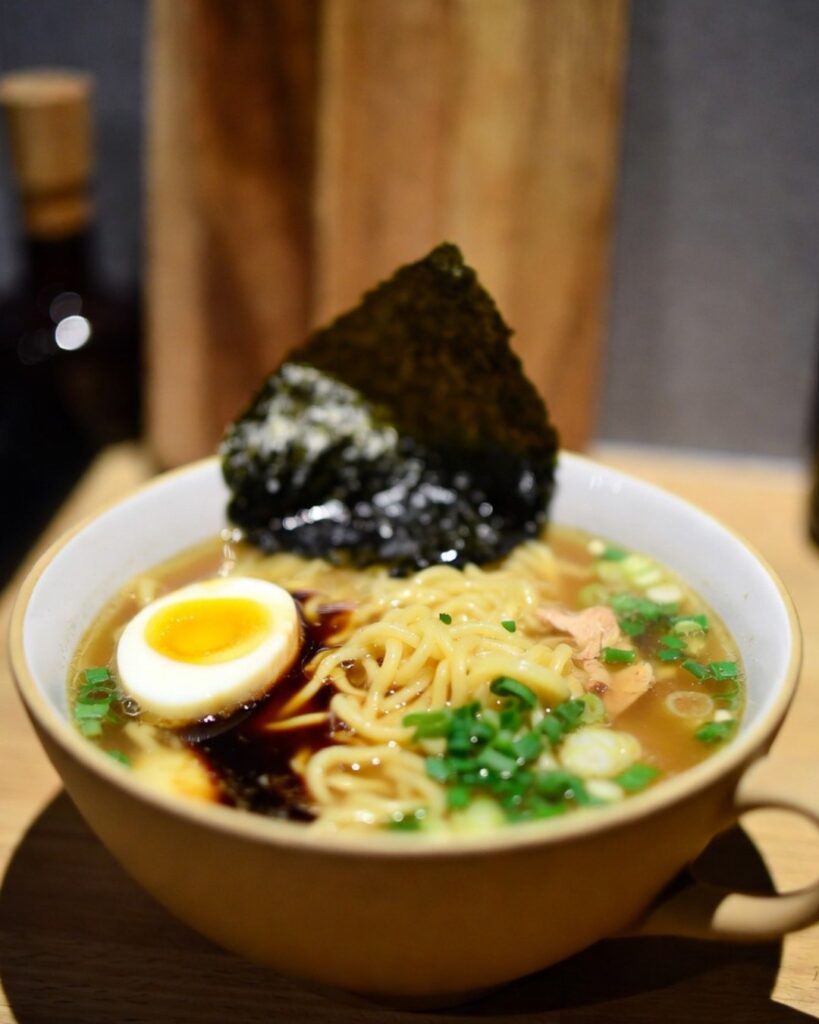
- The refinement that elevates the bowl: a soft-boiled egg at exactly 6.5 minutes, shocked in ice water. The jammy yolk enriches the broth as it breaks.
Plating and Serving
- A soft egg or seared protein centered on the noodles — the visual anchor of the bowl.
- Bright garnishes for contrast: scallion greens, chili oil, toasted sesame, a wedge of lime. Color signals freshness.
- Serve with a small, sharp side: quick-pickled cucumber or a simple cabbage slaw. The acidity cuts the broth’s richness.
- Steamed dumplings or gyoza round it into a full meal without competing.
- Beverages: green tea complements the savory notes and cleanses the palate; a crisp lager works if you want something colder and lighter. Both stay out of the broth’s way.
Nutritional Profile
A broth-based bowl is naturally light yet deeply satisfying. The stock provides hydration and minerals, the protein delivers satiety, and the vegetables add fiber and micronutrients without weighing the dish down. Ginger and garlic contribute genuine anti-inflammatory compounds, not just flavor.
Dietary modifications, with honest trade-offs: use vegetable stock and tofu for a fully plant-based bowl — you’ll lose some of the collagen-rich body that meat stock provides, so lean harder on miso and mushroom for depth. Rice noodles keep it gluten-free. To cut sodium, reduce the soy and build umami with mushroom and a squeeze of citrus instead.
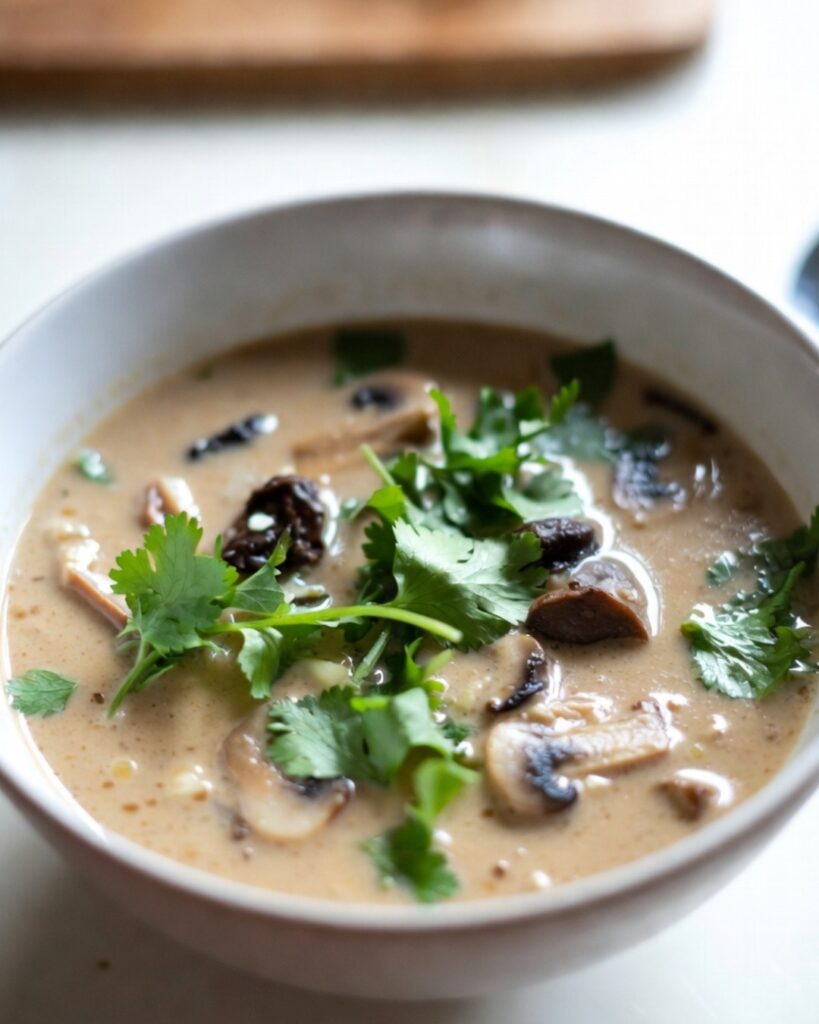
Common Questions, Answered Directly
Why is my broth cloudy? You boiled it. Drop to a bare simmer, and if it’s already cloudy, strain it through a fine sieve or cheesecloth to clarify.
Can I make the broth ahead? Yes, and it improves overnight. Store the broth, noodles, and toppings separately for up to three days, then assemble fresh. This is the key to leftovers that don’t turn to mush.
Can I freeze it? Freeze the broth alone, up to three months. Noodles and vegetables don’t freeze well, so add those fresh when you reheat.
My soup tastes flat. What’s missing? Almost always acid or salt. Add a small squeeze of lime or a few drops of rice vinegar first — flatness is usually a lack of brightness, not a lack of salt.
Pick your protein, get your broth to a bare simmer, and build the bowl the right way tonight. Master the broth once, and every version after it is yours.