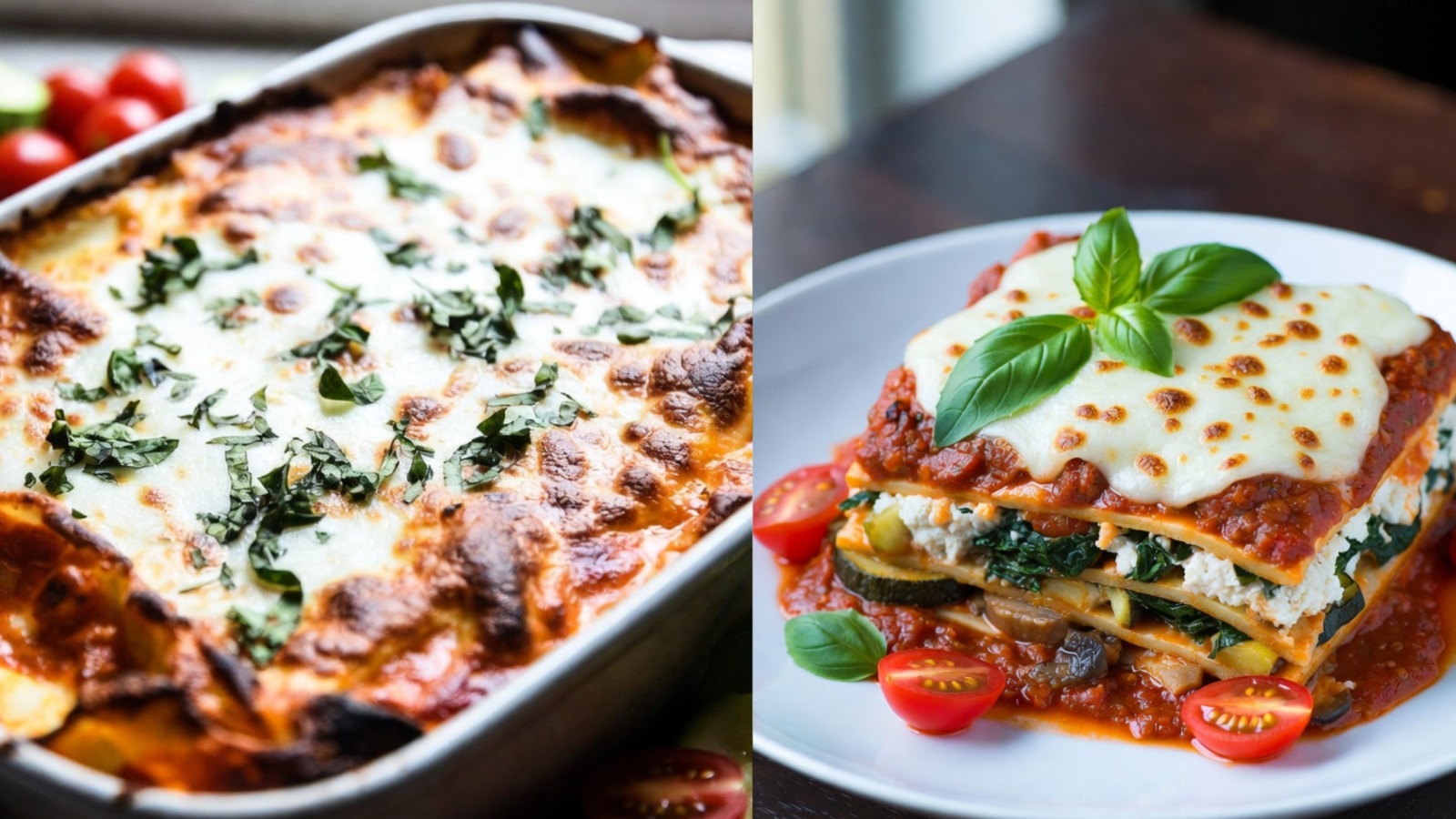
Vegan lasagna fails in one predictable place: it slumps. Cut into it and the layers slide apart into a watery puddle, because the cook removed the ricotta and egg that normally bind everything and put nothing structural back. The vegan lasagna recipes you need to try tonight solve this deliberately — a tofu-cashew ricotta stiff enough to hold its shape, vegetables cooked dry before they layer in, and a béchamel thick enough to set. What sets a properly executed version apart is that it cuts into clean, distinct layers, and no one at the table registers anything missing.
Table of Contents
What Makes This Recipe Work
- Moisture is controlled at every layer. The science here is simple: without egg to coagulate and set the fillings, excess water has nowhere to go and pools in the pan. Vegetables must be cooked until dry, and the ricotta substitute must be thick.
- Tofu plus cashew builds the ricotta’s structure. This is intentional. Firm tofu supplies protein that firms as it bakes, mimicking egg’s binding; blended cashews add the fat and creaminess that make it read as dairy ricotta.
- The béchamel is built on a real roux. Most recipes skip this and use a thin cashew cream that never sets. A flour-and-oil roux thickened with plant milk provides the structural sauce that holds the top layers together.
- Nutritional yeast and miso replace aged-cheese umami. Removing parmesan removes glutamates. These two ingredients put that savory depth back without dairy.
Ingredients — What to Buy and Why It Matters
- Firm or extra-firm tofu, 400 g: the structural base of the ricotta. Press it to remove water — the fat content is irrelevant here, but excess moisture is the enemy, so do not substitute silken, which cannot hold shape.
- Raw cashews, 150 g, soaked: the creaminess. Soaking 4 hours (or 15 minutes in boiling water) softens them for a smooth blend. Raw only — roasted cashews carry the wrong flavor and color.
- Nutritional yeast, 4 tablespoons, and white miso, 1 tablespoon: the umami spine. Miso adds fermented depth; nutritional yeast adds a cheesy, savory note. Both are non-negotiable for flavor that doesn’t taste flat.
- Lasagna noodles, 250 g: most dried varieties are egg-free by default, but check the label. No-boil noodles work well here and absorb excess moisture, which is an advantage in a vegan build.
- Crushed tomatoes, 800 g, and tomato paste, 2 tablespoons: the sauce base. Paste cooked in oil first deepens the flavor and compensates for the meatless profile.
- Vegetables — zucchini, mushrooms, spinach (about 500 g total): body and substance. Mushrooms bring umami; all must be cooked until their water releases and evaporates. Trade-off note: skipping this step is the single most common cause of watery lasagna.
- Plant milk, 500 ml unsweetened, plus flour and olive oil: the béchamel. Unsweetened is critical — sweetened or vanilla plant milk ruins a savory sauce. Soy and oat milk thicken best; almond is thinnest.
Step-by-Step Instructions
Prep time: 30 minutes · Cook time: 50 minutes · Rest time: 15 minutes · Total time: about 1 hour 35 minutes · Servings: 8
- Press the tofu. Wrap it in a towel under a weight for 15 minutes. What’s happening is you’re removing the water that would otherwise leak into the finished dish. This is the critical step here for structure.
- Cook the vegetables dry. Sauté the mushrooms and zucchini over medium-high until their released water fully evaporates and the pan is dry, about 8 minutes. Wilt the spinach separately and squeeze it hard in a towel. Watery vegetables are the primary cause of a collapsing lasagna.
- Build the tomato sauce. Cook the tomato paste in olive oil for 60 seconds until it darkens to brick, add crushed tomatoes, garlic, and herbs, and simmer 15 minutes uncovered to concentrate.
- Make the tofu-cashew ricotta. Blend the drained cashews with a splash of water, lemon juice, nutritional yeast, miso, and salt until smooth. Add the pressed tofu and pulse to a ricotta-like texture with some grain remaining. It should be thick and hold a peak.
- Make the béchamel. Cook 3 tablespoons flour in 3 tablespoons olive oil for 90 seconds, then whisk in the plant milk gradually. Simmer until it coats a spoon, about 5 minutes. A proper roux is what makes it set rather than run.
- Layer with intent. Sauce, then noodles, then ricotta, then vegetables, repeating. Finish with noodles, béchamel, and a scatter of nutritional yeast. Keep each layer thin and even — overloading any single layer is what makes it slide.
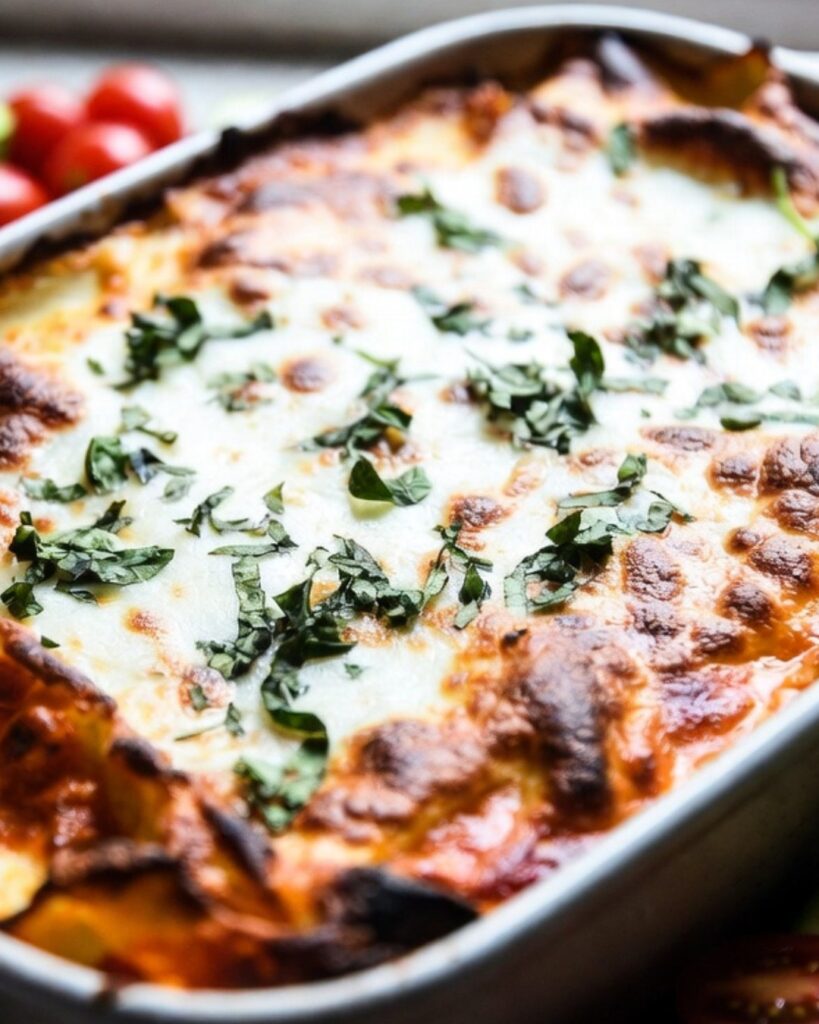
- Bake covered at 190°C (375°F) for 30 minutes, then uncovered for 15 to 20 until the top is golden and the edges bubble. The uncovered phase evaporates surface moisture and sets the top.
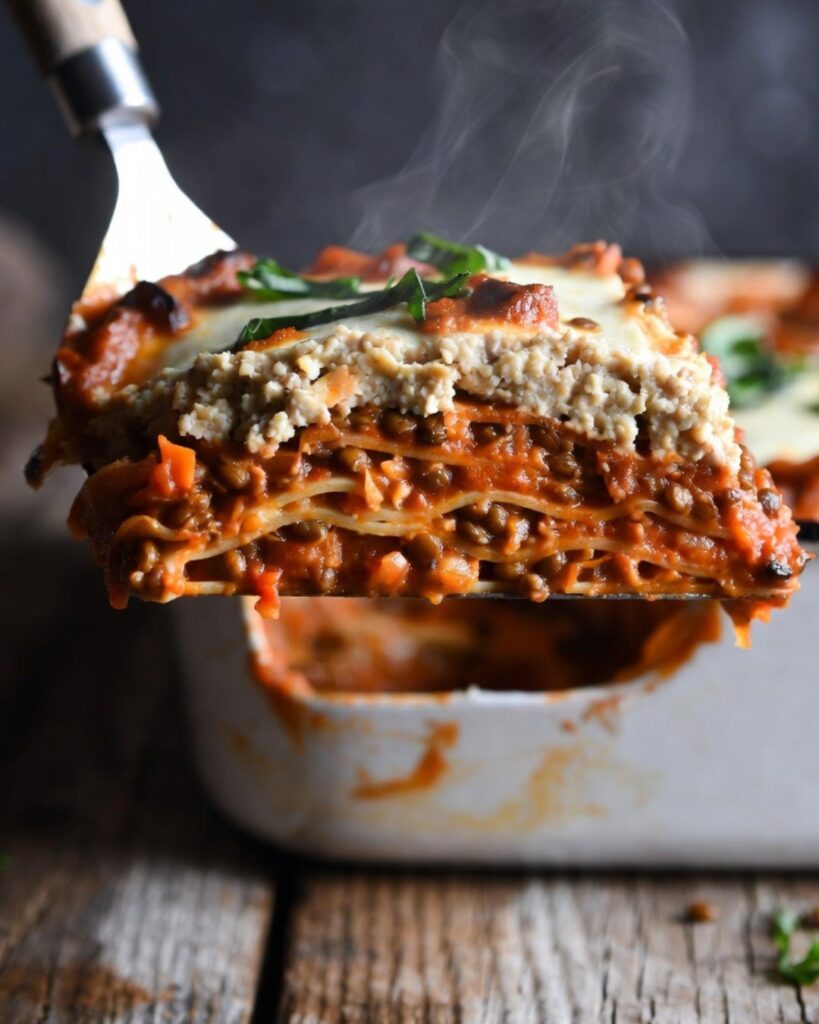
- Rest 15 minutes before cutting. This is non-negotiable. The layers firm as they cool, and cutting immediately guarantees a slide. Resting is what gives you clean slices.
Technique Notes for Better Results
- The professional approach here is to build the lasagna a day ahead and bake it from cold. The noodles absorb moisture from the sauces overnight, the flavors meld, and the structure sets firmer than a same-day build.
- Where most home cooks go wrong: under-seasoning. Plant proteins are bland by default and need aggressive salt, acid, and umami. Taste the ricotta and the sauce separately, and season each until it tastes good on its own.
- Press the tofu longer than you think necessary. Any retained water becomes visible liquid in the pan. Fifteen minutes under real weight is the minimum.
- Do not use sweetened plant milk in the béchamel. It is the single most common ruinous substitution, turning a savory sauce cloying. Read the label.
- The refinement that elevates the dish: a thin layer of béchamel between the ricotta and vegetables in the middle. It binds those layers and adds richness that pushes the whole dish closer to a dairy version.
- If the top browns before the interior sets, tent it with foil rather than shortening the bake. The center needs the full time to firm.
Plating and Serving
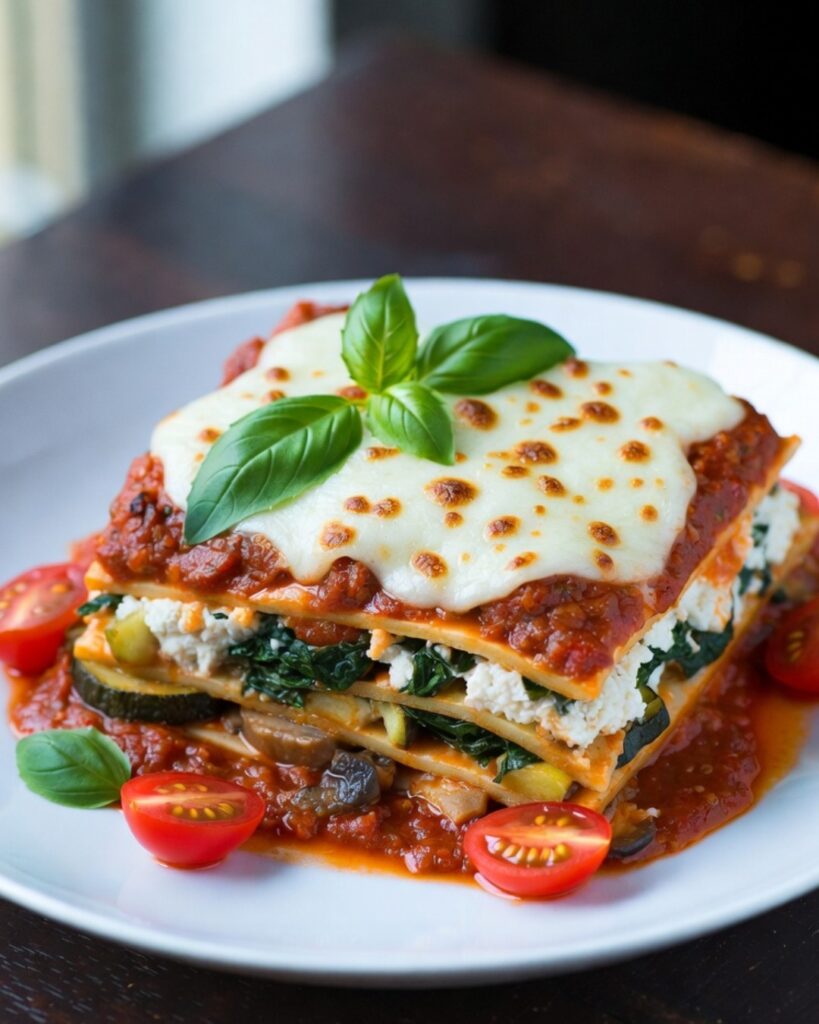
- Cut into clean squares and let each slice rest 2 minutes on the plate — the distinct, held layers are the presentation, so don’t rush it onto the plate straight from the oven.
- A scatter of fresh basil and a thread of good olive oil for color and aroma against the uniform surface.
- A sharp green salad with lemon vinaigrette: acidity cuts the richness of the cashew and béchamel.
- Garlic bread or focaccia for the sauce, and to round it into a full meal.
- Beverage: a medium-bodied red — Chianti or Sangiovese. Its acidity matches the tomato rather than fighting it. For a non-alcoholic pairing, sparkling water with lemon serves the same palate-resetting role.
Nutritional Profile
This is a genuinely well-balanced main. Tofu and cashews supply complete plant protein and healthy fats, the vegetables add fiber and a broad micronutrient range, and nutritional yeast contributes B vitamins, often including B12. It is naturally free of cholesterol and, done right, lower in saturated fat than a traditional dairy-and-meat lasagna.
Modifications, with honest trade-offs: a gluten-free build works with gluten-free noodles and a cornstarch-thickened béchamel in place of the flour roux, with a slightly softer set. For a nut-free version, replace the cashews with blended silken tofu or a sunflower-seed cream — the texture is looser, so lean harder on pressing the firm tofu. To raise protein further, add a layer of seasoned lentils or a plant-based mince, which also deepens the savory profile.
Common Questions, Answered Directly
Why is my vegan lasagna watery? Undercooked vegetables or unpressed tofu, in that order. Cook vegetables until the pan is dry, press the tofu hard, and rest the baked dish 15 minutes before cutting.
Can I make it ahead? Yes, and it improves. Assemble up to a day ahead and refrigerate unbaked, or bake fully and reheat — the structure sets better after a night in the fridge. Add 10 minutes to the bake from cold.
How long does it keep? Four days refrigerated, and it freezes well for three months, baked or unbaked. Freeze in portions and reheat covered so the top doesn’t dry out.
My layers slid apart. What happened? Too much moisture, too little rest, or overloaded layers. Thin, even layers plus a full 15-minute rest fixes it.
Press the tofu, cook the vegetables dry, build a real béchamel, and rest it before cutting. Make it once that way and vegan lasagna stops being the dish that collapses on the plate.