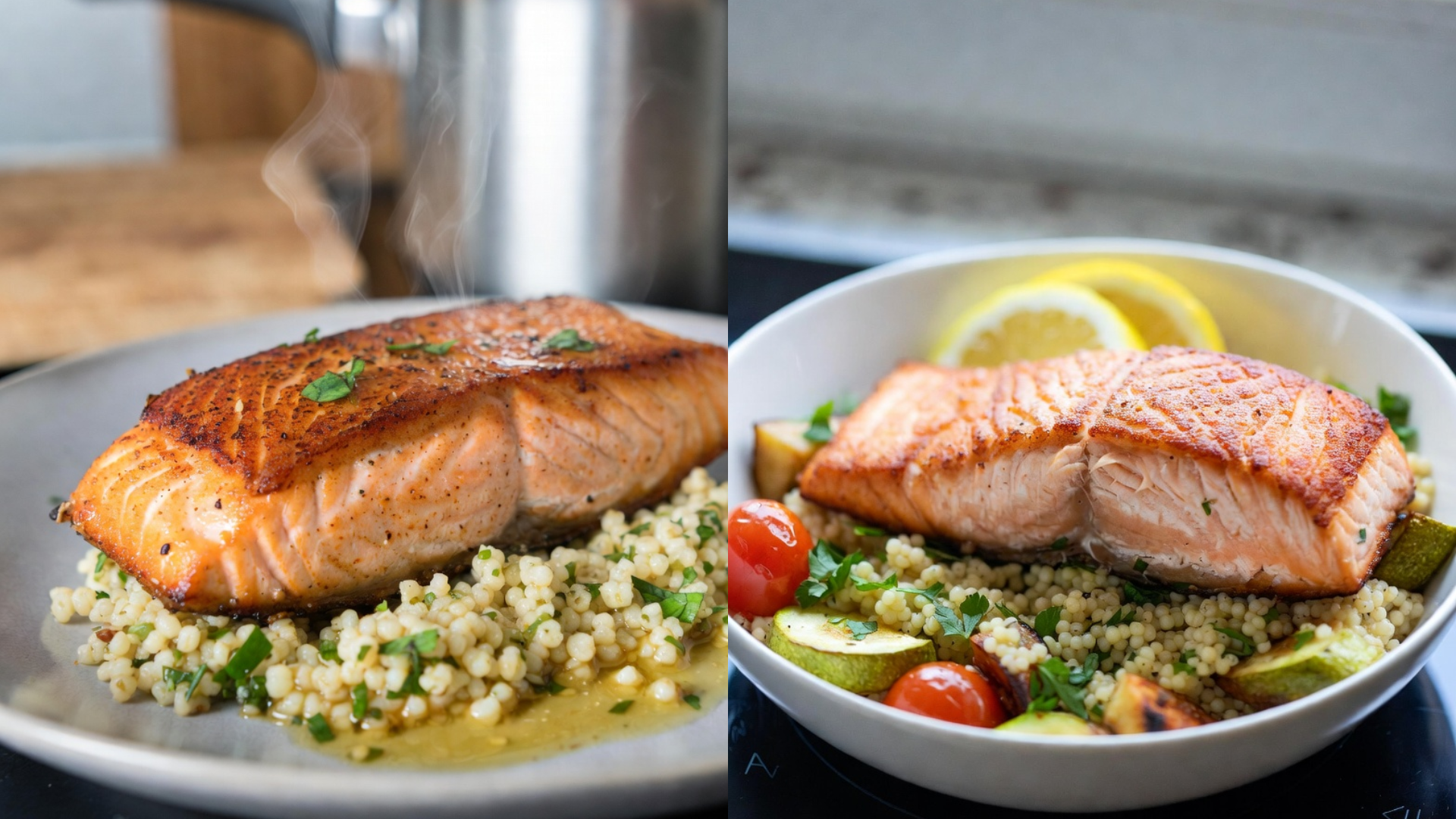
Most people overcook salmon and then wonder why it’s dry. The fix is knowing exactly when to pull it off the heat — and building the whole meal around that timing so nothing else demands your attention at the wrong moment. These quick salmon and couscous recipes work because they use one pan and one clear window: sear the salmon to just-set, rest it while the couscous steams in the same skillet, and let carryover heat finish the fish. The difference between dry and silky salmon comes down to a single principle — stop cooking before it looks done. Master that, and you get a fast, moist, one-skillet dinner with no pile of dishes.
Table of Contents
What Makes This Recipe Work
- Salmon is pulled early and finishes off-heat. The science here is simple: fish keeps cooking after it leaves the pan. Removing it at medium — still translucent at the very center — lets carryover heat bring it to perfect doneness instead of overshooting into dry.
- The couscous steams in the salmon’s pan. This is intentional. Cooking the couscous in the same skillet captures the fond and rendered salmon fat, building flavor while saving you a second pot and a second cleanup.
- Couscous is steamed off the heat, not boiled. Most recipes skip this. True couscous only needs boiling liquid poured over it and a lid — five minutes of resting off the burner gives fluffy, separate grains, not a gummy mass.
- The fat rendered from the skin does double duty. Searing skin-side down renders fat that both crisps the skin and flavors the couscous cooked in it afterward. Nothing is wasted.
Ingredients — What to Buy and Why It Matters
Salmon fillets, skin-on (4 fillets, about 6 oz / 170g each): Skin-on is the better choice here — the skin protects the flesh from the direct heat and renders fat for the couscous. Buy center-cut fillets of even thickness so they cook uniformly. Do not use pre-frozen thin tail pieces, which overcook in seconds.
Couscous (1 cup / 180g): Standard Moroccan-style couscous steams in five minutes, which is why it fits a quick dinner. Do not substitute pearl (Israeli) couscous one-for-one — it’s larger and must be simmered like pasta, changing the whole method.
Stock or water (1½ cups / 360ml): Stock is worth it — it’s the couscous’s only real flavoring liquid, so plain water gives a flatter result. Warm it before adding for faster, more even steaming.
Olive oil, lemon, garlic, and fresh herbs: The acid of lemon cuts the salmon’s richness, and herbs like parsley or dill lift the couscous. These are the brightness that keeps the dish from tasting heavy.
Salt and pepper: Season the salmon well just before searing — salting too early draws out moisture and works against you.
Step-by-Step Instructions
Prep time: 10 minutes · Cook time: 15 minutes · Total time: 25 minutes · Servings: 4
- Dry the salmon thoroughly and season. Pat the fillets completely dry with paper towels. This is the critical step for a good sear — surface moisture steams instead of browns. Season with salt and pepper just before cooking.
- Sear skin-side down. Heat olive oil in a skillet over medium-high and lay the fillets skin-down, pressing gently for 10 seconds so the skin stays flat. Cook 4 to 5 minutes until the skin is crisp and the flesh has turned opaque most of the way up.
- Flip and finish briefly. Turn the fillets and cook just 1 to 2 minutes more. What’s actually happening is you’re setting the surface while leaving the center slightly translucent — pull them now, before they look fully done.
- Rest the salmon off-heat. Transfer the fillets to a plate. Carryover heat finishes the interior to a moist, just-flaking texture while you make the couscous.
- Toast the garlic and couscous in the same pan. Lower the heat, add garlic to the rendered fat for 30 seconds, then stir in the dry couscous for one minute to toast it. Toasting deepens the flavor and helps the grains stay separate.
- Steam the couscous. Pour in the hot stock, stir once, cover, and remove from the heat entirely. Let it sit undisturbed 5 minutes. The grains absorb the liquid and swell without any active cooking.
- Fluff and finish. Uncover, fluff with a fork, and fold in lemon juice and herbs. Return the rested salmon to the pan to warm through, and serve.
Technique Notes for Better Results
- Where most home cooks go wrong: cooking salmon to “flaky.” Flaky at the pan means dry on the plate. Pull it while the center is still slightly translucent and let it rest.
- The professional approach here is the finger test. Gently press the fillet — it should feel like set gelatin with a little give, not firm. Firm means overdone.
- Don’t crowd the pan. Sear in batches if needed. Crowding drops the pan temperature and steams the fish instead of searing it.
- Fluff couscous with a fork, never a spoon. A fork separates the grains; stirring with a spoon compresses them into a paste.
- Let the couscous steam undisturbed. Lifting the lid to check releases the steam doing the work. Trust the five minutes.
- Warm your stock first. Cold liquid cools the pan and steams the couscous unevenly, leaving some grains hard.
Plating and Serving
- A crisp green salad: Its acidity and crunch contrast the rich fish and soft grain for balance.
- Roasted or steamed greens: Asparagus or green beans add color and a fresh, vegetal counterpoint.
- A dollop of yogurt or tzatziki: Cool and tangy against the warm salmon, and it ties the herbs together.
- Beverage pairing: A dry white like Sauvignon Blanc — its acidity mirrors the lemon and cuts the salmon’s fat. Sparkling water with lemon does the same job alcohol-free.
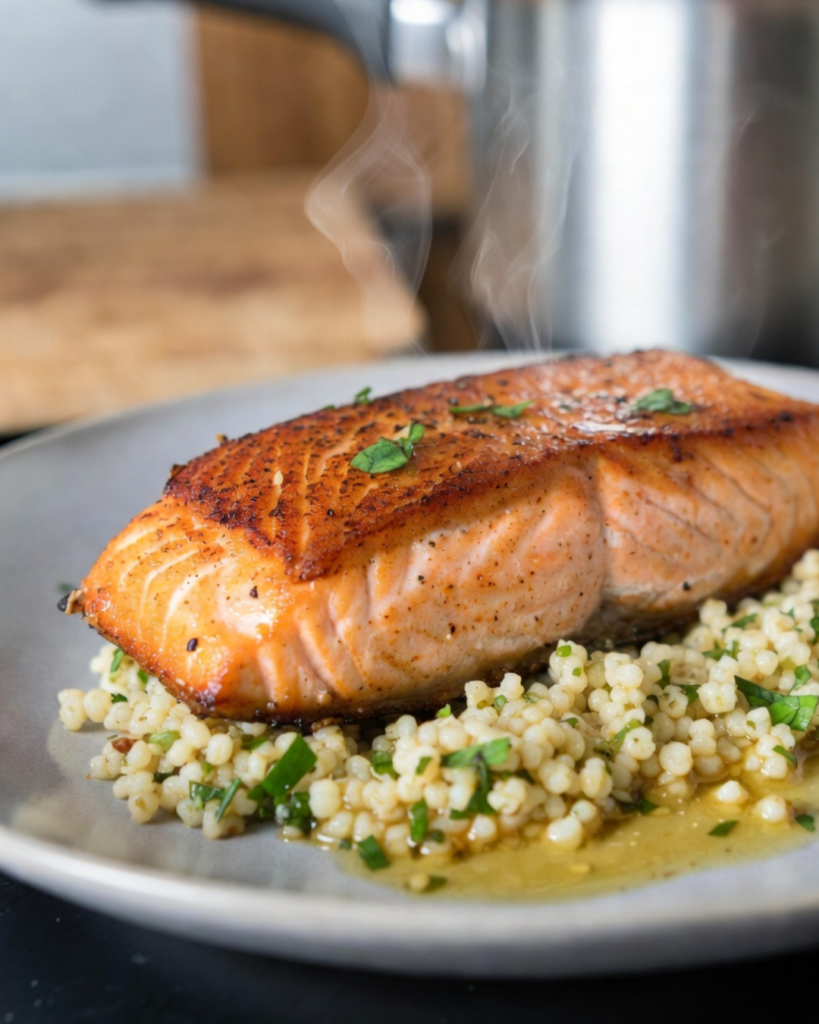
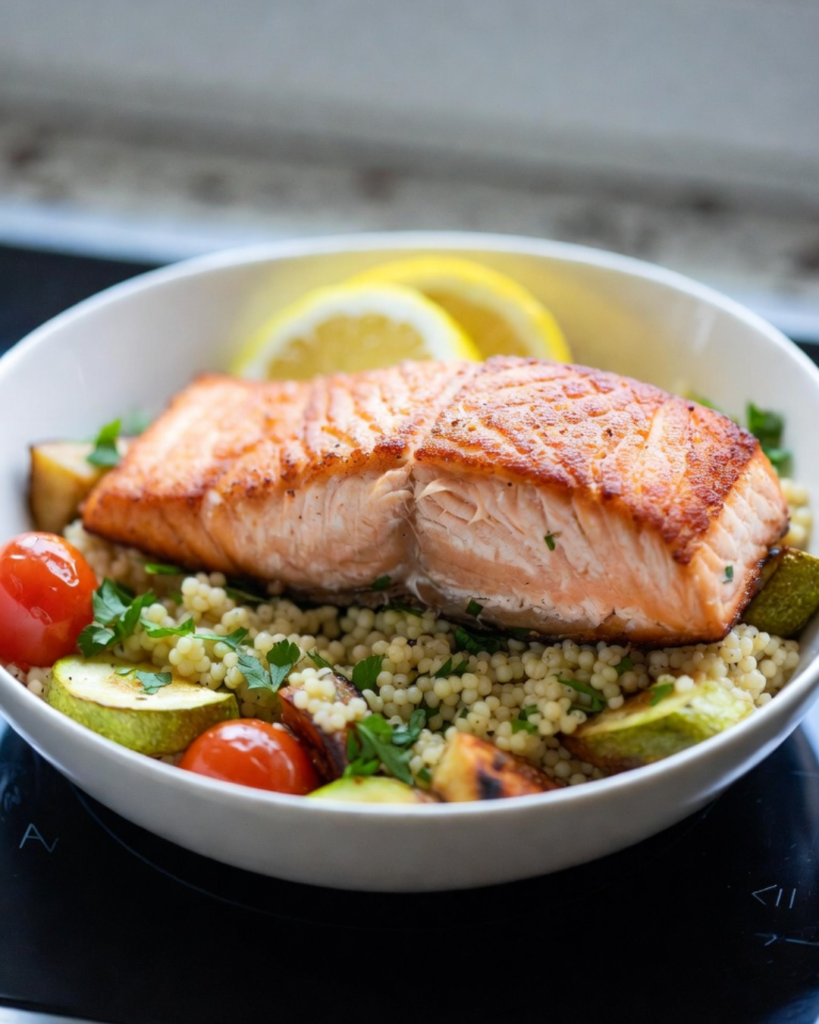
Plate the couscous as a base and rest the salmon on top, skin-side up to keep it crisp. Finish with a lemon wedge and a scatter of herbs — the green against the pink reads fresh and deliberate without any fuss.
Nutritional Profile
This is a genuinely well-balanced plate. Salmon delivers high-quality protein and omega-3 fatty acids, which support heart and brain health. Couscous provides quick complex carbohydrates for energy, and the lemon and herbs add vitamin C and brightness with no added fat. Together they make a complete, nutrient-dense meal.
Dietary modifications: For gluten-free, swap couscous for quinoa, which steams similarly but needs a longer simmer — adjust the method accordingly. For lower carb, serve the salmon over cauliflower couscous, sautéed briefly in the same pan, accepting a lighter, less filling result. To reduce fat further, use a skinless fillet and a nonstick pan, understanding you lose the rendered fat that flavors the grain.
Common Questions, Answered Directly
How do I know when the salmon is done? Pull it when the center is still slightly translucent and it feels like set jelly with a little give. Carryover heat finishes it moist.
Why is my couscous mushy? Too much liquid or over-stirring. Stick to the ratio, steam off the heat, and fluff with a fork instead of stirring.
Can I use frozen salmon? Yes — thaw it fully and pat it very dry first, or the surface water will prevent a proper sear.
How do I store leftovers? Refrigerate up to two days. Reheat gently and briefly, since salmon dries out fast when reheated at high heat.
The whole meal turns on timing and one pan: sear the salmon, pull it early, steam the couscous in its flavor, and let carryover heat do the rest. That’s how these quick salmon and couscous recipes deliver moist fish and fluffy grain without dry fillets or a sink full of pans. Heat your skillet and have dinner on the table in twenty-five minutes.