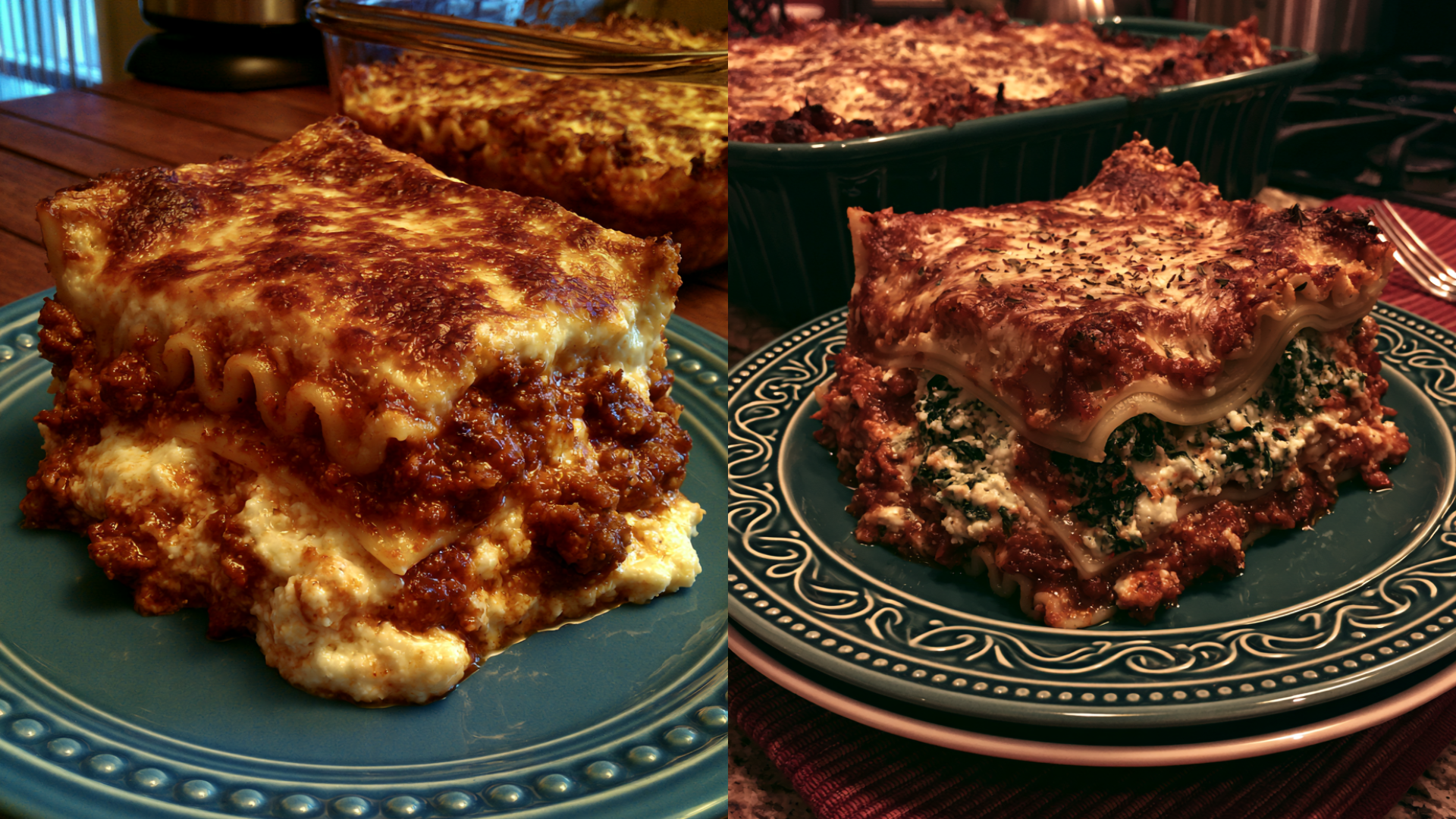
Most people overcook this. Here’s how not to. The difference between a watery, sliding-apart lasagna and one that holds a clean slice comes down to one step: managing moisture at every layer, not just at the noodle stage where most people assume the problem starts and ends.
Easy lasagna recipes get blamed for soggy noodles when the real culprit is usually excess liquid from the sauce, ricotta, or vegetables seeping into layers that were never built to absorb it. A properly executed version controls moisture at each component before assembly, not just during baking.
Prep time: 30 minutes | Cook time: 50 minutes | Total time: 1 hour 20 minutes, plus resting | Servings: 8
Table of Contents
What Makes This Recipe Work
- The sauce is simmered until thick, not left loose — this is intentional. A watery sauce releases liquid throughout baking, which the noodles absorb well past the point of holding their structure
- Ricotta is drained before mixing, not used straight from the container — the science here is simple: ricotta carries excess whey that seeps out during baking if it isn’t removed beforehand
- No-boil noodles are used correctly, with enough sauce moisture calculated in — most recipes skip this balance, either drowning the noodles in too much liquid or leaving them under-hydrated and chewy
- The lasagna rests for a full 15 minutes before cutting — cutting immediately releases trapped steam and liquid that would otherwise redistribute and firm up the layers
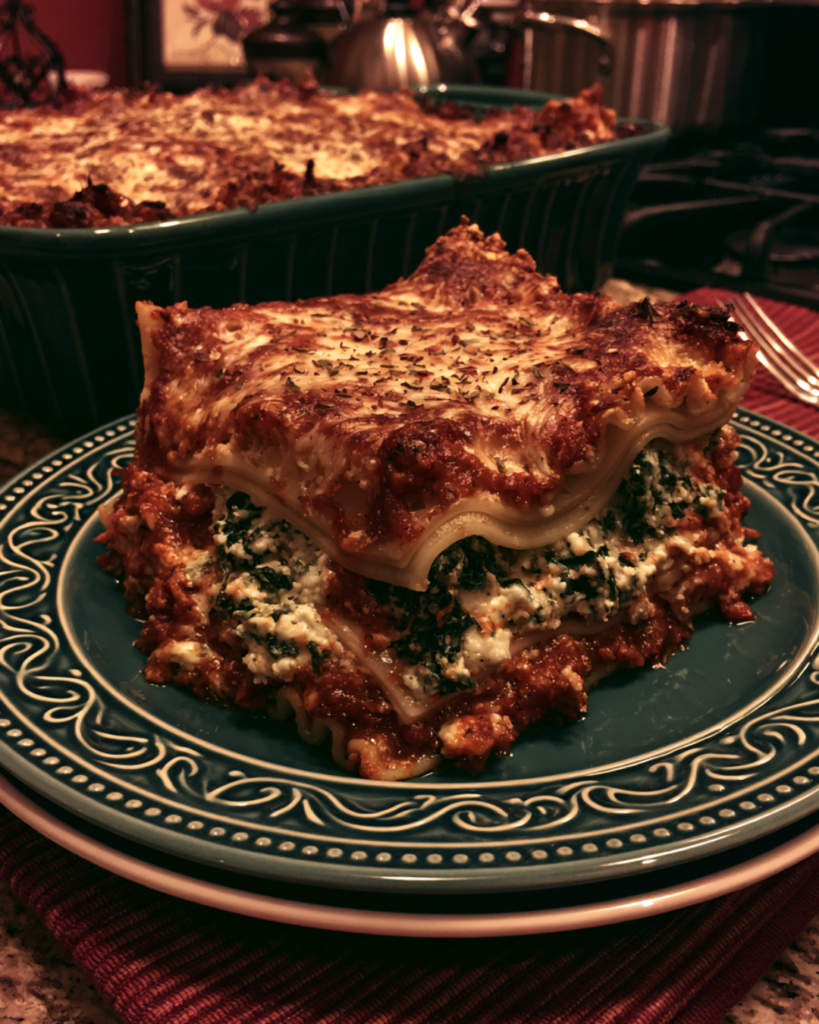
Ingredients — What to Buy and Why It Matters
- No-boil lasagna noodles (1 box): These absorb moisture directly from the sauce during baking, which works in your favor if the sauce has enough liquid, but leads to a chewy, dry result if the sauce is too thick — the recipe balances this precisely.
- Whole milk ricotta (15 oz), well-drained: Draining excess whey through a fine mesh strainer for 20-30 minutes before mixing prevents that liquid from seeping into the noodle layers during baking.
- Ground beef or Italian sausage (1 lb): Browned and drained of excess fat before it joins the sauce — skipping this step adds unnecessary grease that thins the sauce and contributes to sogginess.
- Canned crushed tomatoes (28 oz) and tomato paste (2 tbsp): The paste thickens the sauce beyond what crushed tomatoes alone provide, giving it the body needed to avoid releasing excess liquid during baking.
- Mozzarella (2 cups, shredded), plus more for topping: Shred it yourself from a block — pre-shredded mozzarella carries anti-caking starch that can prevent it from melting into a cohesive layer.
- Parmesan (1/2 cup, grated): Mixed into the ricotta layer for depth and saltiness, rather than reserved only for the top.
- Egg (1 large): Binds the ricotta mixture, helping it hold its shape as a distinct layer rather than melting into a loose, spreadable mass.
Substitution note: Fresh, boiled noodles can replace no-boil, but reduce the sauce’s liquid slightly to compensate, since boiled noodles are already fully hydrated before assembly.
Step-by-Step Instructions
- Brown the ground beef in a large pot over medium-high heat, breaking it apart as it cooks. Drain excess fat thoroughly — this is the critical step here, since leftover grease thins the sauce and adds to the moisture that eventually soaks into the noodles.
- Add the crushed tomatoes and tomato paste to the pot. Simmer uncovered for 20-25 minutes, stirring occasionally, until the sauce has visibly thickened and coats the back of a spoon.
- While the sauce simmers, drain the ricotta in a fine mesh strainer set over a bowl for 20-30 minutes. What’s actually happening is the whey, a watery byproduct of the cheese, is separating out — skipping this step means that liquid ends up in your lasagna instead of down the drain.
- Combine the drained ricotta with the egg, half the Parmesan, and a pinch of salt and pepper. Mix until smooth and set aside.
- Preheat the oven to 375°F. Spread a thin layer of sauce on the bottom of a 9×13 baking dish — this prevents the first layer of noodles from sticking and gives them a small amount of moisture to start absorbing immediately.
- Layer noodles, ricotta mixture, meat sauce, and mozzarella, repeating for three to four layers total, finishing with a final layer of sauce and cheese on top.
- Cover tightly with foil, tented slightly so it doesn’t touch the cheese, and bake 35 minutes. Remove the foil and bake 10-15 minutes more, until the top is bubbling and golden.
- Let the lasagna rest for a full 15 minutes before cutting. This is non-negotiable — cutting immediately releases trapped steam and liquid that the resting period allows to redistribute and set.
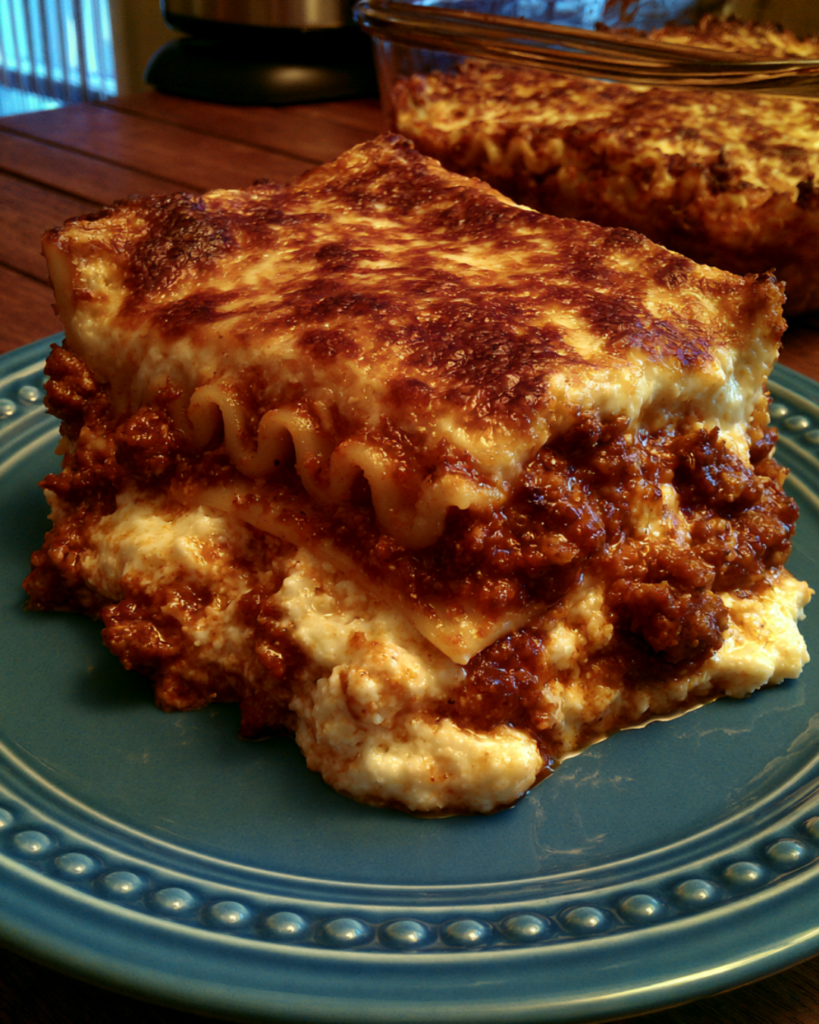
Technique Notes for Better Results
- The professional approach here is thickening the sauce well past what looks necessary before it ever meets the noodles, since it will loosen slightly during baking regardless
- Where most home cooks go wrong is skipping the ricotta drain, assuming a small amount of whey won’t matter, when in fact it’s one of the most common sources of a watery finished dish
- If your lasagna consistently turns out soggy, check whether you’re using fresh mozzarella, which carries significantly more moisture than low-moisture, part-skim mozzarella suited for baking
- Letting the assembled, unbaked lasagna rest in the fridge for an hour before baking helps the no-boil noodles begin absorbing moisture evenly before they hit the oven’s heat
- Tenting the foil so it doesn’t touch the cheese prevents sticking and tearing when you remove it partway through baking
- For a firmer, more sliceable result, refrigerate the fully baked lasagna overnight and reheat individual portions the next day — the layers set further as they cool completely
Plating and Serving
- A simple green salad with a sharp vinaigrette cuts through the richness of the cheese and meat
- Garlic bread on the side works both as a utensil and a flavor complement
- Cut with a sharp knife dipped in hot water between slices for the cleanest presentation
- Let each slice hold its shape on the plate rather than serving it too soon after baking, when it’s still loose
- A medium-bodied red wine like Chianti or Sangiovese complements the acidity of the tomato sauce well
Nutritional Profile
Ricotta and mozzarella both provide calcium and protein, though together with the meat, this dish carries meaningful saturated fat and calories per serving. Using part-skim ricotta and mozzarella lightens the dish somewhat without dramatically changing the texture, since the moisture-control techniques here matter more than the specific fat content of the cheese. Swapping ground beef for ground turkey reduces fat further, though the sauce may need a touch more seasoning to compensate for turkey’s milder flavor. Adding a layer of sautéed spinach or mushrooms, well-drained beforehand, boosts nutrition without compromising the moisture balance the recipe depends on.
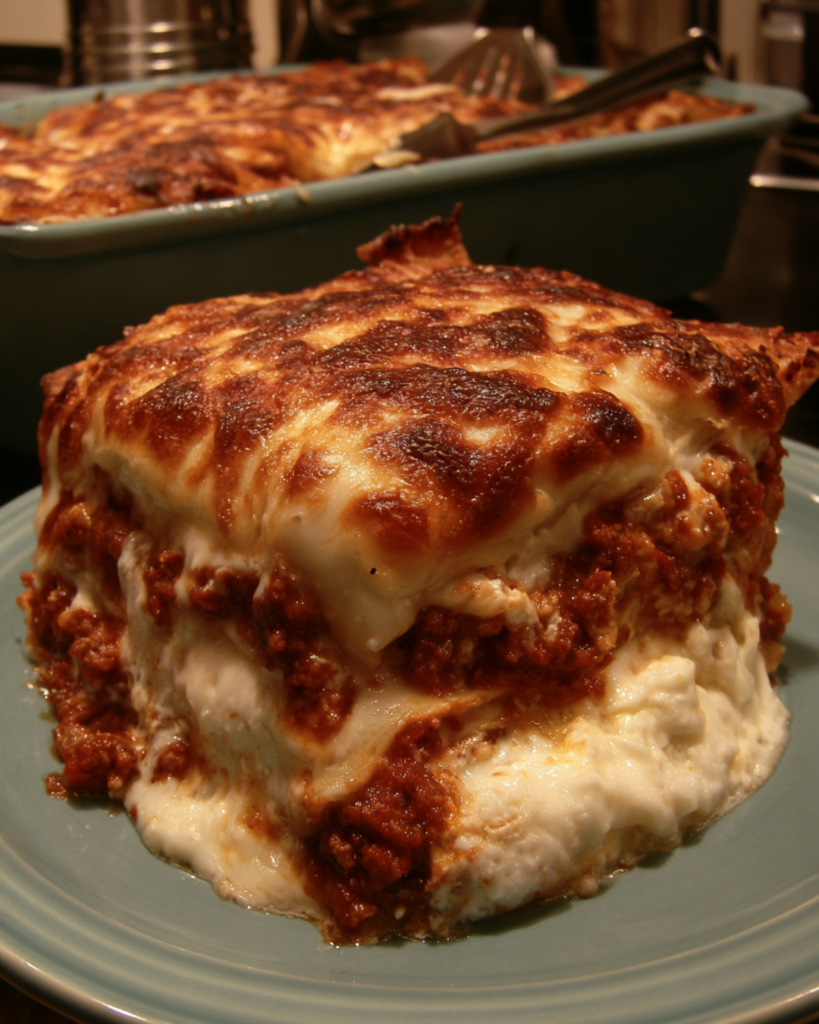
Common Questions, Answered Directly
Can I make this ahead and refrigerate before baking? Yes, assemble up to 24 hours ahead, covered tightly, and add about 10 extra minutes to the covered baking time since it will start from cold.
Why does my lasagna always turn out watery despite following the recipe? The most likely causes are an under-thickened sauce, undrained ricotta, or cutting into it before the rest period is complete.
Can I freeze this lasagna? Yes, either baked or unbaked, for up to 3 months. Thaw overnight in the refrigerator before baking or reheating for the most even results.
What if I only have regular boiled noodles, not no-boil? Cook them slightly under al dente, then pat dry with paper towels before layering, since they carry more residual moisture than no-boil noodles do straight from the box.
Skip the sogginess tonight — controlling moisture at every layer is what actually separates a clean slice from a watery one.