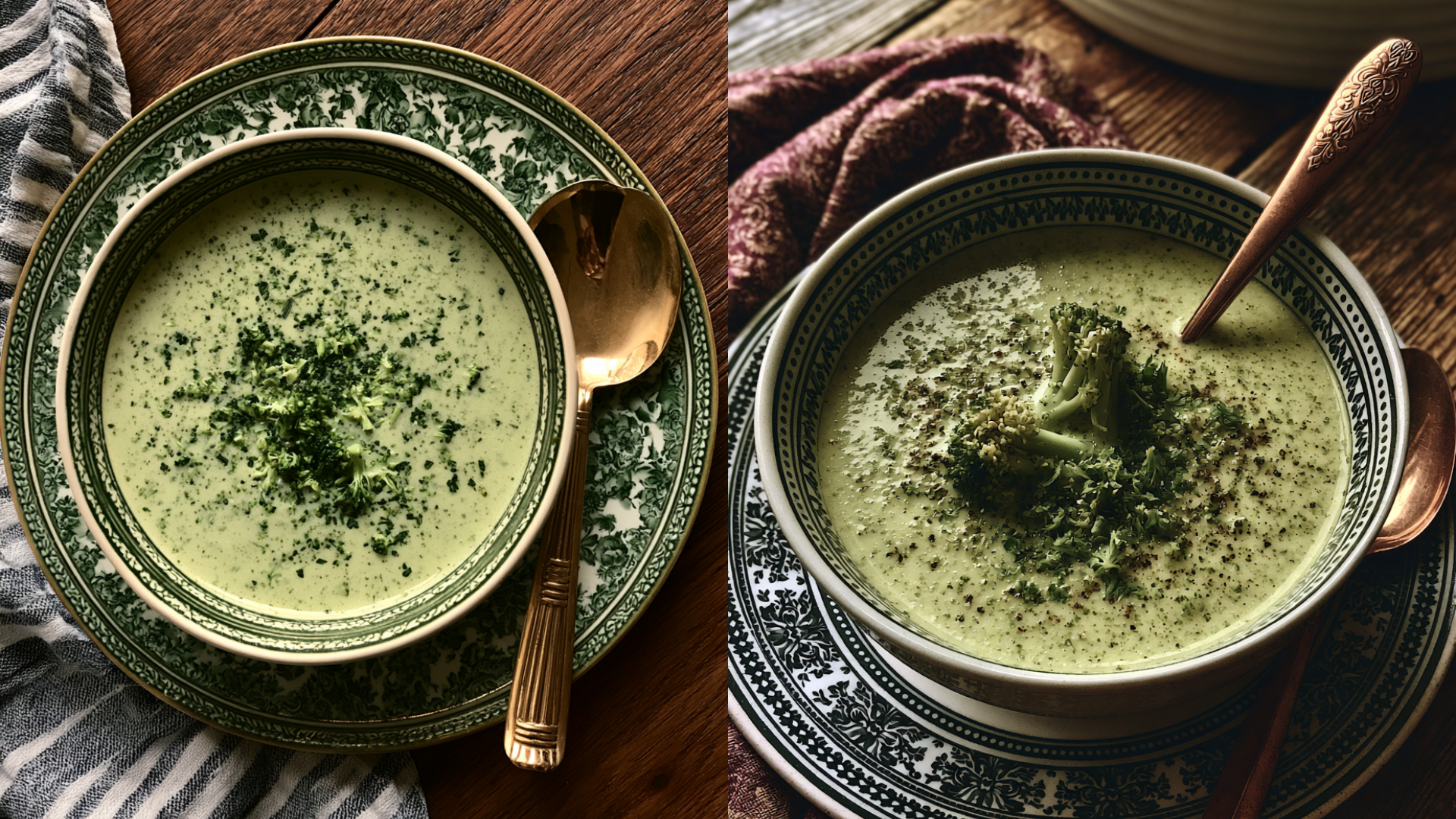
Most people overcook this. Here’s how not to. The difference between a cream soup that breaks into a grainy, separated mess and one that stays silky comes down to one step: building a proper roux base before dairy ever enters the pot, rather than relying on cream alone to hold everything together.
This cream of broccoli soup recipe stays emulsified because the roux does the structural work that cream can’t do on its own. A properly executed version thickens the base first, then introduces dairy gradually and gently — never as an afterthought stirred in at the end over high heat.
Prep time: 15 minutes | Cook time: 30 minutes | Total time: 45 minutes | Servings: 6
Table of Contents
What Makes This Recipe Work
- A butter-and-flour roux is cooked before any liquid is added — this is intentional. The roux thickens the base independently of the cream, so the soup holds together even if the dairy component is imperfectly incorporated
- Broccoli is simmered directly in the thickened broth, not steamed separately — the science here is simple: cooking it in the base infuses the liquid with flavor while the starch released helps bind everything further
- Cream is added off high heat, gradually — most recipes skip this and dump cold cream into a boiling pot, which is one of the most common causes of a broken, separated soup
- The soup is blended before the cream goes in, not after — blending hot dairy at high speed can break its structure, so texture is finalized first and richness is added last
Ingredients — What to Buy and Why It Matters
- Fresh broccoli (1.5 lbs, florets and stems), chopped: Fresh broccoli holds its color and flavor better than frozen — if using frozen, add it directly without thawing and extend the simmer time slightly.
- Unsalted butter (4 tbsp) and all-purpose flour (4 tbsp): Equal parts by weight form the roux, which is the actual mechanism preventing separation — do not skip or reduce this step in favor of cornstarch, which thickens but doesn’t stabilize dairy the same way.
- Chicken or vegetable broth (4 cups, low sodium): Low sodium lets you control the final salt level, since cheese and cream both add saltiness later in the process.
- Yellow onion (1 medium, diced) and garlic (2 cloves, minced): The aromatic base, sweated in the same butter used for the roux to build flavor in a single step.
- Heavy cream (1 cup): Full-fat cream is what gives the soup its richness — half-and-half will work but is more prone to separating under heat, since it carries less fat to stabilize it.
- Sharp cheddar (1 cup, shredded), optional: Adds body and flavor — shred it yourself, since pre-shredded cheese contains anti-caking starch that can create a grainy texture instead of melting smoothly.
- Nutmeg (a small pinch): A subtle background note that rounds out the earthiness of the broccoli without announcing itself directly.
Substitution note: Coconut milk can replace heavy cream for a dairy-free version, but the flavor shifts noticeably sweeter, and the roux should still be made with a plant-based butter substitute to preserve the stabilizing effect.
Step-by-Step Instructions
- Melt the butter in a large pot over medium heat. Add the onion and cook 4-5 minutes until softened, then add the garlic and cook 30 seconds more, until fragrant.
- Sprinkle the flour over the onion mixture and stir constantly for 1-2 minutes, until it smells lightly toasted and no longer raw. This is the critical step here — this roux is what gives the soup structural integrity independent of the dairy added later.
- Gradually whisk in the broth, a ladle at a time, whisking continuously to prevent lumps. What’s actually happening is the roux is dispersing evenly into the liquid, creating a smooth, thickened base before the vegetables ever go in.
- Add the chopped broccoli and bring to a simmer. Cover and cook 15-18 minutes, until the broccoli is completely tender and easily pierced with a fork.
- Blend the soup until smooth, using an immersion blender directly in the pot, or in batches with a standard blender, venting the lid to release steam safely.
- Return the soup to low heat. Stir in the heavy cream gradually, a splash at a time, rather than all at once. This is non-negotiable if you want to avoid a sudden temperature shock that can cause the dairy to separate.
- Add the cheddar, if using, stirring until fully melted. Keep the heat low throughout this step — a hard simmer or boil at this stage is the most common cause of a broken, grainy finish.
- Season with nutmeg, salt, and pepper to taste, adjusting gradually since the broth and cheese both contribute existing salt.

Technique Notes for Better Results
- The professional approach here is building the roux to a pale golden color, not leaving it raw or letting it darken too far — a properly cooked roux thickens without tasting of raw flour
- Where most home cooks go wrong is adding cold cream straight from the fridge into a hot pot, which shocks the dairy and increases the risk of curdling
- If the soup starts to look grainy or separated, remove it from heat immediately and whisk vigorously — catching it early often brings it back together
- Blending before adding dairy, rather than after, protects the cream’s structure from the friction and heat generated by a high-speed blender
- For a smoother finish, strain the blended base through a fine mesh sieve before adding the cream, removing any remaining fibrous broccoli stems
- Reheating leftovers gently over low heat, stirring frequently, preserves the same stability the soup had when first made — a microwave on high risks separating it on reheat
Plating and Serving
- A simple grilled cheese sandwich turns this into a complete, classic pairing
- Crusty bread on the side works well for dipping
- A swirl of extra cream on top, just before serving, adds visual contrast and a touch of richness
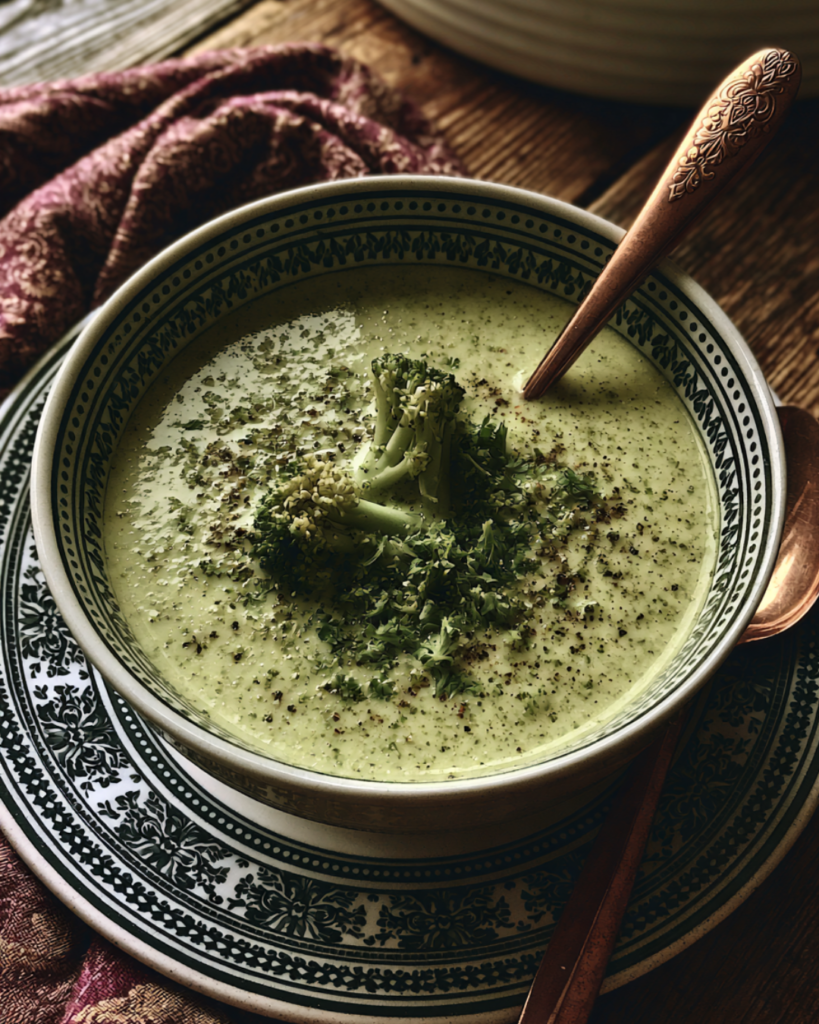
- Garnish with a few reserved small broccoli florets or a light sprinkle of cheddar for texture against the smooth base
- A crisp Chardonnay or a light pilsner both work, cutting through the richness without overwhelming the broccoli’s flavor
Nutritional Profile
Broccoli contributes fiber, vitamin C, and a range of antioxidants that hold up reasonably well through the cooking and blending process. The butter, cream, and optional cheese all add meaningful saturated fat, so for a lighter version, reducing the cream by half and adding a splash more broth maintains body while cutting some richness, though the soup will taste noticeably less indulgent. Using low-sodium broth throughout gives you better control over total sodium, particularly if cheese is included.

Common Questions, Answered Directly
Why does my cream soup always separate? The most common cause is adding cold cream to a boiling pot, or boiling the soup hard after the cream is added. Keep the heat low once dairy enters the pot.
Can I make this ahead? Yes, though hold off on adding the cream until reheating if possible — this minimizes any risk of separation during storage and reheating.
How long does it keep? Up to 4 days refrigerated in a sealed container; reheat gently over low heat, stirring frequently rather than leaving it unattended.
Can I freeze this soup? Cream-based soups don’t always freeze well due to separation risk, but if you do freeze it, do so before adding the cream, then stir it in fresh after thawing and reheating the base.
Skip the broken, grainy version tonight — a proper roux and a gentle hand with the cream are what actually keep this soup from separating.