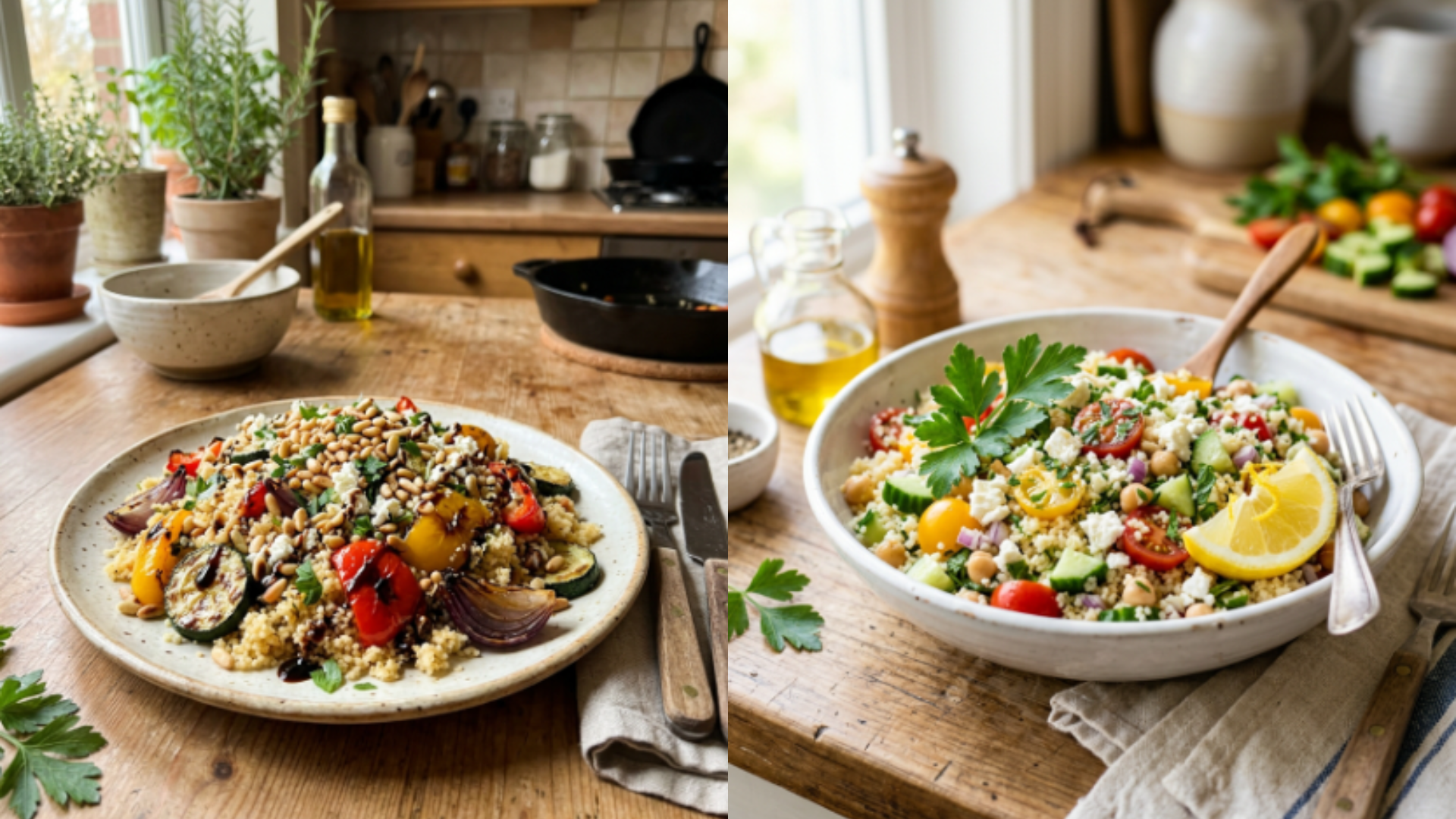
Most people overcook this. Here’s how not to. The difference between clumped, gummy couscous and light, fluffy grains comes down to one step: hydrating it off heat with precisely measured liquid, rather than boiling it directly the way you would pasta or rice.
This zesty couscous salad relies on proper hydration technique and a bold, acid-forward dressing added while the couscous is still warm, since warm grains absorb flavor far more effectively than cold ones. Clumpy couscous is almost always a hydration problem, not a seasoning one.
Prep time: 15 minutes | Cook time: 5 minutes (plus 10-minute steam) | Total time: 30 minutes | Servings: 6
Table of Contents
What Makes This Recipe Work
- Couscous is steamed off heat in a covered bowl, not boiled — this is intentional. Couscous is already precooked and dried during processing, so it only needs to reabsorb hot liquid, and boiling it directly overcooks the exterior before the center finishes hydrating
- The liquid ratio is precisely 1:1 by volume — the science here is simple: too much liquid produces mushy, waterlogged grains, while too little leaves a dry, undercooked center that never fully separates
- The dressing is tossed with the couscous while it’s still warm — most recipes skip this timing, but warm grains absorb the acid and oil in the dressing far more effectively than couscous that’s already cooled and set
- Grains are fluffed with a fork, never stirred with a spoon — a fork separates the grains gently, while a spoon tends to mash them together, undoing the light texture the hydration method just achieved
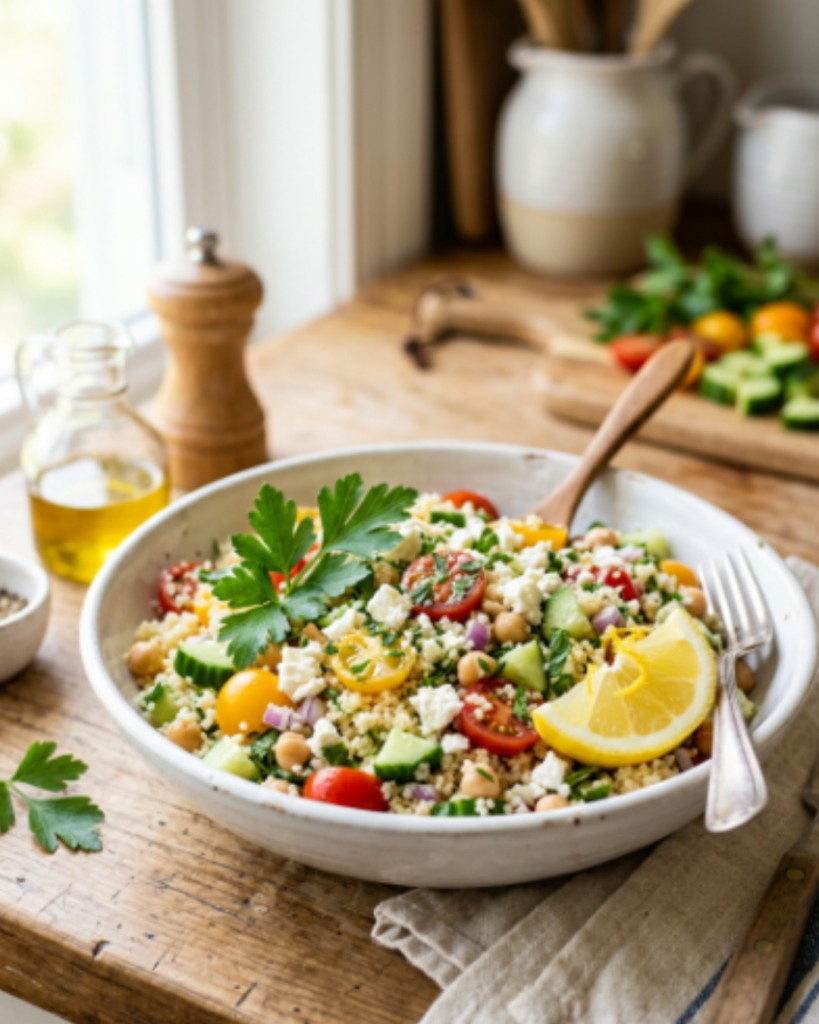
Ingredients — What to Buy and Why It Matters
- Couscous (1.5 cups), preferably not the instant “quick” variety marketed separately from standard couscous: Standard couscous hydrates reliably with this 1:1 method — do not substitute Israeli or pearl couscous, which are a different product entirely and require boiling like pasta.
- Vegetable or chicken broth (1.5 cups), boiling: Using broth instead of water builds flavor directly into the grain from the start, rather than relying entirely on the dressing added afterward.
- Extra-virgin olive oil (1/3 cup, divided): A portion goes into the hydrating liquid for richness, the rest into the dressing — good-quality oil matters here, since its flavor is prominent in a dish this simple.
- Fresh lemon juice (3 tbsp) and lemon zest (1 tsp): The primary acid in the dressing — fresh juice is essential, since bottled lemon juice lacks the brightness this salad depends on for its “zesty” character.
- Cherry tomatoes (1.5 cups, halved) and cucumber (1, diced): Both add moisture and crunch — salt the cucumber lightly and let it sit for 10 minutes, draining excess liquid before adding, to prevent a watery salad.
- Fresh parsley and mint (a handful each, chopped): Adds brightness and volume — using both, rather than just one, gives a more layered herbal flavor than either alone.
- Feta cheese (1/2 cup, crumbled): Adds a salty, tangy contrast to the bright dressing — do not add it while the couscous is still hot, since it will melt rather than hold its crumbled texture.
Substitution note: Quinoa can replace couscous for a gluten-free version, though it requires a completely different cooking method — boiled in excess liquid and drained — rather than this hydration technique.
Step-by-Step Instructions
- Bring the broth and 2 tablespoons of the olive oil to a full boil. This is the critical step here — the liquid needs to be genuinely boiling when it meets the couscous, since that heat is what fully hydrates the grains during the steaming stage.
- Place the couscous in a large, heatproof bowl. Pour the boiling broth mixture directly over it, stirring once briefly to submerge all the grains evenly.
- Cover the bowl tightly with plastic wrap or a tight-fitting lid, and let it sit undisturbed for 10 minutes. What’s actually happening is the trapped steam and residual heat are gently finishing the hydration process without any risk of overcooking the exterior, which direct boiling would cause.
- Uncover and fluff immediately with a fork, working through the grains to separate any clumps. This is non-negotiable for texture — a spoon at this stage mashes the grains together rather than separating them.
- While the couscous is still warm, whisk together the remaining olive oil, lemon juice, and lemon zest. Pour over the warm couscous and toss gently to coat evenly.
- Let the dressed couscous cool to room temperature, about 10-15 minutes, before adding the more delicate ingredients.
- Fold in the tomatoes, drained cucumber, parsley, and mint. Adding these after the couscous has cooled slightly prevents the tomatoes from softening too much and the herbs from wilting in residual heat.
- Top with crumbled feta just before serving.
Technique Notes for Better Results
- The professional approach here is measuring the liquid precisely by volume rather than eyeballing it, since even a small deviation from the 1:1 ratio noticeably affects the final texture
- Where most home cooks go wrong is boiling couscous directly in a pot like pasta or rice, which overcooks the exterior of each grain before the center has a chance to properly hydrate
- If your couscous turns out clumpy despite following the steps, check that the liquid was fully boiling when added — lukewarm liquid won’t hydrate the grains fully within the resting time
- Salting and draining the cucumber before adding it is worth the extra 10 minutes, since skipping it is one of the most common reasons this salad turns watery by the time it’s served
- Dressing the couscous while warm, rather than waiting until it’s fully cooled, makes a genuinely noticeable difference in how much flavor the grains absorb
- For a heartier version, fold in chickpeas or grilled chicken after the couscous has cooled, adding protein without disrupting the texture established in the earlier steps
Plating and Serving
- Serve alongside grilled chicken, lamb, or fish, since the bright, acidic dressing complements richer proteins well
- Warm pita bread works as an easy accompaniment for scooping
- A dollop of plain yogurt or tzatziki on the side adds coolness that balances the zesty dressing
- Serve at room temperature rather than cold, which mutes the flavors of the herbs and dressing
- A crisp white wine or a light rosé both pair well, echoing the salad’s bright, acidic profile
Nutritional Profile
Couscous provides carbohydrates along with a modest amount of protein and fiber, particularly if using a whole wheat variety. The olive oil and feta both contribute healthy and saturated fat respectively, while the abundance of fresh vegetables and herbs adds vitamins and antioxidants without significantly increasing the calorie count. For a lighter version, reducing the olive oil in the dressing by a third still provides enough richness to carry the lemon’s acidity, though the overall flavor will read as slightly less indulgent. Using whole wheat couscous instead of standard adds meaningful fiber without changing the hydration technique this recipe depends on.
Common Questions, Answered Directly
Why does my couscous always turn out clumpy? The liquid likely wasn’t fully boiling when added, or the ratio was off. Both prevent the grains from hydrating evenly and separating properly.
Can I make this ahead? Yes, this salad actually holds up well made a day in advance — the flavors continue to meld, though add the feta fresh just before serving to preserve its texture.
How long does it keep? Up to 4 days refrigerated in a sealed container, though the vegetables will soften somewhat over that time.
Can I use instant couscous instead? Yes, though check the package instructions, since instant varieties are sometimes pre-hydrated differently and may need a slightly adjusted liquid ratio than the standard 1:1 used here.
Make this for the weekend — proper hydration technique is what actually separates light, fluffy couscous from a clumpy disappointment.