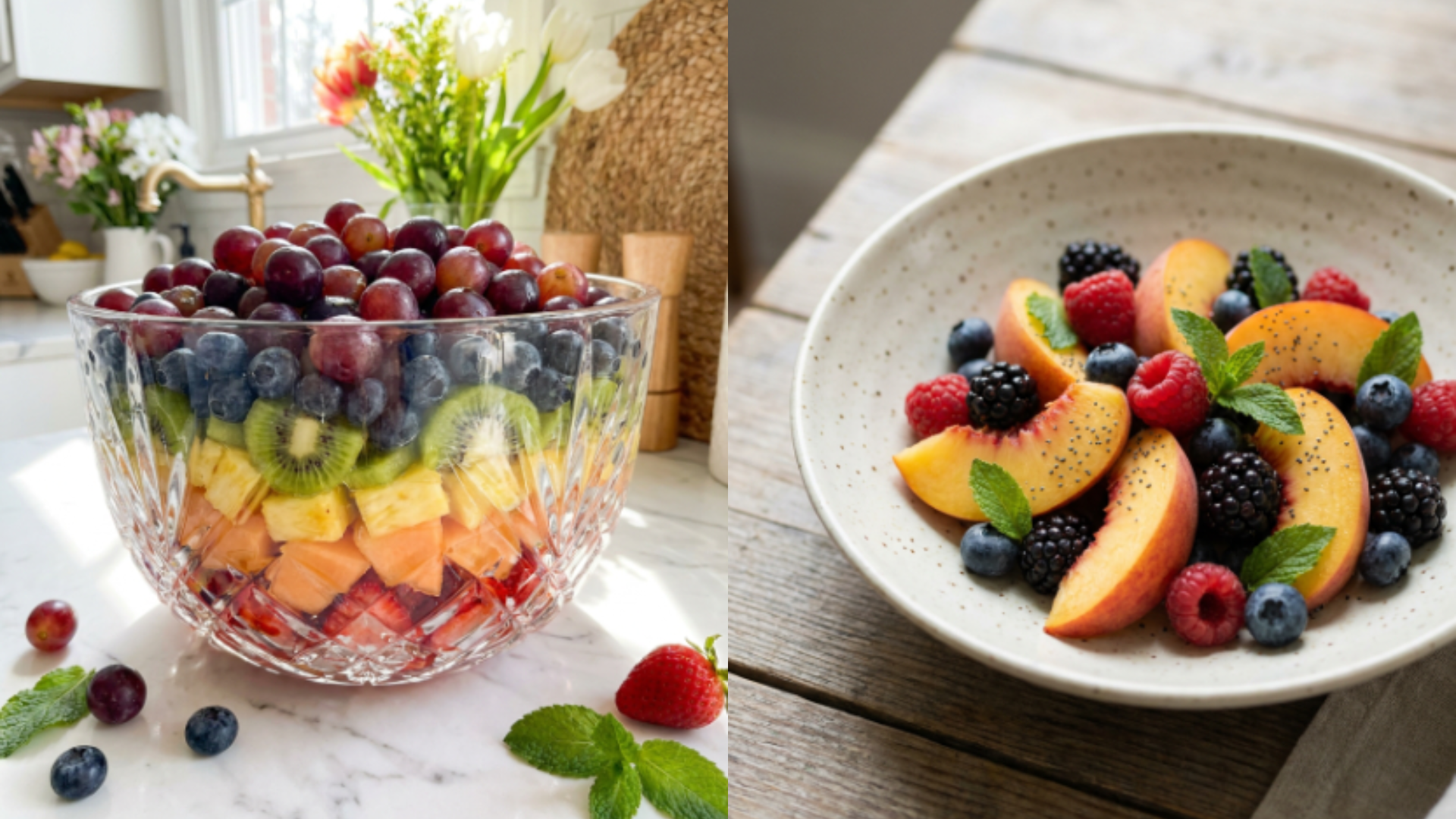
Most people overcook this — well, over-prep this. Here’s how not to. The difference between a fruit salad that turns watery and sad after an hour and one that stays vibrant through an entire gathering comes down to one step: assembling it in layers by density and timing, rather than tossing every fruit together the moment it’s cut.
This fruit salad recipe you have to make this weekend for crowds relies on strategic cutting, a light acidic coating to prevent browning, and a specific assembly order that keeps delicate fruit from turning mushy under the weight of juicier varieties. A properly executed version looks and tastes fresh hours after it’s made, not just in the first ten minutes.
Prep time: 25 minutes | Chill time: 30 minutes (optional) | Total time: 25-55 minutes | Servings: 12-15
Table of Contents
What Makes This Recipe Work
- Fruit is added to the bowl in order of density and juiciness, not randomly — this is intentional. Heartier fruits go in first as a base, with delicate, high-moisture fruits added last, preventing them from getting crushed or waterlogged underneath heavier pieces
- A light citrus coating is tossed with cut fruit immediately — the science here is simple: the acid in lemon or lime juice slows the enzymatic browning that turns apples, bananas, and pears an unappetizing gray-brown within an hour
- Watery fruits like watermelon and citrus are drained briefly before adding — most recipes skip this, but excess liquid from these fruits is exactly what makes the whole salad turn soupy by the time it’s served
- The salad is dressed lightly, not doused — a thin coating of honey-lime syrup enhances flavor without adding the extra liquid that accelerates sogginess in a large-format salad
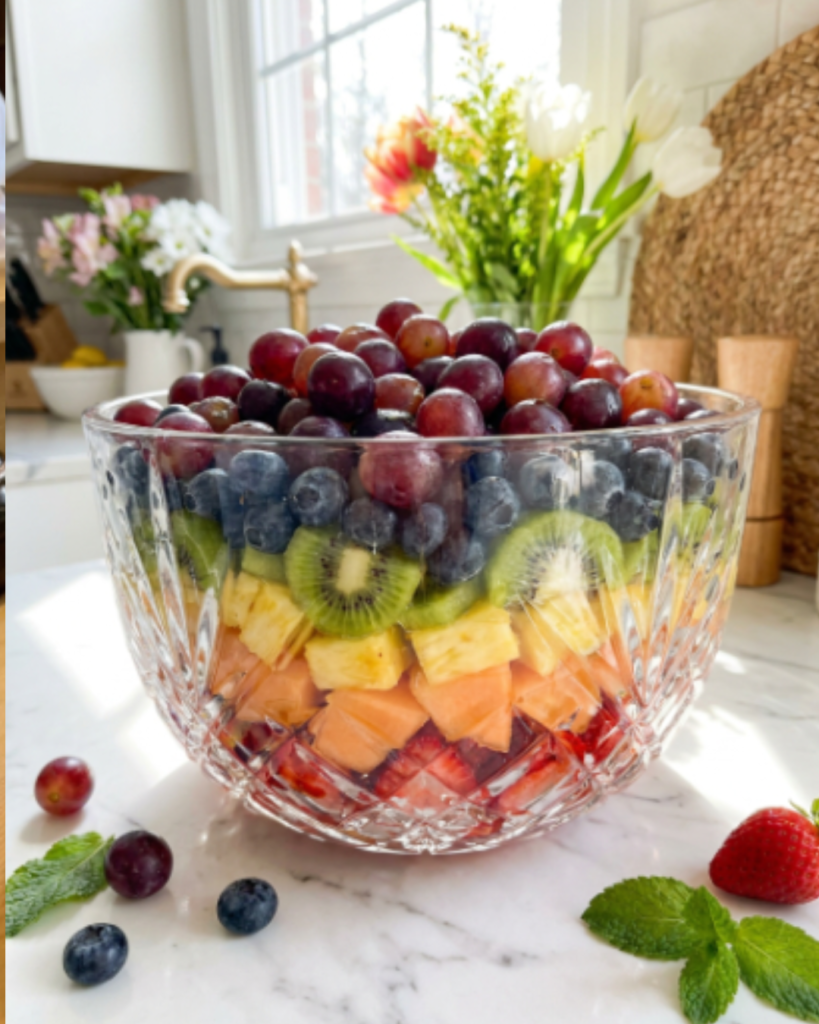
Ingredients — What to Buy and Why It Matters
- Watermelon (4 cups, cubed): Naturally very high in water content — briefly draining the cubes in a colander before adding prevents this fruit from watering down the entire bowl.
- Pineapple (3 cups, cubed): Fresh pineapple holds its texture better than canned, which is often packed in syrup that adds unwanted extra liquid and sweetness.
- Strawberries (2 cups, hulled and halved) and blueberries (1 cup): Added closer to serving time, since berries are among the most delicate fruits and bruise easily under the weight of anything added after them.
- Green and red apples (2 each, diced): A mix of varieties adds visual contrast and a balance of tartness and sweetness — toss these in the citrus coating immediately after cutting to prevent browning.
- Bananas (2, sliced): Added last and just before serving, since bananas brown faster than almost any other fruit in this mix, even with a citrus coating.
- Fresh lime juice (3 tbsp) and honey (2 tbsp): The lime slows browning on cut fruit while the honey, whisked together with the juice, adds a light, cohesive sweetness without a heavy syrup.
- Fresh mint (a small handful, chopped), optional: Adds a bright, fresh note that complements the fruit without overwhelming any single flavor.
Substitution note: Grapes or mango can replace strawberries or pineapple depending on seasonal availability, following the same density-based placement logic — firmer fruits early, delicate ones late.
Step-by-Step Instructions
- Cube the watermelon and place it in a colander set over a bowl. Let it drain for 10-15 minutes while you prepare the other fruit. This is the critical step here — watermelon releases significant liquid on its own, and skipping this drain is one of the most common reasons fruit salads turn watery within an hour.
- Whisk together the lime juice and honey in a small bowl until combined.
- Dice the apples and immediately toss them in about a third of the lime-honey mixture. What’s actually happening is the acid is coating the cut surfaces, slowing the oxidation that causes browning — the sooner this happens after cutting, the more effective it is.
- In a large serving bowl, layer the pineapple and drained watermelon first, as the base. These sturdier, less delicate fruits can support the weight of what comes later without bruising.
- Add the citrus-coated apples next, distributing them evenly through the base layer.
- Add the strawberries and blueberries, placing them gently rather than dumping them in, since they bruise easily.
- Drizzle the remaining lime-honey mixture over the top and toss very gently, just enough to distribute the light coating without crushing the more delicate fruit underneath.
- Add the sliced bananas and chopped mint last, right before serving. This is non-negotiable if you want to avoid the browning that happens even under a citrus coating if bananas sit too long.
Technique Notes for Better Results
- The professional approach here is thinking about a fruit salad in layers, not as a single mixed bowl assembled all at once — the order genuinely affects both texture and appearance hours later
- Where most home cooks go wrong is adding every fruit simultaneously and tossing vigorously, which bruises delicate fruit and speeds up liquid release across the whole bowl
- If you’re making this several hours ahead, hold back the bananas, berries, and any final citrus coating until closer to serving time, adding them fresh right before the gathering starts
- A large, wide bowl rather than a deep one reduces the weight pressing down on fruit at the bottom, which helps prevent bruising in a large-format salad meant for a crowd
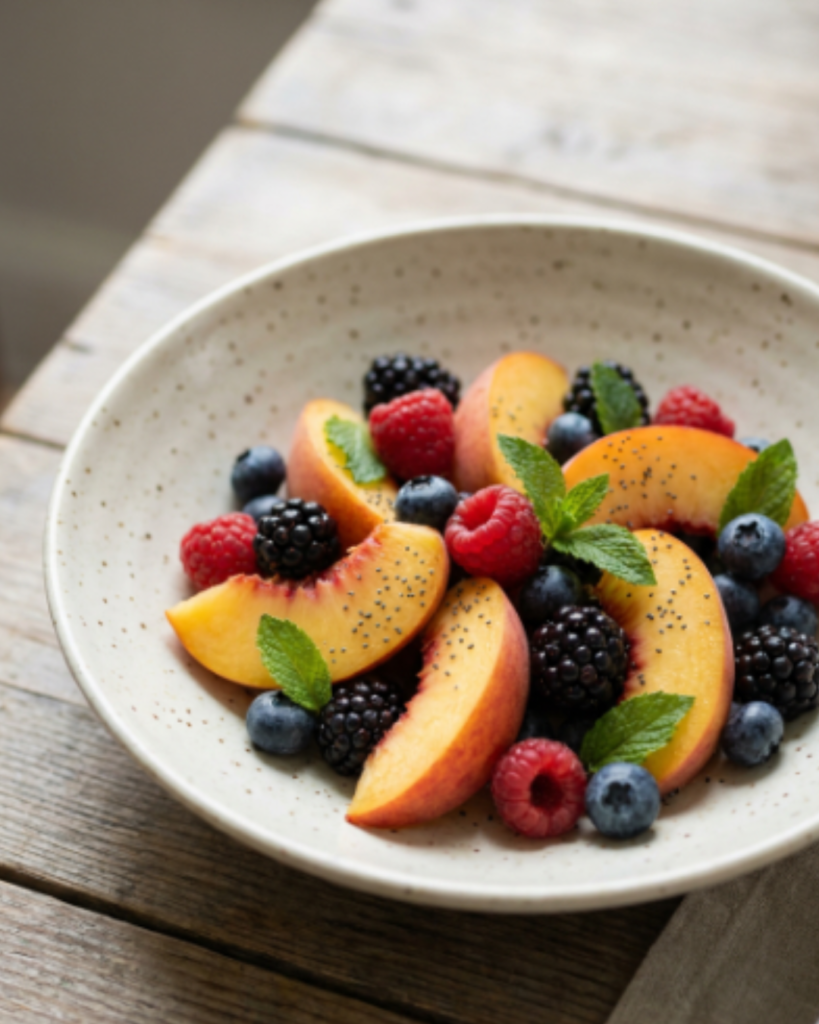
- For a slightly more elevated presentation, reserve a few whole berries and mint sprigs to scatter on top just before serving, rather than mixing everything uniformly
- Taste the lime-honey mixture before adding it, adjusting the ratio slightly if your fruit selection leans more tart or more sweet than the recipe assumes
Plating and Serving
- Serve in a large glass bowl to show off the color contrast between fruits, rather than an opaque dish that hides the visual appeal
- A small side of yogurt or whipped cream works as an optional accompaniment without being necessary
- Garnish with the reserved mint sprigs just before setting the bowl out
- Keep serving spoons nearby that won’t crush the fruit, avoiding anything with sharp or narrow edges
- Light, chilled options like sparkling water with lime or a mimosa both pair well for a daytime gathering
Nutritional Profile
Fresh fruit provides a range of vitamins, antioxidants, and fiber, with the specific profile varying by fruit — watermelon and berries in particular offer high water content alongside beneficial compounds. The honey adds a modest amount of natural sugar, though the overall dish remains considerably lighter than most sweetened desserts served at a gathering. For a lower-sugar version, reducing or omitting the honey works fine, since the natural sweetness of the fruit itself carries most of the flavor. This salad is naturally gluten-free and dairy-free, making it a reliable option for guests with a range of dietary restrictions.
Common Questions, Answered Directly
How far ahead can I make this? The sturdier fruits can be prepped and combined up to a day ahead, refrigerated, but hold off on bananas, berries, and the final citrus toss until an hour or two before serving for the freshest result.
Why does my fruit salad always turn watery? Undrained watermelon or citrus, combined with over-tossing delicate fruit, are the most common causes — both release excess liquid that pools at the bottom of the bowl.
Can I use frozen fruit? Fresh is strongly preferred here, since frozen fruit releases significant water upon thawing and will noticeably water down the salad’s texture.
How long does this keep? Best within 24 hours, refrigerated in a sealed container, though the bananas and berries will show wear first even with proper technique.
Make this for the weekend gathering — proper layering and timing are what actually keep this looking and tasting fresh for a crowd.