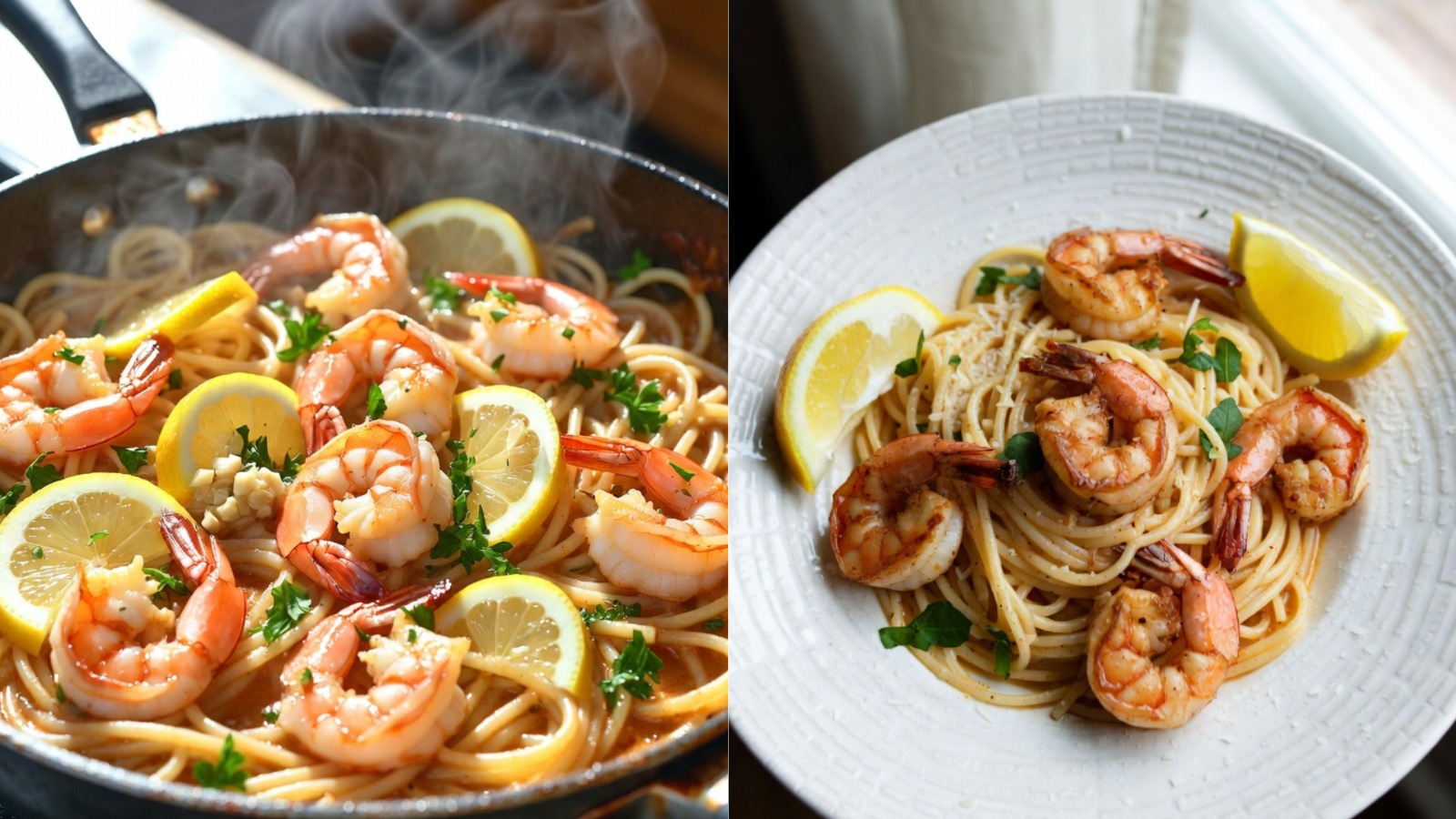
Shrimp are done in three minutes, and every second after that is a subtraction. That single fact governs the entire dish. The easy lemon shrimp pasta recipes worth repeating all sequence around it — the shrimp sear alone, come out of the pan while still slightly underdone, and return only at the end, off the heat. What sets a properly executed version apart is that the shrimp are still plump and snappy rather than tight and rubbery, and the lemon still tastes bright rather than cooked-flat and faintly bitter.
Table of Contents
What Makes This Recipe Work
- The shrimp cook separately and return off the heat. The science here is simple: shrimp protein contracts sharply above 60°C, squeezing out moisture. Pull them at just-opaque and residual heat finishes them without tightening the muscle.
- Lemon juice goes in raw, at the very end. This is intentional. Heat drives off the volatile aromatics in citrus and leaves behind a dull, slightly bitter acidity. The zest carries perfume, the raw juice carries brightness.
- Pasta water is the sauce. Most recipes skip this and end up with oil pooling at the bottom of the bowl. The dissolved starch emulsifies oil and lemon juice into something that clings to the strands.
- The garlic is sliced, not minced. Slices have less surface area and toast evenly to gold. Minced garlic burns in seconds at the temperature this dish needs.
Ingredients — What to Buy and Why It Matters
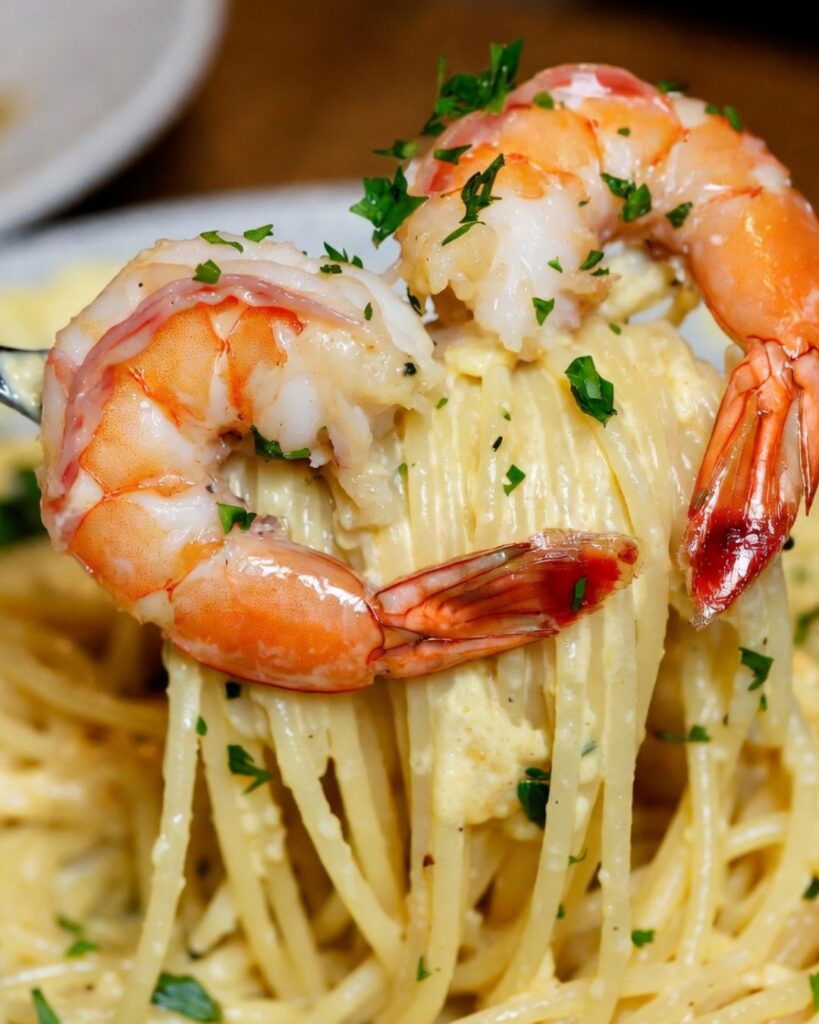
- Large raw shrimp, 500 g, peeled and deveined (16/20 count): size is the buffer against overcooking. Small shrimp go from raw to rubbery in under 60 seconds. Buy raw, never pre-cooked — pre-cooked shrimp cannot be improved, only reheated. Frozen raw is genuinely excellent and often fresher than the thawed shrimp at the counter.
- Good olive oil, 60 ml: the body of the sauce. In a dish with no cream, the oil is the fat that carries everything, so use one you would taste on bread.
- Garlic, 5 cloves, thinly sliced: the aromatic backbone. Cook to pale gold and no further.
- One whole lemon — zest and juice: non-negotiable that you use both. The zest holds the oil-soluble aromatics; the juice holds the acid. Using only juice gives you sour without perfume.
- Linguine or spaghetti, 350 g: long strands suit a thin, glossy sauce. Bronze-cut releases more starch and grips better. Trade-off note: short shapes work but the sauce slides off them.
- Dry white wine, 80 ml (optional): deglazes the shrimp fond and adds depth. Chicken stock substitutes with less acidity and brightness.
- Butter, 1 tablespoon (optional): added off the heat, it rounds the acidity and gives the sauce a glossier finish. Leave it out for a leaner, sharper dish.
- Red pepper flakes and flat-leaf parsley: heat and freshness. Parsley at the very end so it stays green.
- Reserved pasta water, 1 cup: the emulsifier. This is non-negotiable.
Step-by-Step Instructions
Prep time: 10 minutes · Cook time: 15 minutes · Total time: 25 minutes · Servings: 4
- Dry the shrimp thoroughly. Pat them with paper towels and season with salt. What’s actually happening is that surface moisture must evaporate before browning can begin — a wet shrimp steams, and steaming is what produces that pale, rubbery texture.
- Salt the pasta water heavily and bring it to a boil. This is the only opportunity to season the pasta itself.
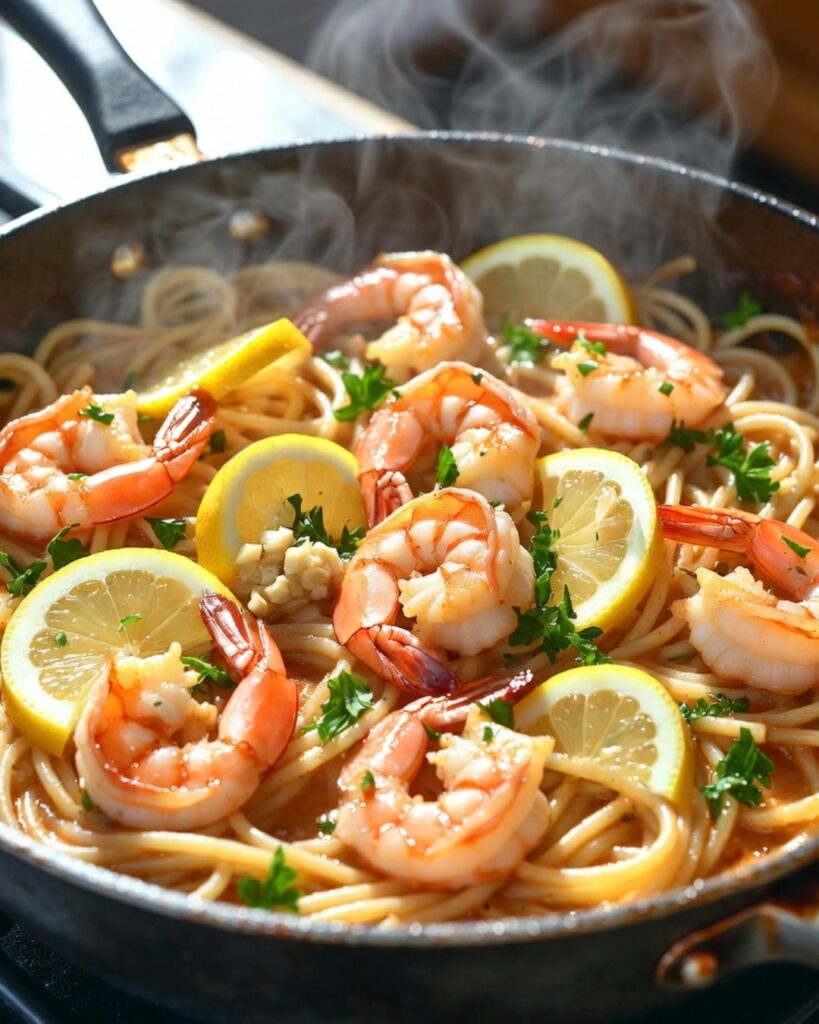
- Sear the shrimp hot and fast. Heat half the olive oil in a wide skillet over medium-high until it shimmers. Add the shrimp in a single uncrowded layer and leave them undisturbed 90 seconds. Flip and cook 60 seconds more. The visual cue is a loose C shape and opaque pink at the edges with a faint translucence at the center. Remove immediately. This is the critical step here — a tight O shape means they are already overdone.
- Cook the pasta to two minutes under package time. It finishes in the sauce.
- Build the sauce in the same pan. Lower the heat to medium-low, add the remaining oil, the sliced garlic, and the pepper flakes. Cook 2 to 3 minutes to pale gold, scraping up the fond the shrimp left behind. That fond is concentrated shellfish flavor.
- Deglaze with the wine, if using, and reduce by half, about 2 minutes. The alcohol cooks off and the acidity dissolves what is stuck to the pan.
- Reserve a full cup of pasta water before draining. Set it beside the stove where you cannot forget it.
- Emulsify. Add the drained pasta and a splash of pasta water to the skillet. Toss vigorously over medium heat for 60 to 90 seconds until the sauce turns glossy and coats each strand. Add more water a splash at a time if it tightens. Vigorous agitation is what forces the emulsion — gentle stirring will not do it.
- Finish off the heat. Return the shrimp with any accumulated juices. Add the lemon zest, the juice of the whole lemon, the butter if using, and the parsley. Toss once. Taste and adjust salt. Serve immediately in warm bowls.
Technique Notes for Better Results
- The professional approach here is to undercook the shrimp deliberately by about 20 seconds. They finish in the residual heat of the pasta, which gives you a margin the pan does not.
- Where most home cooks go wrong: crowding the pan. Shrimp packed together drop the surface temperature and release water, and the pan steams instead of searing. Work in two batches if your skillet is small.
- Never add lemon juice to a hot pan. Cooked citrus loses its aromatic top notes and reads as flat and faintly bitter. Off the heat, always.
- Save the shells if you buy shell-on shrimp. Simmer them in a cup of water for 10 minutes and use that in place of some pasta water. It costs nothing and adds genuine depth.
- The refinement that elevates the dish: finish with the butter off the heat, whisked in last. Cold butter added to a warm emulsion tightens and glosses the sauce without breaking it.
- If the sauce looks oily and separated, add pasta water and toss harder over heat. The starch re-emulsifies it. Adding more oil makes it worse.
Plating and Serving
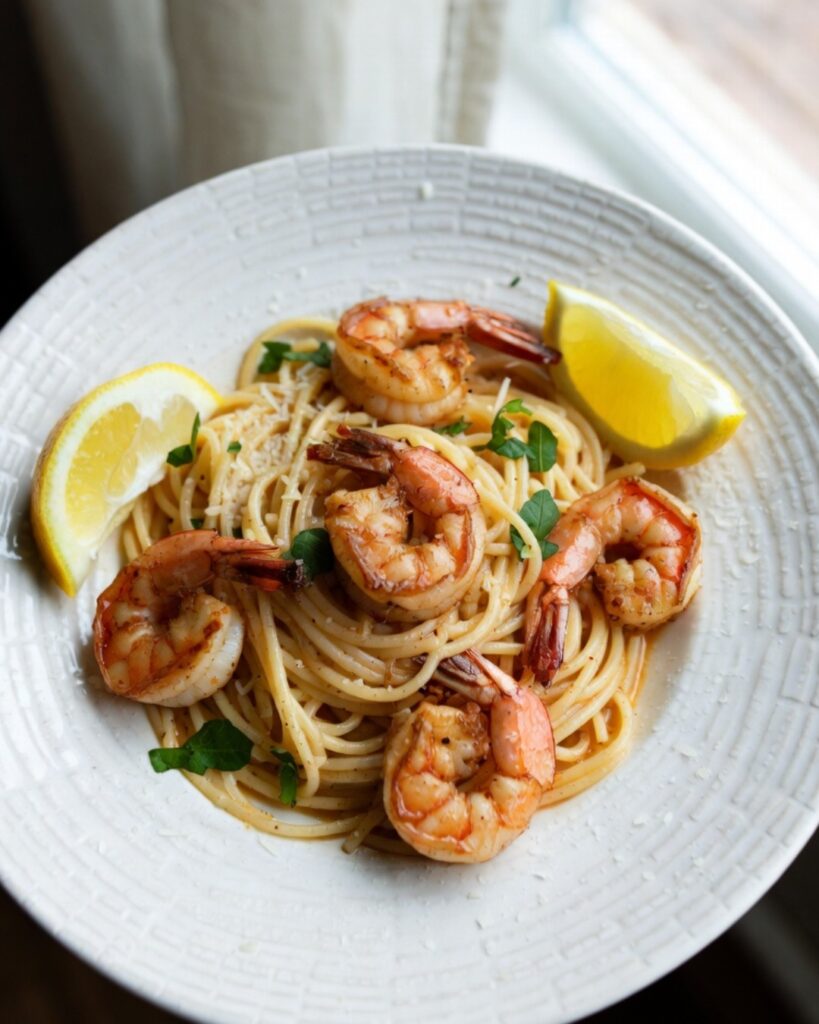
- Pasta twirled into a loose nest, shrimp arranged on top — they should be visible, not buried. The pink against the pale strands is the entire presentation.
- Lemon zest and torn parsley scattered last, for color contrast against a monochrome bowl.
- A sharp arugula or green salad dressed at the last moment: peppery acidity that resets the palate.
- Crusty bread for the oil left in the bowl, which is the reason to be generous with it.
- Blistered green beans or grilled zucchini for a fuller plate without competing.
- Beverage: a crisp unoaked white — Vermentino, Sauvignon Blanc, or Pinot Grigio. Their acidity matches the lemon rather than fighting it. Oak-aged whites clash with citrus and shellfish both.
Nutritional Profile
Shrimp are among the leanest complete proteins available, delivering roughly 24 g of protein per 100 g with minimal fat, alongside selenium, iodine, and vitamin B12. The olive oil contributes monounsaturated fat and polyphenols, and because this dish has no cream, the fat profile is almost entirely unsaturated. The dietary cholesterol in shrimp, long treated as a concern, has little effect on blood cholesterol for most people.
Modifications, with honest trade-offs: whole wheat or chickpea pasta adds fiber and protein but releases less starch, so you will need extra pasta water and a slightly heavier hand with the oil to emulsify. Replacing half the pasta with zucchini ribbons lightens the dish considerably while keeping the sauce intact. Omitting the butter makes it dairy-free and sharper on the palate; the sauce is slightly less glossy as a result. Wilting spinach or arugula into the pan before the pasta adds greens without an additional step.
Common Questions, Answered Directly
Why are my shrimp rubbery? Overcooked, almost certainly. Pull them at a loose C shape, still faintly translucent at the center, and let the residual heat finish them.
Can I make it ahead? No, and this is the one dish where the answer is firm. The emulsion breaks as it cools and reheated shrimp tighten. Prep the components in advance instead — slice garlic, zest lemon, peel shrimp — and the cook takes 15 minutes.
How long do leftovers keep? Two days refrigerated. Reheat in a pan over low heat with a splash of water, never a microwave. It is also very good cold with an extra squeeze of lemon.
My sauce is watery, not glossy. What happened? Not enough starch or not enough agitation. Use less water and toss harder over direct heat until it thickens visibly.
Sear the shrimp 90 seconds a side, pull them early, and add the lemon off the heat. Cook it once that way and rubbery shrimp pasta stops being a problem you have.