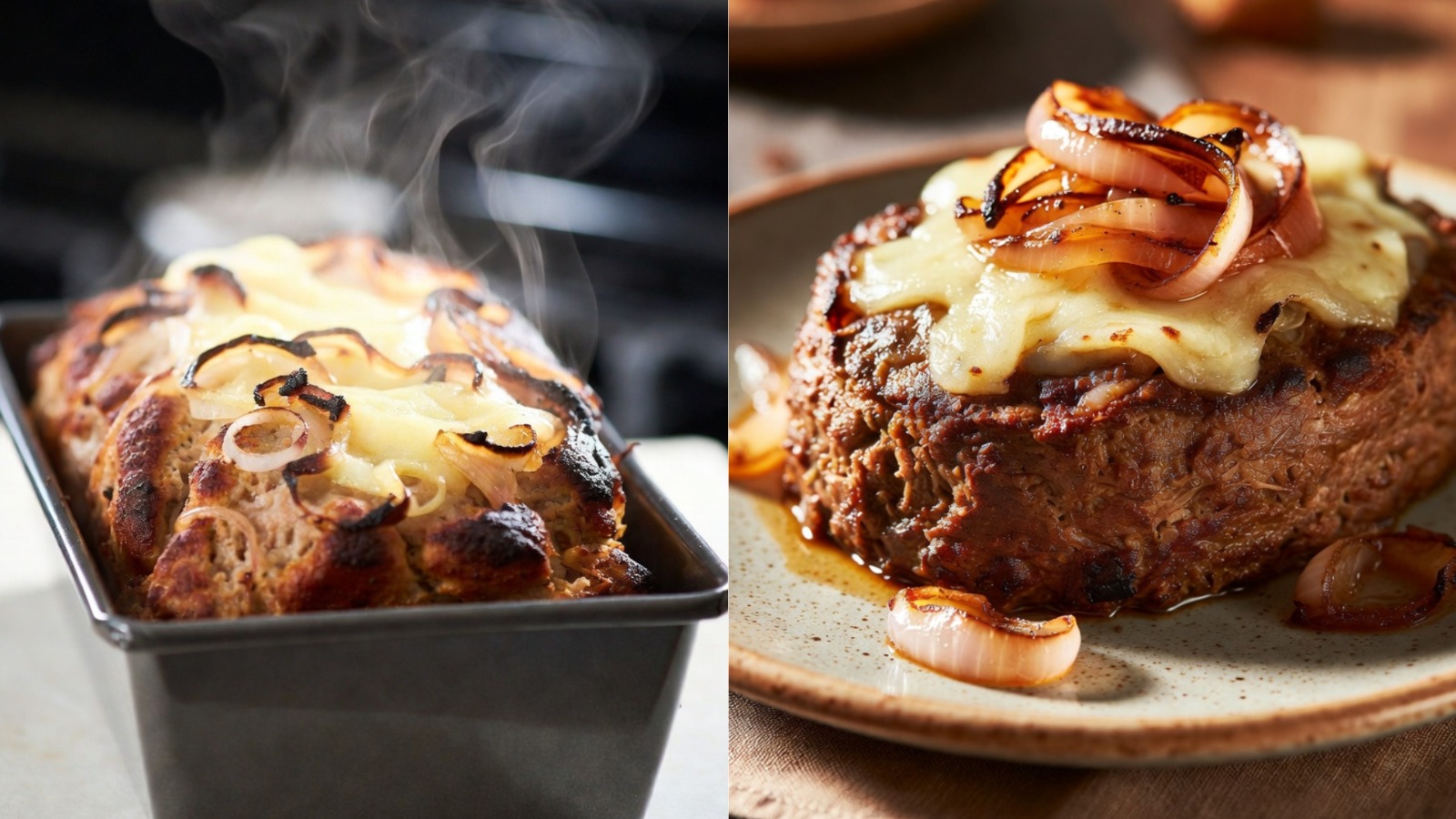
Most French onion meatloaf recipes reach for a packet of dehydrated soup mix and call it done. The result tastes like salt and onion powder, because that is what it is. The version worth repeating starts with actual caramelized onions — 45 minutes of slow heat that converts the onion’s harsh sulfur compounds into deep, jammy sweetness through the Maillard reaction. That single decision is what separates a French onion meatloaf you make once from one you make again. The second decision matters nearly as much: the onions must cool before they touch the meat, or they render the fat and give you a greasy, dense loaf.
Table of Contents
What Makes This Recipe Work
- The onions are caramelized, not sautéed. The science here is simple: browning takes 40 to 50 minutes over medium-low heat. Anything faster is softening, not caramelizing, and the sugars never develop. Rushing this step is the most common failure in the entire recipe.
- A panade replaces breadcrumbs. This is intentional. Bread soaked in milk forms a starch-and-protein gel that physically blocks meat proteins from binding too tightly, which is what keeps the loaf tender rather than springy.
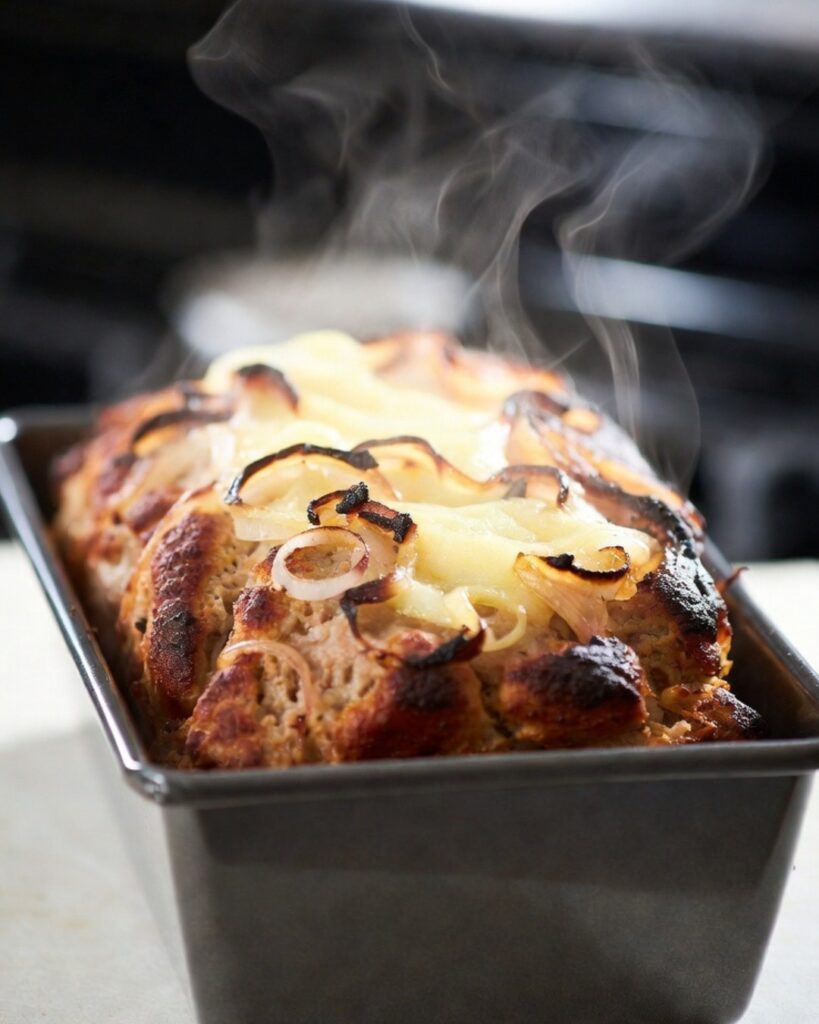
- Gruyère goes inside and on top. Most recipes skip the interior cheese. Cubed inside, it creates molten pockets; grated on top under the broiler, it forms the browned crust that makes the dish read as French onion.
- The loaf is baked free-form, not in a pan. A loaf pan traps rendered fat and steams the sides. A rimmed sheet gives you browned crust on all surfaces and lets the fat drain away.
Ingredients — What to Buy and Why It Matters
- Yellow onions, 3 large (about 900 g): the defining ingredient. Yellow onions have the right sugar-to-sulfur ratio for caramelization. Sweet onions like Vidalia contain more water and brown unevenly; red onions turn a muddy gray. Trade-off noted honestly: sweet onions work but take longer and taste flatter.
- Ground beef, 900 g at 80/20: the fat content is what keeps a loaf moist through an hour in the oven — do not substitute 93/7, which produces a dry, crumbly result regardless of technique. A 50/50 beef-and-pork mix is the traditional choice and is measurably more tender.
- Gruyère, 200 g (150 g cubed, 50 g grated): the classic French onion cheese, chosen for its nutty flavor and clean melt. Comté or aged Swiss substitute well. Avoid pre-shredded, which is coated in anti-caking starch that prevents smooth melting.
- White bread, 2 slices, crusts removed, plus 120 ml whole milk: the panade. This is non-negotiable if you want tenderness. Fresh bread works better than dried breadcrumbs because it hydrates fully.
- Beef stock, 120 ml, plus 60 ml dry white wine or sherry: deglazing liquid for the onion pan. The wine’s acidity dissolves the fond that carries most of the concentrated onion flavor.
- Two eggs: the binder that allows clean slicing.
- Fresh thyme, 2 teaspoons, and Worcestershire sauce, 2 tablespoons: the seasoning spine. Worcestershire supplies fermented glutamates that deepen the beef flavor without reading as a distinct ingredient.
- Butter and olive oil, 2 tablespoons each: the caramelizing fat. Butter alone burns over 45 minutes; the oil raises the effective smoke point.
Step-by-Step Instructions
Prep time: 20 minutes · Onion time: 45 minutes · Bake time: 55 minutes · Rest time: 10 minutes · Total time: about 2 hours 10 minutes · Servings: 8
- Caramelize the onions. Slice them thinly and even. Melt the butter with the oil in a wide skillet over medium-low, add the onions and a teaspoon of salt, and cook 40 to 50 minutes, stirring every 5 minutes. What’s actually happening is water is evaporating and the residual sugars are browning. They are ready when deep amber, jammy, and reduced to roughly a quarter of their starting volume.
- Deglaze the pan. Add the wine and scrape the bottom until clean, then the beef stock. Reduce until nearly dry, about 3 minutes. That fond is concentrated onion flavor and discarding it wastes the previous 45 minutes.
- Cool the onions completely. Spread them on a plate and refrigerate 15 minutes. This is the critical step here — warm onions melt the fat in the ground beef on contact, which produces a greasy, dense loaf that no amount of correct baking will fix.
- Make the panade. Tear the bread into a bowl, pour the milk over it, and let it sit 10 minutes. Mash it to a smooth paste with a fork.
- Combine. Whisk the eggs, Worcestershire, thyme, a generous teaspoon of salt, and plenty of black pepper into the panade. Fold in three-quarters of the cooled onions, reserving the rest for the top.
- Add the beef and cheese. Add the ground meat and the cubed Gruyère. Mix with your hands only until just combined. Overmixing develops myosin, the protein responsible for springy, sausage-like texture. Stop while it still looks slightly uneven.
- Shape and bake. Form a free-form loaf roughly 25 cm long and 10 cm tall on a parchment-lined rimmed sheet. Bake at 175°C (350°F) for 45 minutes.
- Top and finish. Spread the reserved onions over the loaf, scatter the grated Gruyère, and return it to the oven for 10 minutes, until the internal temperature reads 71°C (160°F) on a thermometer.
- Broil briefly. Two to three minutes under the broiler browns and blisters the cheese. Watch it continuously — the window between browned and burnt is under a minute.
- Rest 10 minutes before slicing. Resting allows the juices to redistribute. Cutting immediately drains them onto the board.
Technique Notes for Better Results
- The professional approach here is to caramelize the onions a day ahead. They keep three days refrigerated, the flavor deepens, and it removes the longest step from the day you’re cooking.
- Where most home cooks go wrong: raising the heat to speed up the onions. High heat scorches the exterior while the interior stays raw and sharp, producing bitterness rather than sweetness. Medium-low, stirred regularly, is the only path.
- Use a thermometer, not time. Loaf thickness varies. Seventy-one degrees is a fact; fifty-five minutes is an estimate.
- Never use a stand mixer to combine the meat. It works the proteins far past the point of tenderness in seconds. Hands only, and gently.
- The refinement that elevates the dish: reserve a few tablespoons of the deglazed pan liquid and spoon it over the sliced loaf. It functions as a concentrated jus and connects the plate back to the onions.
- If the loaf cracks across the top, the oven ran too hot or the mixture was too dry. Add a tablespoon more milk to the panade next time and verify your oven temperature with a separate thermometer.
Plating and Serving
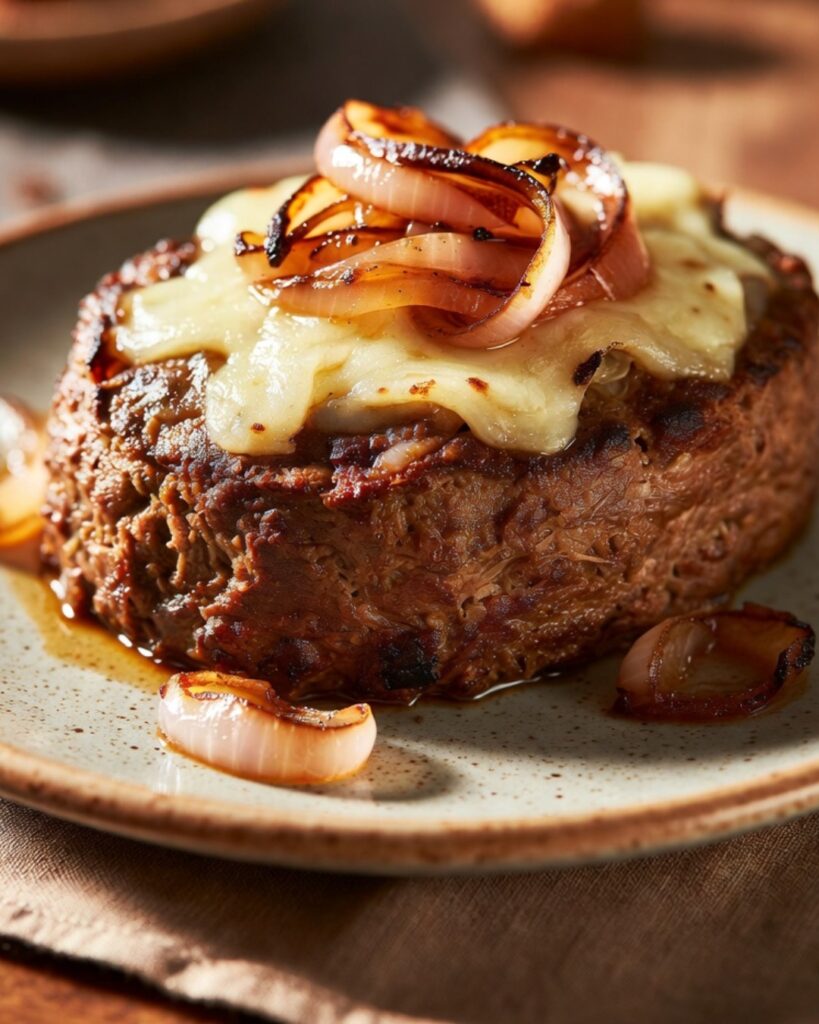
- Slice 2 cm thick and fan the slices so the molten cheese pockets and onion striations are visible in cross-section. The interior is the presentation.
- Spoon the reserved pan jus over the slices, not under them, so the browned cheese crust stays intact.
- Creamy mashed potatoes or a potato gratin: the classic pairing, and a neutral base for the jus.
- Roasted green beans or a sharp vinaigrette salad: acidity and bitterness cut the richness of beef, cheese, and caramelized sugar.
- Crusty baguette, which completes the French onion reference and handles the jus.
- Beverage: a medium-bodied red — Burgundy, Côtes du Rhône, or Merlot. Their acidity balances the onion sweetness without tannins overwhelming the cheese. A dry cider works on the same principle.
Nutritional Profile
A serving delivers roughly 35 g of complete protein alongside meaningful heme iron, zinc, and vitamin B12 from the beef, plus calcium and protein from the Gruyère. Onions contribute quercetin and prebiotic fiber, both of which survive caramelization. The richness sits in the beef fat and cheese, and both are within your control.
Modifications, with honest trade-offs: a beef-and-turkey mix reduces saturated fat noticeably but produces a drier loaf — compensate with an extra tablespoon of milk in the panade and a slightly shorter bake. Gluten-free bread works in the panade with no functional difference, since it is the starch gel doing the work rather than the gluten. Reducing the cheese lowers sodium and fat but sacrifices the melted interior pockets that define the dish. Ninety-three percent lean beef is the one substitution that undermines the recipe directly.
Common Questions, Answered Directly
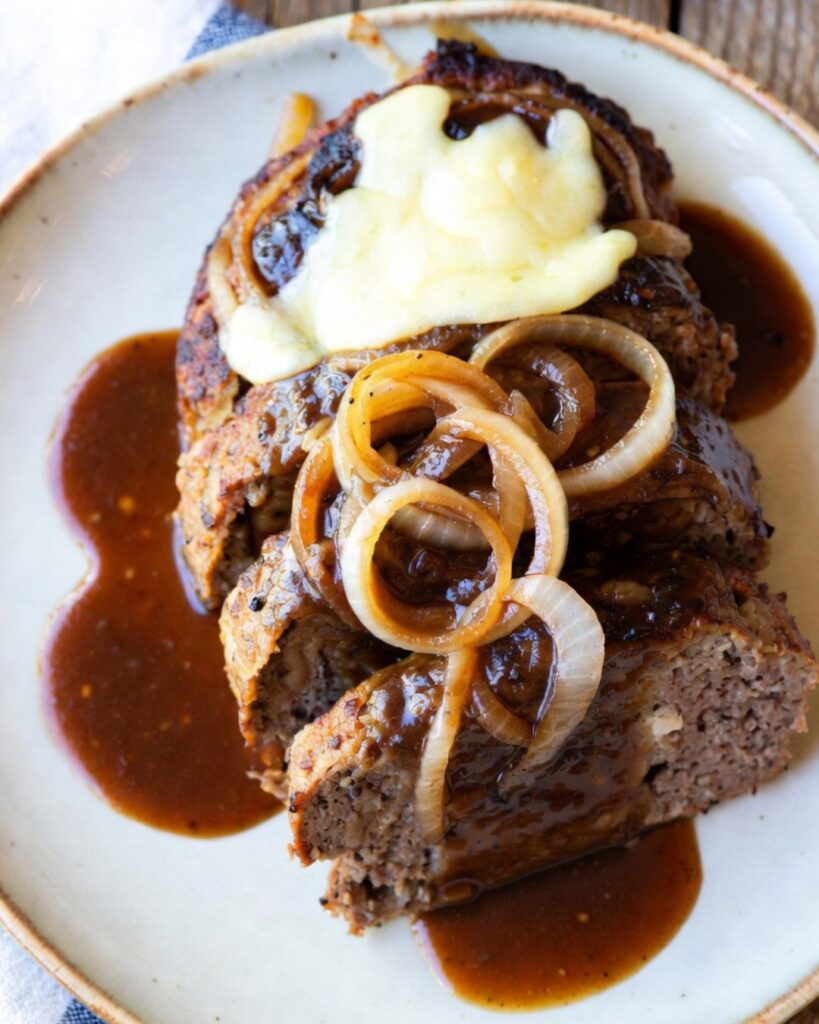
Can I use onion soup mix instead of caramelizing? You can, and the result is a different, saltier dish. The 45 minutes of caramelization is the entire premise of this recipe.
Can I make it ahead? Yes. Caramelize the onions up to three days early, or assemble the full loaf and refrigerate it a day ahead. Add 10 minutes to the bake if it goes into the oven cold.
How long do leftovers keep? Four days refrigerated, and the flavor improves overnight. Freeze cooked slices up to three months, wrapped individually, and reheat covered in a low oven with a splash of stock.
Why is my meatloaf dense and springy? Overmixing, almost certainly. Mix by hand only until the ingredients are just combined, and stop while the texture still looks slightly rough.
Caramelize the onions properly, cool them completely, and mix by hand until barely combined. Make it once that way and the soup packet stops being an option you consider.