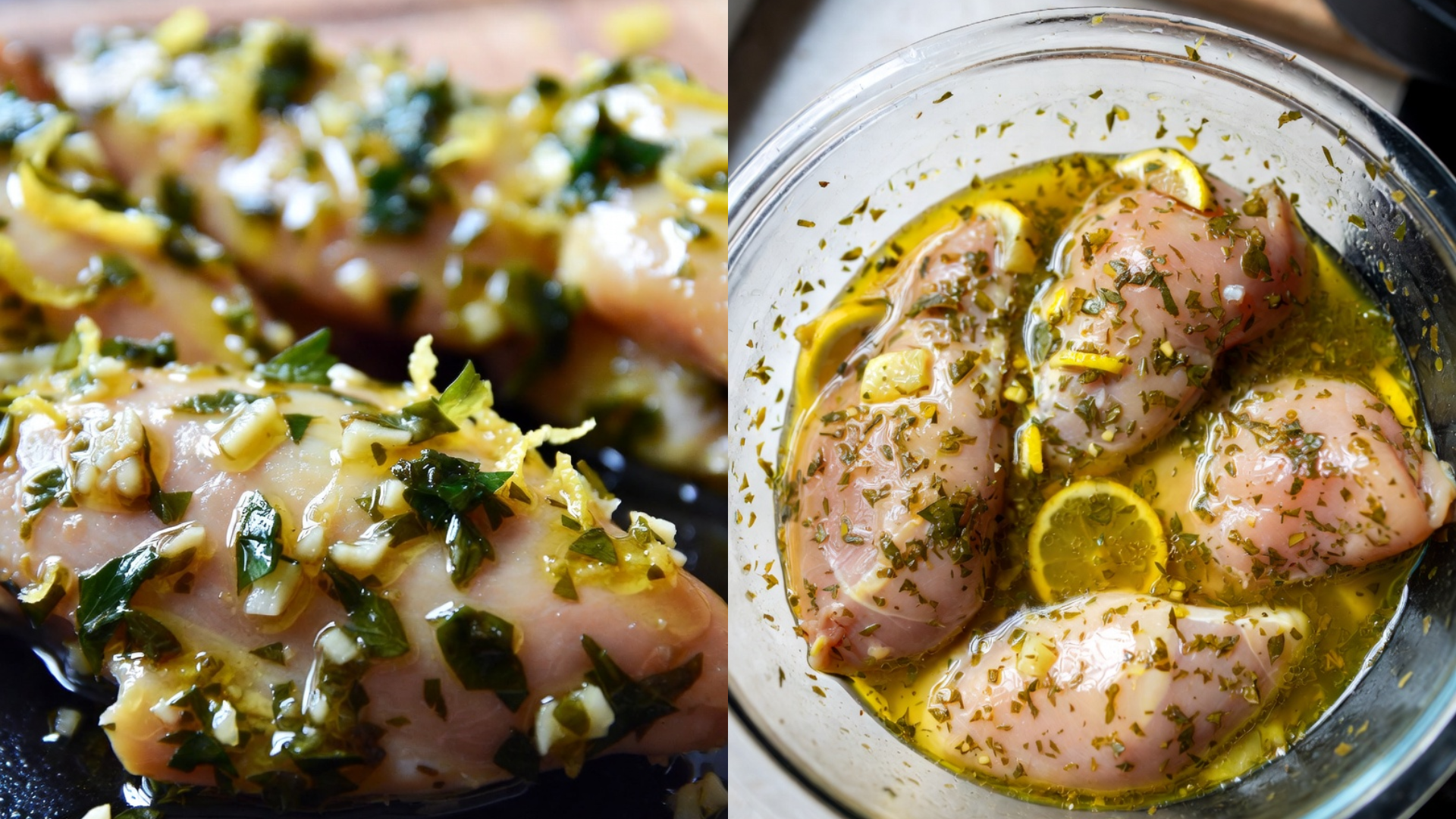
Most people leave chicken in a lemon marinade too long and end up with a mushy, chalky surface instead of tender meat. The difference between a marinade that tenderizes and one that ruins the texture comes down to controlling acid and time. This simple lemon herb chicken marinade is tested for tender meat because it balances lemon’s acidity with oil and salt, then respects a strict marinating window. Acid at the right dose and duration loosens the surface and seasons deeply; too much of either denatures the proteins into a grainy paste. Get the ratio and the timing right, and you get chicken that’s juicy, flavorful all the way through, and never rubbery.
Table of Contents
What Makes This Recipe Work
- Salt does the deep tenderizing, not acid. The science here is simple: salt penetrates the meat and helps it retain moisture, acting like a quick brine. Acid works only at the surface, so salt is the real workhorse for juicy meat.
- Oil carries flavor and protects the surface. This is intentional. Fat-soluble compounds in the herbs and garlic dissolve into the oil and distribute evenly, while the oil coats the meat and buffers it against the acid’s harshness.
- Lemon is measured, not dumped. Most recipes skip this restraint. Too much lemon juice chemically “cooks” the surface, leaving it opaque and mealy. A controlled amount brightens and lightly tenderizes without wrecking texture.
- Time is capped on purpose. The marinade is designed for a window, not an overnight soak. Beyond a few hours, the acid starts breaking down the surface into mush — timing is part of the recipe, not an afterthought.
Ingredients — What to Buy and Why It Matters
Fresh lemons (¼ cup juice, plus zest): Fresh juice is non-negotiable — bottled lemon juice tastes flat and metallic and lacks the aromatic oils in the zest. The zest carries most of the bright lemon fragrance, so don’t skip it.
Olive oil (⅓ cup): The fat that carries flavor and shields the meat from the acid — do not reduce it too far. A good extra-virgin adds its own depth. The oil-to-acid ratio here, roughly 2 to 1, is what keeps the marinade balanced.
Fresh herbs (¼ cup, chopped — parsley, thyme, oregano, or rosemary): Fresh herbs release aromatic oils that dried ones can’t match at the same volume. If using dried, cut the amount by two-thirds, since dried herbs are more concentrated.
Garlic (3 cloves, minced): Freshly minced, not jarred — the raw pungency mellows into deep savory flavor as it marinates. Jarred garlic tastes acidic and dull.
Salt (1½ tsp) and black pepper: Salt is the primary tenderizer and seasoning agent here, so measure it properly rather than eyeballing. This is what seasons the meat beyond the surface.
Optional — a teaspoon of honey or Dijon: Honey aids browning and balances the acid; Dijon emulsifies the marinade so it clings better. Both are refinements, not requirements.
Step-by-Step Instructions
Prep time: 10 minutes · Marinate time: 30 minutes to 4 hours · Cook time: 15 minutes · Total time: ~1 hour · Servings: 4
- Whisk the marinade to an emulsion. Combine lemon juice, zest, olive oil, garlic, herbs, salt, and pepper, whisking until it thickens slightly and looks unified. What’s actually happening is the oil and acid are emulsifying, which helps the marinade coat evenly and cling to the meat.
- Prep the chicken for even contact. Pound thick breasts to an even thickness or lightly score thighs. This is the critical step for uniform marinating and cooking — even thickness means the marinade and heat both penetrate evenly.
- Marinate in a sealed bag. Place the chicken and marinade in a zip-top bag, press out the air, and massage to coat. The bag maximizes contact using less marinade than a bowl. Refrigerate.
- Respect the window: 30 minutes to 4 hours. Thirty minutes seasons the surface; a few hours penetrates deeper. Do not exceed 4 hours — beyond that, the acid degrades the surface into a mushy texture. This cap is non-negotiable.
- Bring to room temperature and pat dry before cooking. Let the chicken sit 15 minutes out of the fridge, then wipe off excess marinade. A dry surface is what allows browning; a wet one steams and stays pale.
- Cook to 165°F (74°C). Sear, grill, or roast over medium-high until the internal temperature hits 165°F. Rest 5 minutes before slicing so the juices redistribute instead of running out.
Technique Notes for Better Results
- Where most home cooks go wrong: marinating overnight. More time is not more tender with an acidic marinade. Past 4 hours the surface turns chalky. Stay inside the window.
- The professional approach here is reserving marinade before it touches raw chicken. Set aside a few spoonfuls before adding the meat, and use it as a finishing drizzle — never reuse marinade that held raw poultry.
- Pat dry, always. Cooking wet chicken is the top reason for a pale, steamed exterior. Dry meat browns; browning is flavor.
- Salt is your tenderizer — don’t underdose it. Skimping on salt is the most common cause of bland, less-juicy results. It’s doing the real work.
- Don’t skip the rest. Cutting immediately spills the juices you worked to keep in. Five minutes of resting is what locks in the moisture.
- Emulsify with Dijon for better cling. A little mustard keeps the oil and acid from separating, so the marinade coats rather than slides off.
Plating and Serving
- Roasted vegetables: Their caramelized sweetness contrasts the bright, herby chicken for balance.
- A grain like rice or couscous: A neutral base that soaks up the lemony juices and rounds out the plate.
- A crisp green salad: Fresh acidity echoes the lemon and lightens the meal.
- Beverage pairing: An unoaked white like Pinot Grigio — its citrus notes mirror the lemon and cut through the richness. Sparkling water with lemon does the same job without alcohol.
Slice the chicken against the grain and fan it over the grain or greens, then spoon the reserved marinade on top. A scatter of fresh herbs and a lemon wedge keeps the plate looking as bright as it tastes.
Nutritional Profile
This is lean, clean protein with real flavor and little added sugar. Chicken breast is a low-fat, high-protein choice, and the olive oil contributes heart-healthy monounsaturated fats. Lemon and fresh herbs add vitamin C and antioxidants with virtually no calories, making the marinade a flavor boost that doesn’t cost you nutritionally.
Dietary modifications: For lower fat, reduce the oil slightly, but not below a 1-to-1 ratio with the acid or the meat loses its buffer against the lemon. For a Whole30 or paleo version, skip the honey and use Dijon without added sugar. To adapt for a higher-heat grill, add a teaspoon of honey — the sugar promotes char, but watch closely, since it also burns faster.
Common Questions, Answered Directly
How long should I marinate the chicken? Between 30 minutes and 4 hours. Less than 30 barely seasons; more than 4 breaks down the surface into mush.
Why did my chicken turn out mushy? It marinated too long in the acid. Lemon degrades the surface over time — stay within the 4-hour cap.
Can I freeze chicken in the marinade? Yes, and it’s a great method. The chicken marinates as it thaws, and freezing pauses the acid’s action until then. Cook within a day of thawing.
Can I use this on other proteins? Absolutely — it works on fish (marinate only 15 to 20 minutes, as fish is delicate) and on vegetables or shrimp with similarly short windows.
The whole recipe rests on two controls: balance the acid with oil and salt, and respect the marinating window. Do both and this simple lemon herb chicken marinade tested for tender meat delivers juicy, deeply seasoned chicken every time. Whisk up a batch, set your timer, and let the marinade do the work.