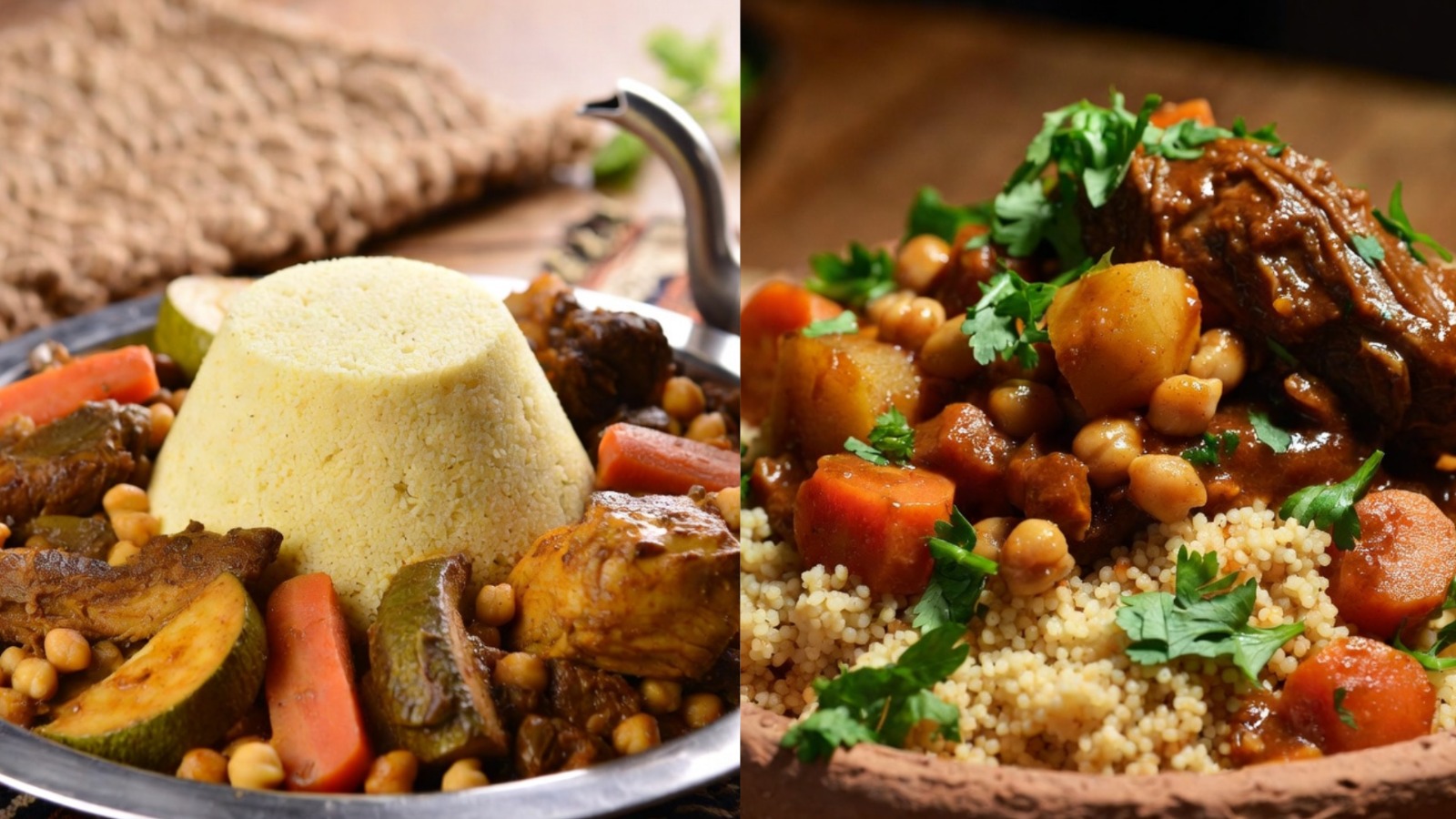
Most people boil couscous in a pot and call it Moroccan. Authentic couscous is never boiled — it’s steamed, multiple times, over a simmering pot of stew. That single distinction is what separates the light, individually separate grains of a real Moroccan couscous from the dense, clumped instant version. These authentic Moroccan couscous recipes work because they honor the traditional method: steaming the grain in a couscoussier over an aromatic broth, so each grain absorbs fragrance while staying distinct. The technique takes patience, but what you get is a texture and depth of flavor that no five-minute shortcut can touch.
Table of Contents
What Makes This Recipe Work
- Steaming, not boiling, defines the texture. The science here is simple: boiling waterlogs the grain into a paste, while steam swells each grain gently and keeps it separate. This is the non-negotiable heart of authentic couscous.
- The grain is steamed in stages with rests between. This is intentional. Steaming, then raking with oil and water, then steaming again, builds up light, fluffy grains layer by layer. Most recipes skip this repetition, and the texture suffers for it.
- The broth flavors the grain from below. Suspending the couscous over a simmering stew means the rising steam carries the aromatics of the broth up into the grain. Flavor is built into the couscous, not just spooned on top.
- Hand-working the grain prevents clumping. Between steamings, the grain is raked and separated by hand with oil and water. This coats each grain and keeps them from fusing, which is what gives the finished dish its signature lightness.
Ingredients — What to Buy and Why It Matters
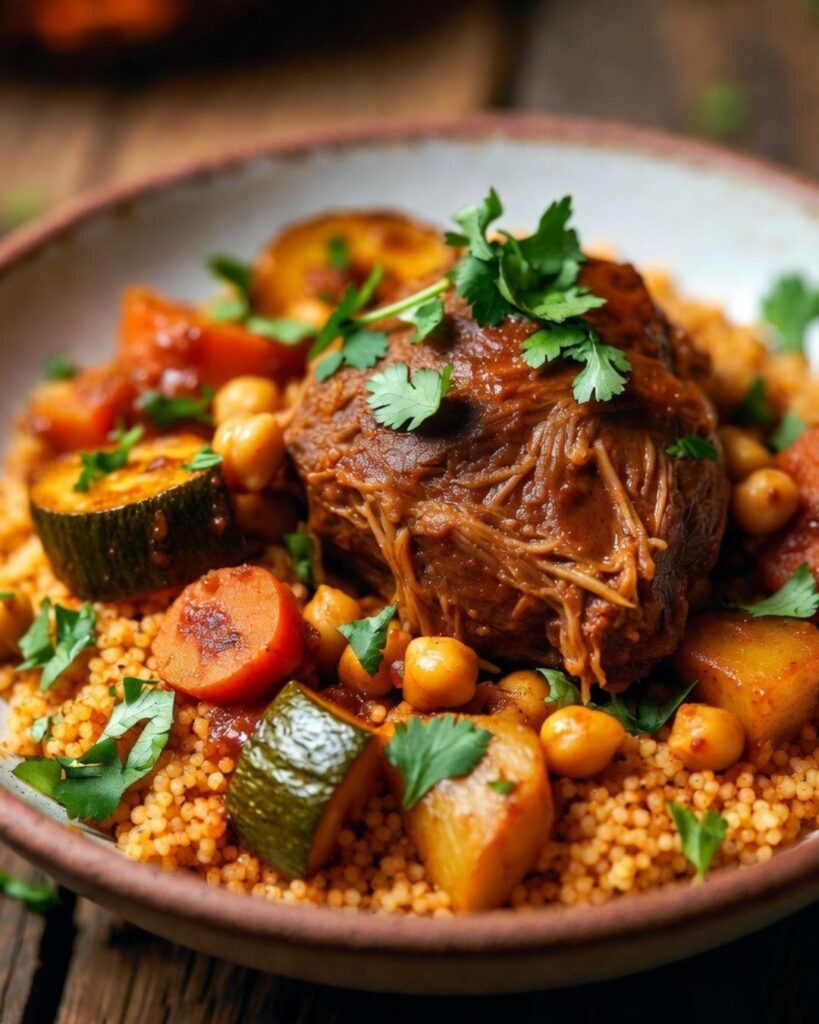
Couscous, medium-grain (2 cups / 360g): Traditional dry couscous, not instant — the fat content of instant is pre-steamed and won’t develop the same texture through hand-steaming. Look for plain, uncooked couscous for the authentic method.
Lamb or chicken (about 2 lbs / 900g): The protein that flavors the broth. Lamb shoulder is traditional and rich; chicken thighs are a lighter, common alternative. Bone-in cuts give the broth more depth.
Seasonal vegetables (carrots, turnips, zucchini, pumpkin, cabbage): These cook in the broth and are served over the grain. Choose firm vegetables that hold their shape through long simmering — the variety is central to a traditional couscous.
Chickpeas (1 cup, soaked): They add protein, texture, and earthiness. Dried and soaked hold up better than canned, which can turn mushy in a long braise.
The spice base — ginger, turmeric, saffron, cinnamon, ras el hanout: These build the broth’s signature warmth. Saffron and ras el hanout in particular are what make the flavor unmistakably Moroccan. Do not substitute a generic curry powder — the profile is entirely different.
Smen or olive oil, and butter: Smen (fermented preserved butter) is the traditional fat that adds a distinctive funk; olive oil or butter are accessible substitutes with a cleaner flavor.
Step-by-Step Instructions
Prep time: 30 minutes · Cook time: 2 hours · Total time: 2 hours 30 minutes · Servings: 6
- Build the broth. In the bottom of a couscoussier, brown the meat with onions, then add the spices, chickpeas, and water. What’s actually happening is you’re creating the aromatic steam that will flavor the grain above. Bring to a gentle simmer.
- Prepare the grain for its first steam. Rinse the couscous, drain, and rake it with a little oil and your fingers to separate the grains. This first coating keeps them from clumping when the steam hits.
- First steaming. Place the couscous in the top steamer basket over the simmering broth — uncovered grain, no lid pressing down. Steam 15 to 20 minutes once you see steam rising through the grain. This is the critical step that begins swelling each grain gently.
- Rake, rest, and hydrate. Turn the grain out into a wide bowl, sprinkle with salted water, and rake with a fork or oiled hands to separate every grain. Let it rest a few minutes to absorb the moisture evenly.
- Second and third steamings. Return the grain to the steamer and repeat the steam-rake-rest cycle two more times. Each pass builds lightness and lets the grain drink in more of the broth’s fragrance. The grain should end up tender, separate, and swollen.
- Add vegetables to the broth in order. Add the longest-cooking vegetables first and the tender ones last, so all finish together without turning to mush.
- Finish the grain. Fold in a knob of butter or smen and fluff thoroughly. Mound the couscous, arrange the meat and vegetables on top, and moisten with a few ladles of broth.
Technique Notes for Better Results
- Where most home cooks go wrong: covering the grain tightly. Steam must pass through the couscous, not condense on a lid and drip back as water. Leave it open to rising steam.
- The professional approach here is sealing the steamer seam. Wrap a strip of damp cloth or a flour-water paste where the basket meets the pot, forcing all the steam up through the grain instead of escaping the sides.
- Don’t rush the steamings. The repeated steam-and-rake cycles are the whole point. Skipping to one steaming gives you dense, unevenly hydrated grain.
- Rake with oiled hands, carefully. The grain is hot, but working it by hand separates clumps far better than a spoon. Use oil to protect your fingers and coat the grain.
- Season the broth boldly. The grain itself is plain, so the broth must be well-seasoned enough to flavor everything it touches. Underseasoning here leaves the whole dish flat.
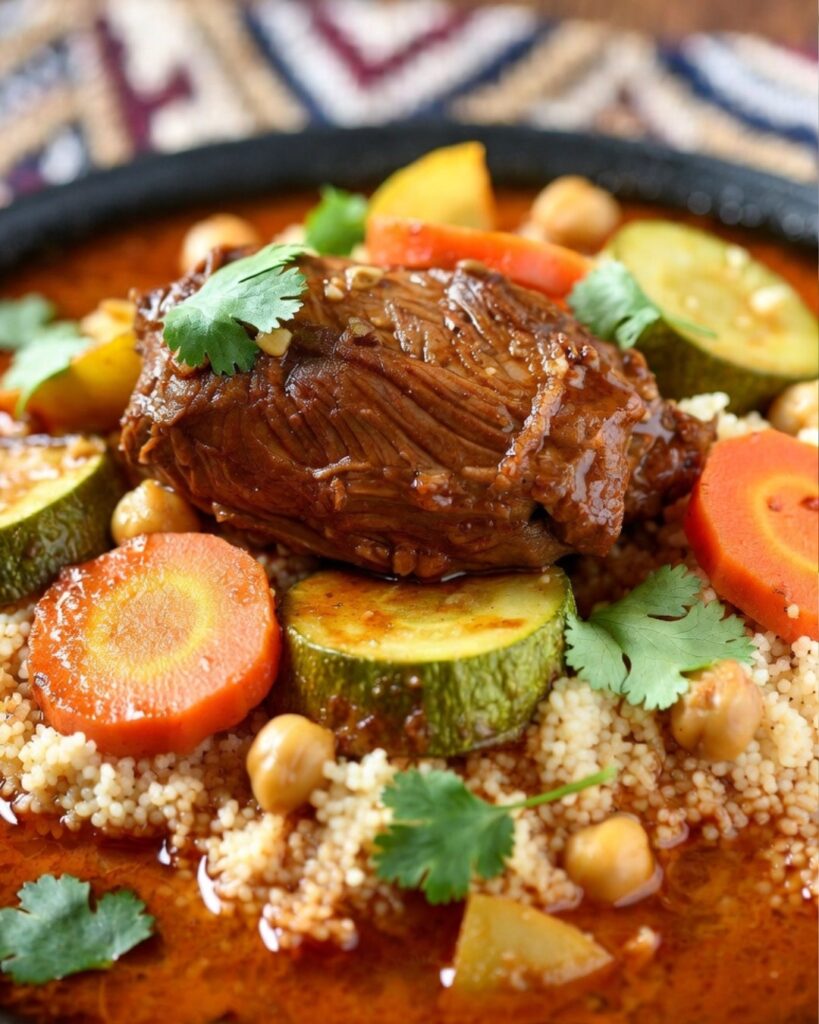
- Serve from a single communal platter. Traditionally couscous is mounded on one large plate — it’s part of the dish’s character and keeps the grain warm and moist.
Plating and Serving
- A bowl of the reserved broth: Served alongside for spooning over, so each diner moistens the grain to taste.
- Harissa or a spiced sauce: A fiery condiment on the side lets diners add heat without overwhelming the fragrant grain.
- Fresh bread (khobz): Traditional for scooping, and it rounds out a generous table.
- Beverage pairing: Moroccan mint tea — its sweetness and freshness are the classic close to the meal and cut the richness of the stew. For a savory pairing, a light red wine works with lamb.
Mound the couscous high on a wide platter, nest the meat in the center, and arrange the vegetables in spokes around it, moistened with broth. The symmetry and abundance are the presentation — simple, generous, and traditional.
Nutritional Profile
Authentic Moroccan couscous is a balanced one-dish meal. The grain provides complex carbohydrates for energy, the meat and chickpeas deliver protein, and the abundance of vegetables contributes fiber, vitamins, and minerals. The spices, particularly turmeric and saffron, carry antioxidant compounds. Served traditionally, it’s naturally portion-balanced across grain, protein, and vegetables.
Dietary modifications: For a vegetarian version, skip the meat and build a deeply spiced vegetable broth, using extra chickpeas for protein — the flavor stays rich if the broth is well-seasoned. For gluten-free, this dish doesn’t translate directly, as couscous is wheat; steamed cauliflower “couscous” is a distant approximation with a different character. For lower fat, reduce the finishing butter or smen, accepting a slightly less silky grain.
Common Questions, Answered Directly
Do I really need a couscoussier? Traditionally yes, but you can improvise with a pot and a fine-mesh steamer or colander that sits snugly on top. The key is steaming over broth, however you rig it.
Why is my couscous clumpy and dense? You likely boiled it or skipped the raking between steamings. Steam it, then separate the grains by hand with oil and water each time.
Can I make it faster? The authentic method takes time, but you can steam the grain while the broth simmers to overlap the work. Instant couscous is a different dish entirely, not a true shortcut.
How do I store leftovers? Refrigerate grain and stew separately up to three days. Re-steam or gently reheat the grain with a splash of water to revive its texture.
The whole tradition rests on one principle: steam the grain, work it by hand, and repeat until it’s light and fragrant. That patience is what makes these authentic Moroccan couscous recipes worth the effort over any boxed shortcut. Set up your steamer, season your broth generously, and give the grain the time it deserves.