Most people spend an hour boiling lasagna noodles and building a ricotta layer, when a shortcut delivers the same result in a fraction of the time. Frozen ravioli already contain the pasta and the cheese filling in one piece — which means they can replace both the noodles and the ricotta layer of a traditional lasagna in a single move. That’s the whole idea behind this easy ravioli lasagna recipe: you stack frozen ravioli, sauce, and cheese, and the oven does the rest. There’s no boiling, no layering ricotta, and no fuss. What you get is a bubbling, deeply satisfying casserole with the same soul as classic lasagna, on the table on a weeknight.
What Makes This Recipe Work
- Ravioli replace both noodles and filling. The science here is simple: each ravioli is pasta wrapped around cheese, so it does two jobs at once. This is why the dish skips the two most tedious lasagna steps entirely.
- Frozen ravioli go in without boiling. They cook through in the sauce and steam of the covered dish. Boiling first makes them fragile and prone to bursting — going straight from freezer to pan is intentional.
- Enough sauce is non-negotiable. The ravioli need ample moisture to cook through, so a generous amount of sauce surrounds every layer. Most recipes skimp and end up with dry, undercooked pasta.
- Covered then uncovered baking does two things. Covering traps steam to cook the ravioli; uncovering at the end browns the cheese. This two-stage bake is deliberate.
Prep time: 10 minutes · Cook time: 45 minutes · Total time: 55 minutes · Servings: 6
Table of Contents
Ingredients — What to Buy and Why It Matters
- 2 lb (about 2 bags) frozen cheese ravioli: The foundation that replaces noodles and ricotta both. Frozen, not fresh, holds up best to the long bake without turning mushy. Cheese ravioli is classic, but any variety works. Do not thaw them — they go in frozen.
- 1 lb ground beef or Italian sausage (optional): Browned for a heartier, meaty layer. Sausage brings built-in seasoning; beef is milder. Skip it entirely for a vegetarian version.
- 32 oz (about 4 cups) marinara or pasta sauce: You need plenty, since the ravioli cook in it. A good jarred sauce is perfectly suited here; the generous quantity is what cooks the pasta through.
- 3 cups shredded mozzarella: The melting cheese that binds the layers and browns on top. Shred it from a block if you can — pre-shredded carries anti-caking starch that melts less smoothly.
- 1 cup ricotta (optional, for extra richness): Dotted between layers if you want a creamier result, though the ravioli filling already provides cheese.
- 1/2 cup grated Parmesan: Sharp, salty depth on top and between layers.
- Fresh basil, dried oregano, and red pepper flakes: The aromatics that lift the sauce and finish the dish.
Substitution notes: Any frozen ravioli — cheese, spinach, mushroom, or meat — works beautifully and changes the character of the dish. For a lighter version, use a vegetable-based ravioli and skip the meat. Fresh spinach folded into the sauce adds nutrition and color without extra effort.
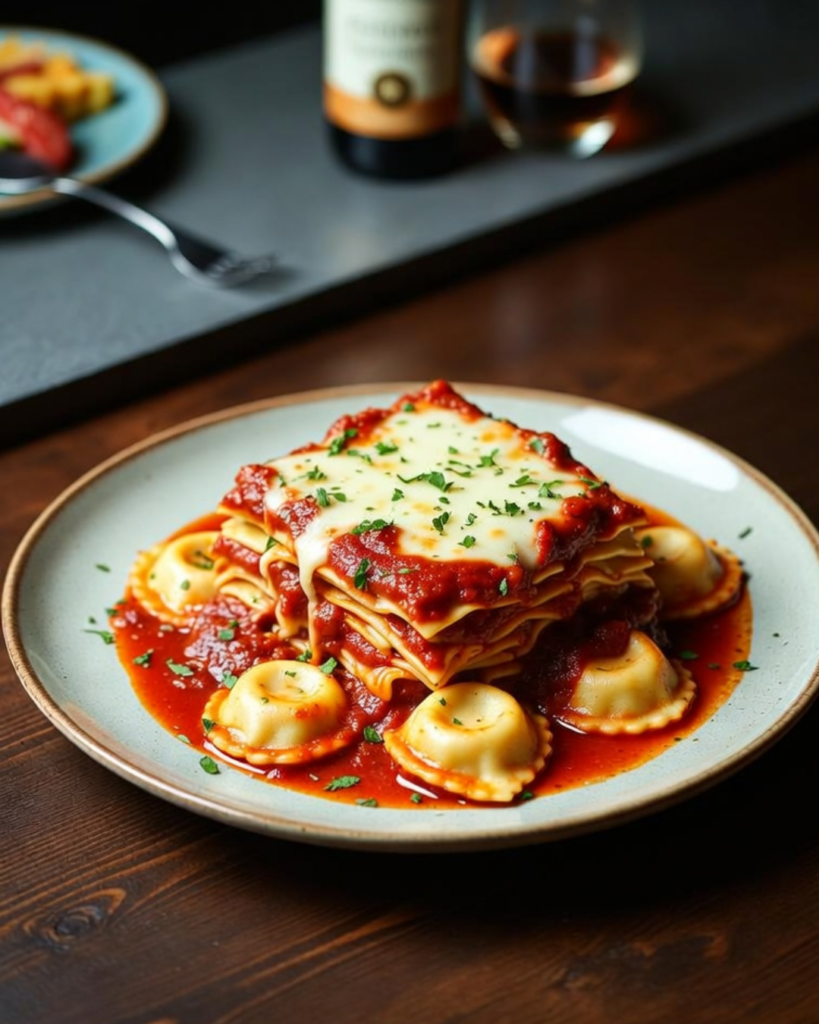
Step-by-Step Instructions
- Preheat and prep. Heat the oven to 375°F and lightly grease a 9×13 baking dish. What’s actually happening is you’re setting up for even heat and easy serving.
- Brown the meat, if using. Cook the ground beef or sausage until browned, breaking it up, then stir it into the sauce. Browning builds the savory fond that deepens the whole dish. Skip straight to the next step for a vegetarian version.
- Start with sauce on the bottom. Spread a full cup of sauce across the base of the dish. The critical step here is a sauced bottom layer — it prevents the ravioli from sticking and gives them moisture to cook in.
- Layer the ravioli. Arrange a single layer of frozen ravioli over the sauce, edges touching but not overlapping heavily. Overlapping too much keeps the middle from cooking through.
- Sauce and cheese, then repeat. Cover the ravioli with sauce, a scatter of mozzarella and Parmesan, and dots of ricotta if using. Add a second layer of ravioli and repeat, finishing with sauce and a generous cap of mozzarella.
- Bake covered. Cover tightly with foil and bake for 30 minutes. This is non-negotiable — the trapped steam is what cooks the frozen ravioli through.
- Uncover and finish. Remove the foil and bake another 12–15 minutes until the top is golden and bubbling. Let it rest 10 minutes before serving so the layers set and slice cleanly.
Technique Notes for Better Results
- Where most home cooks go wrong: not enough sauce. Dry ravioli won’t cook through. Be generous — every layer should be well coated so the pasta steams tender.
- The professional approach here is to bake covered first. The foil traps the steam that cooks the frozen ravioli. Uncovering too early leaves them hard in the center.
- Don’t thaw the ravioli. They hold their shape far better going in frozen. Thawed ones turn soft and can burst during layering.
- Let it rest before cutting. Ten minutes of rest lets the molten layers firm up so you get clean squares instead of a slide. This elevates it from good to precise.
- Shred your own mozzarella. Block cheese melts into a smoother, stretchier top than pre-shredded, which is coated to resist clumping.
- Season between the layers. A pinch of oregano and pepper flakes in the middle, not just on top, seasons the whole dish evenly.
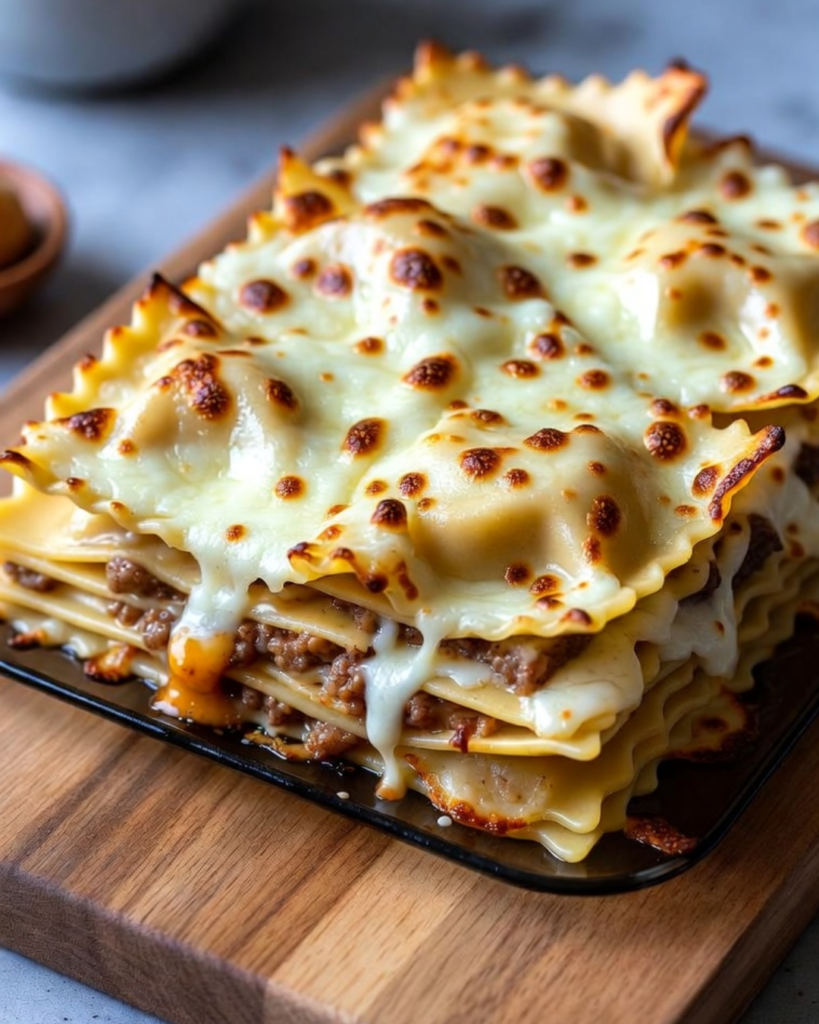
Plating and Serving
- Cut into clean squares after resting and lift with a wide spatula to show the defined layers.
- Pair with a crisp green salad dressed in vinaigrette — the acidity cuts the richness of the cheese and sauce.
- Serve with garlic bread to round out the meal and mop up extra sauce.
- Beverage: A medium-bodied red like Chianti or Sangiovese mirrors the tomato and savory depth; sparkling water with lemon offers a clean non-alcoholic contrast.
Nutritional Profile
This is hearty comfort food built on pasta and cheese, delivering protein and calcium along with its richness. Adding vegetables to the sauce or choosing a spinach ravioli boosts the fiber and nutrient content. Portioned with a fresh salad, it’s a satisfying, balanced family meal.
For vegetarian, simply skip the meat — the ravioli and cheese carry the dish easily. For lower calorie, use a part-skim mozzarella and a lean vegetable ravioli, accepting a slightly less rich result. For more protein, the meat layer or a meat-filled ravioli adds substantial staying power.
Common Questions, Answered Directly
Do I have to boil the ravioli first? No — that’s the entire point. Frozen ravioli cook through in the sauce and steam of the covered dish. Boiling first makes them fragile.
Why is my ravioli lasagna dry? Not enough sauce or not covered while baking. Use plenty of sauce on every layer and keep it foiled for the first 30 minutes to trap steam.
Can I make it ahead? Yes — assemble it, cover, and refrigerate up to a day, then add a few extra minutes to the covered bake time since it starts cold. It also freezes well before baking.
Can I use fresh ravioli instead of frozen? You can, but reduce the covered baking time, since fresh ravioli cook faster and can overcook to mush if treated like frozen.
Grab two bags of frozen ravioli, sauce generously, and bake covered then uncovered — that’s the whole secret. Assemble one tonight and put dinner on the table with almost no effort.
About The Author