Most people add coconut milk at the start and boil it hard, then wonder why their soup separates into a grainy, oily mess. Coconut milk is an emulsion, and hard boiling breaks it. Understanding that single fact is the difference between a split, thin broth and the silky, rich coconut curry chicken soup everyone is obsessed with. This soup is built on layers: a bloomed curry paste, a gently simmered coconut base, and tender chicken added at the right moment. Get the sequence right and you get a bowl that’s creamy without being heavy, aromatic without being harsh, and deeply satisfying in the way only a properly built curry soup can be.
Table of Contents
What Makes This Recipe Work
- Blooming the curry paste builds the foundation. The science here is simple: frying curry paste in oil before adding liquid unlocks its fat-soluble aromatics and deepens the whole soup. Skipping this leaves the flavor flat and raw-tasting. Most recipes rush past it.
- Full-fat coconut milk is non-negotiable. The fat is what gives the soup its body and silky texture — do not substitute light coconut milk, which turns thin and watery. This richness is the entire character of the dish.
- Gentle simmering protects the emulsion. Coconut milk breaks and turns grainy at a hard boil. Keeping it at a bare simmer is intentional and essential to a smooth soup.
- Chicken goes in to poach, not boil. Adding the chicken to a gentle simmer cooks it tender within the soup, and it stays moist rather than turning stringy.
Prep time: 15 minutes · Cook time: 30 minutes · Total time: 45 minutes · Servings: 4–6
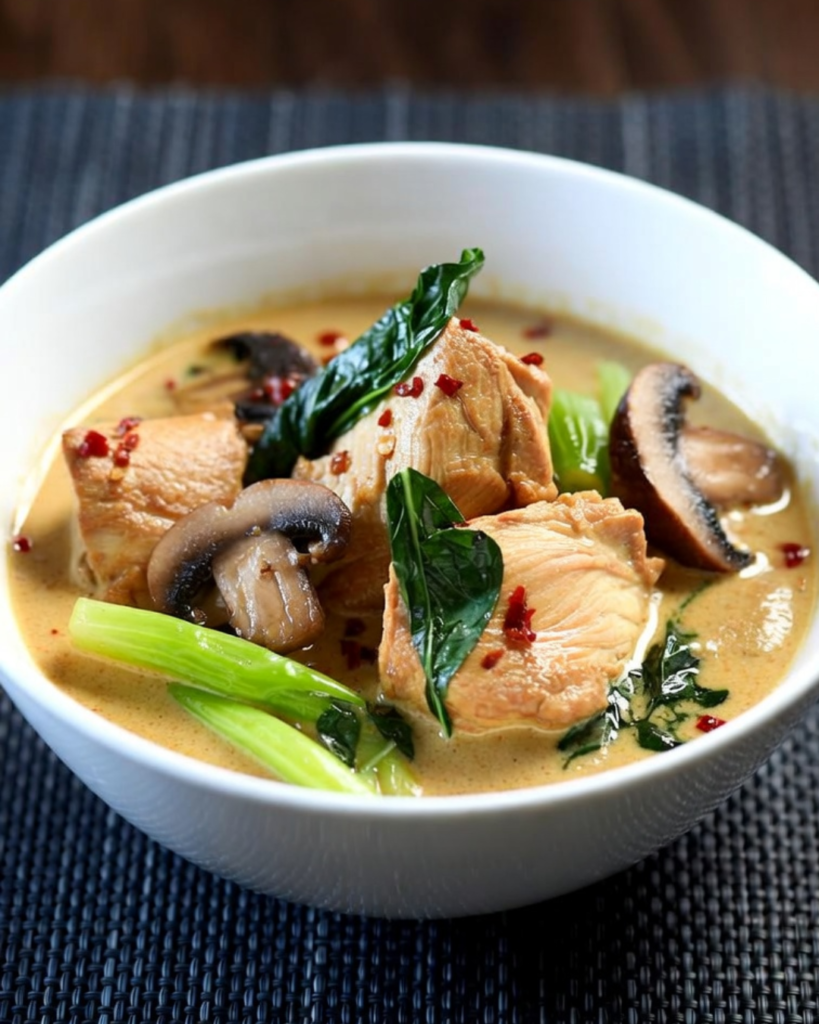
Ingredients — What to Buy and Why It Matters
- 1.5 lb boneless skinless chicken thighs: Thighs stay tender through simmering and won’t dry out the way breast can. Their slight fat adds richness to the broth — the better choice for soup.
- 2 cans (13.5 oz each) full-fat coconut milk: The heart of the soup. The fat content is what gives the broth its body and silk — do not substitute light coconut milk, which leaves it thin. Shake the can well before opening.
- 3 tbsp red or yellow Thai curry paste: The flavor engine. A quality paste carries lemongrass, galangal, and chili; better brands mean a deeper soup. Adjust the amount to your heat tolerance.
- 1 tbsp neutral oil (for blooming the paste): The medium that unlocks the curry paste. This small step drives the entire flavor.
- 4 cups chicken stock (low-sodium): The body of the broth alongside the coconut milk. Low-sodium keeps you in control of the final seasoning.
- 1 tbsp fresh ginger + 3 cloves garlic, minced: Aromatic depth that supports the curry paste.
- 2 tbsp fish sauce + 1 tbsp brown sugar + 2 limes: The essential Thai balance of salty, sweet, and sour. This trio is what makes the soup taste complete.
- Vegetables (1 red bell pepper, 1 cup mushrooms) + fresh cilantro and Thai basil: Texture, color, and a fresh finish.
Substitution notes: Rotisserie chicken works as a shortcut — add it shredded near the end just to warm through. For vegetarian, swap chicken for tofu and chickpeas and use soy sauce in place of fish sauce. Rice noodles turn it into a heartier meal reminiscent of khao soi.
Step-by-Step Instructions
- Bloom the curry paste. Heat the oil in a large pot over medium, add the curry paste, ginger, and garlic, and fry for 1–2 minutes until deeply fragrant. What’s actually happening is the fat pulling the aromatic compounds out of the paste — the flavor foundation of the whole soup. The critical step here is not to burn it.
- Add the coconut cream first. Spoon in the thick cream from the top of the coconut milk cans and stir it into the paste, simmering a minute until it looks glossy and slightly split. This concentrates the flavor before you thin it out.
- Build the broth. Pour in the remaining coconut milk and the stock, stirring to combine into a smooth, unified broth. Bring it to a gentle simmer, never a rolling boil.
- Poach the chicken. Add the chicken thighs whole or sliced and simmer gently for 12–15 minutes until cooked through and tender. Poaching in the broth keeps them moist and flavors the soup.
- Add the vegetables. Stir in the bell pepper and mushrooms and simmer 5 minutes until just tender but still with bite. Adding them late keeps them from going mushy.
- Season and balance. Stir in the fish sauce, brown sugar, and lime juice, then taste. This is non-negotiable — the final balance of salty, sweet, and sour is what makes the soup sing. Adjust until it’s bright and rounded.
- Finish fresh. Remove from the heat and stir in the cilantro and Thai basil. Serve immediately with extra lime.
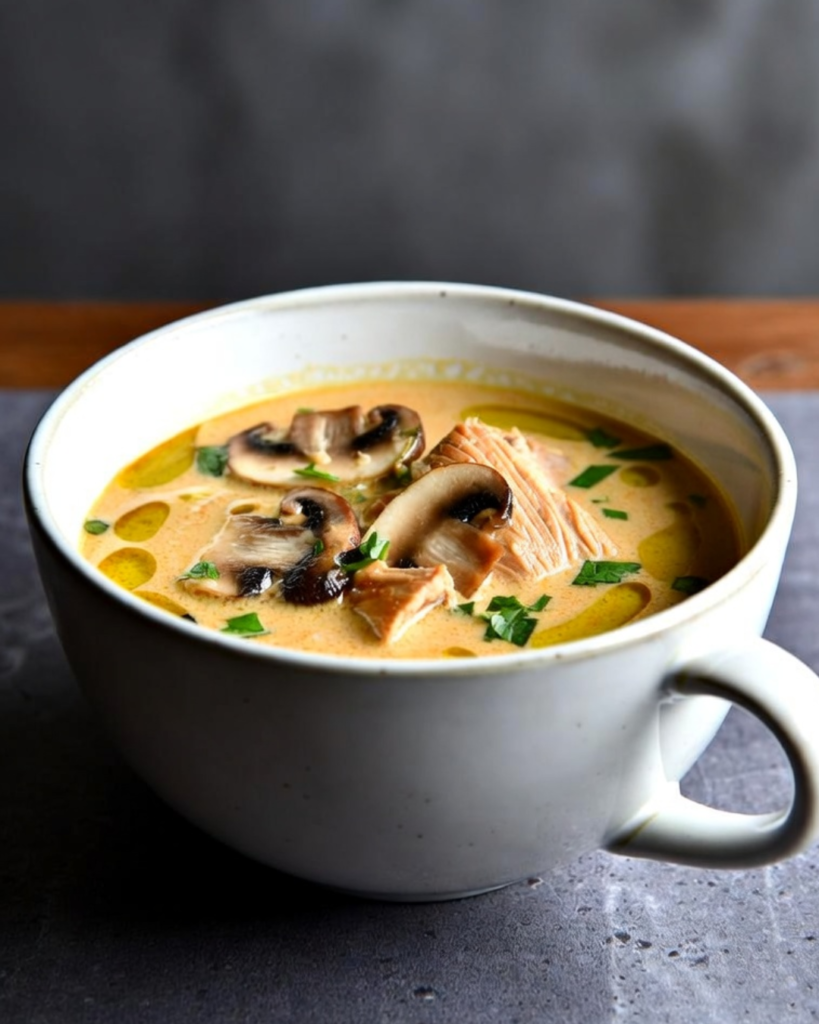
Technique Notes for Better Results
- Where most home cooks go wrong: boiling the coconut milk. A hard boil breaks the emulsion into oil and grit. Keep the soup at a gentle simmer the whole way through.
- The professional approach here is to fry the paste in the coconut cream. Simmering the paste in the thick cream until it splits and glosses builds a depth of flavor a quick stir-in never achieves.
- Balance at the very end. The interplay of fish sauce, sugar, and lime is the soul of Thai-style soup. Add them last and adjust by taste, not by measure alone. This elevates it from good to precise.
- Use full-fat coconut milk. Light versions leave the soup thin and characterless. The fat is the whole point.
- Don’t overcook the vegetables. Add them late so they keep their color and bite against the rich broth.
- Taste for heat and adjust. Curry pastes vary widely in spice. Start conservative and build, since you can add but not remove.
Plating and Serving
- Serve in deep bowls over rice or rice noodles to carry the rich broth and turn it into a full meal.
- Garnish with contrast — fresh herbs, a lime wedge, sliced chili, and a few bean sprouts add brightness and crunch against the creamy soup.
- Pair with a crisp side, like a simple cucumber salad or fresh spring rolls, to cut the richness.
- Beverage: A cold, off-dry Riesling or a light lager balances the heat and richness; iced Thai tea or coconut water complements the flavors for a non-alcoholic pairing.
Nutritional Profile
This soup delivers lean protein from the chicken along with the medium-chain fats of coconut milk, which give lasting satiety. The ginger, garlic, and fresh herbs add anti-inflammatory compounds and bright, functional flavor. It’s rich but nourishing, and loading it with vegetables makes it a genuinely complete meal in a bowl.
For lower calorie, use one can of full-fat coconut milk and more stock, accepting a slightly less rich broth rather than switching to light coconut milk, which breaks the texture. For vegetarian or vegan, tofu and soy sauce replace chicken and fish sauce cleanly. For lower carb, serve it as-is or over cauliflower rice instead of noodles.
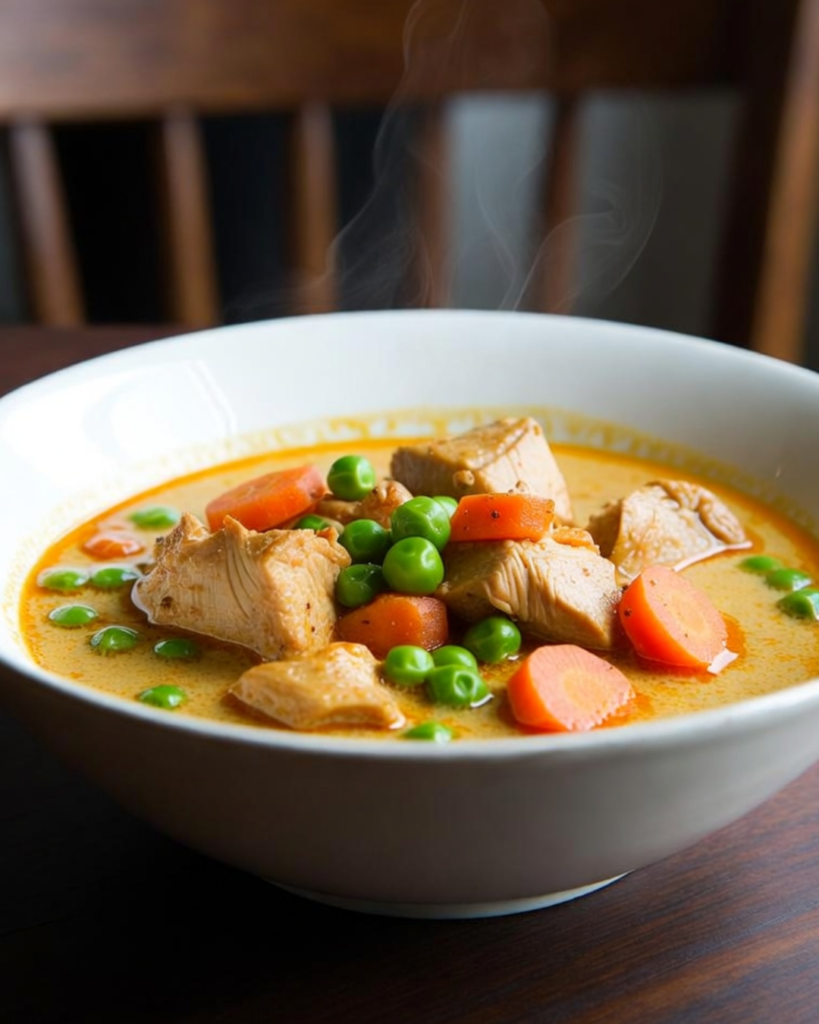
Common Questions, Answered Directly
Why did my coconut soup separate? You boiled it too hard. Keep it at a gentle simmer — a rolling boil breaks the coconut emulsion into oil and grit.
Can I use light coconut milk? You can, but the soup will be noticeably thinner and less silky. Full-fat is what gives this soup its signature richness, so it’s worth it.
How do I store and reheat it? Refrigerate up to 4 days and reheat gently over low heat, never boiling, to keep the coconut milk smooth. The flavor deepens overnight.
Can I make it spicier or milder? Yes — adjust the curry paste to taste and add fresh chili for heat, or more coconut milk and a touch of sugar to mellow it.
Bloom your paste, keep the coconut milk at a gentle simmer, and balance the salty-sweet-sour at the end — that’s the whole secret. Simmer a pot tonight and see why this soup earns its obsession.