
Most people pour honey straight into a hot pan and end up with a sauce that’s either burnt or sickly sweet. The secret to a great honey chicken sauce is balance and control: honey needs an acid to cut its sweetness, a savory anchor to give it depth, and gentle heat so it doesn’t scorch. That single principle of balance is the difference between a one-note sugary glaze and the honey chicken sauce you’ll actually make again. Done right, it turns glossy and clings to the chicken in a lacquered coat, sweet but rounded, with tang and umami underneath. It comes together in one small pan in under ten minutes, and it’s the kind of sauce that makes plain chicken taste like takeout.
Table of Contents
What Makes This Recipe Work
- Acid balances the honey. The science here is simple: honey alone reads as flat and cloying, but rice vinegar or lemon juice cuts through the sweetness and makes the whole sauce taste bright and layered. This balance is intentional, not optional.
- A savory anchor adds depth. Soy sauce brings salt and umami that keep the sauce from tasting like dessert. Most recipes underdo this and end up too sweet.
- A cornstarch slurry gives the glossy cling. Slurry thickens the sauce into that signature glaze that coats the chicken instead of running off. This is what separates a proper sauce from a thin syrup.
- Gentle heat protects the honey. Honey burns fast and turns bitter over high heat. Keeping the heat moderate is non-negotiable for a clean, sweet flavor.
Prep time: 5 minutes · Cook time: 8 minutes · Total time: 13 minutes · Servings: 4 (about 1 cup sauce)

Ingredients — What to Buy and Why It Matters
- 1/3 cup honey: The star and the body of the sauce. Use a real, good-quality honey — its flavor carries the whole dish. A mild clover or wildflower honey keeps the balance; a strong dark honey can dominate.
- 3 tbsp soy sauce (low-sodium): The savory anchor. Low-sodium lets you control the salt as the sauce reduces and concentrates — do not use full-salt, or the reduced sauce turns harsh.
- 2 tbsp rice vinegar (or fresh lemon juice): The acid that cuts the sweetness and brightens the sauce. This is the balancing element; without it the sauce is flat and cloying.
- 2 cloves garlic + 1 tsp fresh ginger, minced: The aromatic base that gives the sauce depth and warmth. Fresh, not powdered, for real flavor.
- 1 tbsp ketchup or tomato paste (optional): Adds color, body, and a subtle tang, echoing the look of restaurant honey chicken.
- 1 tbsp cornstarch + 2 tbsp cold water: The slurry that thickens the sauce to a glossy glaze. Mix with cold water so it doesn’t clump.
- 1 tsp toasted sesame oil + sesame seeds: A finishing note of nutty aroma and garnish, added off the heat.
Substitution notes: Maple syrup can replace honey for a different, deeper sweetness. Tamari swaps in for soy sauce to keep it gluten-free. A pinch of chili flakes or a squirt of sriracha adds heat and turns it into a hot-honey style sauce.
Step-by-Step Instructions
- Mix the slurry first. Stir the cornstarch into the cold water until fully dissolved and set it aside. What’s actually happening is you’re preparing a lump-free thickener so it disperses smoothly when it hits the hot sauce.
- Bloom the aromatics. Warm a little oil in a saucepan over medium, add the garlic and ginger, and cook 30 seconds until fragrant. The critical step here is not to brown them — burnt garlic turns the sauce bitter.
- Build the sauce base. Add the honey, soy sauce, rice vinegar, and ketchup if using. Stir to combine and bring to a gentle simmer over medium heat. Keep the heat moderate — this is non-negotiable, since high heat scorches the honey.
- Simmer briefly. Let the sauce simmer for 2–3 minutes to meld the flavors and cook off the raw edge of the vinegar. It will look thin at this stage; that’s expected.
- Thicken with the slurry. Stir the slurry once more, then whisk it into the simmering sauce. Cook for 1–2 minutes, stirring, until the sauce turns glossy and thick enough to coat the back of a spoon. This is where it becomes a glaze.
- Finish off the heat. Remove from the heat and stir in the toasted sesame oil. Adding it now preserves its aroma, which would cook off over heat. Taste and adjust.
- Toss or serve. Toss with cooked chicken to coat, or serve alongside, and finish with sesame seeds.

Technique Notes for Better Results
- Where most home cooks go wrong: scorching the honey. High heat burns honey and turns it bitter fast. Keep the sauce at a gentle simmer, never a hard boil, for a clean, sweet flavor.
- The professional approach here is to balance by taste. Honey brands and vinegars vary, so taste and adjust the sweet-salty-sour balance at the end. A sauce that tastes flat usually needs more acid, not more honey. This elevates it from good to precise.
- Add the slurry gradually. Whisk it in a little at a time until the sauce reaches the thickness you want. It thickens more as it cools, so stop just short.
- Don’t skip the acid. Rice vinegar or lemon is what keeps the sauce from being cloying. This is the single most important balancing step.
- Finish sesame oil off the heat. Its aroma is delicate and cooks off quickly, so add it at the very end for the most impact.
- Match the honey to the dish. A mild honey keeps the balance; a strong, dark honey can overwhelm. Choose accordingly.
Plating and Serving
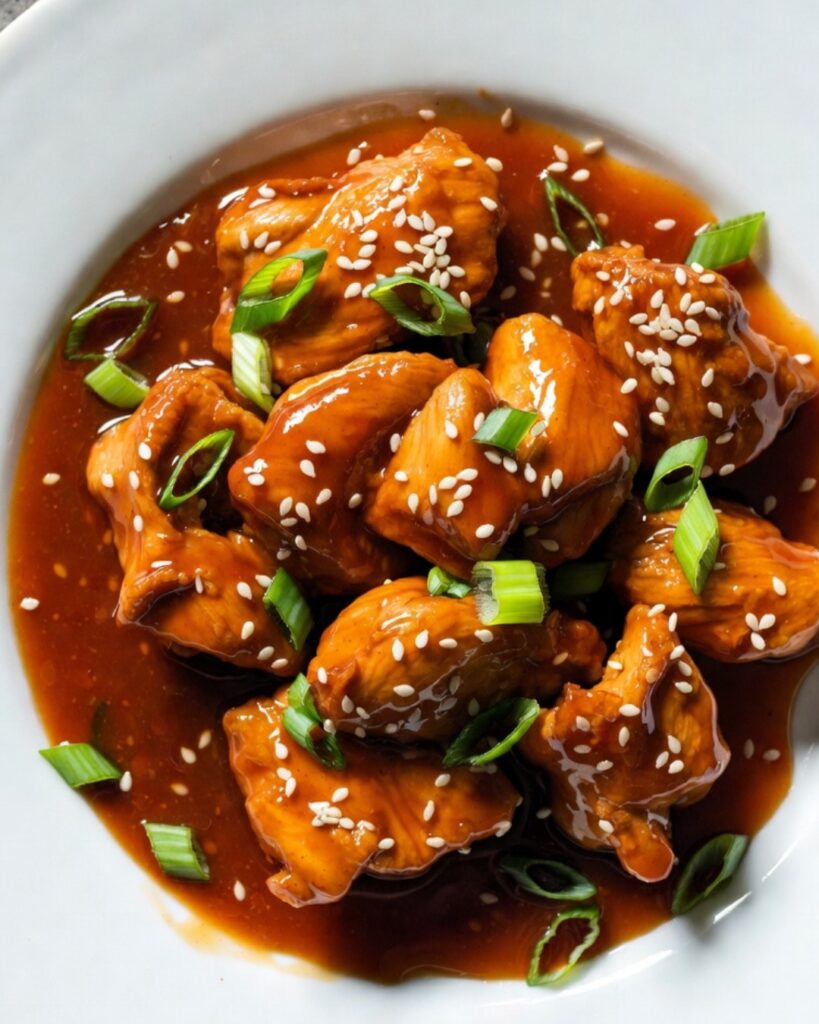
- Spoon over crispy chicken and steamed rice, letting the glossy sauce pool and coat both — the classic honey chicken presentation.
- Add crunch and color with sliced scallions, sesame seeds, and a side of steamed broccoli or snap peas.
- Balance the sweetness with a sharp, simple side like a cucumber salad or quick-pickled vegetables.
- Beverage: A cold, crisp lager or an off-dry Riesling complements the sweet-savory sauce; jasmine or green tea offers a clean non-alcoholic pairing that cuts the richness.
Nutritional Profile
This sauce is built on honey, so it carries natural sugars, but making it at home lets you control the amount and skip the corn syrup and preservatives of bottled versions. Honey brings trace antioxidants, while the garlic and ginger add functional, anti-inflammatory compounds. Used to glaze lean chicken, it turns a simple protein into a satisfying meal.
For lower sugar, reduce the honey and lean on the aromatics and acid for flavor, accepting a less thick, less sweet glaze. For gluten-free, tamari replaces soy sauce cleanly. For lower sodium, use low-sodium soy sauce and season by taste at the end, since reduction concentrates the salt.
Common Questions, Answered Directly
Why did my honey sauce turn bitter? You cooked it over heat that was too high and scorched the honey. Keep it at a gentle simmer, and add the honey to a moderate pan rather than a screaming-hot one.
How do I make it thicker or thinner? Adjust the cornstarch slurry — more for a thicker glaze, less for a pourable sauce. Remember it thickens further as it cools, so stop just before your target.
How do I store it? Refrigerate up to a week in a sealed jar. It thickens when cold; reheat gently with a splash of water to loosen it back to a glaze.
Can I make it spicy? Yes — add chili flakes, sriracha, or fresh chili to turn it into a hot-honey style sauce. The heat balances beautifully against the sweetness.
Balance the honey with acid, keep the heat gentle, and thicken to a gloss — that’s the whole secret. Make a batch tonight and keep this honey chicken sauce in your rotation for good.