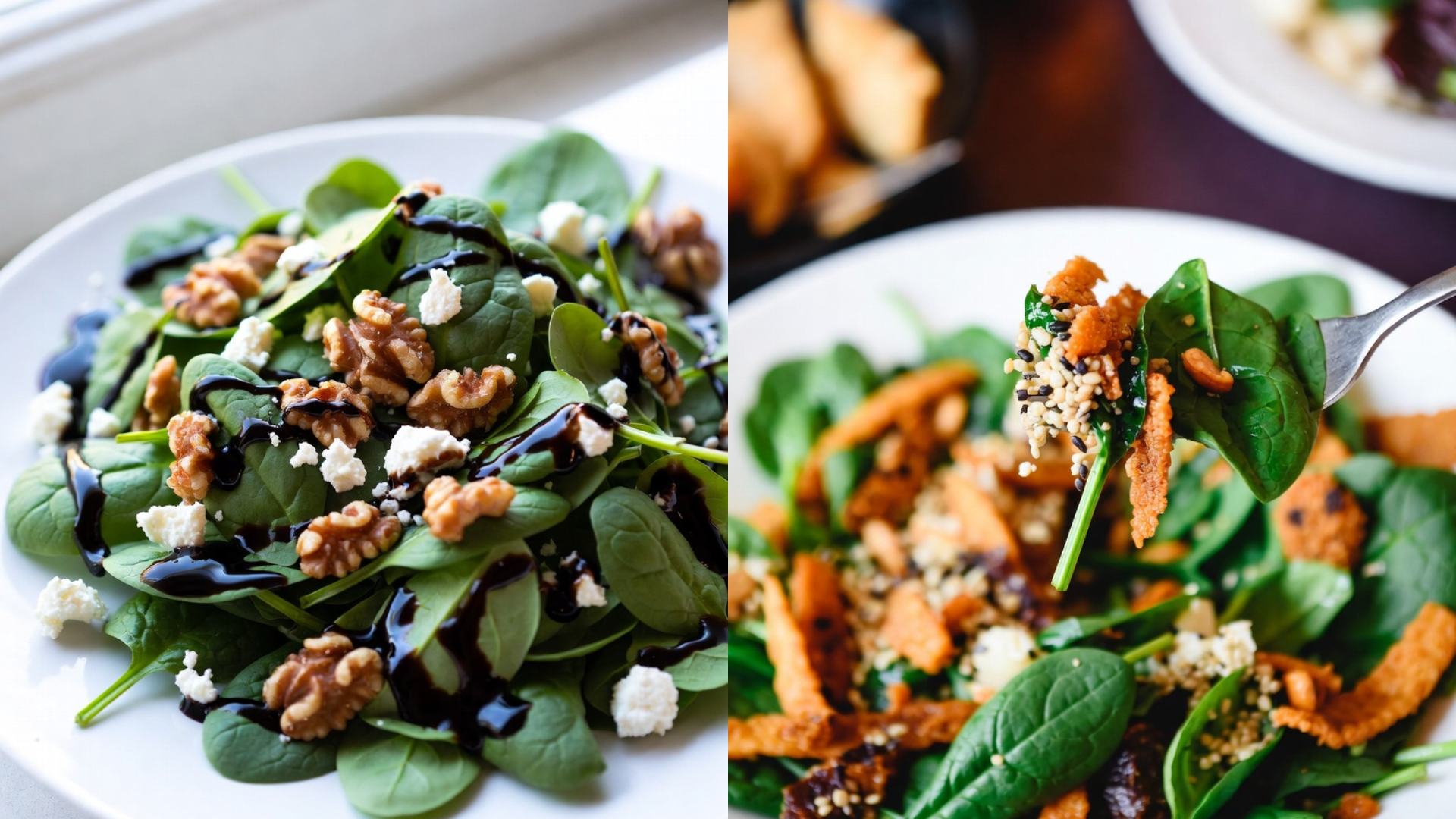
Most people overcook this — well, under-think this. Here’s how not to. The difference between a crispy spinach salad with a dressing that actually clings and one that pools thin and watery at the bottom of the bowl comes down to one step: properly emulsifying the vinaigrette instead of just shaking oil and vinegar together and hoping they stay combined.
Crispy spinach salad recipes get blamed for boring, watery dressing when the actual issue is almost always a broken or under-emulsified vinaigrette that separates the moment it hits the leaves. A properly executed version builds an emulsion with an actual binding agent, then dries the spinach thoroughly enough that the dressing coats instead of dilutes.
Prep time: 15 minutes | Cook time: 10 minutes | Total time: 25 minutes | Servings: 4
Table of Contents
What Makes This Recipe Work
- The vinaigrette is emulsified with Dijon mustard, not shaken loose — this is intentional. Mustard contains compounds that bind oil and vinegar together into a stable emulsion, preventing the separation that leads to a thin, watery coating
- Spinach is spun completely dry before dressing — the science here is simple: any residual water on the leaves dilutes the dressing on contact, which is often the actual source of a “watery” tasting salad rather than the dressing itself
- Bacon and nuts are added warm, just before serving — most recipes skip this timing, but warm textural elements slightly wilt the spinach in a pleasant way while staying crisp themselves, rather than sitting cold and static
- The dressing is tossed in stages, not poured all at once — this prevents oversaturating the bottom leaves while leaving the top ones bare, which is what often reads as an unevenly “watery” salad
Ingredients — What to Buy and Why It Matters
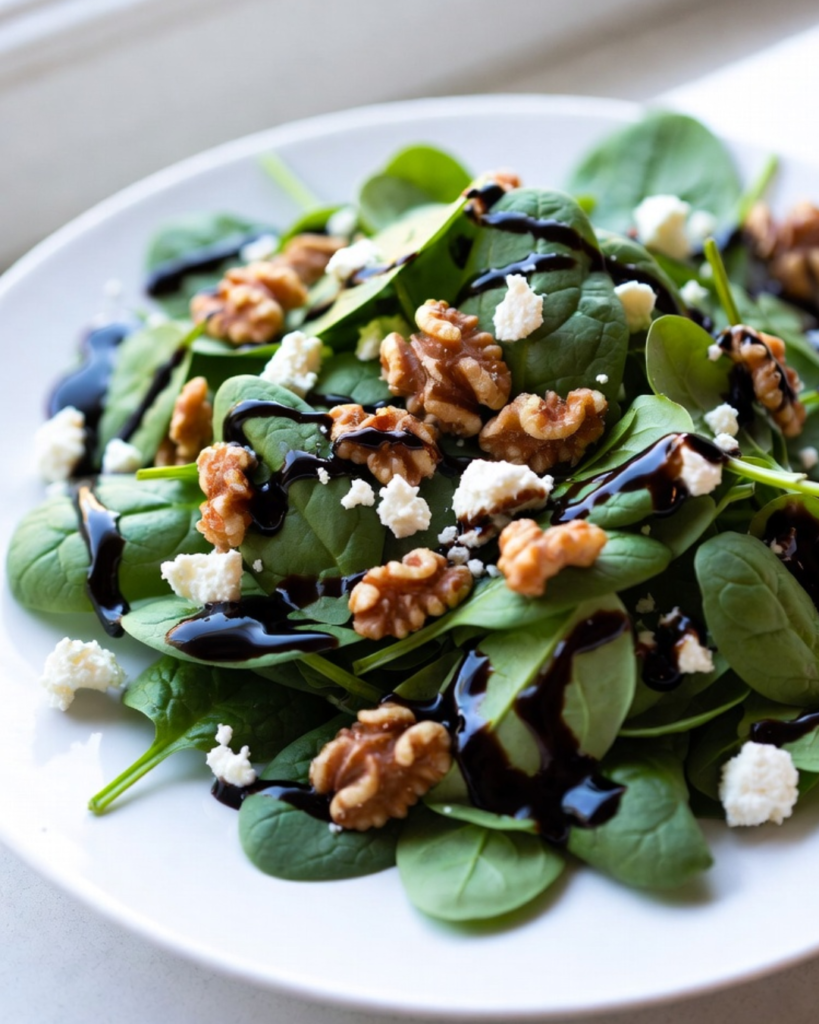
- Fresh baby spinach (8 cups, about 6 oz), washed and thoroughly dried: Baby spinach has a more tender texture than mature spinach — thorough drying is non-negotiable, since any lingering water dilutes the dressing immediately on contact.
- Bacon (4-5 slices), cooked crisp and crumbled: Adds a warm, crispy textural contrast — turkey bacon works as a substitute, though it renders less fat for the warm dressing drizzle described below.
- Red onion (1/4 cup, thinly sliced): A small amount adds sharpness — soaking the slices in cold water for 10 minutes mellows the bite if a milder flavor is preferred.
- Hard-boiled eggs (2, sliced or quartered): Adds richness and protein, rounding out the salad into something closer to a full meal.
- Dijon mustard (1 tbsp): The actual emulsifier — do not omit or substitute a milder mustard, since Dijon’s specific composition is what stabilizes the dressing most effectively.
- Red wine vinegar (2 tbsp) and olive oil (1/3 cup): The classic vinaigrette base — a roughly 1:3 acid-to-oil ratio balances sharpness against richness without one overwhelming the other.
- Maple syrup or honey (1 tsp): A small amount of sweetness balances the acidity of the vinegar, rounding out the overall flavor.
Substitution note: Balsamic vinegar can replace red wine vinegar for a sweeter, less sharp profile, though reduce the added sweetener slightly to compensate.
Step-by-Step Instructions
- Wash the spinach thoroughly, then dry it completely using a salad spinner, followed by a final pat with paper towels. This is the critical step here — even a small amount of residual water is often the actual reason a dressed salad tastes watery, not the dressing recipe itself.
- Cook the bacon in a skillet over medium heat until crisp, about 6-8 minutes. Remove and drain on paper towels, reserving 2 tablespoons of the rendered fat.
- Whisk the Dijon mustard and vinegar together first, before adding any oil. What’s actually happening is the mustard is beginning to form the emulsion’s structure, giving the oil something to bind to once it’s added.
- Slowly drizzle in the olive oil while whisking constantly, followed by the reserved bacon fat and maple syrup. A steady, thin stream is what allows the mixture to emulsify into a stable, cohesive dressing rather than separating.
- Taste and adjust the vinegar-to-oil balance if needed, adding a touch more vinegar for sharper varieties of spinach or reducing it slightly if the greens taste naturally bitter.
- Place the dried spinach in a large bowl and add about two-thirds of the dressing, tossing gently. Add more gradually, tasting as you go, rather than pouring the full amount at once — this is non-negotiable if you want even coverage without oversaturating the bottom leaves.
- Top with warm crumbled bacon, sliced red onion, and hard-boiled eggs just before serving, so the bacon retains its crispness against the dressed greens.
Technique Notes for Better Results
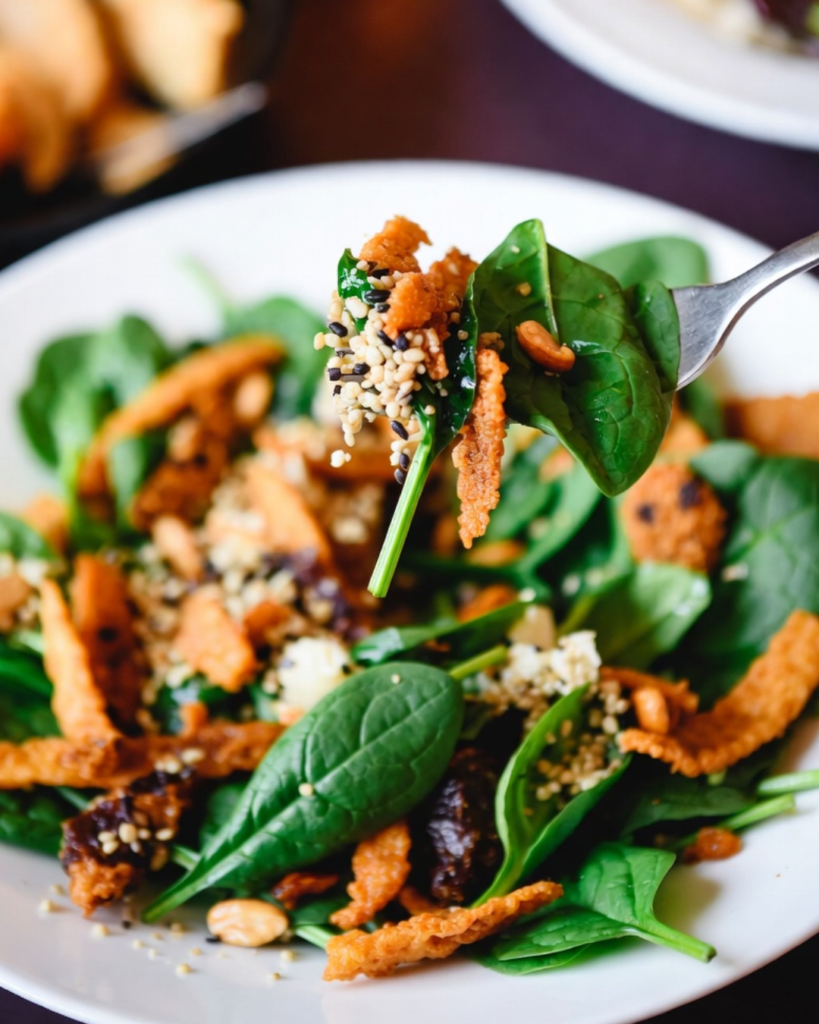
- The professional approach here is building the emulsion in stages — mustard and vinegar first, oil added slowly after — rather than combining everything at once and shaking
- Where most home cooks go wrong is dressing wet spinach, assuming the dressing itself is at fault when the actual issue is undried greens diluting it on contact
- If your dressing separates after sitting, a quick re-whisk with an additional small spoonful of mustard usually brings it back together
- Toss gently rather than vigorously — spinach bruises more easily than heartier greens like romaine, and aggressive tossing can make it wilt prematurely
- For extra crunch, toast a handful of nuts like pecans or walnuts in the same pan used for the bacon, picking up some of the rendered fat’s flavor
- Dress the salad as close to serving as possible — spinach wilts faster than most greens once dressed, even with a properly emulsified vinaigrette
Plating and Serving
- Serve alongside a simple grilled chicken breast to turn the salad into a complete meal
- Crusty bread on the side complements the warm bacon and tangy dressing
- Arrange the egg slices and bacon on top rather than tossing them in, for a cleaner presentation that shows off the ingredients
- A light sprinkle of extra cracked pepper just before serving adds a final layer of contrast
- A crisp, dry white wine or a light rosé both pair well, cutting through the richness of the bacon and dressing
Nutritional Profile
Spinach contributes iron, vitamin K, and a range of antioxidants, most of which hold up well since this salad is served raw. The bacon and eggs both add protein, though the bacon also contributes a meaningful amount of saturated fat and sodium. For a lighter version, reducing the bacon to two slices and adding extra egg maintains protein while cutting fat, though the dressing will lose some of its rendered-fat richness in the process. Using a light hand with the oil in the dressing, without dropping below the 1:3 ratio that keeps the emulsion stable, is the most effective way to lighten this dish without compromising the technique it depends on.
Common Questions, Answered Directly
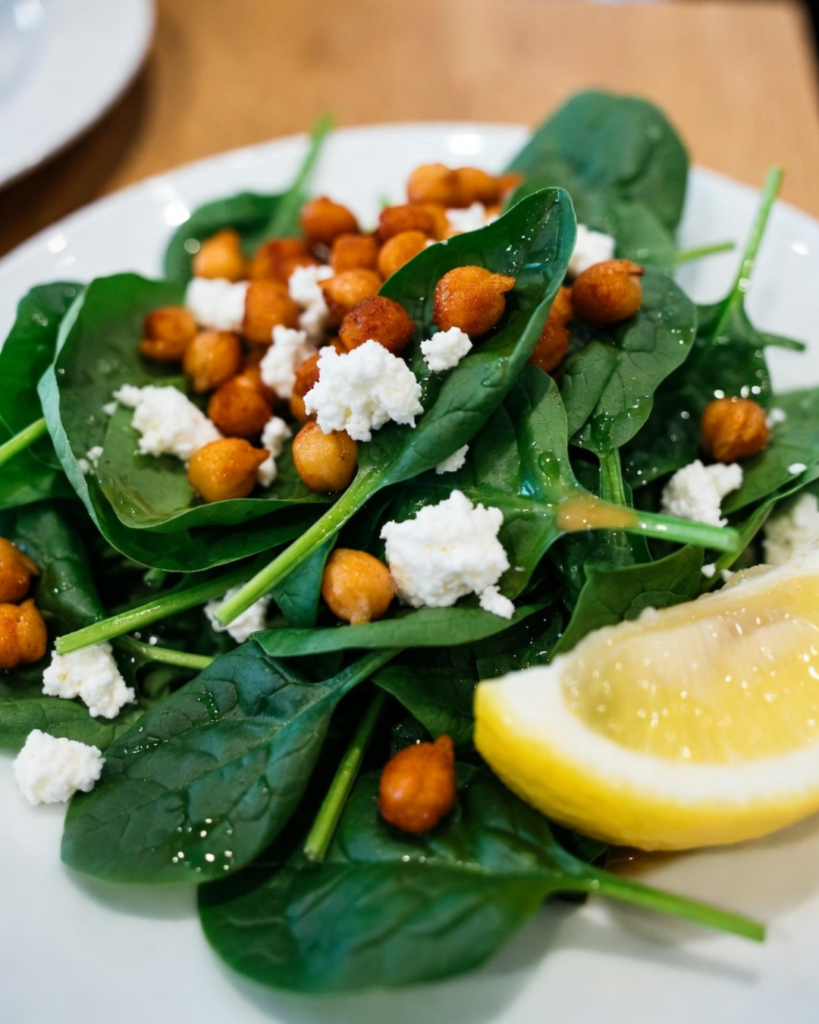
Why does my spinach salad always taste watery even with a good dressing? The spinach itself was almost certainly not dried thoroughly enough before dressing — residual water dilutes even a well-made vinaigrette on contact.
Can I make the dressing ahead? Yes, up to 5 days refrigerated in a sealed container — bring to room temperature and re-whisk before using, since the emulsion can loosen slightly when cold.
How do I keep the bacon crispy if I’m not serving immediately? Add it just before serving rather than tossing it in early, and keep it separate from the dressed spinach until the last possible moment.
Can I substitute a different green? Yes, though spinach wilts faster than heartier greens like kale, so if substituting, dress the salad closer to serving time to account for the difference in resilience.
Skip the watery bowl tonight — a properly emulsified dressing and thoroughly dried spinach are what actually separate crisp from soggy.
About The Author