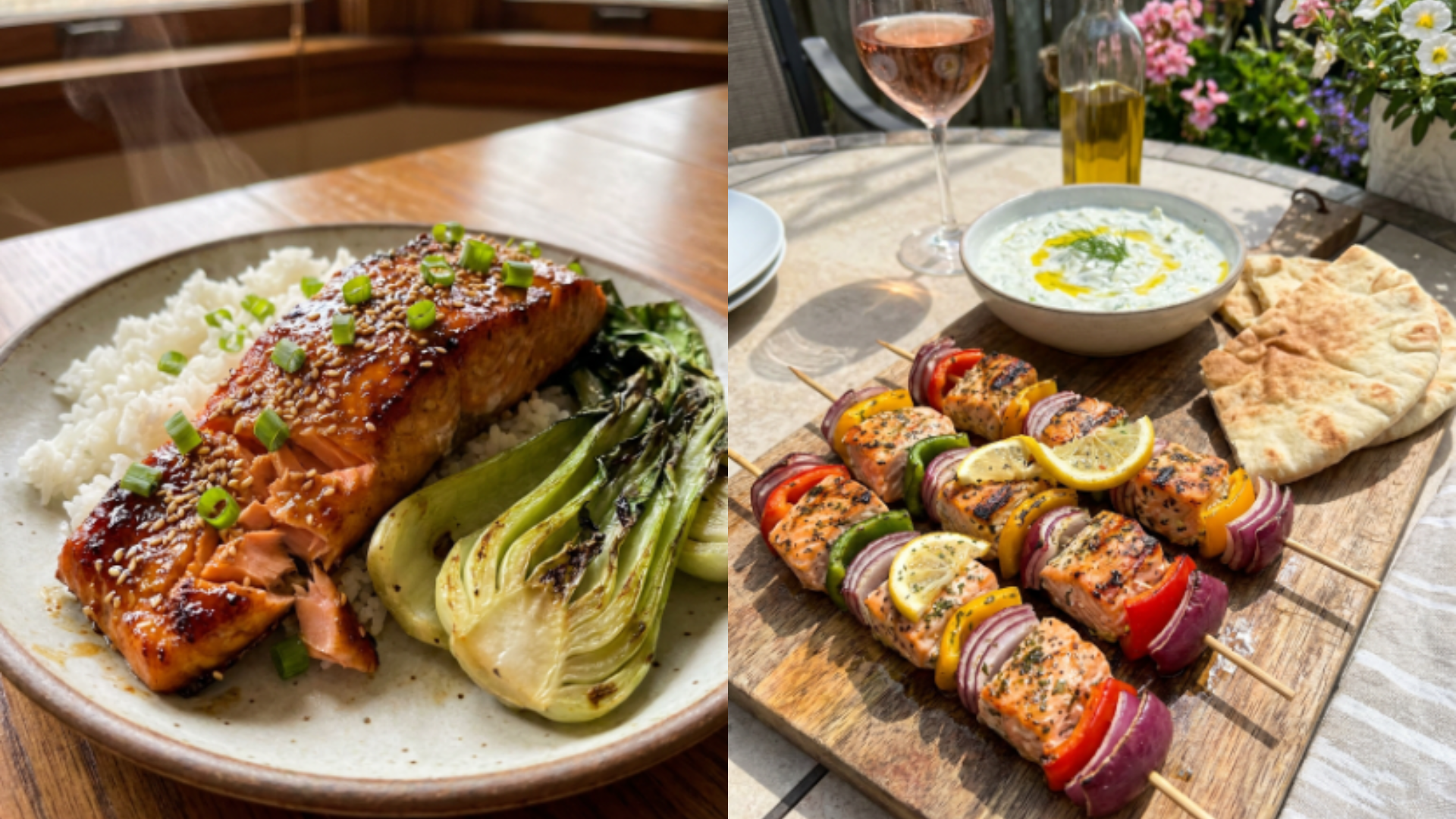
Most people overcook this. Here’s how not to. The difference between salmon that flakes apart perfectly on the grill and salmon that ends up in shreds stuck to the grate comes down to one step: proper grate preparation and a genuine hands-off sear, not just heat and hope.
Easy grilled salmon recipes fail most often not because of the fish itself but because of what happens between the fillet and the grate. A properly executed version relies on a clean, well-oiled grate, skin-on fillets, and enough patience to let a crust form before attempting to move anything.
Prep time: 10 minutes (plus optional 20-minute marinade) | Cook time: 10 minutes | Total time: 20-40 minutes | Servings: 4
Table of Contents
What Makes This Recipe Work
- The grate is cleaned and oiled twice, not once — this is intentional. A double pass of oil, once on the grate and once on the fish, creates a barrier that dramatically reduces sticking on the delicate flesh side
- Fillets are grilled skin-side down for most of the cook time — the science here is simple: skin acts as a protective barrier between direct flame and the delicate flesh, and flipping too early exposes flesh that isn’t ready to release cleanly
- The fish isn’t moved until it releases naturally — most recipes skip this warning, but forcing a flip before the proteins have set is the single biggest cause of salmon falling apart on the grill
- A brief marinade with oil and acid, not a long soak, is used — extended acid exposure actually begins to “cook” the fish’s surface, which changes texture before it ever touches the grill

Ingredients — What to Buy and Why It Matters
- Salmon fillets (4, about 6 oz each), skin-on: Skin-on is non-negotiable for this method — it’s the buffer that protects the flesh from direct flame contact and helps the fillet hold together when it’s time to flip.
- Olive oil (3 tbsp, divided): Used both in the marinade and for oiling the grate directly — a neutral oil with a higher smoke point works too, but olive oil adds flavor that complements the fish.
- Fresh lemon juice (2 tbsp) and lemon zest (1 tsp): A modest amount of acid brightens the fish without breaking down its texture — do not increase this significantly or extend the marinade time much beyond 20 minutes.
- Garlic (2 cloves, minced) and fresh dill (a small handful, chopped): The primary flavor layer — dried dill works at a third the amount, though fresh brightens the fish more effectively.
- Kosher salt and black pepper: Simple seasoning is enough here — the grill itself provides most of the flavor complexity through char and smoke.
Substitution note: Fresh thyme or parsley can replace dill without changing the method, added in the same quantity at the same stage.
Step-by-Step Instructions
- Combine 2 tablespoons of olive oil, lemon juice, lemon zest, garlic, and dill in a shallow dish. Add the salmon fillets, flesh-side down, and marinate for 15-20 minutes at room temperature. This is the critical step here — longer than 20 minutes and the acid starts changing the texture of the fish before it even hits the grill.
- Preheat the grill to medium-high heat, around 400-450°F, and clean the grates thoroughly with a grill brush.
- Oil the grates directly with a paper towel dipped in oil, held with tongs. This first oiling pass is what actually prevents sticking — skipping it is where most sticking problems originate, regardless of what happens to the fish afterward.
- Remove the salmon from the marinade and pat the skin dry. Brush the remaining tablespoon of oil onto the skin side. What’s actually happening is you’re creating a second barrier layer directly on the fish, reinforcing the oiled grate below it.
- Place the fillets skin-side down on the grill, then close the lid and do not touch them for 6-7 minutes. Undisturbed contact is what allows the skin to crisp and the flesh to set enough to release cleanly.
- Check for release by gently sliding a thin spatula underneath. If it resists, it isn’t ready — give it another minute. Forcing an early release is non-negotiable to avoid, since it’s the primary cause of torn, stuck fillets.
- Flip carefully and cook 2-3 minutes more on the flesh side, until the internal temperature reaches 125-130°F at the thickest point.
- Remove from the grill and rest for 2-3 minutes before serving, allowing carryover heat to bring the center to a fully set, moist finish.

Technique Notes for Better Results
- The professional approach here is treating the skin-side sear as the entire technique, not just the first half of a two-sided cook — most of the actual work happens during those first several undisturbed minutes
- Where most home cooks go wrong is flipping too early out of impatience, tearing the fillet apart because the proteins haven’t finished setting against the grate
- If sticking remains a persistent problem, consider grilling on a cedar plank or a piece of foil with holes poked through it, which still delivers grill flavor while removing direct grate contact entirely
- Pat the fish completely dry after marinating — excess surface moisture creates steam that works against a clean sear and good grate release
- A properly preheated grill matters as much as the oiling — a grate that isn’t hot enough won’t sear quickly enough to form the crust that allows clean release
- For extra insurance on delicate fillets, a fish basket or grilling mat removes the risk of direct grate contact almost entirely, though it sacrifices some of the classic grill marks
Plating and Serving
- Grilled corn on the cob, cooked alongside on the same grill, makes efficient use of the heat
- A simple arugula salad with lemon vinaigrette echoes the citrus in the marinade
- A dollop of herbed yogurt sauce on the side adds coolness without masking the fish’s flavor
- Serve skin-side down on the plate to show off the flesh’s color and char marks
- A crisp rosé or a dry Sauvignon Blanc both complement the char and citrus without overwhelming the fish
Nutritional Profile
Salmon provides substantial omega-3 fatty acids, which also contribute to its relative forgiveness against overcooking compared to leaner fish. The olive oil marinade adds healthy monounsaturated fat without significantly increasing the overall calorie count given the small quantity used. For a lower-fat version, reducing the oil in the marinade by half still provides enough moisture and flavor, though the fish will char slightly less evenly on the grill. This dish is naturally low in carbohydrates, making it a reasonable option for those managing blood sugar or following a lower-carb approach.

Common Questions, Answered Directly
Why does my salmon always stick to the grill? The grate likely wasn’t cleaned and oiled properly, or the fish was flipped before it had fully released on its own. Both are fixable with the technique above.
Can I use skinless fillets? Yes, but expect more sticking risk without the skin’s protective barrier — a well-oiled grate and a fish basket become more important with skinless cuts.
How long does grilled salmon keep? Two to three days refrigerated in a sealed container, best served cold or gently reheated rather than microwaved on high.
Can I make the marinade ahead? Yes, the marinade itself keeps for up to 3 days refrigerated, though only combine it with the fish shortly before grilling to avoid over-marinating.
Fire up the grill this weekend — proper grate prep is the one step standing between you and salmon that holds together perfectly.