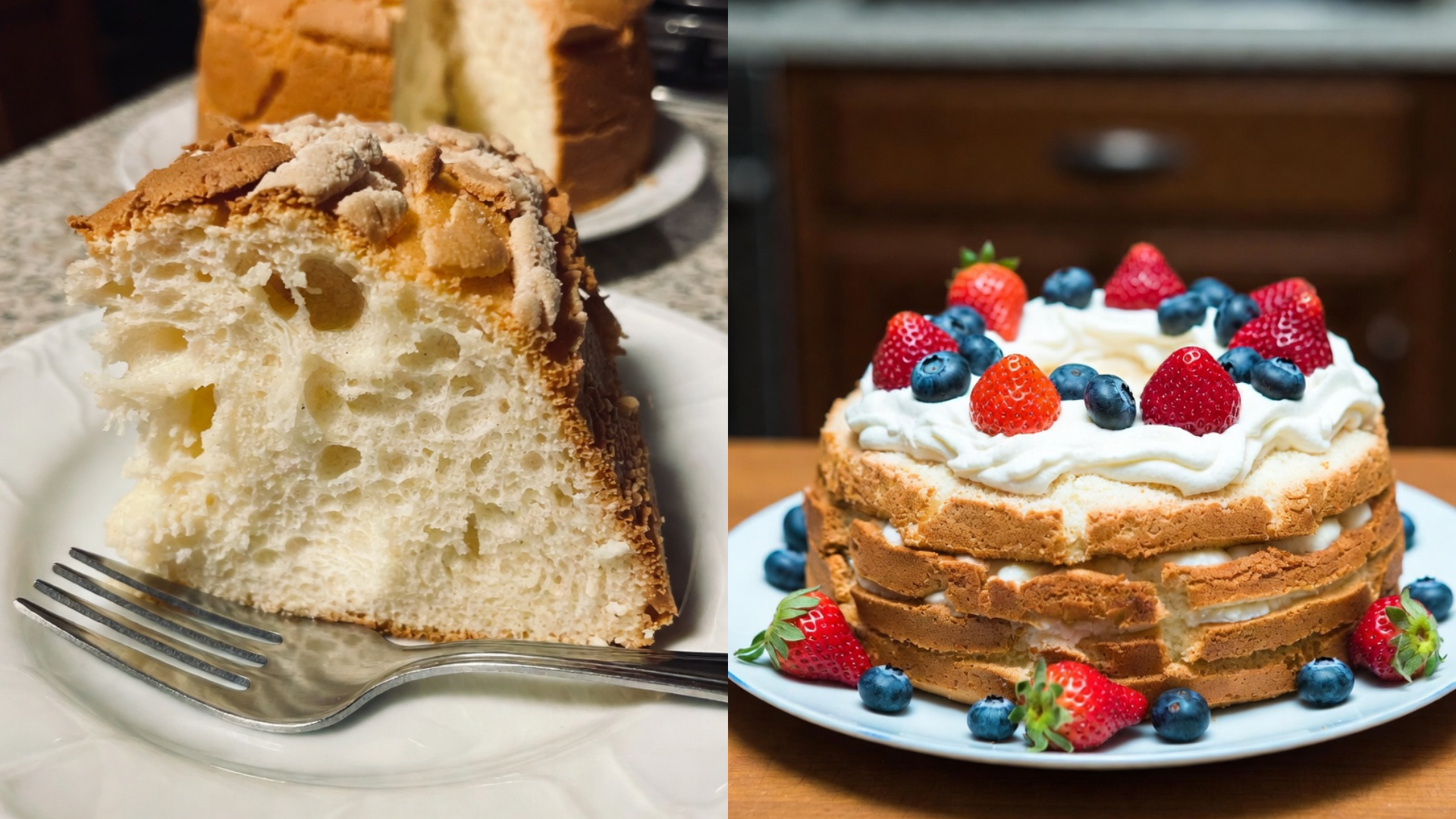
Most people overcook this — or rather, they sabotage it before it even reaches the oven. Here’s how not to. The difference between a proudly tall angel food cake and one that collapses into a flat, dense disc comes down to one step: leaving the pan completely ungreased, since the batter needs to grip bare metal to climb properly as it bakes.
Fluffy angel food cake recipes fail almost exclusively due to structural mistakes, not flavor ones — a greased pan, an underwhipped meringue, or premature cooling are the real culprits behind a collapsed texture. A properly executed version protects the whipped egg white structure at every single stage, since there’s no butter or baking powder here to save a deflated batter.
Prep time: 25 minutes | Cook time: 40 minutes | Total time: 1 hour 5 minutes, plus cooling | Servings: 12
Table of Contents
What Makes This Recipe Work
- The tube pan is left completely ungreased — this is intentional. The batter needs to cling to the pan’s bare sides to climb during baking; a greased pan causes it to slide back down instead of rising and holding its height
- Egg whites are whipped to stiff, glossy peaks, not soft ones — the science here is simple: stiff peaks hold significantly more air and structure than soft peaks, and that trapped air is the cake’s only leavening agent
- Flour is folded in, never stirred or mixed vigorously — most recipes skip this warning, but any aggressive mixing at this stage deflates the very air structure the whipped whites just built
- The baked cake is inverted immediately and cools upside down — cooling right-side up lets the delicate structure collapse under its own weight while still warm and unset

Ingredients — What to Buy and Why It Matters
- Egg whites (12 large, about 1 1/2 cups), room temperature: The entire structural foundation of the cake — room temperature whites whip to significantly greater volume than cold whites straight from the fridge, so don’t skip that wait.
- Cream of tartar (1 1/2 tsp): Stabilizes the whipped egg whites, helping them hold their structure through the folding and baking process — fresh lemon juice works as a substitute at roughly the same quantity.
- Granulated sugar (1 1/2 cups, divided): Half is whipped directly into the egg whites for stability, half is folded in with the flour — both roles matter, so don’t combine them into a single addition.
- Cake flour (1 cup), sifted at least twice: Lower protein content than all-purpose flour keeps the crumb tender rather than tough — all-purpose can substitute in a pinch, but sift it extra times to lighten it as much as possible.
- Salt (1/4 tsp): A small amount sharpens the overall sweetness without adding any noticeable saltiness of its own.
- Vanilla extract (1 1/2 tsp) and cream of tartar’s acidic partner, almond extract (1/2 tsp, optional): The almond extract rounds out the vanilla with subtle depth, though it can be omitted for a more classically plain flavor.
Substitution note: This is not a recipe with much room for substitution — the structure depends on precise proportions between egg whites, sugar, and flour, so swapping ingredients beyond flour type risks a collapsed result regardless of technique.
Step-by-Step Instructions
- Preheat the oven to 325°F. Do not grease the tube pan under any circumstances. This is the critical step here — bare metal is what the batter needs to grip as it climbs during baking.
- Sift the cake flour with half the sugar together, twice. This distributes the sugar through the flour evenly before it ever meets the whipped egg whites.
- In a very clean, grease-free bowl, whip the egg whites with cream of tartar and salt until foamy, about 1 minute. Any trace of fat in the bowl or on the beaters will prevent the whites from whipping properly.
- Gradually add the remaining sugar, a few tablespoons at a time, whipping continuously until stiff, glossy peaks form. What’s actually happening is the sugar is stabilizing the protein structure of the whites, allowing them to hold significantly more air than they could unsweetened.
- Add the vanilla and almond extract, mixing just until incorporated.
- Sift the flour-sugar mixture over the whipped whites in three additions, folding gently after each. Cut through the center with a spatula, turn the bowl, and fold — this is non-negotiable if you want to preserve the air structure rather than deflating it through vigorous stirring.
- Pour the batter into the ungreased tube pan. Run a knife through the batter once to pop any large air pockets.
- Bake 35-40 minutes, until the top is golden and springs back lightly when touched.
- Invert the pan immediately upon removing it from the oven, using the pan’s built-in feet or setting it over a bottle neck. Cool completely upside down, at least 1 hour, before running a knife around the edges to release the cake.

Technique Notes for Better Results
- The professional approach here is whipping the egg whites to true stiff peaks — checked by lifting the beaters and confirming the peak holds its shape without drooping — rather than stopping at soft peaks that look similar but hold far less structure
- Where most home cooks go wrong is greasing the pan out of habit, assuming it will prevent sticking, when it actually prevents the cake from climbing and holding its height in the first place
- If your cake collapsed after baking, the most likely cause is skipping the immediate inversion — even a few minutes right-side up while warm can cause it to sink under its own weight
- Folding technique matters as much as whipping technique; a heavy hand at this stage undoes minutes of careful whipping in seconds
- For the tallest possible rise, avoid opening the oven door during the first 30 minutes of baking, since a temperature drop at the wrong moment can prevent the structure from setting properly
- A serrated knife, used gently, slices this cake far more cleanly than a straight-edged one, which tends to compress the delicate crumb
Plating and Serving
- Fresh berries and lightly sweetened whipped cream are the classic, uncomplicated pairing
- A light citrus glaze adds brightness without weighing down the cake’s airy texture
- Serve slightly chilled or at room temperature, both work well given the cake’s neutral richness
- Cut into slices with a gentle sawing motion rather than pressing straight down, to avoid compressing the crumb
- A light dessert wine or simply iced tea both pair well, since anything heavier competes with the cake’s delicate texture
Nutritional Profile
This cake contains no butter, oil, or egg yolks, making it one of the leaner cake options available, fat-wise, though the sugar content remains significant since it does real structural work here beyond sweetness. For those avoiding refined sugar, this isn’t an easy recipe to adapt, since the whipped structure depends specifically on sugar’s properties in a way most substitutes can’t replicate without compromising the rise. The dish is naturally low in fat and cholesterol given the absence of yolks, butter, or oil throughout.

Common Questions, Answered Directly
Why did my angel food cake collapse after baking? The most common causes are a greased pan, underwhipped egg whites, or failing to invert the pan immediately after baking. All three undermine the structure the cake depends on.
Can I use a bundt pan instead of a tube pan? Not well — bundt pans are typically greased and shaped differently, both of which work against the climbing and cooling technique this cake requires.
How long does this cake keep? Three to four days at room temperature, loosely wrapped — it doesn’t refrigerate well, since the texture tends to turn slightly rubbery in the cold.
What can I do with the leftover egg yolks? Custards, lemon curd, or a pound cake all put yolks to good use — worth planning for before you start this recipe, since 12 yolks is a substantial amount to have leftover.
Skip the collapsed disappointment tonight — an ungreased pan and properly whipped whites are what actually keep this cake tall and fluffy.