Most people overcook this. Here’s how not to. The difference between dense, dry homemade gyro meat and a genuinely juicy version comes down to one step: compacting the meat mixture tightly into a loaf before baking, mimicking the compression a rotisserie spit provides through gravity and slow rotation.
A juicy gyro meat recipe without a rotisserie spit relies on a loaf pan and a water bath to recreate the slow, even, moisture-retaining cook that a spit naturally achieves. The compression is what actually matters here, not the rotation itself — get the density right and the texture follows.
Prep time: 20 minutes (plus 1+ hour chilling) | Cook time: 1 hour | Total time: 1 hour 20 minutes, plus chilling | Servings: 6
Table of Contents
What Makes This Recipe Work
- The meat mixture is processed until slightly sticky and pasty — this is intentional. That tacky texture is what allows the meat to bind together densely, mimicking the compressed structure that rotisserie spinning creates through gravity
- A loaf pan compacts the mixture into a tight, dense shape — the science here is simple: density is what gives gyro meat its distinctive sliceable texture, and a loaf pan provides the compression a home kitchen otherwise lacks without a spit
- A water bath surrounds the pan during baking — most recipes skip this, but the water bath moderates oven heat, preventing the exterior from drying out before the dense interior fully cooks through
- The cooked loaf chills before slicing — cutting a warm gyro loaf causes it to crumble apart, since the proteins haven’t fully set; a cold loaf slices thin and clean
Ingredients — What to Buy and Why It Matters
- Ground lamb (1 lb) and ground beef (1 lb): The traditional blend — lamb alone can taste overly gamey for some palates, while beef alone loses some of the classic gyro flavor, so the combination balances both.
- Yellow onion (1 small), grated and squeezed dry: Grating releases moisture that needs to be squeezed out before adding to the mix — skipping this step introduces excess liquid that prevents the meat from binding densely.
- Garlic (4 cloves, minced): Fresh garlic gives a sharper, more traditional flavor than powder, which reads as flatter in a dish this simple.
- Dried oregano, ground cumin, dried marjoram (1 tsp each): The classic Greek spice profile — marjoram specifically distinguishes gyro seasoning from a generic Mediterranean blend, so don’t skip it in favor of more oregano.
- Smoked paprika (1/2 tsp): Adds a subtle background warmth that plain paprika doesn’t provide, rounding out the spice blend without overwhelming it.
- Salt (1 1/2 tsp) and black pepper (1/2 tsp): Salt here does double duty — seasoning the meat and also helping extract the proteins that bind the mixture into a cohesive loaf.
Substitution note: All beef can replace the lamb entirely for a milder flavor, though it moves further from a traditional gyro taste — ground turkey works too, but needs a tablespoon of olive oil added to compensate for its lower fat content.
Step-by-Step Instructions
- Combine the grated, squeezed onion, garlic, and all the spices with the ground lamb and beef in a food processor. Pulse in short bursts, scraping down the sides periodically, until the mixture becomes smooth and slightly sticky, about 1-2 minutes total. This is the critical step here — that tacky, paste-like texture is what allows the meat to bind densely rather than crumbling once sliced.
- Preheat the oven to 325°F. Press the meat mixture firmly into a loaf pan, packing it tightly and smoothing the top. What’s actually happening is you’re manually creating the density that a rotisserie spit achieves through gravity and rotation over time.
- Cover the loaf pan tightly with foil. Place it inside a larger roasting pan, then pour hot water into the roasting pan until it reaches about halfway up the sides of the loaf pan.
- Bake for 55-65 minutes, until the internal temperature reaches 165°F. The water bath is non-negotiable here — it moderates the oven’s direct heat, preventing the exterior from overcooking before the dense center is done.
- Remove the loaf pan from the water bath and let it cool at room temperature for 20 minutes.
- Pour off any excess fat, then refrigerate the loaf, still in its pan, for at least 1 hour, ideally overnight. Cutting into a warm loaf causes it to crumble rather than slice, since the proteins haven’t fully set at that stage.
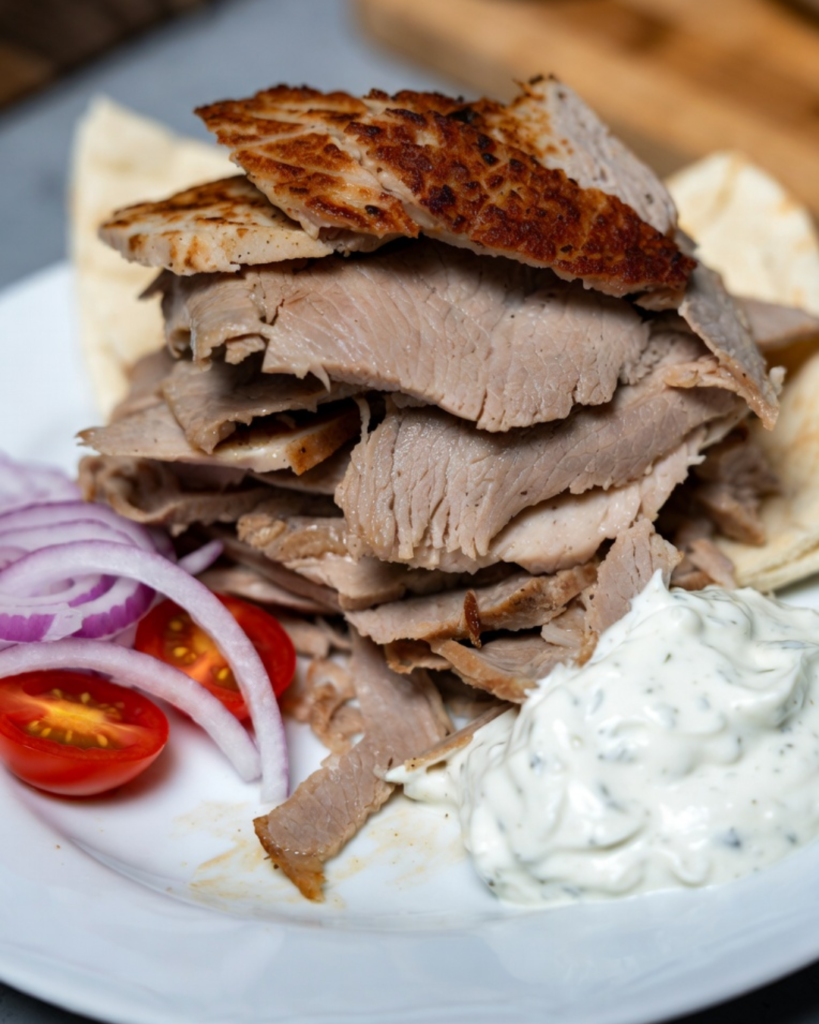
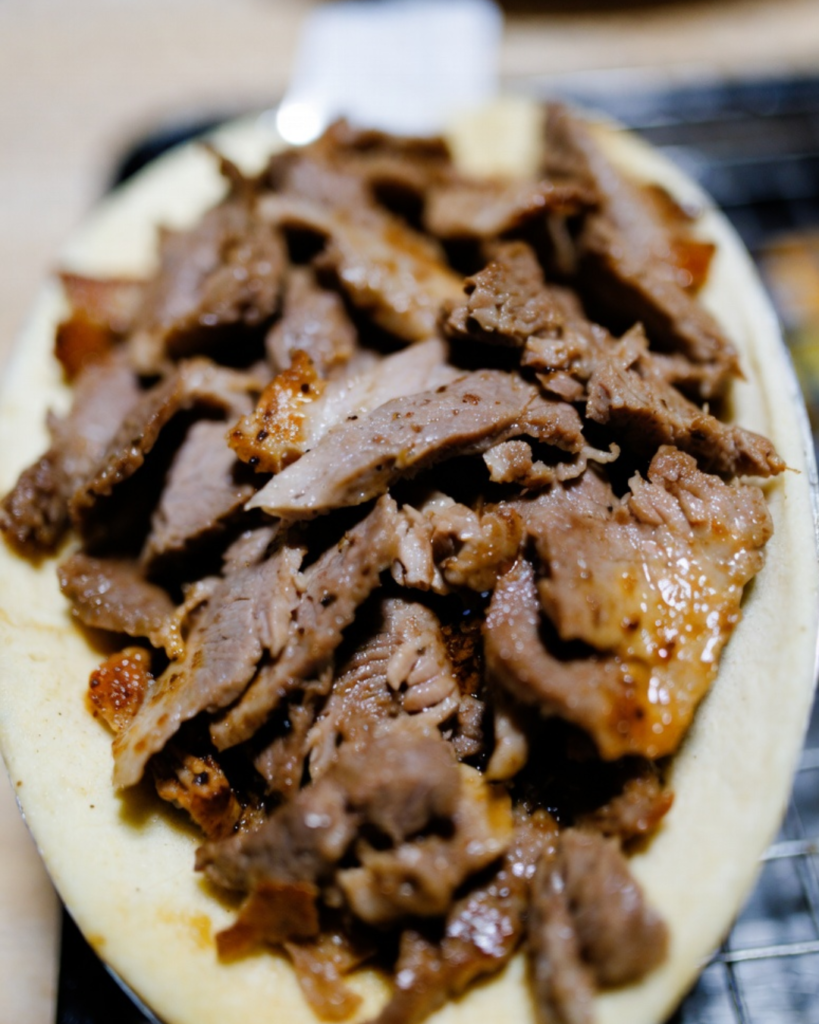
- Once fully chilled, turn the loaf out and slice as thin as possible with a sharp knife. Reheat the slices in a hot, dry skillet for 1-2 minutes per side, which crisps the edges the way a rotisserie’s direct heat traditionally would.
Technique Notes for Better Results
- The professional approach here is processing the meat mixture longer than feels necessary, since the sticky, bound texture that develops is directly responsible for how well the loaf holds together when sliced thin
- Where most home cooks go wrong is skipping the water bath, assuming it’s an unnecessary extra step, when it’s actually what prevents the exterior from drying out during the longer bake this method requires
- If the loaf still crumbles after slicing, it likely wasn’t chilled long enough — an overnight rest produces noticeably better results than the one-hour minimum
- Searing the sliced pieces in a hot pan after chilling isn’t optional if you want the characteristic crisp edge gyro meat is known for — straight from the fridge, it lacks that textural contrast
- Squeezing the grated onion thoroughly dry is worth the extra effort; residual onion liquid is one of the most common reasons the mixture won’t bind properly
- For a smokier flavor closer to a true rotisserie, finish the reheated slices under a broiler for the last 30 seconds instead of only pan-searing
Plating and Serving
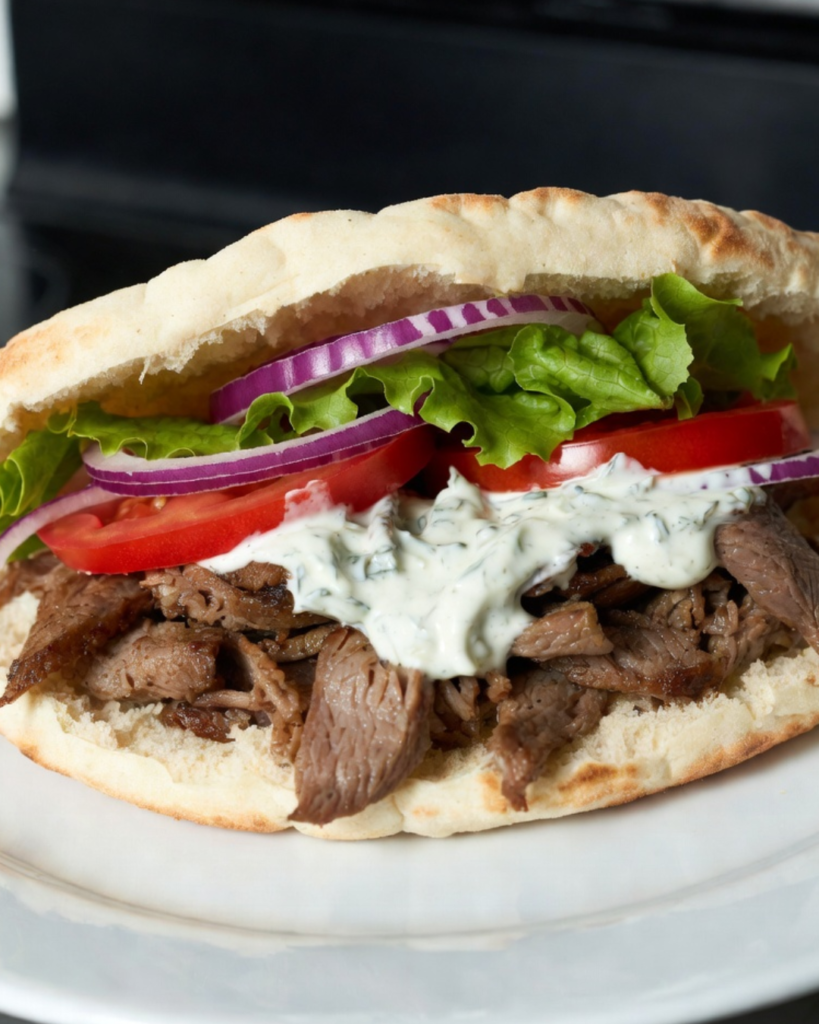
- Warm pita bread, lightly charred, is the traditional vessel for these thin slices
- Tzatziki sauce is essential, its cool acidity balancing the richness of the lamb and beef
- Sliced tomato, cucumber, and red onion round out a classic gyro plate
- Arrange the crisped slices slightly overlapping for a presentation that echoes the traditional carved-from-the-spit look
- A dry Greek white wine or a light lager both pair well, cutting through the richness of the meat
Nutritional Profile
The lamb and beef combination provides iron, zinc, and B vitamins, along with meaningful saturated fat given the traditional fat content of both meats. Draining the excess fat after baking, as the recipe instructs, removes a portion of that fat before serving. For a lighter version, an all-beef or all-turkey version reduces overall fat, though turkey specifically needs added oil to compensate for its leanness and avoid a dry final texture. Using whole wheat pita instead of white adds fiber without changing the core technique of the dish itself.
Common Questions, Answered Directly
Can I make this without a food processor? A stand mixer with a paddle attachment works as a substitute, mixing on low until the same sticky texture develops, though it takes slightly longer than a food processor.
Why did my gyro meat crumble when I sliced it? The most likely causes are insufficient processing time, excess onion moisture, or not chilling the loaf long enough before slicing. All three affect how well the mixture binds.
How long does this keep? Up to 4 days refrigerated in a sealed container, sliced or whole — slice just before reheating for the best texture.
Can I freeze the cooked loaf? Yes, whole and unsliced, wrapped tightly, for up to 3 months. Thaw overnight in the refrigerator before slicing and pan-searing.
Skip the rotisserie hunt tonight — a loaf pan and a water bath get you genuinely juicy gyro meat without any special equipment.
About The Author