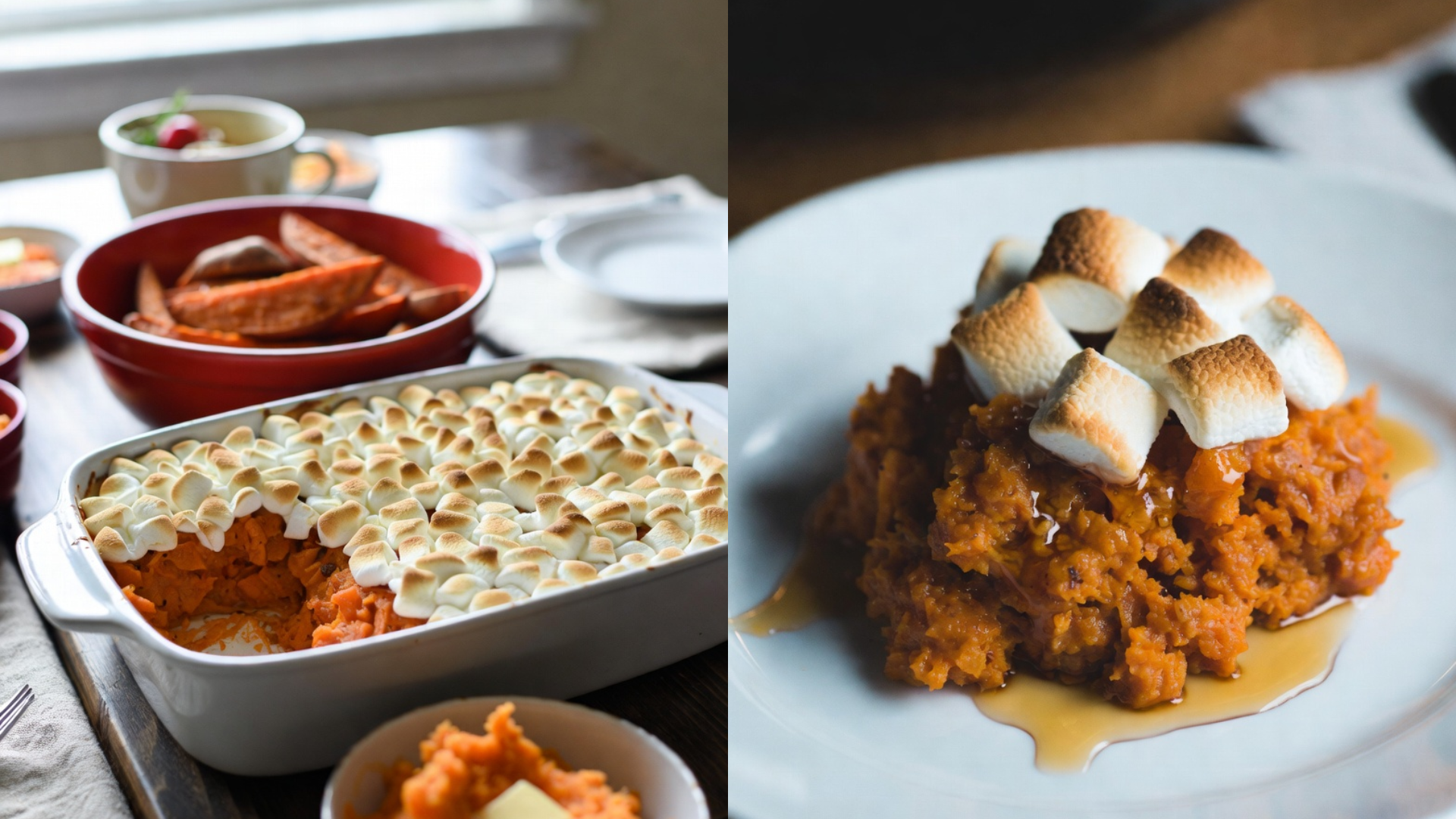
Most people boil their sweet potatoes, and that’s exactly why their Thanksgiving side tastes like sweetened water. The difference between a good version and a great one comes down to one decision: how you cook the potato before it ever meets the butter and sugar. What’s actually happening when you boil is that the potato absorbs water and leaches out the very sugars you want concentrated. Roasting does the opposite — it drives off moisture and caramelizes the natural sugars, deepening the flavor before you add a single other ingredient. The best Thanksgiving sweet potato recipes that actually work start here, with dry heat, and everything after that is refinement rather than rescue. This is a mash-style casserole built for the holiday table, and it holds its texture instead of weeping into a puddle by the time it reaches the plate.
Prep time: 15 minutes | Cook time: 60 minutes | Total time: 75 minutes | Servings: 8
Table of Contents
What Makes This Recipe Work
- The potatoes are roasted whole, not boiled. The science here is simple: boiling waterlogs the flesh and dilutes flavor, while roasting concentrates sugars through caramelization and evaporation. Most recipes skip this and then wonder why they need so much added sugar to compensate.
- The sugar is restrained on purpose. This is intentional. A properly roasted sweet potato is already sweet; the added sugar should support, not replace, the vegetable. Over-sugared casseroles read as dessert and fight everything else on the plate.
- Egg binds the mash into a set, sliceable texture. A single egg turns a loose mash into a casserole that holds its shape when served. Skip it and you get a purée that spreads across the plate into the gravy.
- Warm spices are bloomed in the butter first. Cinnamon, nutmeg, and a whisper of clove release their aromatic oils in fat far better than when stirred in raw. This is a small step that separates a flat casserole from a fragrant one.
Ingredients — What to Buy and Why It Matters
For the base:
- 1.6 kg (about 3.5 lb) sweet potatoes — buy the deep orange Beauregard or Garnet varieties. Their higher moisture and carotene content mash smoother and taste richer than the pale, drier varieties. Choose firm, unblemished potatoes of even size so they roast at the same rate.
- 60 g (4 tbsp) unsalted butter — unsalted is the correct choice so you control the final seasoning. The butterfat carries the bloomed spices and adds the richness roasting alone can’t provide.
- 50 g (1/4 cup) light brown sugar — the molasses in brown sugar adds depth a white sugar can’t. This is a restrained amount by design; taste before adding more.
- 1 large egg, beaten — the binder. Do not skip it if you want clean portions.
- 60 ml (1/4 cup) whole milk or cream — for adjusting consistency. Full-fat only; the fat carries flavor and keeps the texture plush.
- 1 tsp kosher salt — non-negotiable. Salt is what keeps a sweet dish from tasting flat and one-dimensional.
For the spices and topping:
- 1 tsp ground cinnamon
- 1/2 tsp freshly grated nutmeg
- 1/8 tsp ground clove — a whisper, no more. Clove dominates fast.
- 1 tsp vanilla extract
Pecan topping:
- 100 g (1 cup) pecans, roughly chopped — buy them whole and chop yourself for fresher flavor and better texture control.
- 50 g (1/4 cup) light brown sugar
- 40 g (3 tbsp) cold butter, cubed
- 30 g (1/4 cup) all-purpose flour
- Pinch of salt
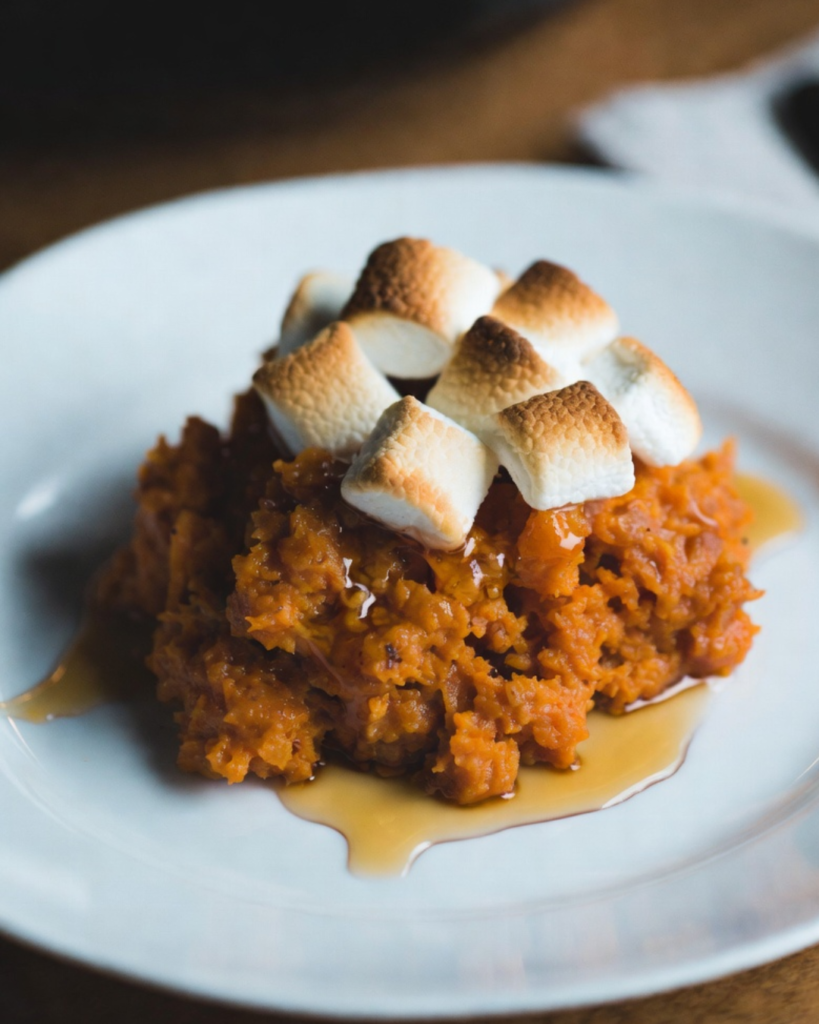
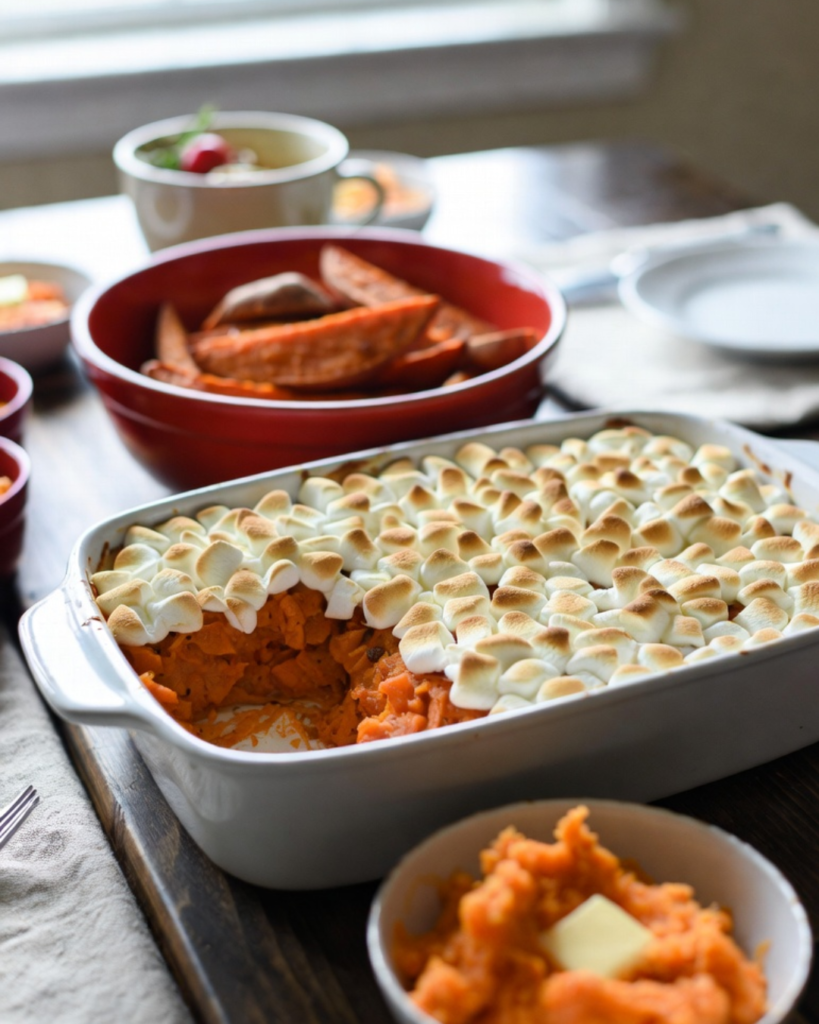
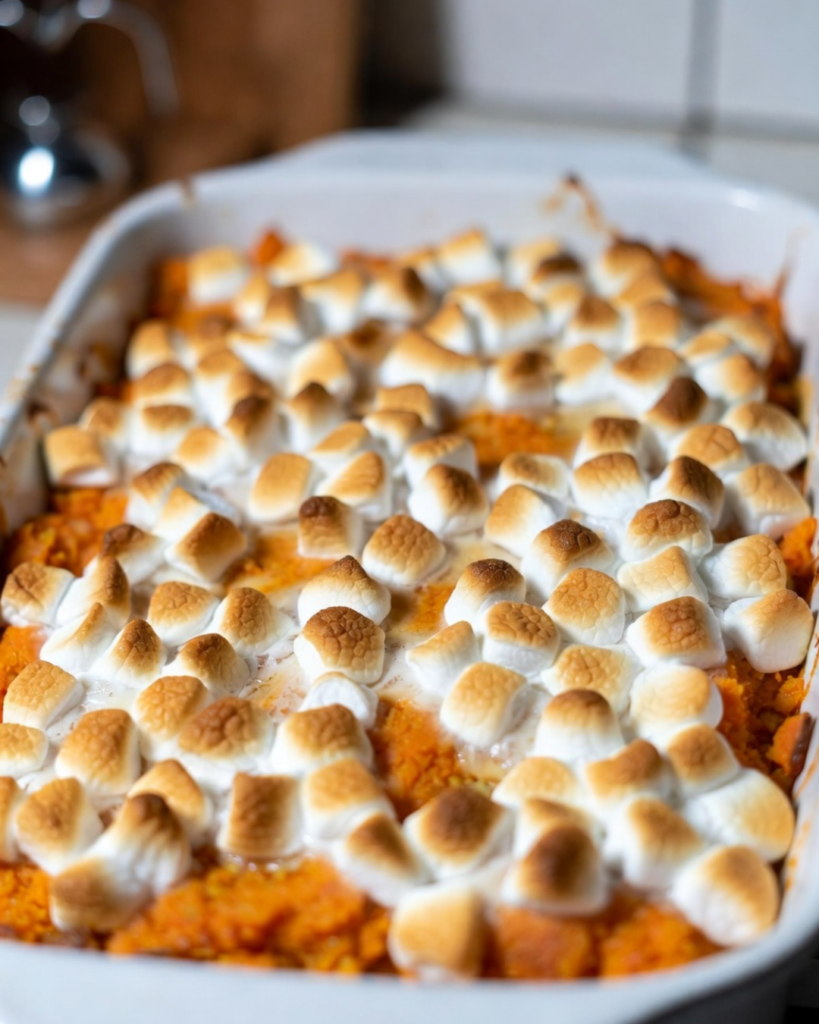
Substitutions, honestly: Maple syrup can replace the brown sugar in the mash for a more complex sweetness — use 45 ml and reduce the milk slightly to compensate for the added liquid. For a marshmallow topping instead of pecan, understand the trade: marshmallow is pure sweetness and browns fast, so it pushes the dish toward dessert. Pecan streusel gives you contrast and crunch, which most balanced tables want. Gluten-free flour blends work in the topping with no meaningful difference.
Step-by-Step Instructions
- Heat the oven to 200°C (400°F). Prick the whole sweet potatoes several times with a fork and set them on a foil-lined tray. The foil catches the sugary syrup that will inevitably leak, which otherwise burns onto the pan.
- Roast the potatoes whole for 50–60 minutes. They’re done when a knife slides through with zero resistance and the skins have puckered, with caramelized syrup weeping from the fork holes. That syrup is exactly the concentrated flavor you’re after. Undercooking here means a fibrous mash, so err long, not short.
- Bloom the spices while the potatoes cool slightly. Melt the 60 g butter in a small pan over medium-low, add the cinnamon, nutmeg, and clove, and warm for 60 seconds until fragrant. What’s actually happening is that the fat-soluble aromatic compounds are dissolving into the butter, distributing far more evenly than dry spice ever would. Pull off the heat.
- Scoop and mash. Halve the potatoes and scoop the flesh into a bowl, discarding the skins. Mash while still warm — warm flesh breaks down smoothly, cooled flesh turns gluey. A potato masher gives the right texture; a food processor overworks it into paste.
- Build the mixture. Add the bloomed spice butter, brown sugar, salt, and vanilla. Stir to combine, then let it cool for five minutes — the critical step here, because adding egg to hot mash scrambles it. Once it’s warm rather than hot, beat in the egg and enough milk to reach a thick, spoonable consistency.
- Make the pecan topping. Rub the cold cubed butter into the flour, brown sugar, pecans, and salt with your fingertips until it forms coarse, pea-sized clumps. Cold butter is non-negotiable — it’s what creates distinct crumbs rather than a greasy paste that melts flat.
- Assemble and bake. Spread the sweet potato mixture into a buttered baking dish and level the top. Scatter the pecan streusel evenly across the surface. Bake at 180°C (350°F) for 25–30 minutes, until the topping is deep golden and the edges bubble gently.
- Rest 10 minutes before serving. The set from the egg firms up as it cools slightly, giving you clean portions instead of a loose scoop.
Technique Notes for Better Results
- Where most home cooks go wrong: boiling the potatoes for speed. It waterlogs them and forces you to over-sweeten and over-thicken to recover. Roast, and the dish practically seasons itself.
- The professional approach is to roast a day ahead. Cooked sweet potato flesh holds beautifully overnight and the flavor deepens. Assemble the day of, and you’ve cut your holiday-morning work in half without any quality loss.
- Taste before you sweeten. Sweet potato sugar content varies significantly by variety and season. Add the sugar in stages and taste — a great casserole is balanced, not saccharine.
- Don’t overwork the mash. Sweet potatoes don’t turn gluey as easily as russets, but a food processor will still break down the starch into a gummy texture. Hand-mash for structure.
- Bring the egg to room temperature. Cold egg hitting warm mash cools it unevenly and risks curdling on contact. Room-temp egg incorporates cleanly.
- The precision tip: toast the pecans separately for five minutes before making the streusel. Toasting before they go into the topping guarantees deep, even nuttiness rather than the uneven roast they’d get buried in sugar on top of a casserole.
Plating and Serving
- Roast turkey, naturally — this is the anchor the dish is built around, and its savory richness offsets the sweetness.
- A sharp cranberry sauce — the acid is essential here. It cuts the richness and resets the palate between bites; without a tart element, the sweet potato reads as too much.
- Brussels sprouts or green beans with a bitter, charred edge — a green, slightly bitter counterpoint to the soft sweetness.
- Presentation: serve in the baking dish for a rustic holiday table, or portion into clean squares if the egg-set texture allows. Let the golden pecan topping show; it’s the visual signal of the dish. Finish with a few whole toasted pecans on top.
- Beverage pairings: an off-dry Riesling matches the sweetness without being overwhelmed, while its acidity cuts the butter. For red, a fruit-forward Zinfandel holds up. Non-alcoholic: sparkling apple cider echoes the autumnal notes and brings welcome acidity.
Nutritional Profile
Per serving, this lands around 340–400 calories, with roughly 5 g protein, 18 g fat, and 45 g carbohydrate. Sweet potatoes are a nutritional standout — exceptionally high in beta-carotene, which your body converts to vitamin A, along with fiber, potassium, and vitamin C. Roasting rather than boiling preserves more of the water-soluble vitamins that leach into cooking water. The pecans contribute healthy monounsaturated fats, and the fiber content meaningfully slows the sugar absorption compared to a dessert with the same sweetness.
Modifications, with honest trade-offs:
- Lower sugar: cut the mash sugar entirely and rely on the roasted potato’s natural sweetness plus a small amount in the topping. The dish will taste more vegetable-forward and less like a dessert — a genuine improvement for many tables, though it will read as less indulgent.
- Dairy-free: use full-fat coconut milk and a plant butter. The coconut adds a faint background note that pairs surprisingly well with the warm spices, though browning in the topping will be slightly weaker.
- Vegan: replace the egg binder with 2 tbsp of ground flax mixed with 6 tbsp water, rested 10 minutes. The set will be softer and less clean-cutting, but the flavor holds.
- Nut-free: swap the pecan streusel for an oat-based crumble. You lose the buttery richness of pecans but keep the textural contrast that makes the dish work.
Common Questions, Answered Directly
Why is my sweet potato casserole watery? You boiled the potatoes, almost certainly. Roast them whole instead so they lose moisture rather than absorb it, and the mash sets firm.
Can I make this ahead? Yes, and you should. Roast and mash the potatoes up to two days ahead and refrigerate. Assemble with the topping the day of and bake fresh. The streusel must go on just before baking or it turns soft.
Why did my topping sink into the mash? The mash was too loose, or the topping butter was too warm and melted in. Make sure the mash is thick and spoonable, and keep the streusel butter cold until it goes in the oven.
Can I freeze it? The mash freezes well on its own for up to two months. Freeze it without the topping, thaw overnight in the refrigerator, then add fresh streusel and bake. A fully assembled and baked casserole loses topping crispness on thaw.
Do I have to use egg? No, but it changes the result. Without egg you get a looser, more purée-like texture that tastes fine but won’t hold clean portions. Use the flax substitute if you want structure without egg.
Roast the potatoes whole, keep the sugar honest, and let the natural caramelization do the heavy lifting. Do that and you’ll have a Thanksgiving sweet potato dish that earns its place on the table instead of just filling space on it.