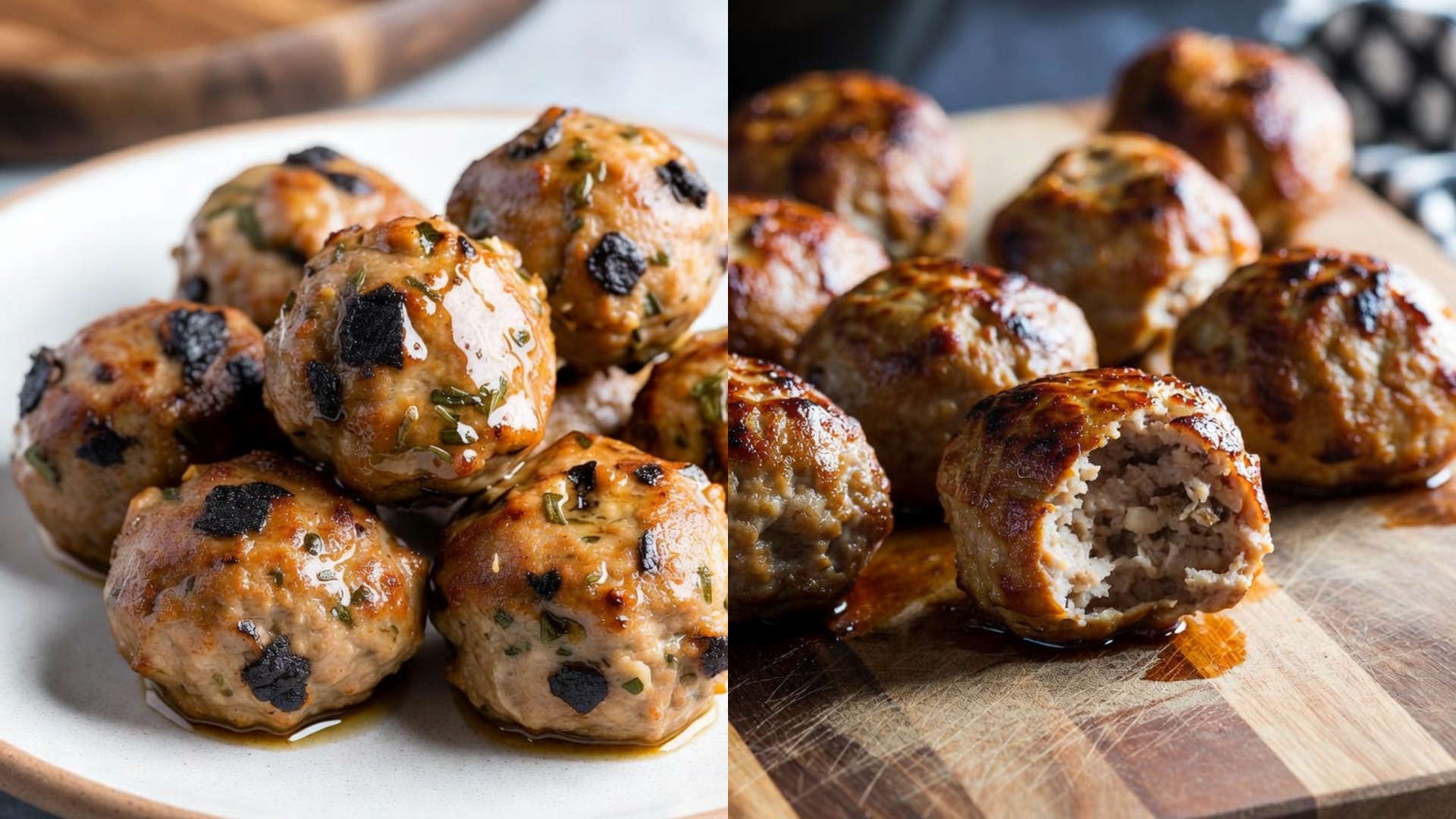
Most people mix turkey meatballs like they’re mixing beef, then wonder why they bounce off the plate. The rules are different. Turkey is lean and delicate, and treating it like a fattier meat gives you dense, dry, rubbery spheres. The difference between a good turkey meatball and a genuinely juicy one comes down to a single principle: build in moisture and stop the proteins from tightening. Do that, and these juicy turkey meatballs come out tender enough to cut with a fork, savory all the way through, and light in a way beef never manages. Dinner tonight is entirely achievable.
What Makes This Recipe Work
- A panade is the foundation. The science here is simple: bread soaked in milk forms a paste that coats the meat proteins and physically prevents them from bonding into a tough network as they cook. This is the difference between tender and rubbery, and most recipes skip it.
- Grated onion and cheese add moisture from within. Grated onion melts into the mix and releases juice throughout cooking; Parmesan brings fat, salt, and umami that lean turkey lacks. This is intentional seasoning, not filler.
- Gentle mixing protects the texture. Overworking the meat compacts it and squeezes out air. A light hand keeps the meatballs tender. The critical step here is knowing when to stop.
- Bake then simmer, or sear then simmer. Browning builds flavor through the Maillard reaction; finishing in sauce keeps the interior moist and lets the meatballs absorb flavor. You get both crust and juiciness.
Prep time: 15 minutes · Cook time: 20 minutes · Total time: 35 minutes · Servings: 4 (about 20 meatballs)
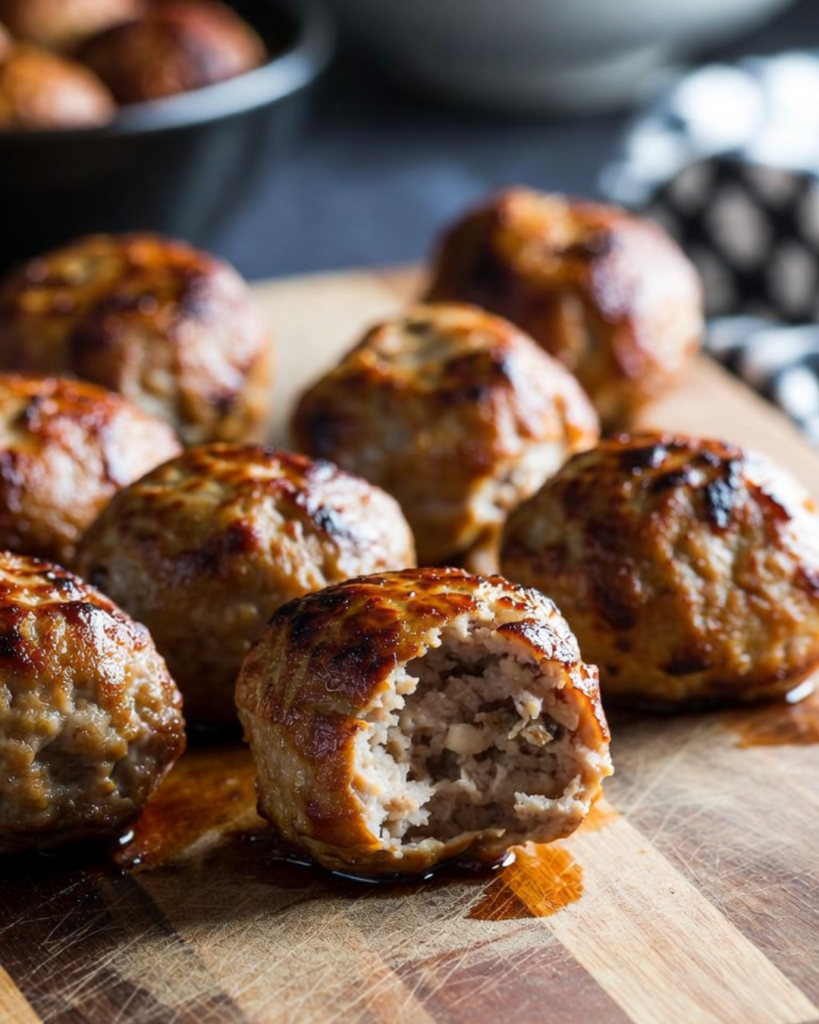
Ingredients — What to Buy and Why It Matters
- 1 lb ground turkey (93/7, not 99/1): The fat ratio decides everything. Ultra-lean 99/1 turns to sawdust — do not substitute it. The modest fat in 93/7 is what keeps a turkey meatball juicy.
- 1/2 cup panko + 1/3 cup milk: Combined into a panade, this is your moisture insurance. Panko absorbs more liquid than standard breadcrumbs and vanishes into the mix.
- 1/3 cup grated Parmesan: Real Parmigiano-Reggiano, grated fine. It brings salt, fat, and deep savory notes; the pre-shredded bagged kind is drier and coated in anti-caking starch.
- 3 tbsp grated yellow onion (not chopped): Grated onion distributes moisture evenly and disappears into the meatball; chopped onion stays in dry pockets and weakens structure.
- 1 large egg: The binder that holds everything together as the meatballs set.
- 2 cloves garlic, minced + 2 tbsp chopped parsley: Fresh aromatics for brightness and depth.
- 3/4 tsp salt + 1/2 tsp black pepper + 1/2 tsp dried oregano: Season the mix thoroughly — under-seasoned lean meat tastes flat.
- 2 cups marinara sauce: For simmering. A good jarred sauce is fine; you’ll be building flavor into it as the meatballs finish.
- 1 tbsp olive oil: For searing, if you go the stovetop route.
Substitution notes: Ground chicken swaps in at the same ratio with identical rules. For gluten-free, use almond flour or gluten-free panko in the panade. No milk? Water or unsweetened plant milk hydrates the panade nearly as well. Pecorino stands in for Parmesan with a sharper, saltier edge — pull back the added salt if you use it.
Step-by-Step Instructions
- Make the panade first. In a large bowl, stir the panko and milk together and let them sit 3–4 minutes until pasty. What’s actually happening is the starch swelling with liquid so it can lock moisture inside the cooked meatball.
- Add everything but the meat. Mix the Parmesan, grated onion, egg, garlic, parsley, and seasonings into the panade until combined. Doing this before the turkey means you distribute the seasoning without overworking the meat later.
- Fold in the turkey gently. Add the ground turkey and combine with your fingertips just until no streaks remain. The critical step here is stopping early — overmixing is the number one cause of dense, tough meatballs.
- Portion evenly. Using a scoop or damp hands, roll into 1.5-inch balls, roughly 20 total. Wet hands keep the sticky lean mix from tearing. Even sizing means even cooking.
- Brown them. Heat olive oil in a skillet over medium-high and sear the meatballs on 2–3 sides until deeply colored, about 4–5 minutes. Don’t cook them through — you’re building crust, not finishing them. (To bake instead, roast at 400°F for 12 minutes.)
- Simmer in sauce. Add the marinara, lower to a gentle simmer, cover, and cook 10–12 minutes until the meatballs reach 165°F at the center. Simmering finishes them gently and infuses flavor both directions.
- Rest briefly and serve. Let them sit 3 minutes off the heat so the juices redistribute instead of running out at first bite.
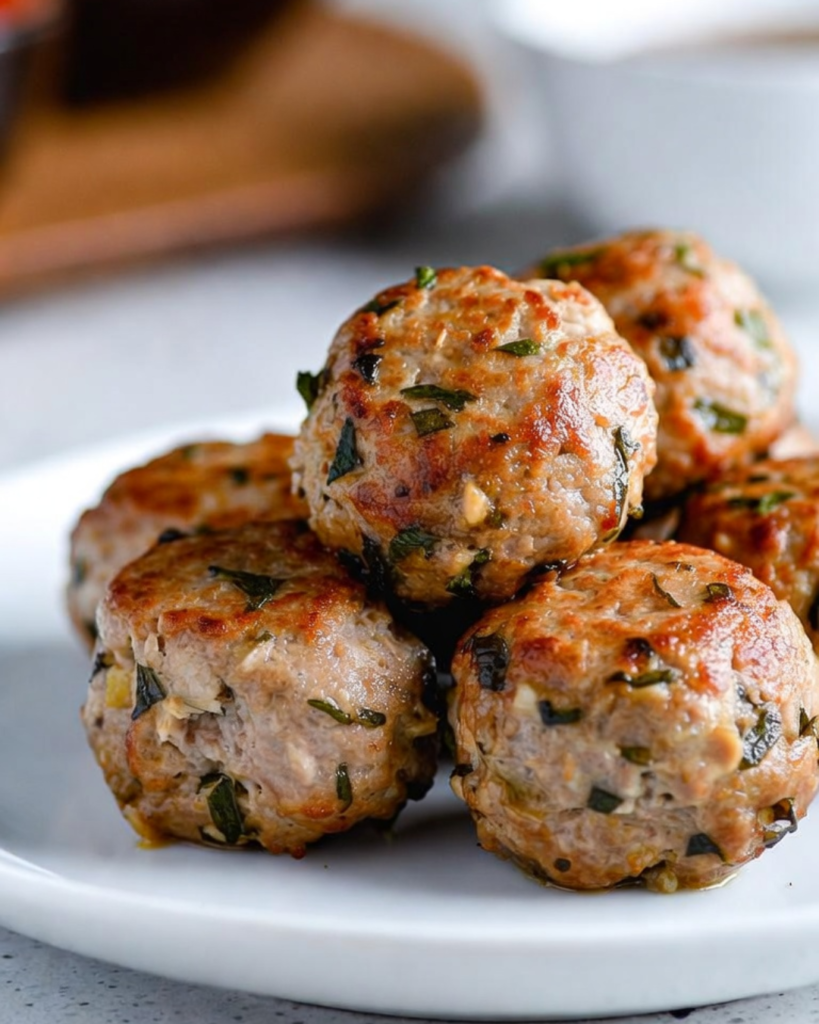
Technique Notes for Better Results
- Where most home cooks go wrong: they overmix. The moment the ingredients are evenly distributed, stop. Every extra squeeze compacts the meat.
- The professional approach here is to test-cook one. Fry a small piece of the raw mix, taste it, and adjust salt before rolling the whole batch. You only get one shot at seasoning the mix.
- Keep everything cold. A chilled mix holds its shape and rolls cleanly. If the mix warms and turns sticky, refrigerate it for 15 minutes.
- Don’t crowd the pan. Searing too many at once drops the temperature and steams them gray. Work in batches for real browning.
- Cook to temperature, not time. An instant-read thermometer at 165°F is the whole game — past that, moisture leaves the meatball.
- Let the sauce do the finishing. Pulling the meatballs from the pan a touch early and letting them coast to temperature in simmering sauce keeps them tender.
Plating and Serving
- Serve over a soft base — creamy polenta, mashed potato, or spaghetti — so the tender meatball has a textural counterpoint.
- Finish with contrast: torn basil, a dusting of Parmesan, and a drizzle of good olive oil against the rich sauce.
- For a lighter plate, serve over zucchini noodles or alongside a sharp arugula salad dressed with lemon to cut the richness.
- Beverage: A medium-bodied red like Chianti mirrors the tomato and savory notes; sparkling water with lemon works as a clean non-alcoholic pairing.
Nutritional Profile
Turkey meatballs are a lean, high-protein comfort food. Ground turkey delivers roughly 22 grams of protein per serving with less saturated fat than beef, and the Parmesan and egg add calcium and complete protein. Served over vegetables instead of pasta, the whole dish becomes genuinely low-carb.
For lower calorie, bake rather than sear and use part-skim components — the trade-off is slightly less crust, easily accepted for the savings. For gluten-free, swap in almond flour or gluten-free panko with no meaningful loss of texture. For dairy-free, skip the Parmesan and add a teaspoon of nutritional yeast plus a pinch of extra salt to recover the savory depth.
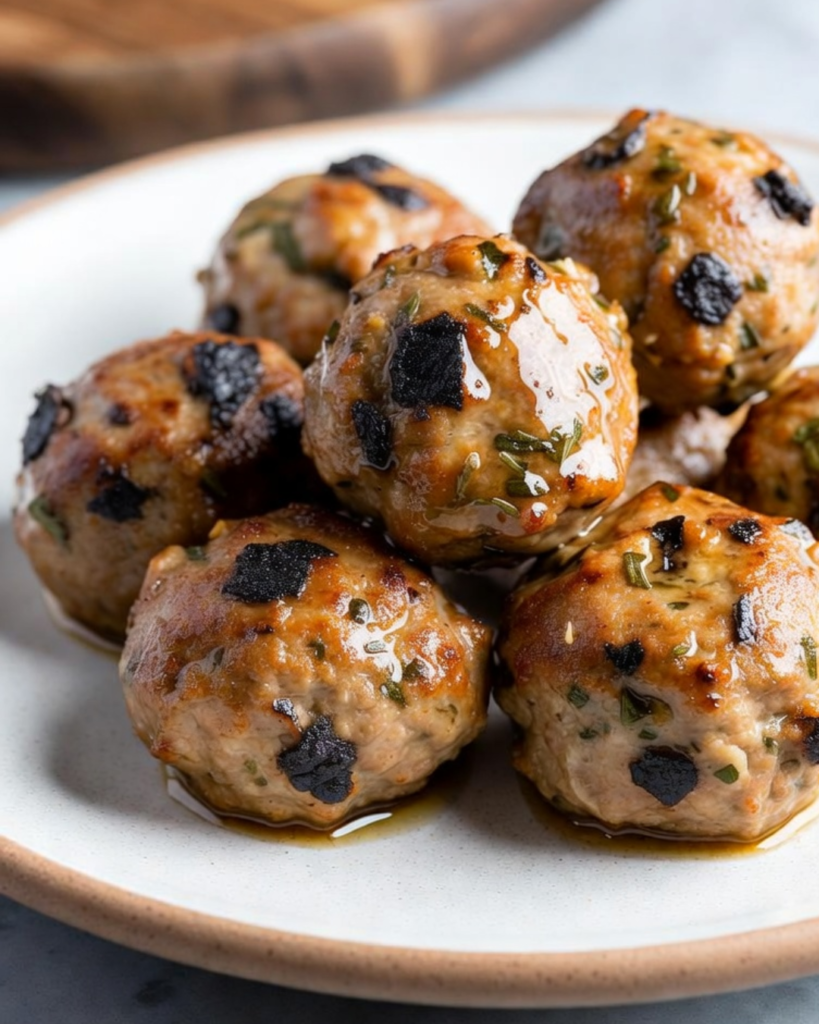
Common Questions, Answered Directly
Why are my turkey meatballs dry or rubbery? Almost always overmixing, no panade, or 99/1 meat. Use 93/7, build a panade, and mix with a light hand.
Can I make them ahead? Yes — roll and refrigerate raw up to a day, or freeze raw on a tray then bag for up to 3 months. Cook from thawed, or simmer frozen straight into sauce with a few extra minutes.
How do I store and reheat leftovers? Keep cooked meatballs in their sauce up to 4 days refrigerated. Reheat gently on the stovetop; the sauce protects them from drying out. They freeze well cooked, too.
Do I have to use sauce? No — bake them plain at 400°F to 165°F and use them for meal-prep bowls or subs. The panade keeps them juicy even without a simmer.
Grab a pound of 93/7, soak your panko, and keep a light hand on the mix — that’s the whole secret. Roll a batch tonight and see what a properly made turkey meatball is supposed to taste like.