Most people cook turkey burgers to the texture of a hockey puck and blame the turkey. The meat isn’t the problem — the method is. Ground turkey is lean, which means it has almost no fat to keep it moist and a very narrow window before it dries out. The difference between a dry, sad patty and a genuinely juicy ground turkey burger comes down to two things: adding moisture back into the mix, and pulling it off the heat at exactly the right internal temperature. Get those right and lean turkey delivers a burger that’s tender, savory, and every bit as satisfying as beef — without the grease.
Table of Contents
What Makes This Recipe Work
- You have to add fat and moisture back. The science here is simple: turkey breast grind is around 1–2 percent fat, and fat is what carries flavor and keeps meat juicy. Mixing in a binder of grated onion, a little mayonnaise, and breadcrumb-milk panade puts moisture back where the lean grind took it out. This is intentional, not a shortcut.
- A panade stops the patty from tightening. Bread soaked in milk coats the meat proteins and physically blocks them from bonding into a tough matrix as they cook. Most recipes skip this and wonder why the burger turns rubbery.
- Temperature, not time, tells you when it’s done. Turkey is safe at 165°F, and every degree past that is moisture leaving the patty. Cooking to a number instead of a clock is the single biggest lever you have.
- A dimple keeps it flat. Pressing a shallow well into the center counteracts the doming that happens as the patty contracts, so it cooks evenly and sits properly on the bun.
Prep time: 10 minutes · Cook time: 10 minutes · Total time: 20 minutes · Servings: 4
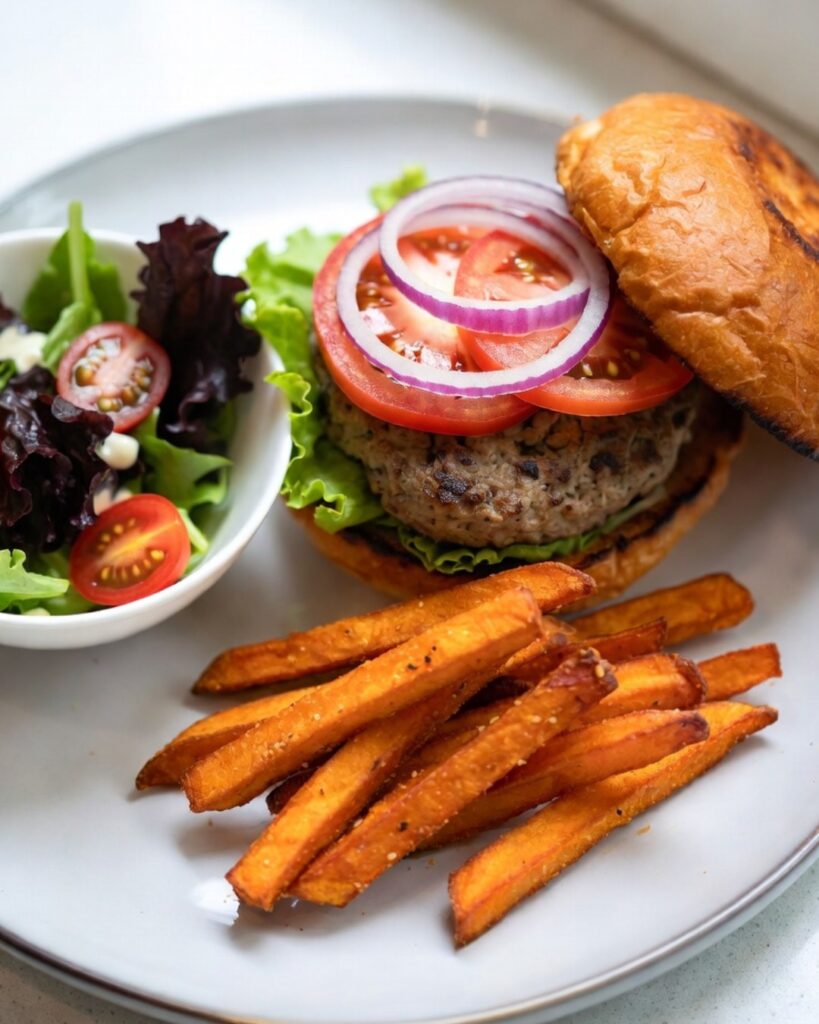
Ingredients — What to Buy and Why It Matters
- 1 lb ground turkey (93/7, not 99/1): The fat ratio is everything here. The ultra-lean 99/1 breast grind cooks to sawdust — do not substitute it. The 7 percent fat in 93/7 is the difference between juicy and dry.
- 1/4 cup panko or fresh breadcrumbs + 2 tbsp milk: Combined into a panade, this is your moisture insurance. Panko absorbs more liquid than standard crumbs and disappears into the patty.
- 2 tbsp grated yellow onion (not chopped): Grated onion melts in and releases juice throughout the patty; chopped onion stays in dry pockets and makes the burger fall apart. Grate it on the large holes of a box grater.
- 1 tbsp mayonnaise: An emulsion of oil and egg that keeps the interior tender and browns the exterior beautifully. This is one of the quiet secrets of a juicy turkey burger.
- 1 clove garlic, minced + 1 tsp Worcestershire sauce: Umami depth that lean turkey lacks on its own. Worcestershire brings the savory, almost-beefy note.
- 3/4 tsp salt + 1/2 tsp black pepper + 1/2 tsp smoked paprika: Salt seasons; paprika adds color and a faint smokiness the grind doesn’t have.
- 1 tbsp neutral oil (avocado or grapeseed): High smoke point for a proper sear.
- 4 burger buns + toppings of choice: Toast the buns — untoasted bread goes soggy against a juicy patty.
Substitution notes: Ground chicken works at the same ratio with the same rules. For gluten-free, swap breadcrumbs for almond flour or crushed pork rinds in the panade. No milk on hand? Water or unsweetened plant milk hydrates the panade nearly as well.
Step-by-Step Instructions
- Make the panade first. In a large bowl, stir the breadcrumbs and milk together and let them sit for 2–3 minutes until pasty. What’s actually happening is the starch swelling with liquid so it can hold moisture inside the cooked patty.
- Mix gently. Add the turkey, grated onion, mayonnaise, garlic, Worcestershire, and seasonings to the panade. Combine with your fingertips just until no streaks remain. The critical step here is stopping early — overworking the meat compacts the proteins and guarantees a dense, tough burger.
- Form and dimple. Divide into four equal portions and shape patties slightly wider than your buns, since they’ll shrink. Press a shallow dimple into the center of each with your thumb. This is non-negotiable for an even, flat burger.
- Chill briefly. Rest the patties in the fridge for 10 minutes if you have time. Cold patties hold their shape and sear rather than crumble.
- Sear on high. Heat the oil in a skillet over medium-high until it shimmers. Add the patties and leave them undisturbed for 4–5 minutes — moving them too soon tears the forming crust. Flip once.
- Cook to temperature. Continue for another 4–5 minutes until an instant-read thermometer reads 165°F at the center. Pull them the moment they hit it. Add cheese in the last minute if using, and cover to melt.
- Rest, then build. Let the patties rest 3 minutes before assembling. Resting lets the juices redistribute instead of running out onto the plate. Build on toasted buns.
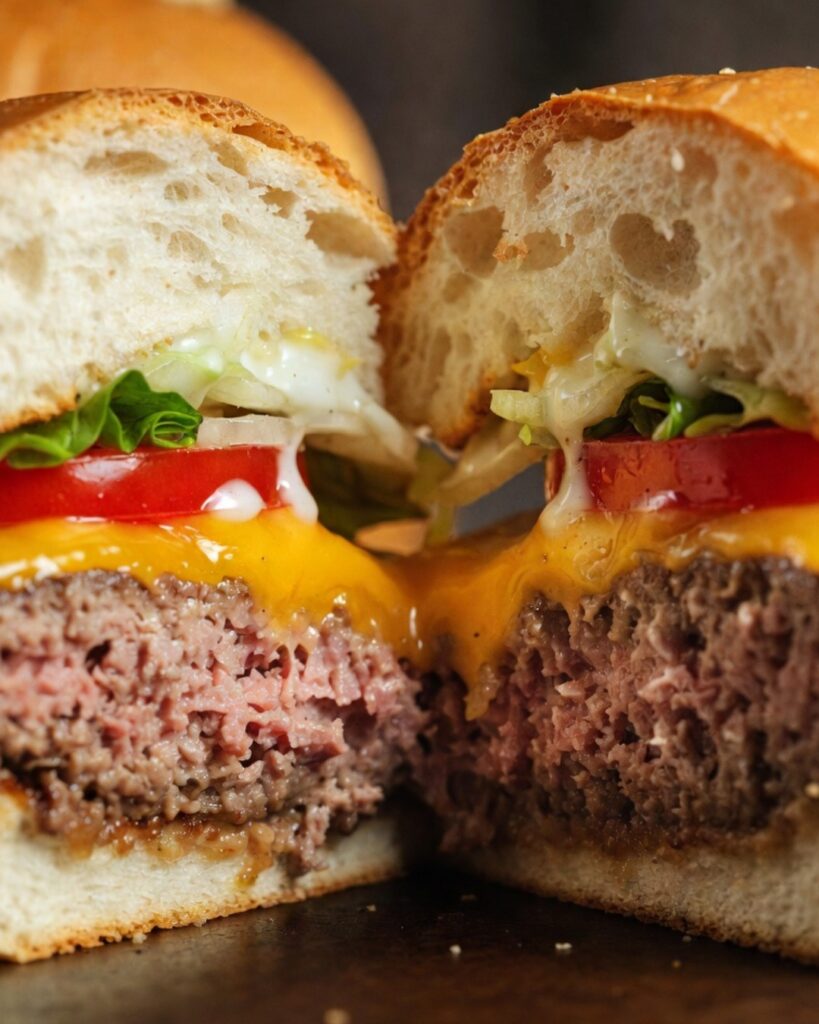
Technique Notes for Better Results
- Where most home cooks go wrong: no thermometer. Guessing doneness on lean meat is how burgers get overcooked. An instant-read thermometer is the whole game — 165°F and not a degree more.
- The professional approach here is to season in layers. Salt in the mix, then a light pinch on the outside just before searing, builds a more complete crust.
- Wet your hands when shaping. Damp hands keep the sticky lean mix from tearing and let you form smooth, even patties.
- Don’t press the patty in the pan. Pressing with a spatula squeezes out the exact juices you worked to keep in. Let it sit and sear undisturbed.
- Toast the bun in the pan drippings for a flavor bridge between bun and patty and a barrier against sogginess.
- Rest is not optional. Cutting or biting in immediately dumps the juices; three minutes of rest keeps them in the meat.
Plating and Serving
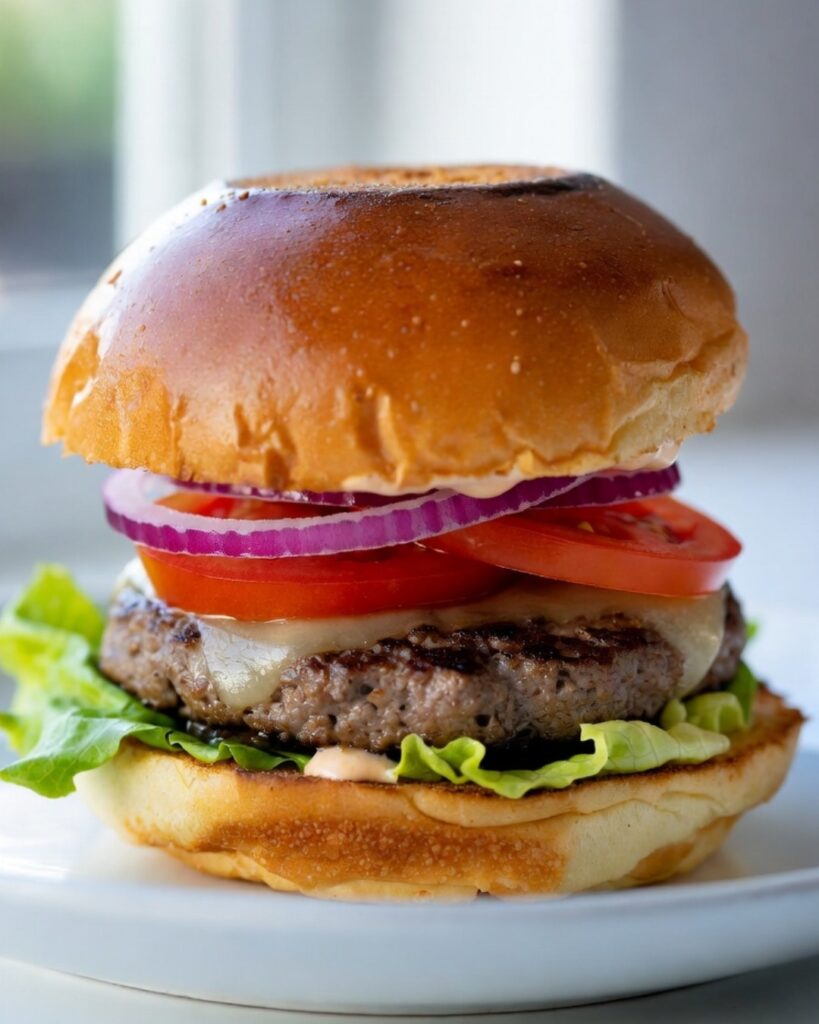
- Build low to high: bottom bun, sauce, patty, cheese, then crisp toppings, so the lettuce and tomato stay cool and crunchy against the warm patty.
- Pair with a sharp, acidic side — a vinegar-dressed slaw or quick pickles cut the richness and reset the palate.
- For contrast in texture, serve with crisp oven fries or sweet potato wedges rather than anything soft.
- Beverage: A hoppy pale ale or a dry rosé both balance the savory, slightly smoky patty; unsweetened iced tea with lemon works for a non-alcoholic pairing.
Nutritional Profile
A properly built turkey burger is lean, high-protein comfort food. Ground turkey delivers roughly 22 grams of protein per serving with less saturated fat than an equivalent beef patty. Skip the bun or use a lettuce wrap and it becomes a genuinely low-carb, high-protein meal.
For lower calorie, drop the mayonnaise and lean on the panade and grated onion for moisture — the trade-off is a slightly less rich interior, easily offset by not overcooking. For gluten-free, use almond flour or crushed pork rinds in the panade with no real loss of texture. For dairy-free, hydrate the panade with plant milk and skip the cheese.
Common Questions, Answered Directly
Why do my turkey burgers always turn out dry? Two reasons: 99/1 meat and overcooking. Switch to 93/7, add a panade, and pull the patties at exactly 165°F.
Why do they fall apart on the grill? Not enough binder, or too warm going on. Use the panade and mayonnaise, chill the patties first, and don’t flip until a crust forms.
Can I make them ahead? Yes — shape the patties and refrigerate up to a day, or freeze raw with parchment between them for up to 3 months. Cook from thawed for even results.
How do I store leftovers? Refrigerate cooked patties up to 3 days and reheat gently in a covered skillet with a splash of water to steam them back to moist, not in the microwave, which dries them out.
Pick up a pound of 93/7, mix in the panade, and keep a thermometer within reach — that’s the whole secret. Fire up the skillet and see what a juicy turkey burger is actually supposed to taste like.
About The Author