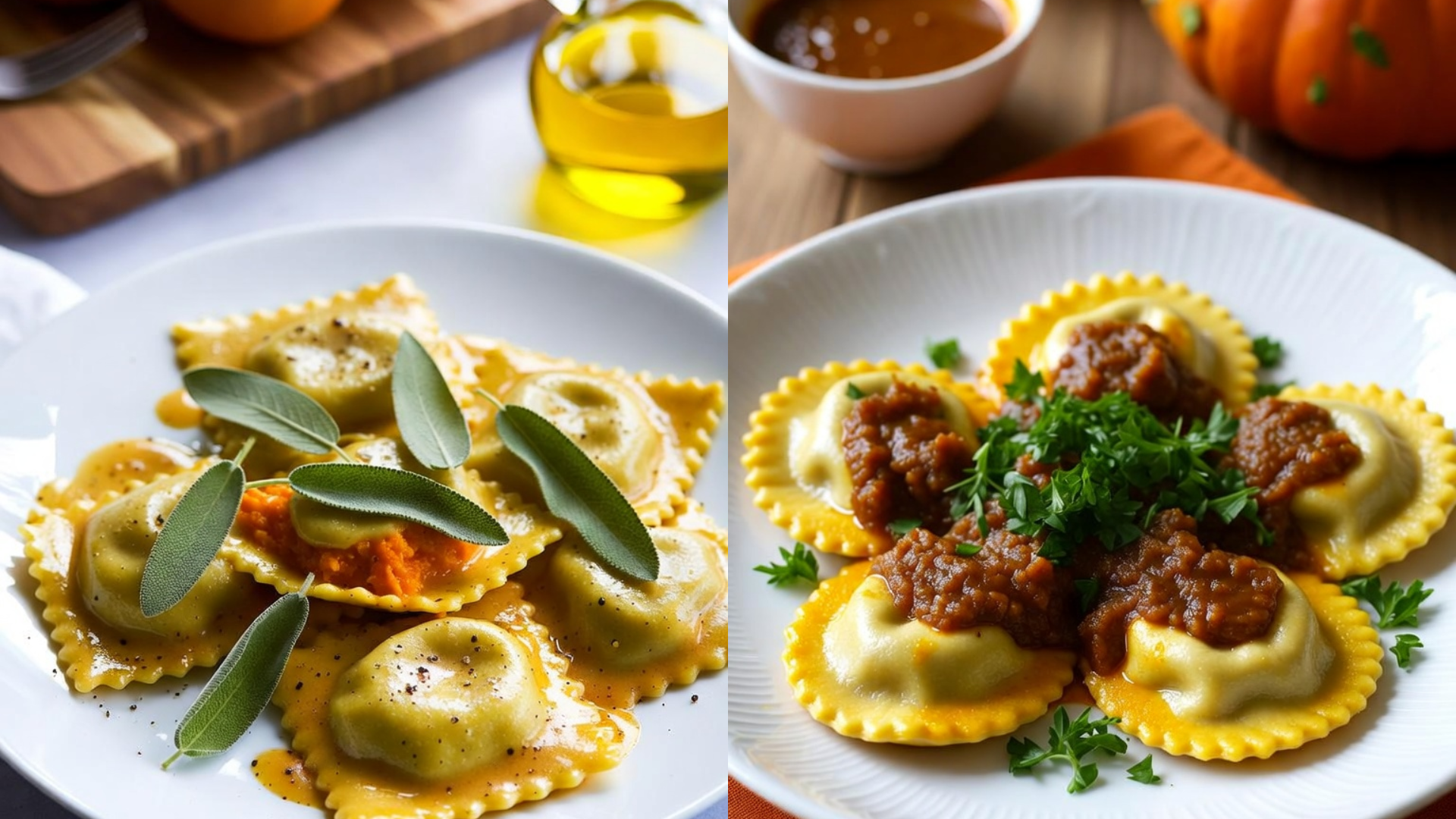
Most people make pumpkin ravioli filling too wet, and the moisture blows out the pasta seams during cooking. The critical step almost everyone skips is drying the pumpkin — driving off its excess water before it ever meets the flour. That single move is the difference between filling that oozes and tears and the tight, silky pumpkin ravioli you need right now. This is peak fall cooking: a lightly sweet, nutmeg-warmed squash filling sealed in tender pasta and finished in a nutty brown butter sage sauce. Done properly, it tastes like the season on a plate, and the technique is far more forgiving than it looks once you understand what the moisture is doing.
Table of Contents
What Makes This Recipe Work
- Drying the pumpkin is everything. The science here is simple: canned or fresh pumpkin holds a lot of water, and water is what causes ravioli to burst and filling to run. Cooking the purée down concentrates flavor and firms the filling. Most recipes skip this and pay for it.
- A little cheese binds and enriches. Ricotta and Parmesan add structure and savory depth that balance the pumpkin’s sweetness. This is intentional balance, not just richness.
- Thin pasta, well-sealed, cooks fast. Rolling the dough thin and pressing out all the air prevents seams from failing and gives a tender bite. Trapped air is the enemy of an intact ravioli.
- Brown butter is the perfect partner. The nutty, toasted notes of brown butter and crisp sage cut the sweetness of the squash. This pairing is a classic for a reason.
Prep time: 45 minutes · Cook time: 15 minutes · Total time: 1 hour · Servings: 4

Ingredients — What to Buy and Why It Matters
- 1.5 cups pumpkin purée (canned or fresh, not pie filling): The filling’s base. Buy pure pumpkin, not spiced pie filling, which is pre-sweetened and seasoned — do not substitute it. If using fresh, roast and drain it well.
- 1/2 cup ricotta, well-drained: Adds creaminess and binds the filling. Drain it in a sieve first; excess whey makes the filling loose.
- 1/2 cup grated Parmesan: The savory anchor that keeps the filling from tasting like dessert. Real Parmigiano-Reggiano brings the deepest flavor.
- 1/4 tsp fresh nutmeg + pinch of cinnamon: The warm spices that define fall squash. Freshly grated nutmeg is far more aromatic than pre-ground.
- 2 cups “00” or all-purpose flour + 3 eggs (for fresh pasta): “00” flour gives the silkiest, most tender pasta. All-purpose works but yields a slightly firmer bite. Or use store-bought fresh pasta sheets or wonton wrappers as a shortcut.
- 6 tbsp butter + 12 fresh sage leaves: For the brown butter sauce. Real butter is essential here — its milk solids are what brown into that nutty flavor.
- Salt, pepper, and toasted pine nuts or amaretti: Seasoning and an optional crunchy, sweet-savory garnish.
Substitution notes: Butternut squash purée swaps in cleanly and is a touch sweeter. For a shortcut, wonton wrappers make quick, thin ravioli with no dough-making at all. For gluten-free, use a gluten-free pasta blend, accepting a more delicate dough that needs gentle handling.
Step-by-Step Instructions
- Dry the pumpkin. Cook the purée in a dry skillet over medium heat for 5–8 minutes, stirring, until it darkens and thickens into a stiff paste. What’s actually happening is the water evaporating so the filling holds its shape and the flavor concentrates. This is the critical step — let it cool.
- Make the filling. Stir the cooled, dried pumpkin with the drained ricotta, Parmesan, nutmeg, cinnamon, salt, and pepper until smooth and thick. It should hold a shape on a spoon, not slump.
- Make the pasta dough. Mound the flour, make a well, add the eggs, and mix into a dough. Knead 8–10 minutes until smooth, then rest it wrapped for 30 minutes. Resting relaxes the gluten so it rolls thin without springing back.
- Roll thin. Roll the dough into thin sheets you can nearly see through, working in batches and keeping the rest covered. Thin pasta is what gives a tender, not doughy, ravioli.
- Fill and seal carefully. Place small spoonfuls of filling spaced along one sheet, brush around each with water, lay a second sheet over, and press out all the air around each mound before sealing. The critical step here is pressing out trapped air — it’s what makes seams burst. Cut into squares.
- Cook gently. Boil in well-salted water at a gentle simmer, not a hard boil, for 3–4 minutes until they float and the pasta is tender. A rough boil tears delicate filled pasta.
- Make brown butter sage sauce. Melt the butter in a pan over medium until it foams, smells nutty, and the milk solids turn golden-brown, then add the sage and fry until crisp. Toss the drained ravioli gently in the sauce and serve.

Technique Notes for Better Results
- Where most home cooks go wrong: wet filling. Undried pumpkin makes a loose filling that bursts the pasta. Cook the purée down until it’s thick and dry before filling. This is the number one fix.
- The professional approach here is to press out every air pocket. Trapped air expands in boiling water and splits the seams. Seal from the filling outward to push it all out.
- Watch the brown butter closely. It goes from nutty golden to burnt in seconds. Pull it the moment the milk solids turn amber and smell toasty. This elevates the dish from good to precise.
- Don’t overfill. A modest spoonful seals reliably; an overstuffed ravioli won’t close and will leak. Restraint gives a better ratio anyway.
- Salt the pasta water well. It’s the only chance to season the pasta itself. It should taste like the sea.
- Simmer gently, don’t boil hard. Delicate filled pasta needs a calm pot. A rolling boil batters them apart.
Plating and Serving
- Plate in a shallow bowl and spoon the brown butter and crisp sage over the top, letting the golden sauce and fried leaves be the visual focus.
- Finish with shaved Parmesan and a crack of black pepper for salty contrast against the sweet squash.
- Add crunch with toasted pine nuts or crushed amaretti, which echo the filling’s warm sweetness.
- Beverage: A medium-bodied white like Viognier or a light Pinot Noir complements the squash and brown butter; sparkling cider echoes the autumnal flavors for a non-alcoholic pairing.
Nutritional Profile
Pumpkin is rich in beta-carotene, fiber, and vitamin A, giving this dish real nutritional value beneath its indulgence. The ricotta and Parmesan add protein and calcium, while the pasta provides satisfying carbohydrates. It’s a rich dish, but one built on a genuinely nutritious vegetable.
For lighter eating, use the brown butter sparingly as a drizzle rather than a pour, letting a little go a long way. For gluten-free, a gluten-free pasta blend or gluten-free wonton wrappers work with careful handling. For vegetarian, this dish already is — just confirm your Parmesan is made without animal rennet if that matters to you.

Common Questions, Answered Directly
Why does my ravioli filling leak out? The filling was too wet or you trapped air inside. Dry the pumpkin thoroughly and press out all the air before sealing the seams.
Can I use store-bought pasta or wrappers? Yes — fresh pasta sheets or wonton wrappers are excellent shortcuts that skip the dough-making entirely and still deliver thin, tender ravioli.
How do I store them? Refrigerate uncooked ravioli on a floured tray up to a day, or freeze them in a single layer then bag for up to a month. Cook from frozen, adding a minute.
Why did my brown butter taste bitter? It burned. Brown butter turns from nutty to acrid quickly, so pull it off the heat as soon as the solids are golden and it smells toasty.
Dry your pumpkin, seal out every air pocket, and brown the butter with care — that’s the whole secret. Make a batch right now and bring the taste of fall to your table.