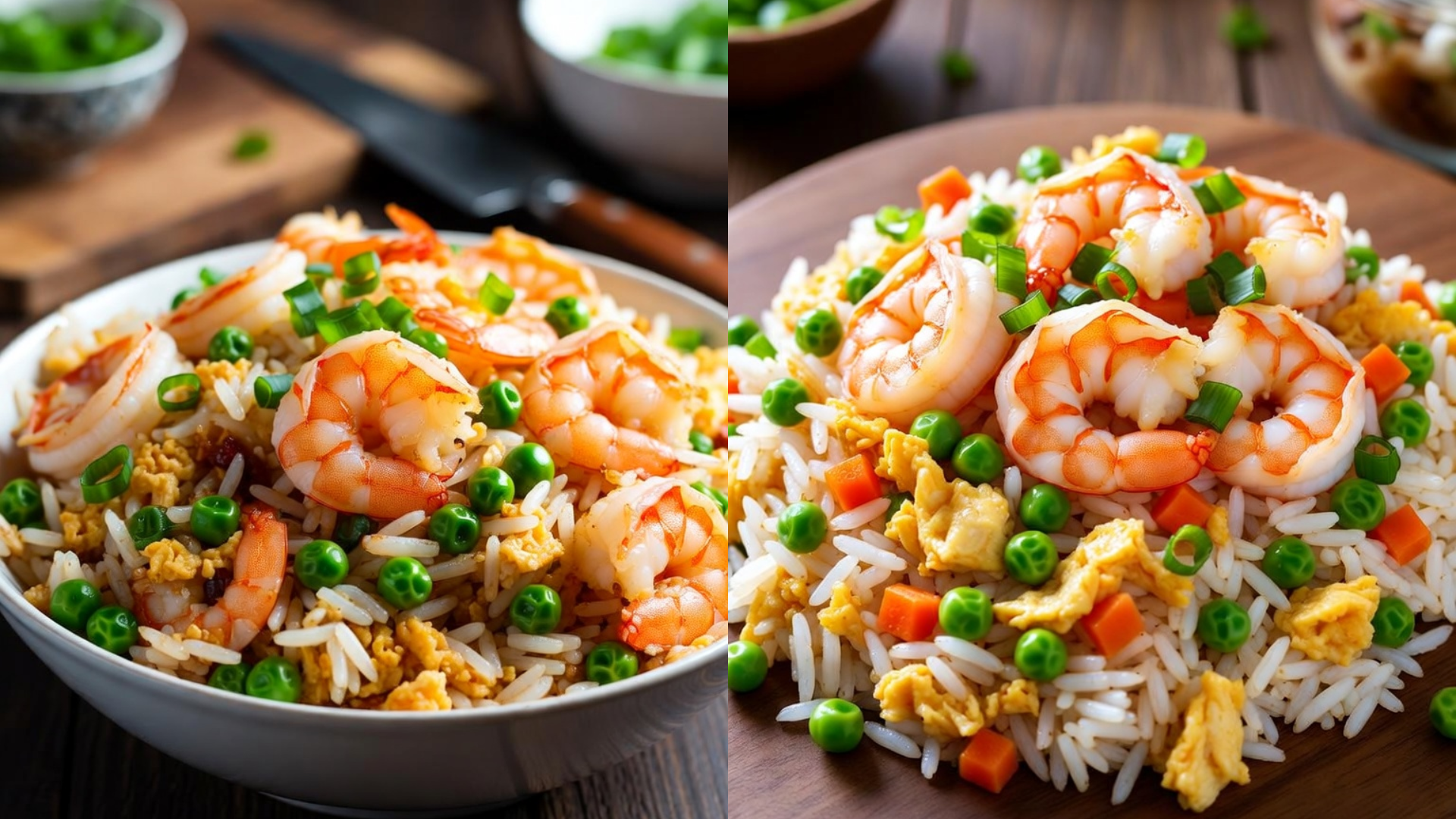
Most people steam their fried rice by accident. They crowd the pan, the moisture has nowhere to go, and what should be light and separate turns into a soft, clumping mass. The difference between a good version and a great one comes down to one thing: heat management and dry rice. Get those right and this easy shrimp fried rice delivers the smoky, grain-separate texture — what Cantonese cooks call wok hei — that you assume only takeout can produce. It doesn’t require a wok or a professional burner. It requires understanding what’s actually happening in the pan.
Table of Contents
What Makes This Recipe Work
- Cold, day-old rice is non-negotiable. Freshly cooked rice is saturated with surface moisture, and moisture is the enemy of frying. Chilling rice overnight lets the grains firm up and dry slightly, so they fry instead of steam. This is intentional — it’s the single biggest lever you have.
- The shrimp cook separately, then get pulled. The science here is simple: shrimp overcook in seconds, and rice needs sustained high heat. Cooking them together guarantees rubbery shrimp. Searing them first, removing them, and folding them back at the end keeps them plump.
- High heat, small batches. Most recipes skip this and tell you to dump everything in at once. A crowded pan drops the temperature and traps steam. Working in stages keeps the surface hot enough to caramelize rather than sweat.
- Fat and aromatics build the base. A neutral high-smoke-point oil carries the heat; garlic, ginger, and scallion whites layer flavor into that oil before the rice ever touches the pan.
Prep time: 10 minutes · Cook time: 8 minutes · Total time: 18 minutes · Servings: 4
Ingredients — What to Buy and Why It Matters
- 3 cups day-old cooked rice (jasmine or long-grain): Long-grain has less surface starch than short-grain, so it separates more readily. Cook it the day before and refrigerate uncovered for the last hour if you can — the drier, the better.
- 12 oz raw shrimp, peeled and deveined (medium, 41/50 count): Raw, not pre-cooked. Pre-cooked shrimp have already spent their tenderness and will turn to rubber on a second heating. Pat them bone-dry before they hit the pan — surface water blocks searing.
- 2 large eggs, beaten: The eggs coat and enrich the rice. Beating them first means faster, more even cooking.
- 2 tbsp neutral oil (avocado, grapeseed, or refined peanut): You need a high smoke point here. Olive oil will scorch and turn bitter at these temperatures — do not substitute.
- 3 cloves garlic + 1 tbsp fresh ginger, both minced: Fresh only. The volatile aromatics in fresh garlic and ginger are what perfume the oil; jarred versions are flat by comparison.
- 4 scallions, whites and greens separated: The whites go in early as an aromatic; the greens finish the dish raw for color and bite.
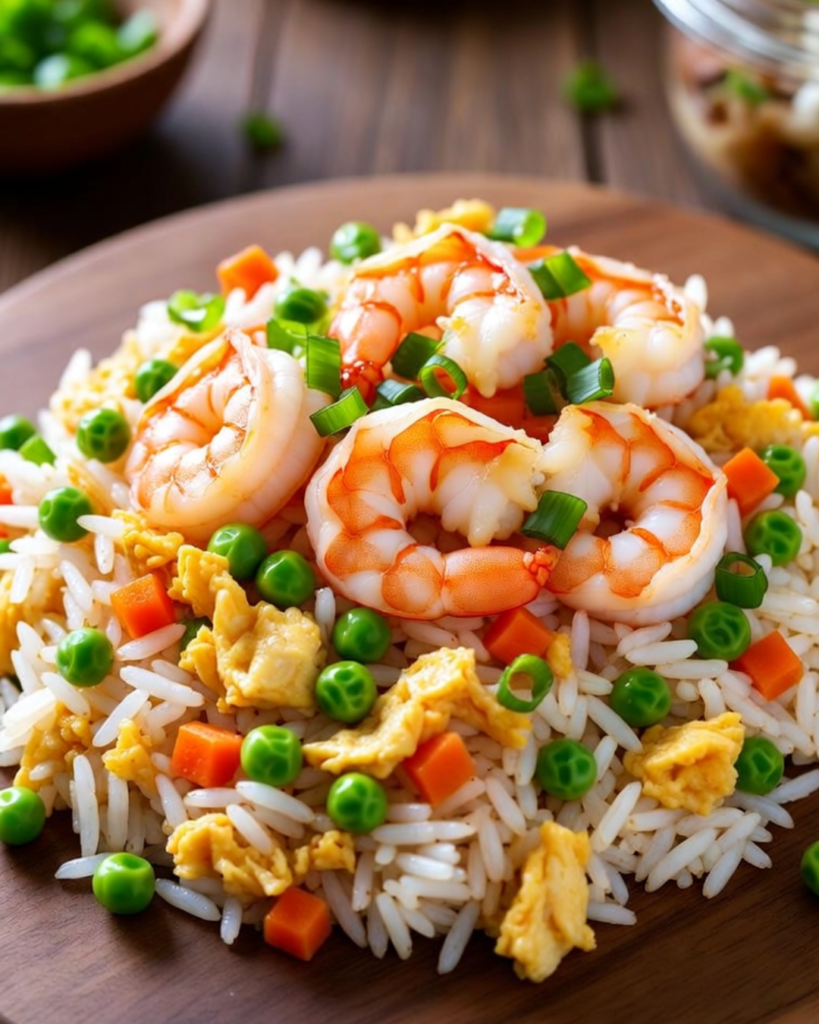
- 1 cup frozen peas and carrots: No need to thaw — they’ll cook through in the residual heat. Frozen is genuinely fine here; the vegetables are a supporting texture, not the star.
- 2 tbsp soy sauce + 1 tsp toasted sesame oil: Soy brings salt and umami; sesame oil is a finishing note, added off-heat so its aroma survives. Add sesame oil early and you cook off the very thing you wanted.
Substitution notes: Cauliflower rice works for a low-carb version but releases far more water — cook it in a separate dry pan first to drive off moisture, or you’ll be back to steaming. Chicken or diced tofu swap in cleanly for shrimp; just adjust cook time upward for chicken.
Step-by-Step Instructions
- Break up the rice. Turn the cold rice into a bowl and separate the clumps with your fingers or a fork before you start. Cold rice compacts; loose grains fry evenly. Doing this now means you’re not fighting clumps in a hot pan.
- Sear the shrimp. Heat 1 tbsp oil in a large skillet or wok over high until it shimmers and just begins to smoke. Add the dried shrimp in a single layer and leave them undisturbed for 60–90 seconds, then flip. They’re done the instant they turn opaque and curl into a loose C — a tight O means overcooked. Remove them to a plate immediately.
- Scramble the eggs. Lower to medium-high, add a small drizzle of oil, pour in the beaten eggs, and let them set for a few seconds before folding into soft curds. Pull them out while still slightly wet — they’ll finish later. Set aside with the shrimp.
- Build the aromatic base. Add the remaining tablespoon of oil, return the heat to high, and add garlic, ginger, and scallion whites. Stir constantly for about 30 seconds — you want them fragrant, not browned. Burnt garlic turns the whole dish acrid, so this window is short.
- Fry the rice. Add the rice and press it into the hot surface, then let it sit for 20–30 seconds before stirring. What’s actually happening is direct contact with the hot metal driving off moisture and building faint toasty color. Repeat the press-and-stir two or three times.
- Add vegetables and sauce. Toss in the frozen peas and carrots and drizzle the soy sauce around the edge of the pan, not over the rice — hitting the hot surface lets it caramelize slightly before coating the grains. Stir for another minute.
- Return the proteins and finish. Fold the shrimp and eggs back in, add the scallion greens and toasted sesame oil off the heat, and toss once or twice. Serve immediately — fried rice waits for no one.
Technique Notes for Better Results
- Where most home cooks go wrong: the rice is too fresh. If you genuinely have no day-old rice, spread freshly cooked rice on a sheet pan and freeze it flat for 20–30 minutes to shed surface moisture. It’s a rescue, not a replacement.
- The professional approach here is to let the pan do the work. Constant stirring cools the surface and prevents any browning. Let the rice rest against the hot metal in short bursts — that’s where the flavor develops.
- Season the pan, not just the food. Adding soy sauce down the side of the hot skillet rather than directly onto the rice gives you a deeper, slightly smoky flavor from the brief contact with the metal.
- Dry your shrimp like you mean it. The critical step here is patting them completely dry. Any residual water and they poach in their own moisture instead of searing.
- Taste before you over-salt. Soy sauce brands vary widely in sodium. Add most of it, taste, then adjust — you can always add more, but you can’t pull it back out.
Plating and Serving
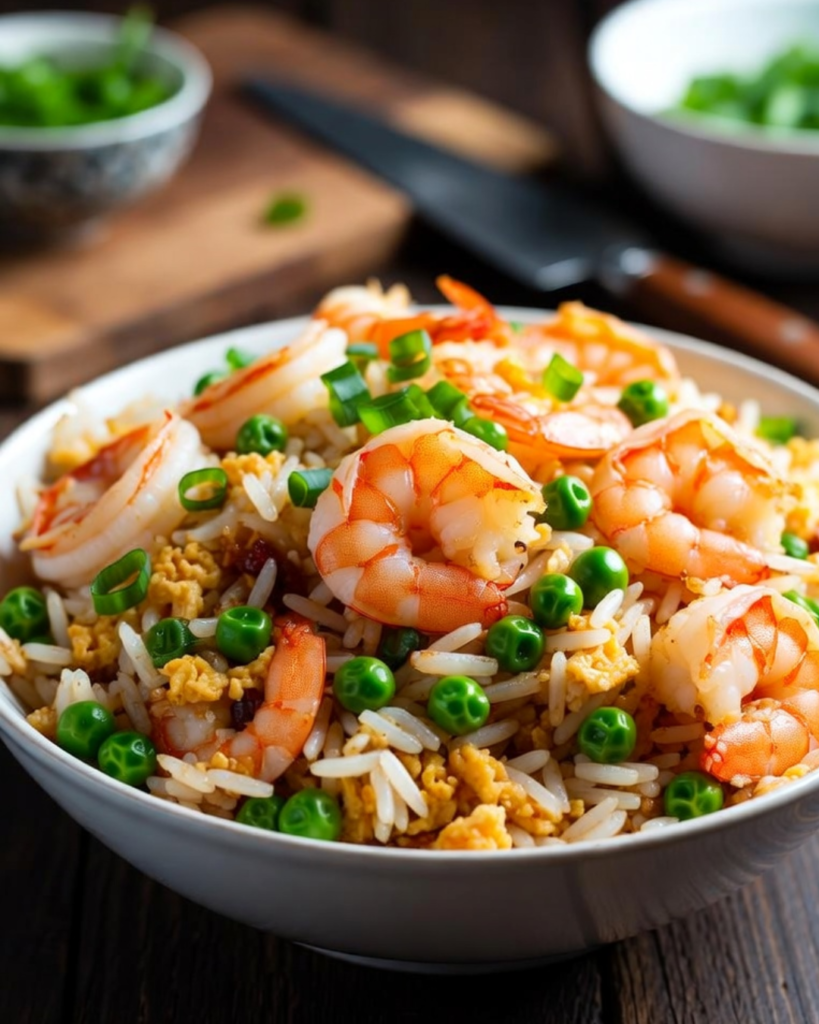
- Serve in a shallow bowl, mounded, not spread flat — height reads as generous and keeps the rice hot longer.
- Finish with extra raw scallion greens and a pinch of white pepper for contrast against the rich, savory base.
- Pair with a sharp, acidic side — a quick cucumber salad with rice vinegar cuts the richness and resets the palate.
- Beverage: A crisp lager or an off-dry Riesling both work; the light bitterness or faint sweetness balances the salt and sesame without competing.
Nutritional Profile
Shrimp are lean, high-protein, and low in calories, delivering selenium and B12 with very little fat. The peas and carrots add fiber and vitamin A, while the eggs contribute complete protein and richness. This is a genuinely balanced one-pan meal.
For lower sodium, use reduced-salt soy sauce and lean on the aromatics and sesame oil for flavor — the trade-off is a slightly less deep savory note, easily offset with a squeeze of lime. For gluten-free, swap soy sauce for tamari, which behaves identically. For lower carb, the cauliflower-rice route works but changes the texture toward softer and lighter — manage the moisture as noted above and it holds up.
Common Questions, Answered Directly
Can I use freshly cooked rice? You can, but expect softer, clumpier results. If you must, cool and dry it on a sheet pan first. Day-old is always better.
Why is my fried rice mushy? Almost always too much moisture — wet rice, a crowded pan, or heat that’s too low. Fix all three: dry rice, small batches, high heat.
How do I store and reheat leftovers? Refrigerate up to 3 days in an airtight container. Reheat in a hot skillet with a teaspoon of oil, not the microwave, which steams it soft again.
Can I make it ahead for meal prep? Yes. It reheats better than most rice dishes precisely because the grains are already dry. Undercook the shrimp very slightly if you know you’ll reheat, to protect their texture.
Cook the rice tonight, chill it, and make this tomorrow — the twelve hours of patience are the whole secret. Fire up your hottest burner and give it a try.